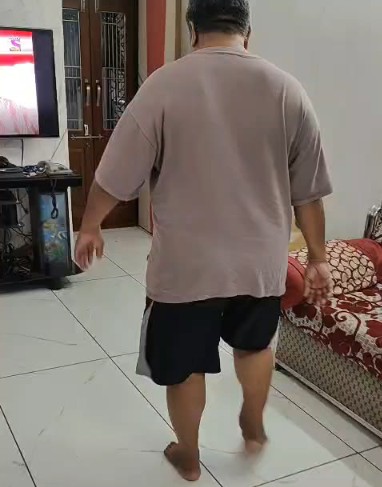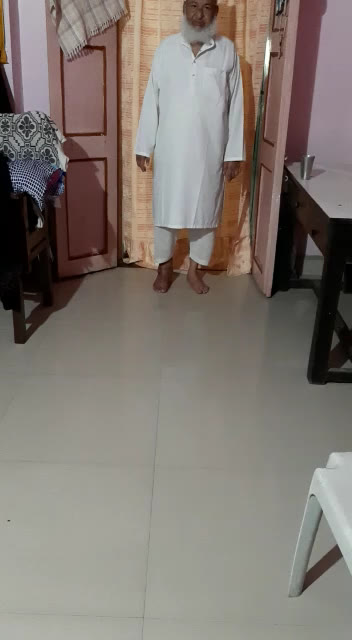
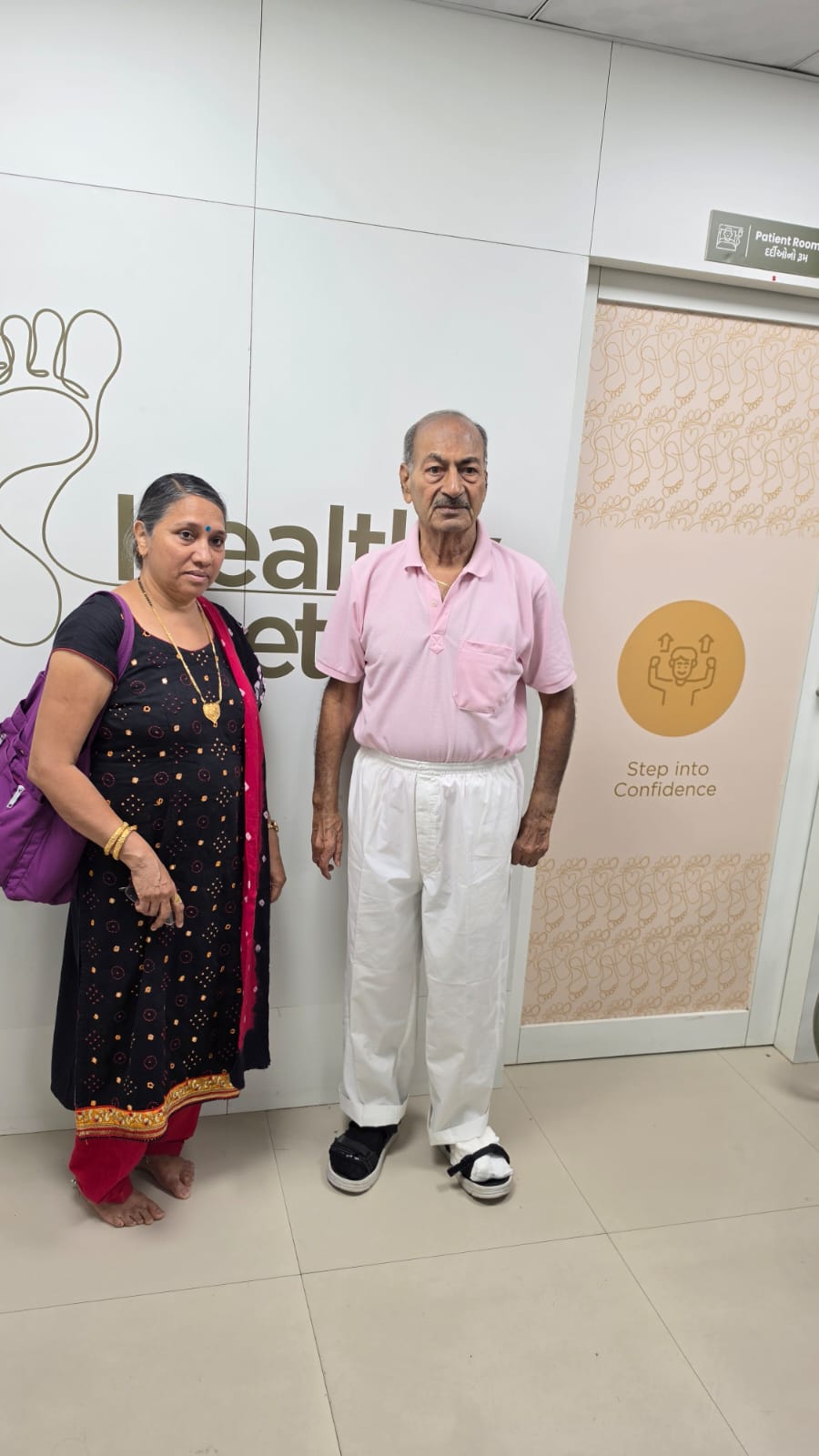
Prabhubhai's infected, non-healing diabetic foot wound healed after timely surgical debridement, modern dressings and off-loading by Dr. Ashutosh Shah at EDFC Surat.
What's in this artical: Prabhubhai came to Elegance Diabetic Foot & Ulcer Clinic (EDFC), Surat, with an infected diabetic foot wound that was not healing. Dr. Ashutosh Shah, plastic surgeon and diabetic foot specialist, performed timely surgical debridement to remove dead and infected tissue, followed by modern dressings and off-loading. With regular follow-ups, the wound healed step by step.
Presentation
Prabhubhai came to the clinic with a diabetic foot wound showing signs of infection and non-healing tissue. Dead and infected tissue in a wound holds bacteria and stops healthy tissue from growing, so the wound could not heal on its own.
Treatment at EDFC
- Clinical assessment: Dr. Ashutosh Shah examined the wound to judge the extent of infection and dead tissue.
- Surgical debridement: all necrotic (dead) and infected tissue was removed from the wound, as part of our wound care and debridement service.
- Modern dressings: suitable dressings were used after debridement to keep the wound clean and support healing.
- Off-loading: pressure was kept off the wound with off-loading footwear, as seen in his photo.
- Regular follow-ups: the wound was checked at every visit and care was adjusted as it healed.
Outcome
Debridement reduced the bacterial load and improved the wound bed, allowing healthy granulation (new healing) tissue to form. With dressings, off-loading and follow-ups, the wound showed steady, progressive healing.
Why early debridement matters in diabetic foot
When a diabetic foot wound has dead or infected tissue, dressings alone are often not enough. Removing that tissue early lowers the risk of infection spreading to deeper tissue and bone, and gives the wound a clean base to heal. Prabhubhai's case shows why timely debridement is an important step in diabetic foot care.
Questions about diabetic foot debridement
What is debridement in diabetic foot care?
Debridement is the removal of dead, infected or unhealthy tissue from a wound so that healthy tissue can grow. It can be done surgically or by other methods, depending on the wound.
Why is debridement needed for a diabetic foot wound?
Dead tissue traps bacteria and stops the wound from closing. Removing it lowers the risk of infection and helps the wound start healing.
How many debridement sessions are needed?
Some wounds need only one session, while others need repeat sessions as the wound changes. The doctor decides at each follow-up visit.
Is debridement painful?
Debridement is done with suitable anaesthesia when needed, and many people with diabetic nerve damage have reduced feeling in the foot. Your doctor will explain pain control before the procedure.
Medically reviewed by Dr. Ashutosh Shah, plastic surgeon and diabetic foot specialist, Elegance Diabetic Foot & Ulcer Clinic, Surat.
Have a foot wound that is not healing? Book a consultation with Dr. Ashutosh Shah, or read Bhavnaben's diabetic foot ulcer story.
Every patient is different. Results depend on the condition, its stage and overall health. Shared with the patient's consent. If you have a diabetic foot wound, please have it assessed in person. Send a photo on WhatsApp or book a consultation.