
Non-Diabetic Ulcer Clinic
Peripheral Arterial Disease Ulcers
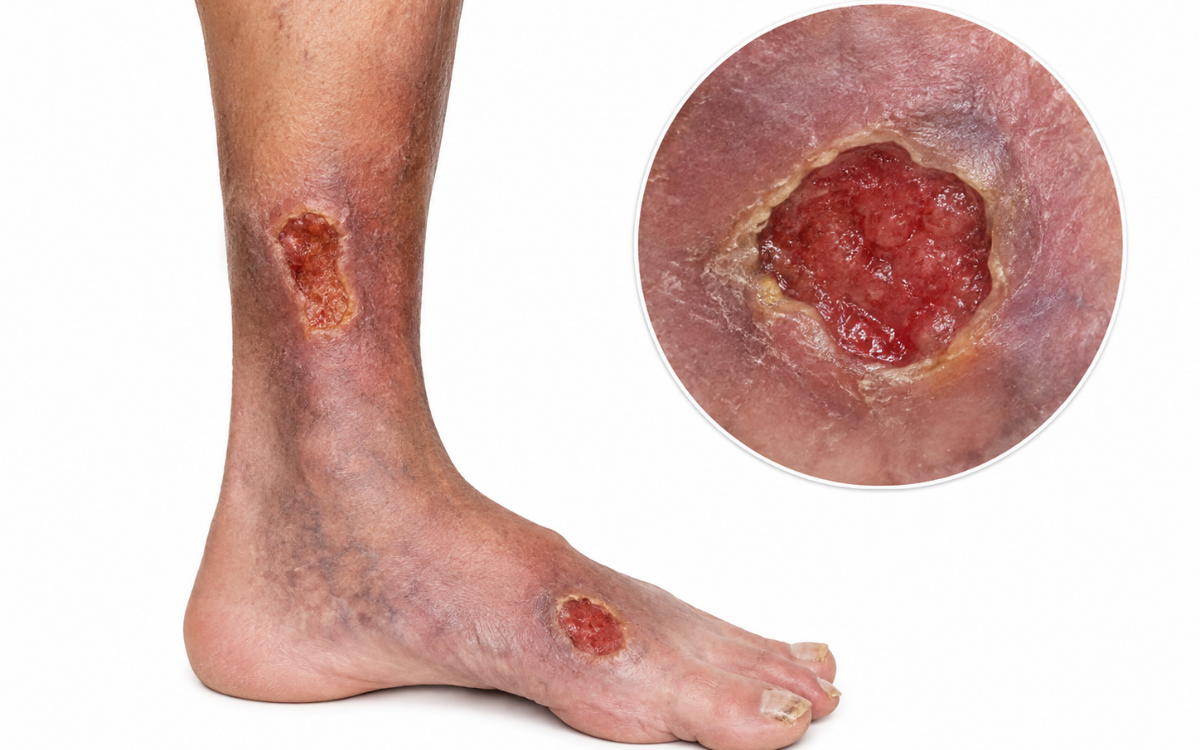
Peripheral arterial disease narrows the leg arteries, so the foot receives too little blood to heal even small injuries. The result is painful, punched-out ulcers on toes, heels and pressure points.
A peripheral arterial disease ulcer forms when narrowed leg arteries cannot deliver enough blood for the skin to repair itself. Restoring circulation is the key step, because without blood flow no dressing can close the wound.
What Are Peripheral Arterial Disease Ulcers?
Peripheral arterial disease, often shortened to PAD, is the narrowing of leg arteries by cholesterol and calcium deposits. When blood flow drops, even a minor cut on the toe or heel cannot heal, and it deepens into a dry, painful ulcer. According to vascular guidelines, PAD is one of the strongest predictors of limb loss when left untreated.
Peripheral arterial disease: narrowing or blockage of the arteries supplying the legs, reducing blood flow to the feet.
How Do You Recognise an Arterial Ulcer?
- Punched-out, well-defined wound edges on toes, heel or foot margins
- Pain that worsens on lying flat and eases when the leg hangs down
- Cold, pale or bluish foot with weak or absent pulses
- Cramping calf pain on walking that stops with rest
How Does EDFC Treat PAD Ulcers?
First, our vascular team maps the blockage. Then circulation is restored with endovascular or surgical revascularisation, followed by wound debridement and protection. Meanwhile, risk factors such as smoking, sugar and cholesterol are corrected so the arteries stay open.
Cost and Urgency in Surat
Costs vary with the procedure needed to reopen the artery, and EDFC provides a clear estimate before treatment. Do not wait: a painful cold foot with a wound is an emergency. Book an urgent assessment or send a photo on WhatsApp now.
quiz Frequently Asked Questions
Have an ulcer that won't heal?
Send a photo on WhatsApp for an assessment, or book a consultation with Dr. Shah.
This page is for education only and is not a substitute for an in-person diagnosis. Please consult Dr. Ashutosh Shah or a qualified clinician for advice specific to your condition.