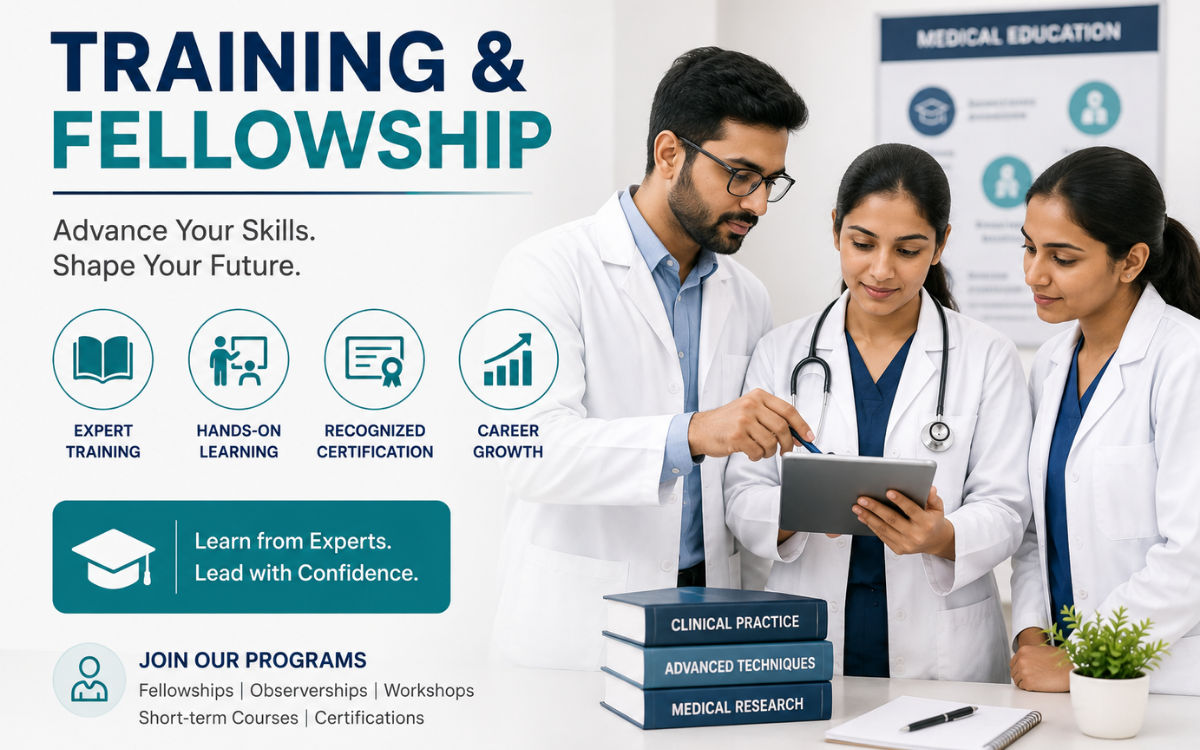
Training & Fellowship
Structured training pathways in diabetic foot and wound care for doctors, nurses and technicians at every level.
Key Takeaways
- Training pathways exist for doctors, nurses, technicians and whole hospital teams.
- Programmes range from short observerships to full structured fellowships.
- All training is built around live case work rather than classroom teaching alone.
- Institutions can arrange group training to set up their own wound service.
What Training Pathways Are Available?
Different people need very different things from training, so the programmes are separated by purpose rather than by job title.
- Observership: short attachment to see how a diabetic foot service runs. Best for exposure and orientation.
- Fellowship: longer, supervised training for doctors who intend to practise this work themselves.
- Nursing and technician training: practical wound care skills, dressing technique, offloading and patient education.
- Institutional training: team training for hospitals setting up their own diabetic foot pathway.
Why Is Training Built Around Live Cases?
Wound care is a decision-heavy field. Knowing the theory of debridement is easy. Knowing which tissue to remove and which to leave, on a particular foot, at a particular moment, only comes from doing it under supervision.
This is why every pathway puts the trainee in clinics and theatre rather than in a seminar room, with teaching built around the patients actually in front of them.
Who Can Apply?
Doctors of any postgraduate background with an interest in the field, nurses and dressing technicians wanting formal wound competence, footwear and orthotic technicians, and hospital teams planning a new service. Requirements differ by programme, and eligibility is confirmed when you enquire.
What Does Training Cost?
Fees depend entirely on the programme and its length, and they are confirmed at the time a place is offered. Short observerships and long fellowships are not comparable, so a single published figure would be misleading. Institutional and group training is quoted separately according to the scope agreed.
What Do Trainees Take Away?
The practical answer is a system, not just skills. Trainees leave able to assess a foot properly, grade risk, decide what needs urgent action, manage the wound competently, and build the follow-up structure that keeps healed wounds closed. For those returning to their own hospital, that includes how to organise the pathway itself.
How Do I Enquire?
Send your curriculum vitae with a note on which pathway interests you and your available dates. For hospital or institutional training, a short conversation about your setting works better than a form, so please call or write directly.
Detailed pages are available for the fellowship and the observership.
Frequently Asked Questions
Which pathway suits you?
Send your curriculum vitae with a note on which pathway interests you and your available dates. For hospital or institutional training, a short conversation comes first.