
Bone & Joint Disorders
Achilles Tendon Disorders
Tightness, thickening or damage in the Achilles tendon, which drives pressure into the forefoot.
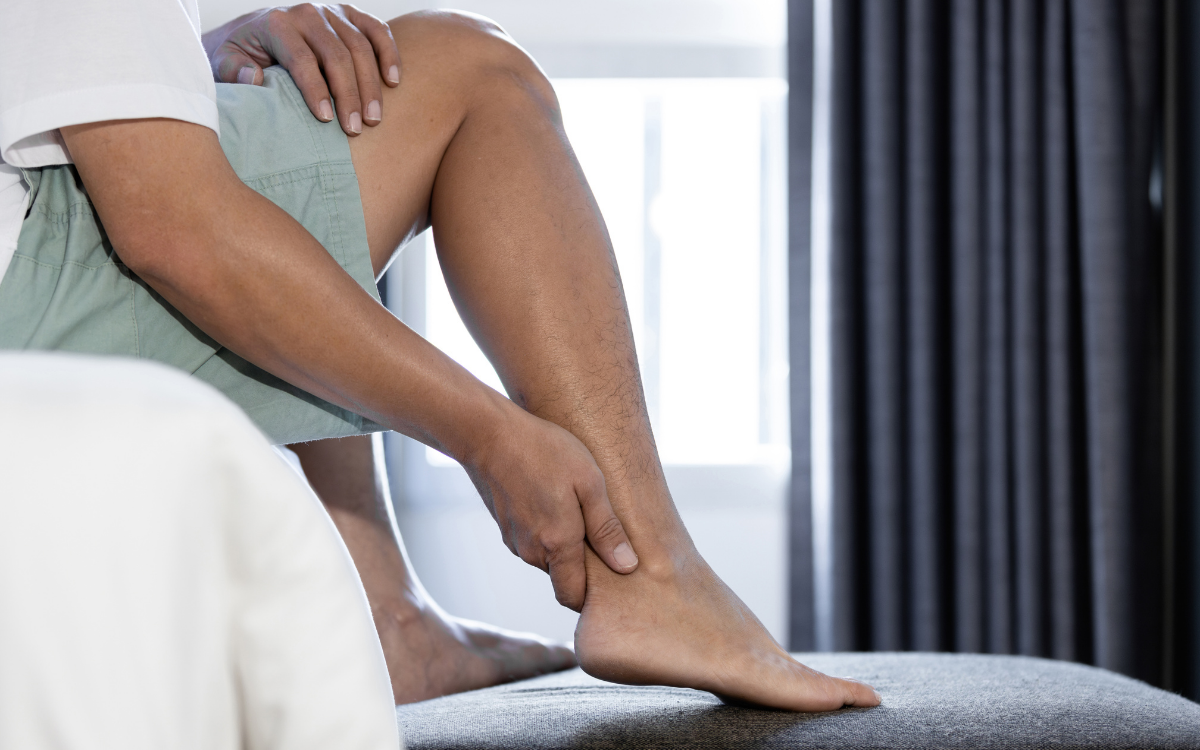
The Achilles tendon controls how your heel lifts during walking. When it tightens, and diabetes makes that likely, the forefoot takes load it was never designed to carry.
Key Takeaways
- Diabetes stiffens the Achilles tendon, limiting how far the ankle can bend upward.
- Restricted ankle movement transfers pressure to the ball of the foot.
- Achilles lengthening reduces forefoot pressure substantially and helps stubborn ulcers heal.
- Tightness is easy to test and often missed in routine examinations.
What Goes Wrong With the Achilles in Diabetes?
Equinus: restricted upward movement at the ankle, usually caused by a tight Achilles tendon or calf muscles.
Sugar bonds to collagen fibres, and the tendon gradually loses its stretch. As a result, the ankle cannot bend upward normally during walking, so the heel lifts early and the forefoot absorbs the load. Patients rarely notice the stiffness itself, only the ulcer that follows months later.
How Is Achilles Tightness Detected?
A simple test measures how far the ankle bends upward with the knee straight and bent. Anything below the normal range confirms equinus. Additionally, pressure mapping shows the resulting overload under the forefoot, which links the tendon problem directly to the ulcer site.
What Treatments Are Available?
- Structured calf and Achilles stretching, done daily over months
- Heel lifts and rocker sole footwear to reduce demand on the tendon
- Total contact casting to offload an active forefoot ulcer
- Percutaneous Achilles lengthening for stubborn or recurring ulcers
Does Achilles Lengthening Work?
Yes, and it is one of the more satisfying procedures we do. Releasing the tightness lowers forefoot pressure immediately, which allows an ulcer that resisted months of dressings to close. The procedure is small, performed through tiny incisions, and recovery involves a period in a cast or boot.
Recurrence of forefoot ulceration drops considerably afterwards, which is why we assess the Achilles in every patient with a repeated wound under the ball of the foot.
What Does It Cost and What Is Recovery Like?
Conservative management costs little beyond consultation and footwear. Surgical lengthening is a day procedure, quoted after assessment. Expect a cast or boot for several weeks, followed by gradual return to normal walking with prescribed footwear.
quiz Frequently Asked Questions
Not sure what's wrong with your foot?
Send a photo on WhatsApp for an assessment, or book a consultation with Dr. Shah.
This page is for education only and is not a substitute for an in-person diagnosis. Please consult Dr. Ashutosh Shah or a qualified clinician for advice specific to your condition.