
Non-Diabetic Ulcer Clinic
Connective Tissue Disease Ulcers
Diseases such as lupus, scleroderma and rheumatoid arthritis can silently damage skin circulation, producing stubborn leg and fingertip ulcers that ordinary dressings cannot close.
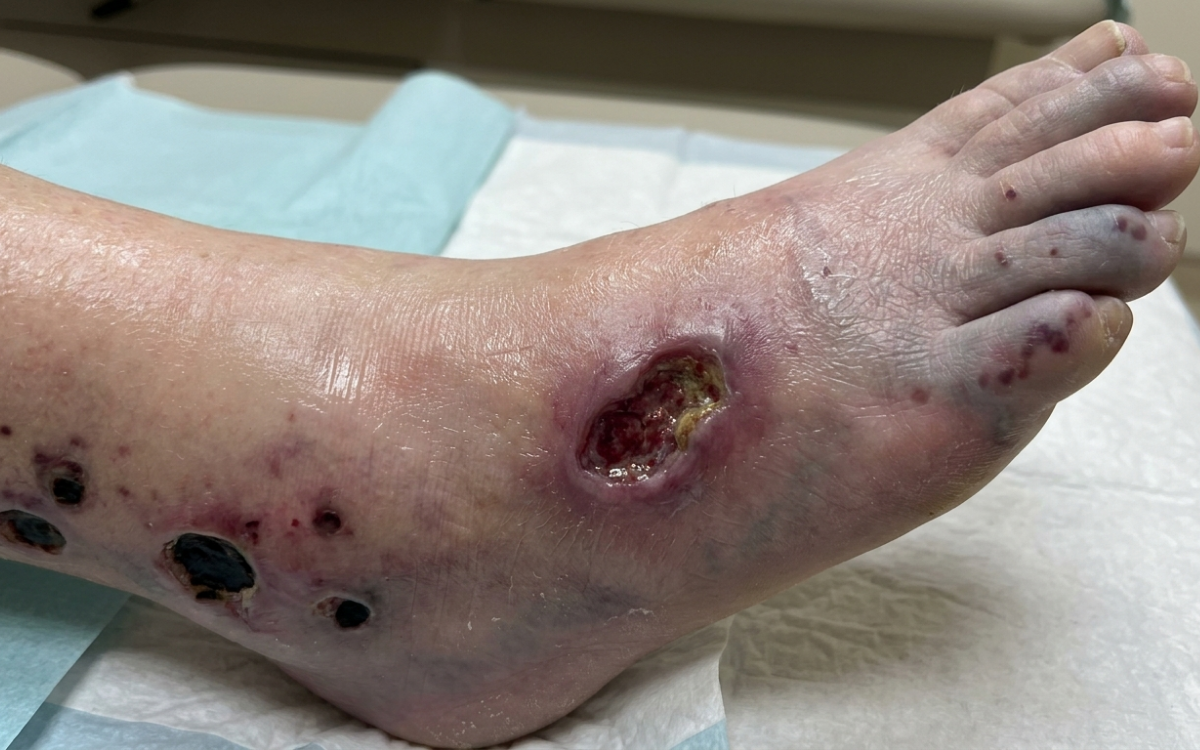
Connective tissue disease ulcers appear in conditions like lupus, rheumatoid arthritis and scleroderma, where the disease injures small vessels and skin. Healing requires controlling the underlying disease while protecting and rebuilding the wounded skin.
What Are Connective Tissue Disease Ulcers?
Connective tissue diseases are autoimmune conditions that affect the body's structural tissues. Lupus, rheumatoid arthritis, scleroderma and similar illnesses can inflame small vessels, thin the skin and slow repair. Consequently, minor knocks on the legs, ankles or fingertips break down into ulcers that linger for months.
Connective tissue disease: an autoimmune illness affecting the tissues that support skin, joints and organs.
Why Are These Ulcers So Stubborn?
- The underlying disease keeps injuring the small vessels
- Long-term steroids and immune medicines thin the skin and slow healing
- Raynaud's spasm in scleroderma repeatedly cuts blood flow to fingertips
- Joint deformity concentrates pressure over bony points
How Does EDFC Approach Them?
We coordinate with your rheumatologist so disease control and wound care move together. Our team adds specialised dressings, offloading of pressure points, circulation support and, when needed, reconstructive options for wounds that cannot close on their own. Nutrition and infection control round out the plan.
Costs and When to Come In
Wound care costs stay modest at Surat clinic rates, and every estimate is confirmed upfront. If you live with lupus, rheumatoid arthritis or scleroderma and a wound has stalled for two weeks, book a review before it deepens.
quiz Frequently Asked Questions
Have an ulcer that won't heal?
Send a photo on WhatsApp for an assessment, or book a consultation with Dr. Shah.
This page is for education only and is not a substitute for an in-person diagnosis. Please consult Dr. Ashutosh Shah or a qualified clinician for advice specific to your condition.