
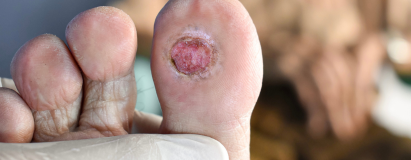
Non-Diabetic Ulcer Clinic
Arterial Ulcers
Arterial ulcers form when narrowed or blocked arteries starve the lower leg and foot of blood. They are painful, slow to heal, and a warning sign of peripheral artery disease.
Arterial (Ischemic) Ulcer Treatment in India
Arterial (ischemic) ulcer treatment in India focuses on restoring blood flow to the limb, because these painful, poorly supplied wounds cannot heal without it. At EDFC, the priority is improving circulation, coordinated with vascular specialists, alongside wound care. Importantly, compression is avoided unless circulation is confirmed adequate.
What is an arterial ulcer?
An arterial, or ischemic, ulcer forms when narrowed arteries (peripheral artery disease) cannot deliver enough blood to the skin. The wound is typically painful, often worse at night or when the leg is raised, with a pale or grey base and a "punched-out" edge, usually on the toes, foot, or outer ankle. Without enough blood supply, the wound simply cannot heal.
That is why treatment prioritises circulation. Restoring blood flow, through medication and, where needed, angioplasty or bypass, is the key step, with wound care supporting healing once flow improves. The vascular intervention is arranged with specialists through our vascular services. At EDFC, India's first dedicated foot and ulcer clinic, this is coordinated by Dr. Ashutosh Shah's team in Surat (Gujarat) and Vizianagaram (Andhra Pradesh).
Signs of an arterial ulcer
- A painful wound on the toes, foot, or outer ankle
- Pain that worsens at night or when the leg is elevated
- A pale, grey, or "punched-out" wound base
- Cold, pale feet with weak or absent pulses
- Leg pain on walking that eases with rest
Important safety note: arterial ulcers must not be treated with standard compression, which can further reduce blood flow. Circulation must be assessed first, a key reason to see an ulcer specialist rather than self-treat.
How arterial ulcers are treated
- Circulation assessment, pulses, ankle brachial index, and imaging of the arteries.
- Restoring blood flow, medication and, where needed, angioplasty or bypass via vascular specialists.
- Wound care, careful cleaning and dressing suited to a poorly supplied wound.
- Pain management, addressing the often significant pain.
- Risk-factor control, smoking cessation, cholesterol, and blood pressure.
Why choose EDFC in India
- Circulation-first, treating the cause, not just the wound.
- Coordinated vascular care, angioplasty or bypass arranged with specialists.
- Dedicated wound care, India's first chain built only for foot and ulcer care.
- Two branches, Surat, Gujarat and Vizianagaram, Andhra Pradesh.
Content on this page is medically reviewed by Dr. Ashutosh Shah. See vascular services for revascularization, or book a visit.
Types of Arterial Ulcers We Treat
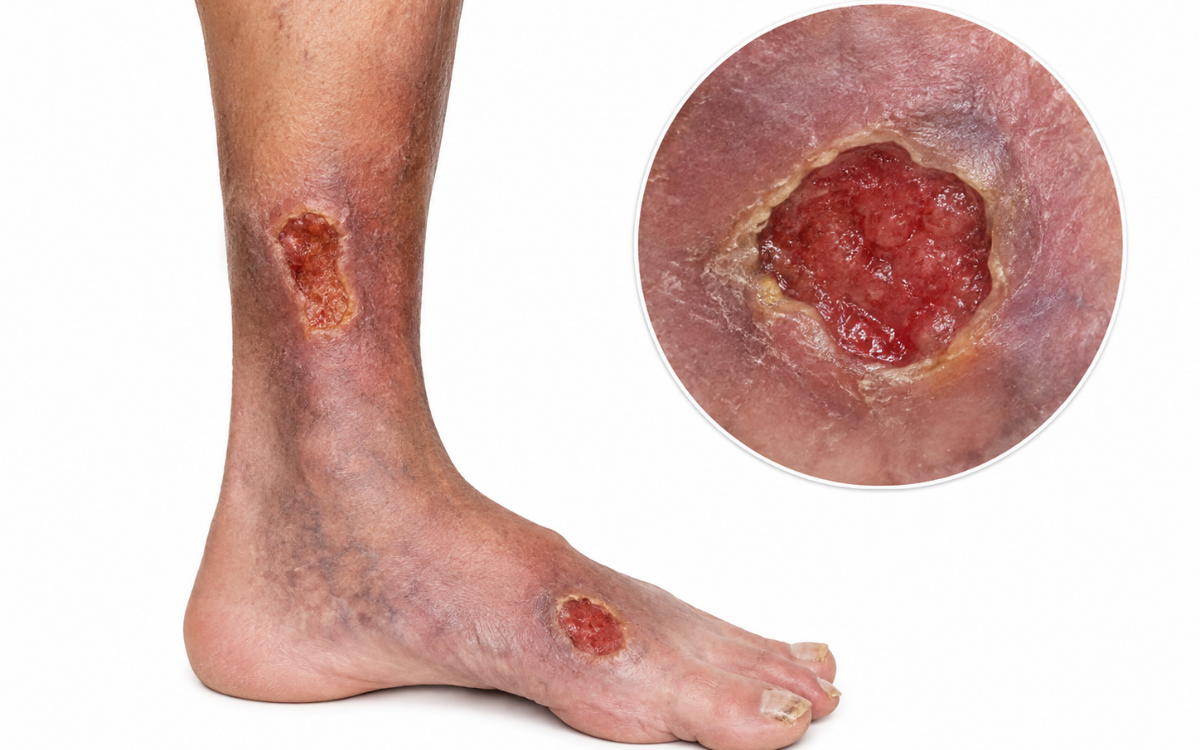
Peripheral Arterial Disease Ulcers
Peripheral arterial disease narrows the leg arteries, so the foot receives too little blood to heal even smal…
Learn more arrow_forward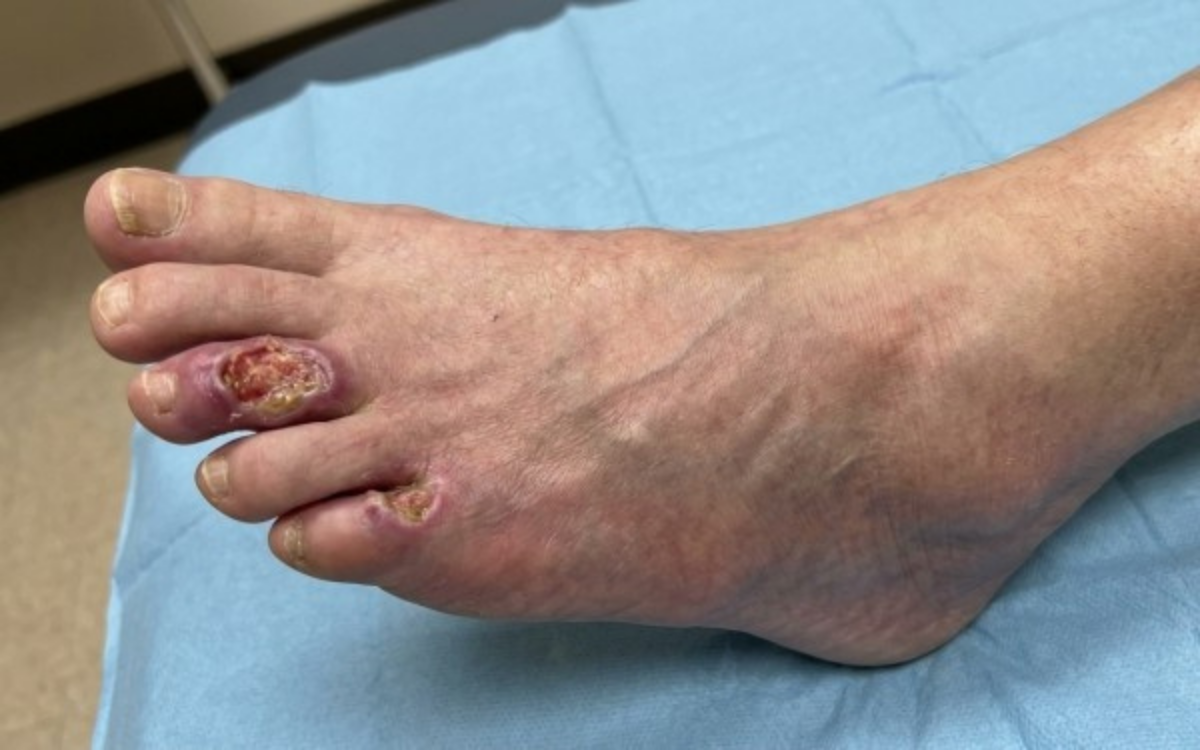
Buerger's Disease Ulcers
Buerger's disease, a smoking-linked inflammation of small arteries, blocks blood flow to fingers and toes in …
Learn more arrow_forward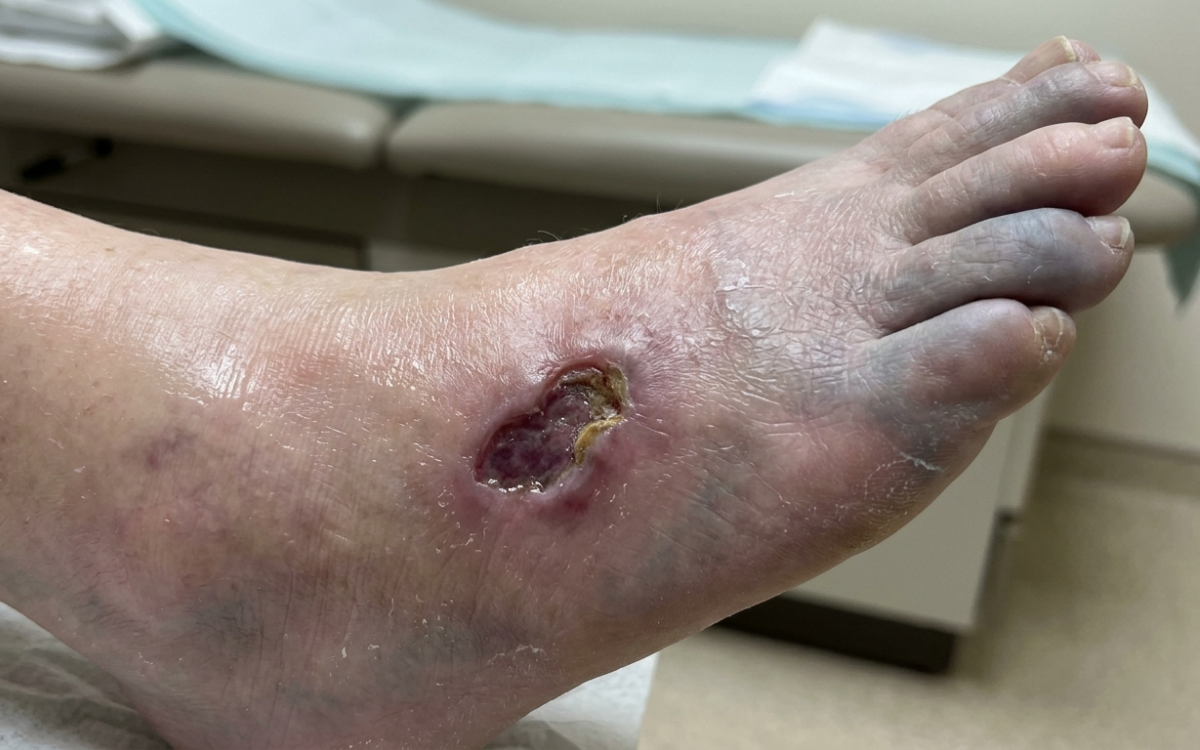
Ischemic Ulcers
Painful wounds caused by poor arterial blood supply, often on the feet, toes or shins, that will not heal unt…
Learn more arrow_forwardquiz Frequently Asked Questions
Have an ulcer that won't heal?
Send a photo on WhatsApp for an assessment, or book a consultation with Dr. Shah.
This page is for education only and is not a substitute for an in-person diagnosis. Please consult Dr. Ashutosh Shah or a qualified clinician for advice specific to your condition.