
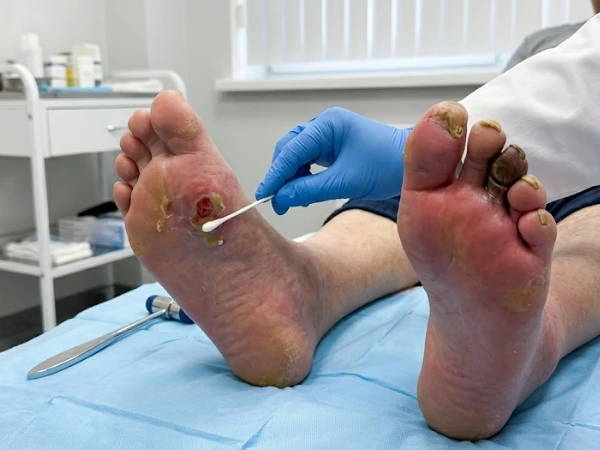
Diabetic Foot Conditions
Diabetic Foot Infection
Infections in the diabetic foot can escalate quickly because high blood sugar and poor circulation blunt the body's defences. What looks minor can become limb-threatening within days.
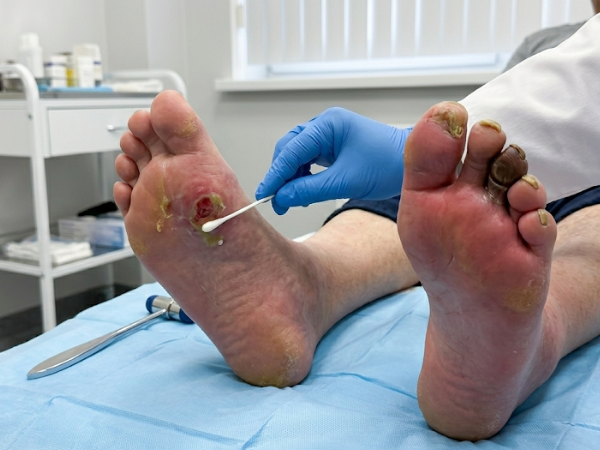
Diabetic Foot Infection: Signs & Treatment in India
A diabetic foot infection is bacteria spreading into the skin, tissue or bone of a diabetic foot, often through a small wound. Warning signs are redness, swelling, pus, smell or fever. Mild infections settle in [1 to 2] weeks with antibiotics and cleaning; deep ones need surgery. EDFC treats all grades in Surat, with same-day review for urgent cases.
What is a diabetic foot infection?
An infection develops when bacteria enter a break in the skin, usually a foot ulcer, and multiply. In diabetes this is more likely and more dangerous, because high blood sugar weakens the immune response, poor circulation limits healing, and nerve damage hides the pain that would normally warn you. An infection that starts small can progress to deeper tissue, bone (osteomyelitis), or the bloodstream if not treated quickly.
What are the warning signs of a diabetic foot infection?
- Increasing redness, warmth, or swelling around a wound
- Pus or cloudy discharge, and a bad smell
- A wound that suddenly worsens or enlarges
- Red streaks spreading up the foot or leg
- Fever, chills, or feeling generally unwell
When to see a doctor in India: any of these signs, especially spreading redness, fever, or feeling unwell, needs urgent care. A diabetic foot infection can advance within hours, so don't wait.
Why is a foot infection dangerous in diabetes?
The combination of weakened immunity, poor circulation, and lost sensation means infections spread faster and are felt less. What looks like a minor wound can hide a serious, deep infection, which is why prompt professional assessment is so important.
Which treatments does EDFC use for a diabetic foot infection?
Treatment is prompt and thorough. EDFC's dedicated infection management service covers it in full:
- Assessment, judging how deep and severe the infection is.
- Targeted antibiotics, guided by wound cultures.
- Drainage & debridement, removing pus and infected tissue.
- Surgery if needed, for deep infection, to save the limb.
Who needs diabetic foot infection treatment? A quick checklist
See a diabetic foot specialist soon if you notice any of these:
- Redness or warmth spreading around a wound
- Swelling of the foot or toes
- Pus, discharge or a bad smell
- A wound that suddenly becomes painful, or a painless wound that looks worse
- Fever, chills or blood sugar that is harder to control
- Skin turning dark, blue or black
If the redness is spreading fast or you have fever, come in the same day (Monday to Saturday).
How is a diabetic foot infection treated, step by step?
- Assessment: the specialist checks how deep the infection is, the blood flow and nerve sensation.
- Tests: wound culture, blood tests and an X-ray or MRI if bone infection is suspected.
- Cleaning and drainage: pus and dead tissue are removed so antibiotics can work.
- Antibiotics: chosen based on the culture report.
- Offloading and dressings: pressure is taken off the wound and dressings are planned.
- Surgery if needed: for deep infection, to control it and protect the limb.
- Follow-up: regular checks until the infection settles and the wound heals.
How long does recovery from a diabetic foot infection take?
Recovery depends on how deep the infection is, blood flow to the foot and sugar control. Mild skin infections usually settle faster than deep infections or infections that reach the bone.
| Stage | What you may see | What to do | Warning sign |
|---|---|---|---|
| First days | Less redness and swelling | Take antibiotics exactly as advised | Redness spreading or fever |
| [weeks] | Wound cleaner, less discharge | Keep dressings and offloading | New pus or bad smell |
| [weeks] | Healthy pink tissue in the wound | Keep follow-up dates | Wound stops improving |
| Healed | Wound closed | Daily foot checks, proper footwear | Any new wound or redness |
What affects the cost of diabetic foot infection treatment?
The total cost depends on:
- How deep and widespread the infection is
- The tests needed (culture, blood tests, X-ray or MRI)
- Type and duration of antibiotics
- Number of dressing visits
- Whether drainage, debridement or surgery is needed
- Whether a hospital stay is needed
Browse all services or book a consultation.
quiz Frequently Asked Questions
Not sure what's wrong with your foot?
Send a photo on WhatsApp for an assessment, or book a consultation with Dr. Shah.
This page is for education only and is not a substitute for an in-person diagnosis. Please consult Dr. Ashutosh Shah or a qualified clinician for advice specific to your condition.