
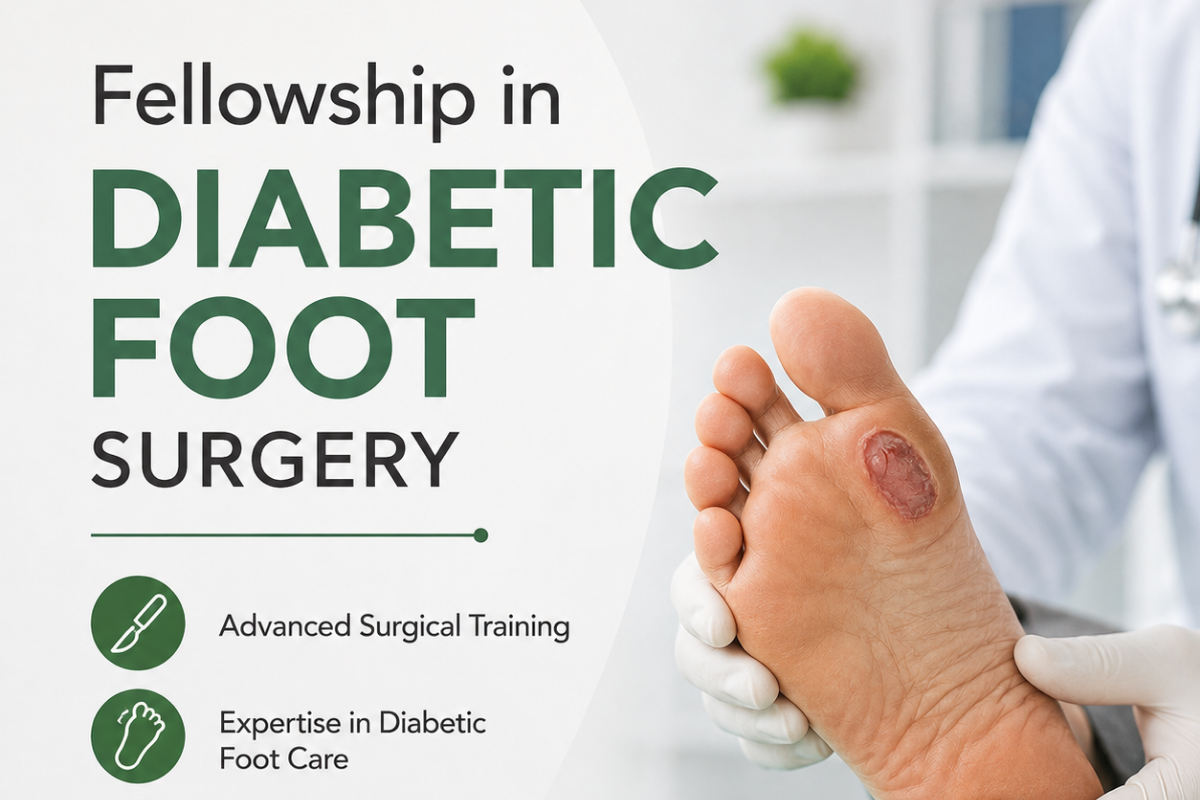
Fellowship in Diabetic Foot Surgery
A structured, hands-on fellowship for surgeons who want to build real competence in limb salvage and diabetic foot surgery.
Key Takeaways
- A structured fellowship built around real case volume, not lectures alone.
- Designed for surgeons and physicians who already hold a postgraduate qualification.
- Covers assessment, wound management, offloading, infection control and operative limb salvage.
- Six months, with a monthly stipend - the fellowship is paid, not self-funded.
What Is the Fellowship Designed to Do?
Most surgeons finish training able to amputate but not able to salvage. The gap is rarely technical skill. It is decision making, knowing which foot can be saved, which infection needs drainage tonight, and when to call the vascular team before operating.
This fellowship exists to close that gap, using a high volume of diabetic foot and chronic wound cases as the teaching material.
Who Should Apply?
- General surgeons, orthopaedic surgeons and plastic surgeons wanting limb salvage competence
- Physicians and diabetologists managing large diabetic foot loads
- Podiatric practitioners with a surgical scope of practice
- Doctors planning to set up a dedicated foot or wound service in their own hospital
What Does the Training Cover?
The programme is built around what actually determines outcomes:
- Assessment: vascular and neurological examination, Doppler interpretation, wound classification and risk grading
- Infection: recognising the foot that needs urgent drainage, antibiotic principles and osteomyelitis management
- Wound management: debridement technique, dressing selection, negative pressure therapy and skin grafting
- Offloading: total contact casting, footwear and the biomechanics that decide whether a healed wound stays healed
- Surgery: drainage procedures, minor and major amputation planning, deformity correction and reconstruction
- Systems: how to build a multidisciplinary pathway when you return to your own hospital
How Is It Different From a Course?
A weekend course teaches you what to do. A fellowship teaches you to decide. Fellows are in clinics and theatre with the team, following patients from first presentation through healing, which is where the judgement actually forms.
What Is the Duration and Fee?
Duration: 6 months.
Fee: ₹50,000, which covers examinations and certification.
Certificate: an Elegance Vidhyalay certificate is awarded on completion.
Monthly stipend: the fellowship is paid, so you are not funding time out of practice.
- General Surgeon and above – ₹50,000 per month
- MBBS – ₹25,000 per month
Start dates and accommodation guidance are confirmed at the time of selection.
How Do I Apply?
Send your curriculum vitae with a short note explaining your current practice and what you want to be able to do at the end. Applications are reviewed individually rather than through fixed intake windows, and shortlisted applicants are invited for a conversation before a place is offered.
If you want a shorter, observation-based exposure instead, see the observership programme.
Frequently Asked Questions
Ready to apply?
Send your curriculum vitae with a short note on your current practice and what you want to be able to do at the end. Applications are reviewed individually.