
Skin & Nail Disorders
Thick Nails
Toenails that have thickened and hardened, pressing down into the nail bed with every step.
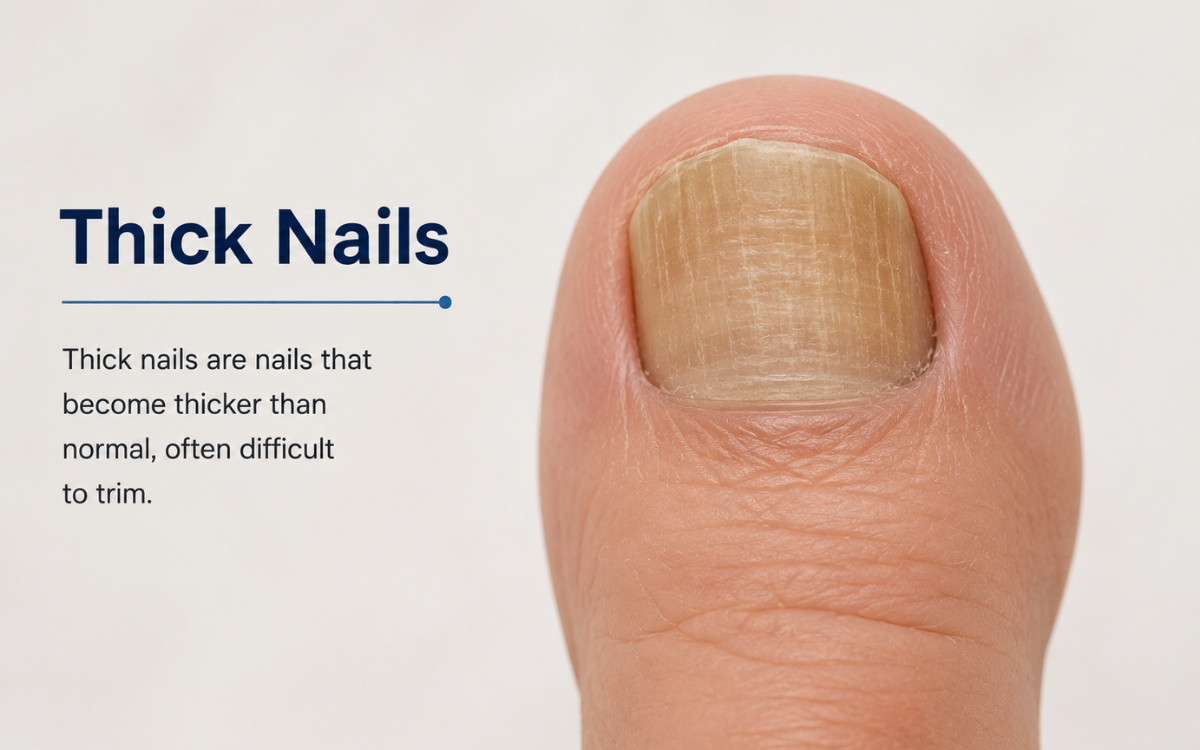
A thickened nail acts like a stone inside your shoe. Pressure passes through it into the skin below, and in a numb foot that pressure quietly creates a wound under the nail.
Key Takeaways
- Thick nails press downward into the nail bed with every step.
- Fungal infection is the commonest cause, followed by repeated minor trauma.
- Ulcers under a thickened nail are hidden and often found late.
- Regular professional reduction is safer and more effective than home cutting.
Why Do Toenails Thicken?
Fungal infection accounts for most cases, changing the nail's structure as it grows. Repeated trauma from footwear does the same over years, and reduced circulation slows normal nail turnover so material accumulates. Age contributes too.
Whatever the cause, the mechanical effect is identical. A thick, rigid plate transmits shoe pressure directly into the soft tissue underneath.
What Problems Do Thick Nails Cause?
- Pressure ulcers forming beneath the nail, hidden from view
- Pain when wearing closed shoes
- Nails that are impossible to cut safely at home
- Ingrowing at the edges as the shape distorts
- Fungal reservoir reinfecting surrounding skin
How Are Thick Nails Treated?
Reduction is the immediate step. The nail is thinned carefully with proper instruments, which relieves pressure straight away and lets us see the nail bed underneath. Notably, this is where hidden wounds are often discovered.
Next, the cause is addressed. Fungal infection is confirmed and treated, since reducing thickness without clearing infection means it simply returns. Where a nail is repeatedly problematic and painful, permanent removal is considered.
Why Not Just Cut Them at Home?
Because thick nails resist ordinary clippers, so people apply force, and force slips. Cuts into the surrounding skin are common, and in a diabetic foot that is a direct route to infection. Professional reduction during a medical pedicure is safer and far more comfortable.
What Does Treatment Cost and How Often Is It Needed?
Reduction is part of routine clinical foot care and is inexpensive. Most patients need it every six to eight weeks, since thickened nails grow back steadily. Antifungal treatment is quoted separately when the cause is confirmed.
quiz Frequently Asked Questions
Not sure what's wrong with your foot?
Send a photo on WhatsApp for an assessment, or book a consultation with Dr. Shah.
This page is for education only and is not a substitute for an in-person diagnosis. Please consult Dr. Ashutosh Shah or a qualified clinician for advice specific to your condition.