
Bone & Joint Disorders
Osteoma
A benign bony growth that creates a hard pressure point under the skin of the foot.
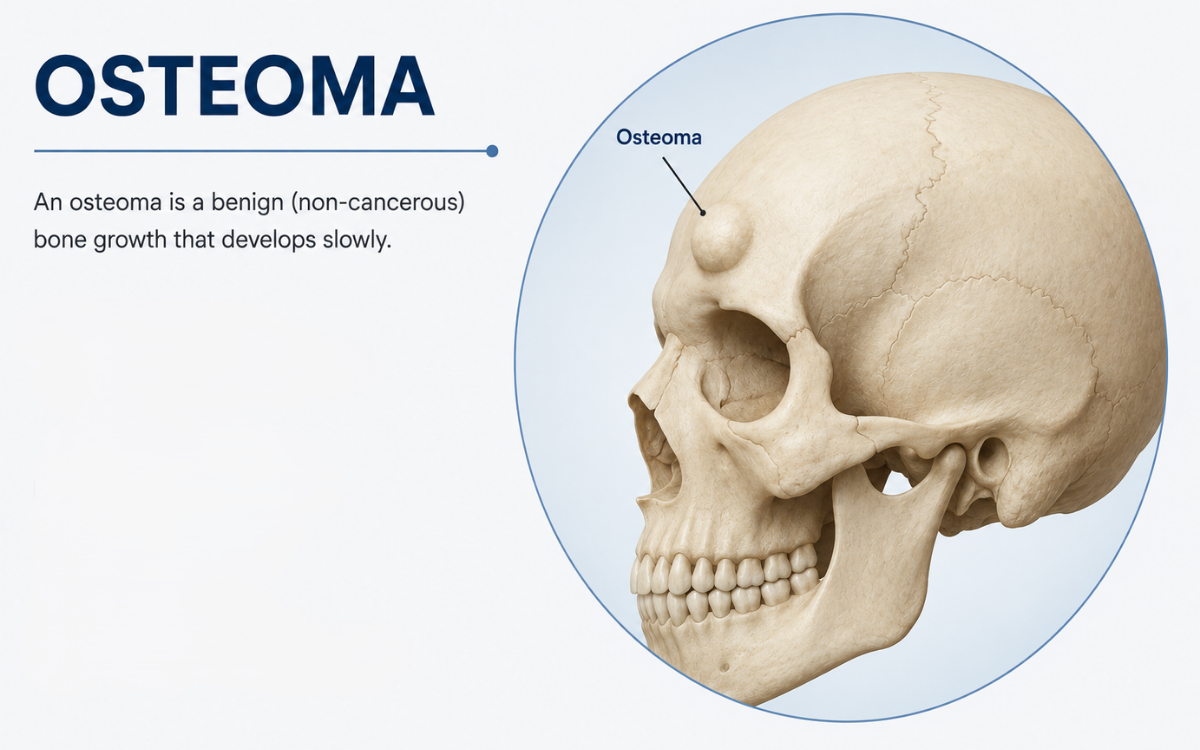
An osteoma is a harmless bone growth in itself. In a diabetic foot, however, any bony prominence pushing against a shoe becomes an ulcer waiting to happen.
Key Takeaways
- An osteoma is a benign bony growth, not a cancer.
- The danger in diabetes comes from pressure, not from the growth itself.
- Skin over a bony prominence thins and breaks down easily, especially when sensation is reduced.
- Treatment is either offloading the prominence or removing it surgically.
What Is an Osteoma?
Osteoma: a benign overgrowth of bone that forms a firm, fixed lump, most often on the top or side of the foot.
It grows slowly and does not spread. In a foot with normal sensation, an osteoma usually causes only discomfort in tight shoes. In a diabetic foot, the picture changes, since the skin stretched over that lump is under constant pressure and cannot signal distress.
How Do You Recognise It?
- A hard, fixed lump that does not move under the skin
- Callus forming directly over the lump
- Redness after wearing shoes, particularly closed footwear
- Difficulty finding shoes that do not rub that spot
- Occasionally an ulcer appearing exactly over the prominence
How Is It Treated?
Where the lump is small and shoes can be adapted, offloading solves the problem. Roomy footwear, padding and a custom insole take pressure off, and callus is reduced regularly through clinical foot care.
Where an ulcer keeps forming over the bone, removing the prominence is the definitive answer. Exostectomy is a small procedure, and once the bump is gone the pressure point disappears with it.
What Does Treatment Cost?
Offloading with footwear and insoles is the lower cost route and suits most patients. Surgical removal costs more upfront yet ends the problem permanently, which usually works out cheaper than treating recurring ulcers. Costs are confirmed after examination and imaging.
What Recovery Should You Expect After Surgery?
Most patients walk in protective footwear within a few days and return to normal shoes in a few weeks. Because the underlying cause has been removed, the skin over that area stops breaking down.
quiz Frequently Asked Questions
Not sure what's wrong with your foot?
Send a photo on WhatsApp for an assessment, or book a consultation with Dr. Shah.
This page is for education only and is not a substitute for an in-person diagnosis. Please consult Dr. Ashutosh Shah or a qualified clinician for advice specific to your condition.