
Bone & Joint Disorders
Foot Instability
A foot that feels unsteady, gives way or rolls, often after nerve damage or joint collapse.
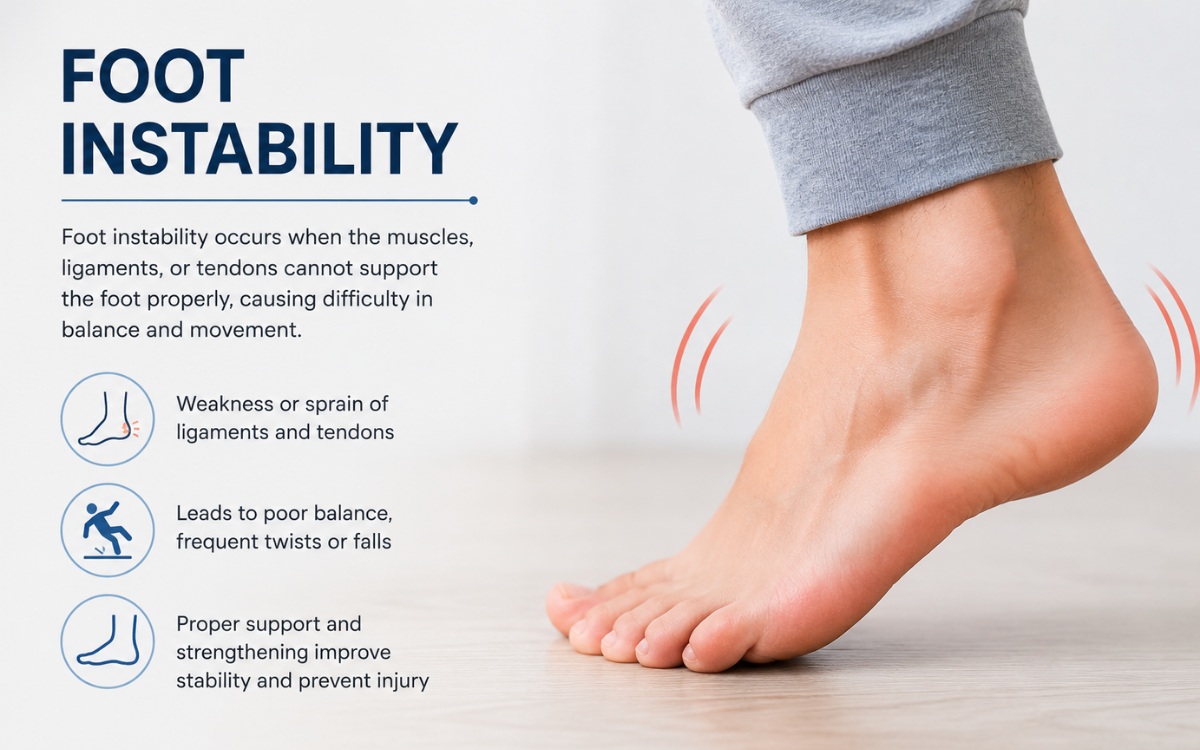
Instability changes how load passes through the foot with every step. It raises fall risk and concentrates pressure unpredictably, which is why unstable diabetic feet ulcerate more often.
Key Takeaways
- Instability comes from muscle weakness, joint damage or lost position sense.
- Diabetic nerve damage removes the body's sense of where the foot is in space.
- Unstable feet fall more often and ulcerate more often.
- Bracing, strengthening and correct footwear restore control in most patients.
Why Does a Diabetic Foot Become Unstable?
Three things usually combine. Nerve damage removes position sense, so the brain no longer knows precisely where the foot is. Motor nerve damage weakens the small muscles that fine tune balance. Finally, joint damage from Charcot changes or arthritis alters the mechanical structure itself.
As a result, patients describe the ankle giving way, feeling wobbly on uneven ground, or needing to watch the floor while walking.
What Are the Consequences?
- Falls, which are a leading cause of fracture in older diabetic patients
- Unpredictable pressure points, causing ulcers in unusual places
- Reduced walking, which worsens sugar control and circulation
- Loss of confidence, leading many patients to stay indoors
How Is Foot Instability Treated?
Assessment comes first, separating muscle weakness from joint damage from sensory loss, since each needs different treatment. Ankle foot orthoses and braces provide external stability where muscles cannot. Meanwhile, targeted strengthening and balance work rebuild what can be rebuilt.
Footwear matters enormously here. A firm heel counter and a stable sole do more for balance than most patients expect, and both are fitted through our footwear and orthotic service.
What Does Treatment Cost?
An ankle foot orthosis is a one time cost, usually modest against the cost of a fall. Physiotherapy is charged per session, often as a short course. Everything is priced before it begins.
What Improvement Is Realistic?
Most patients regain confident walking with a brace and correct shoes, even when the underlying nerve damage is permanent. Balance training genuinely helps, though it works best alongside external support rather than instead of it.
quiz Frequently Asked Questions
Not sure what's wrong with your foot?
Send a photo on WhatsApp for an assessment, or book a consultation with Dr. Shah.
This page is for education only and is not a substitute for an in-person diagnosis. Please consult Dr. Ashutosh Shah or a qualified clinician for advice specific to your condition.