
Skin & Nail Disorders
Brittle Nails
Nails that split, flake and crumble, leaving sharp edges that can cut the neighbouring toe.
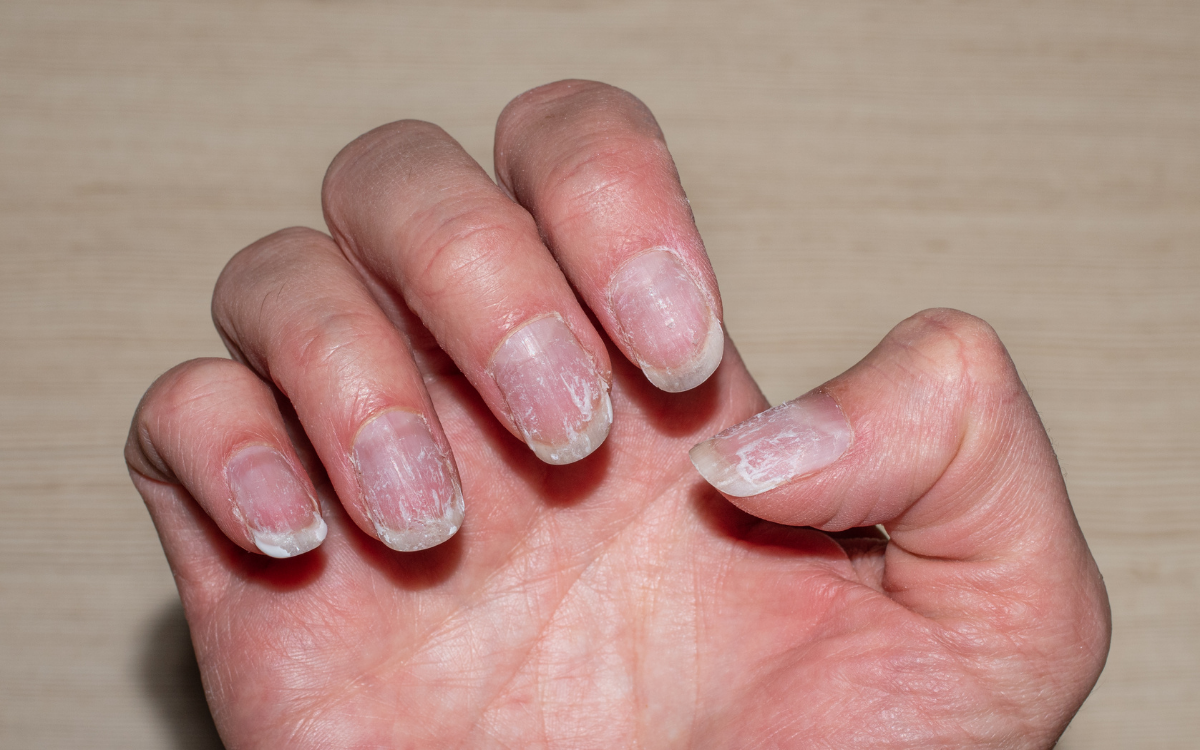
Brittle nails seem harmless until a jagged edge scratches the toe beside it. In a diabetic foot, that small scratch is an entry point, which is why nail quality matters here.
Key Takeaways
- Brittle nails split and crumble, creating sharp edges that injure neighbouring skin.
- Fungal infection, poor circulation and nutritional deficiency are the usual causes.
- Filing rather than clipping keeps edges smooth and prevents splitting further.
- Improving the cause takes months, because nails grow slowly.
What Makes Toenails Brittle?
Several factors combine in diabetes. Reduced circulation limits the nutrients reaching the nail matrix. Fungal infection disrupts nail structure directly. Deficiencies in iron, biotin or protein weaken the plate as it forms. Additionally, repeated wetting and drying, common in humid weather, makes nails flake.
Why Do Brittle Nails Matter in a Diabetic Foot?
Because of the edges they leave. A split nail forms a sharp point that presses or scratches the adjacent toe with every step. Given numbness, that scratch goes unnoticed, and the resulting break in the skin becomes an infection site.
Moreover, brittle nails are harder to trim safely, which leads to rough home cutting and further injury.
How Are Brittle Nails Managed?
- Filing rather than clipping, which avoids shattering the plate
- Keeping nails at a moderate length to reduce leverage on the edges
- Moisturising the nail and surrounding skin daily
- Testing for and correcting nutritional deficiency
- Treating fungal infection where confirmed
How Long Before Nails Improve?
Toenails grow slowly, roughly one to two millimetres a month, so a completely new nail takes nine to twelve months. Consequently, improvement in nail quality appears gradually from the base upward, and patience is genuinely required.
Meanwhile, regular reduction through clinical foot care keeps edges smooth so no damage occurs while the new nail grows.
What Does Treatment Cost?
Routine nail care is inexpensive and included in a medical pedicure session. Blood tests for deficiency and antifungal treatment, where needed, are priced separately and explained before being started.
Daily Nail Care That Genuinely Helps
Apply moisturiser to the nail and the skin around it each evening, since hydration reduces splitting more than any supplement. Keep nails at a moderate length so the edges take less leverage.
Wear cotton socks, dry your feet thoroughly after washing, and avoid nail hardeners containing formaldehyde, which make brittle nails worse over time. Small habits carried out consistently improve nail quality far more than occasional intensive treatment.
quiz Frequently Asked Questions
Not sure what's wrong with your foot?
Send a photo on WhatsApp for an assessment, or book a consultation with Dr. Shah.
This page is for education only and is not a substitute for an in-person diagnosis. Please consult Dr. Ashutosh Shah or a qualified clinician for advice specific to your condition.