
Non-Diabetic Ulcer Clinic
Pyoderma Gangrenosum
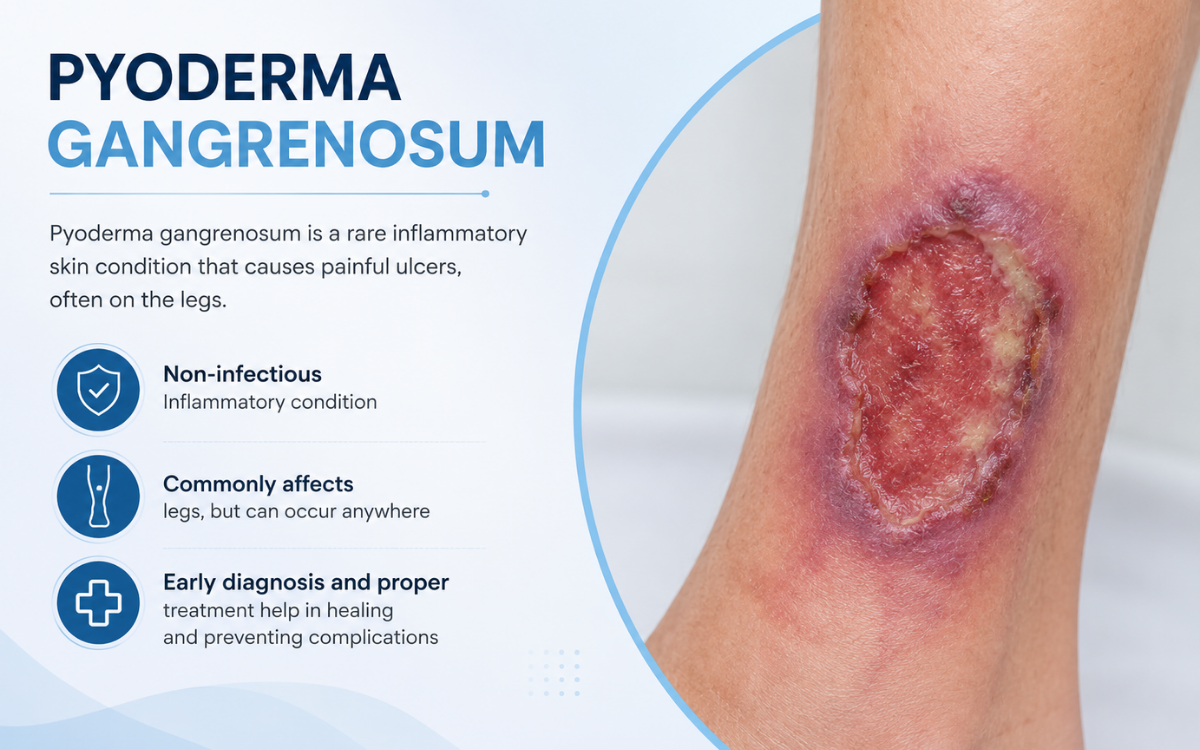
Pyoderma gangrenosum is a rare immune ulcer that enlarges with frightening speed and worsens if operated on. Recognising it early spares patients months of wrong treatment.
Pyoderma gangrenosum is a rare, immune-driven ulcer that grows rapidly with violet, undermined edges and severe pain. It worsens with surgery, so treatment relies on immune-suppressing medicines plus gentle wound care.
What Is Pyoderma Gangrenosum?
Pyoderma gangrenosum is not an infection despite its name. It is an immune system malfunction in which the body attacks its own skin, punching out painful ulcers that can enlarge within days. It often accompanies conditions such as inflammatory bowel disease or arthritis, and it is frequently mistaken for an infected wound or spider bite.
Pathergy: the tendency of pyoderma gangrenosum to worsen at sites of injury, including surgical debridement.
How Do You Recognise It?
- A small pustule or bump that ulcerates and spreads within days
- Violet, ragged, undermined wound edges
- Pain far more severe than the wound size suggests
- Worsening after cleaning, cutting or debriding the wound
How Does EDFC Treat It?
The critical decision is what not to do: aggressive surgery makes it worse through pathergy. Instead, treatment uses immune-controlling medicines, prescribed with physician colleagues, alongside gentle, non-traumatic wound care. As the immune attack switches off, these dramatic ulcers calm and close. Any associated bowel or joint disease is treated in parallel.
Cost and Urgency in Surat
Medicine-based treatment costs are explained clearly, and wound care visits remain affordable. Because days matter with a fast-growing ulcer, seek assessment immediately if a wound is enlarging rapidly with violet edges and severe pain.
quiz Frequently Asked Questions
Have an ulcer that won't heal?
Send a photo on WhatsApp for an assessment, or book a consultation with Dr. Shah.
This page is for education only and is not a substitute for an in-person diagnosis. Please consult Dr. Ashutosh Shah or a qualified clinician for advice specific to your condition.