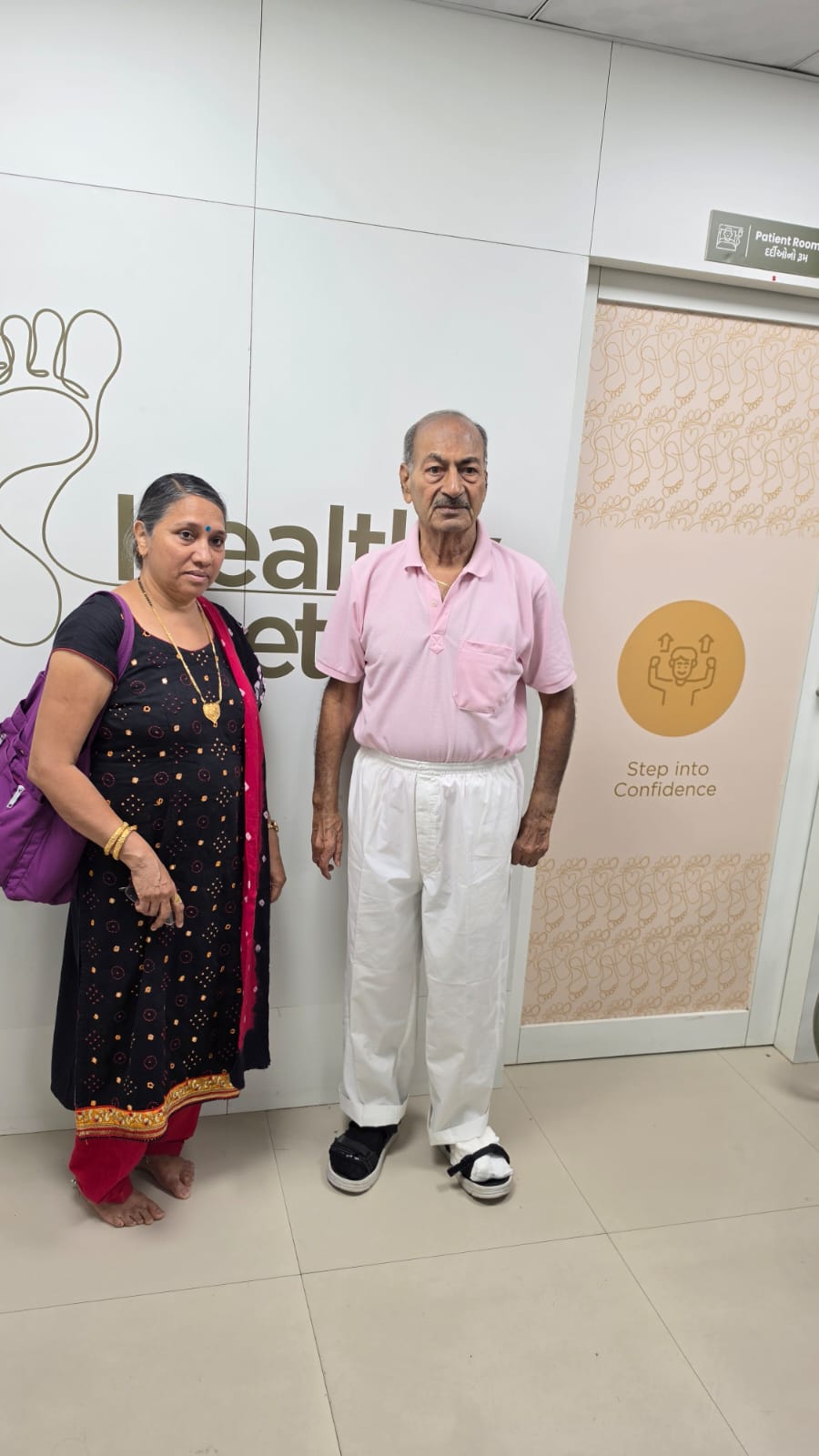

A complex diabetic foot wound with exposed bone or tendon was covered with a peroneus muscle flap by Dr. Ashutosh Shah at EDFC Surat. The post-operative video shows the patient walking comfortably.
In short: This patient came to Elegance Diabetic Foot & Ulcer Clinic (EDFC), Surat, with a complex diabetic foot wound with significant tissue loss and exposed bone or tendon. Dr. Ashutosh Shah, plastic surgeon and diabetic foot specialist, covered the wound with a peroneus muscle flap. The post-operative video shows the patient walking comfortably, with the foot preserved.
Presentation
The patient had a complex diabetic foot wound with significant tissue loss, leaving deeper structures such as bone or tendon exposed. In wounds like this, simple dressings are not enough to heal the wound, and the foot is at risk of infection and amputation.
Treatment at EDFC
- Assessment: Dr. Ashutosh Shah examined the wound and planned the right way to cover the exposed structures.
- Peroneus muscle flap: healthy, well-vascularised muscle from the lower leg was used to cover the defect, as part of our wound reconstruction and limb salvage surgery services.
- Post-operative care and off-loading: the flap was monitored and dressed carefully, and pressure was kept off the foot with off-loading support.
- Early mobilisation: walking was started step by step once the flap had settled.
Outcome
The flap restored soft-tissue cover over the exposed structures and improved the local blood supply, supporting healing and infection control. The post-operative video shows the patient walking comfortably, reflecting a preserved foot, good function and early return to mobility.
Why a muscle flap helps in diabetic foot wounds
A muscle flap brings healthy tissue with a rich blood supply to a wound that cannot heal on its own. This helps control infection, protects exposed bone or tendon and creates good conditions for healing. Combined with timely surgery, post-operative care and off-loading, it is an important part of the Save My Foot Program to help avoid amputation.
Questions about peroneus flap surgery for diabetic foot
What is a peroneus flap?
A peroneus flap uses a muscle from the outer side of the lower leg, with its own blood supply, to cover a deep wound around the ankle, heel or foot.
When does a diabetic foot wound need a muscle flap?
A muscle flap is considered when a wound has significant tissue loss with exposed bone or tendon and dressings alone cannot heal it. The surgeon decides after examining the wound and its blood supply.
How is a peroneus flap different from a sural flap?
A peroneus flap uses muscle, while a sural flap mainly uses skin and the tissue under it from the back of the leg. The choice depends on the wound's size, depth, location and blood supply.
Can a patient walk after peroneus flap surgery?
Yes, many patients walk again once the flap has settled, with off-loading and a gradual return to walking as advised by the surgeon. Recovery time is different for each patient.
Medically reviewed by Dr. Ashutosh Shah, plastic surgeon and diabetic foot specialist, Elegance Diabetic Foot & Ulcer Clinic, Surat.
Have a foot wound that is not healing? Book a consultation with Dr. Ashutosh Shah, or read Alkeshbhai's sural flap story.
Every patient is different. Results depend on the condition, its stage and overall health. Shared with the patient's consent. If you have a diabetic foot wound, please have it assessed in person. Send a photo on WhatsApp or book a consultation.