
Skin & Nail Disorders
Pincer Nails
A toenail that curves inward sharply from side to side, pinching the skin beneath it.
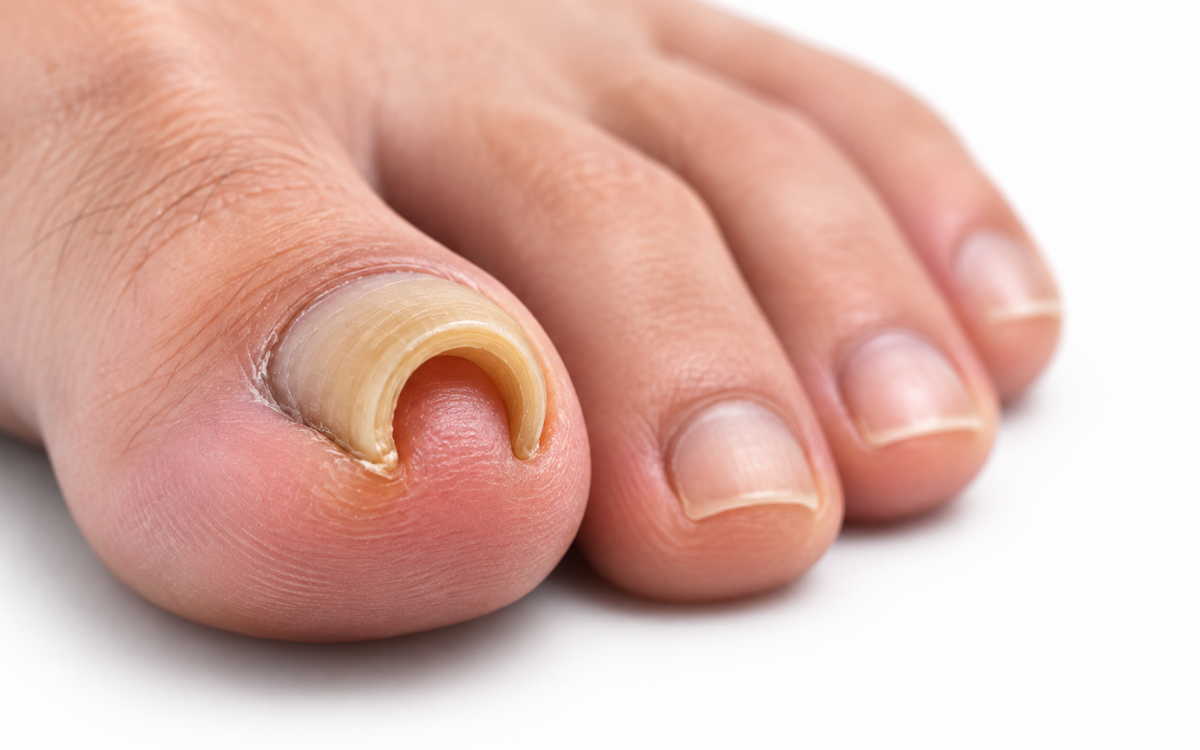
A pincer nail folds in on itself as it grows, squeezing the nail bed underneath. It causes real pain even in numb feet, and in diabetes the pinched skin can break down.
Key Takeaways
- Pincer nails curve inward across their width, trapping the nail bed underneath.
- The curve usually worsens toward the tip of the nail.
- Trimming alone gives temporary relief because the curve simply regrows.
- Correction involves reshaping, bracing or removing the nail edge permanently.
What Is a Pincer Nail?
Pincer nail: a toenail with excessive transverse curvature, which pinches the nail bed and soft tissue as it grows forward.
Viewed end on, the nail looks like a tube rather than a flat plate. The two edges dig downward and inward, compressing the skin between them. Consequently, patients feel pressure and pain even when general foot sensation is reduced.
What Causes It?
- Genetic nail shape, which runs in families
- Long standing pressure from narrow footwear
- Fungal nail infection thickening and distorting the plate
- Bone changes underneath the nail bed
- Certain medications affecting nail growth
Why Does It Matter in Diabetes?
Because the pinched skin can break down into a wound hidden beneath the nail. That wound sits in a warm enclosed space, which suits bacteria perfectly. Furthermore, patients often attempt to dig out the edges at home, and in a diabetic foot that frequently starts an infection.
How Is It Treated?
Conservative care reduces the thickness and relieves pressure, giving genuine relief for many months. Nail bracing applies gentle outward tension across the plate, gradually flattening the curve over several months without surgery.
Where pain and wounds keep returning, permanent narrowing of the nail is the definitive answer. The offending edge is removed along with its growth cells, so it does not grow back curved. It is a small procedure done under local anaesthetic, with careful attention to circulation beforehand.
What Does Treatment Cost and How Long Until Relief?
Routine reduction during a medical pedicure is inexpensive and gives relief the same day. Bracing costs more and works gradually across months. Surgical correction is a modest day procedure, quoted after assessment, and it solves the problem permanently.
quiz Frequently Asked Questions
Not sure what's wrong with your foot?
Send a photo on WhatsApp for an assessment, or book a consultation with Dr. Shah.
This page is for education only and is not a substitute for an in-person diagnosis. Please consult Dr. Ashutosh Shah or a qualified clinician for advice specific to your condition.