
Bone & Joint Disorders
Hammer Toe / Claw Toe
Hammer and claw toes are deformities where the toes bend abnormally at the joints, creating pressure points on the tips and tops of the toes that can ulcerate in diabetic feet.
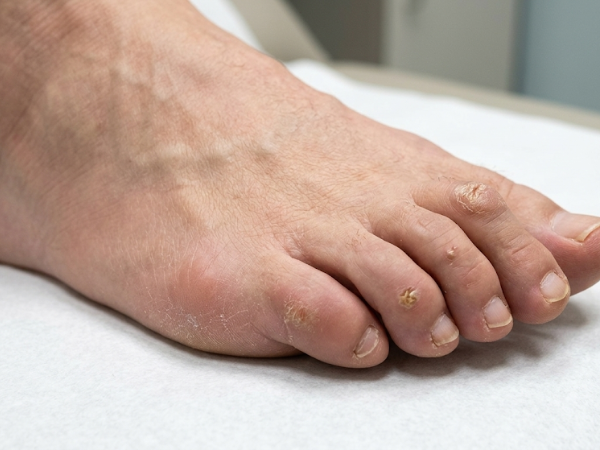
Hammer Toe Treatment in India
A hammer toe is a toe that bends abnormally at the middle joint, curling downward and creating pressure points on the top of the toe and the ball of the foot. At EDFC, hammer toes are managed with footwear and orthotics, and corrected surgically when they cause pain or threaten a diabetic foot with ulcers.
What is a hammer toe?
A hammer toe occurs when the muscles and tendons around a toe become imbalanced, pulling the middle joint into a bent, claw-like position. The raised knuckle then rubs against shoes, and the tip presses into the ground, both becoming corns or calluses, and in a diabetic foot, potential ulcer sites. Early on the toe is still flexible; over time it can stiffen into a fixed deformity.
Signs to watch for
- One or more toes bent downward at the middle joint
- A corn or callus on top of the bent toe
- Hard skin or an ulcer at the tip of the toe
- Pain or rubbing inside shoes
- Toes that no longer straighten easily
When to see a doctor in India: if you have diabetes, a hammer toe with hard skin or a sore needs review, those pressure points can ulcerate. Treating it early, while the toe is flexible, gives more options.
Why they form
Muscle and tendon imbalance is the core cause, often worsened by tight or short footwear and sometimes linked to nerve problems or other deformities like bunions. Diabetic nerve changes can contribute to the imbalance.
How EDFC treats a hammer toe
- Footwear advice, deeper, roomier shoes to reduce rubbing.
- Orthotics & padding, devices to offload the toe and ball of the foot.
- Skin care, managing corns and calluses safely.
- Surgery, deformity correction for fixed or ulcer-prone toes.
Browse all services or book a consultation.
quiz Frequently Asked Questions
Not sure what's wrong with your foot?
Send a photo on WhatsApp for an assessment, or book a consultation with Dr. Shah.
This page is for education only and is not a substitute for an in-person diagnosis. Please consult Dr. Ashutosh Shah or a qualified clinician for advice specific to your condition.