
Bone & Joint Disorders
Gastrosoleus Tightness
Tightness in the calf muscles that restricts ankle movement and overloads the front of the foot.
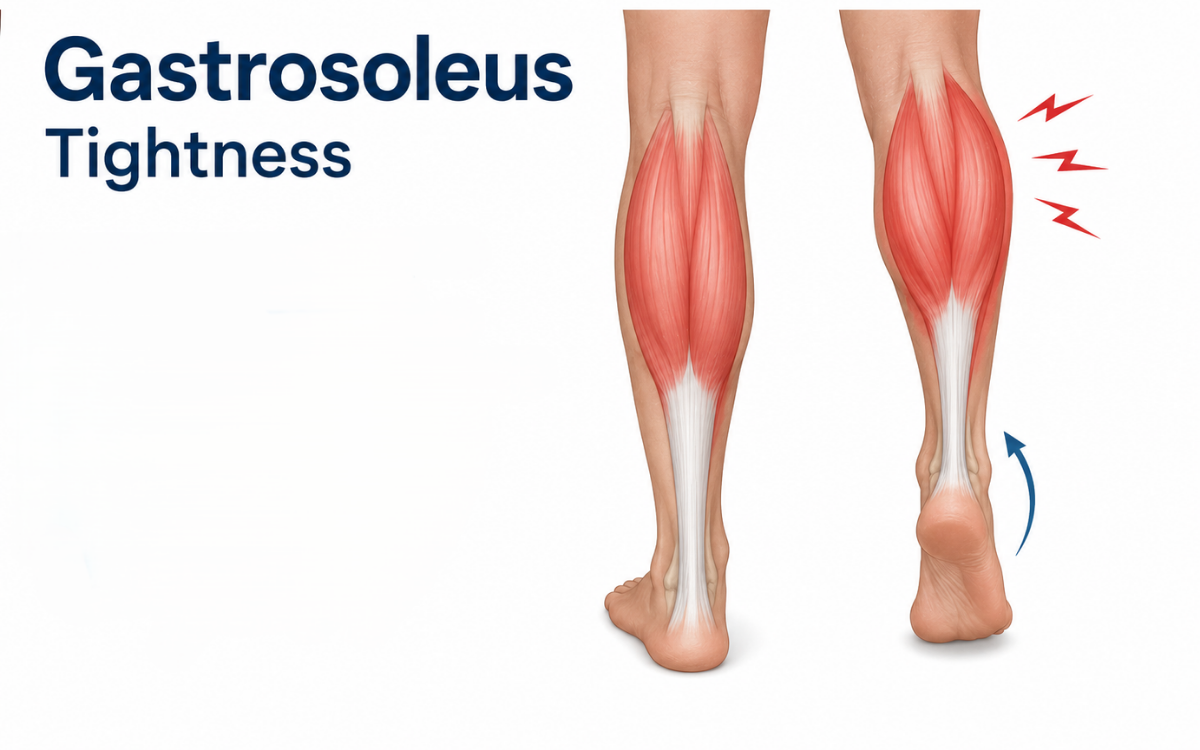
The gastrocnemius and soleus muscles form the calf and connect into the Achilles tendon. When they tighten, ankle movement reduces, and the forefoot pays the price during every step.
Key Takeaways
- The gastrocnemius and soleus muscles control how far your ankle can bend upward.
- Tightness here is extremely common in long standing diabetes.
- The result is high forefoot pressure and repeated ulcers under the ball of the foot.
- Testing takes seconds and changes the treatment plan significantly.
What Is Gastrosoleus Tightness?
Both calf muscles feed into the Achilles tendon. When they shorten, the ankle cannot flex upward properly. Since walking requires that upward movement, the body compensates by lifting the heel sooner, which drives load onto the forefoot.
Importantly, the gastrocnemius crosses the knee while the soleus does not, which is why testing is done with the knee both straight and bent. That distinction determines which treatment works.
Why Does It Cause Ulcers?
Because pressure has to go somewhere. Studies of diabetic feet consistently link restricted ankle movement with raised forefoot pressure and with ulcers under the metatarsal heads. In our Surat clinic, patients with recurring forefoot wounds very frequently turn out to have significant calf tightness that nobody had tested.
How Is It Treated?
- Daily calf stretching, both knee straight and knee bent versions
- Night splints to hold a gentle stretch during sleep
- Rocker sole footwear that compensates for restricted ankle movement
- Gastrocnemius recession surgery where tightness sits mainly in that muscle
- Achilles lengthening where both muscles are involved
How Long Does Stretching Take to Work?
Realistically, three to six months of consistent daily stretching produces measurable change. Many patients give up before then, which is why we set the expectation clearly at the start and recheck the measurement rather than relying on impressions.
What Does Treatment Cost?
Stretching costs nothing beyond the consultation that teaches it correctly. Night splints and rocker sole footwear are modest one time costs. Surgical release is quoted after assessment, and it is usually reserved for feet with recurring ulceration where offloading alone has not been enough.
quiz Frequently Asked Questions
Not sure what's wrong with your foot?
Send a photo on WhatsApp for an assessment, or book a consultation with Dr. Shah.
This page is for education only and is not a substitute for an in-person diagnosis. Please consult Dr. Ashutosh Shah or a qualified clinician for advice specific to your condition.