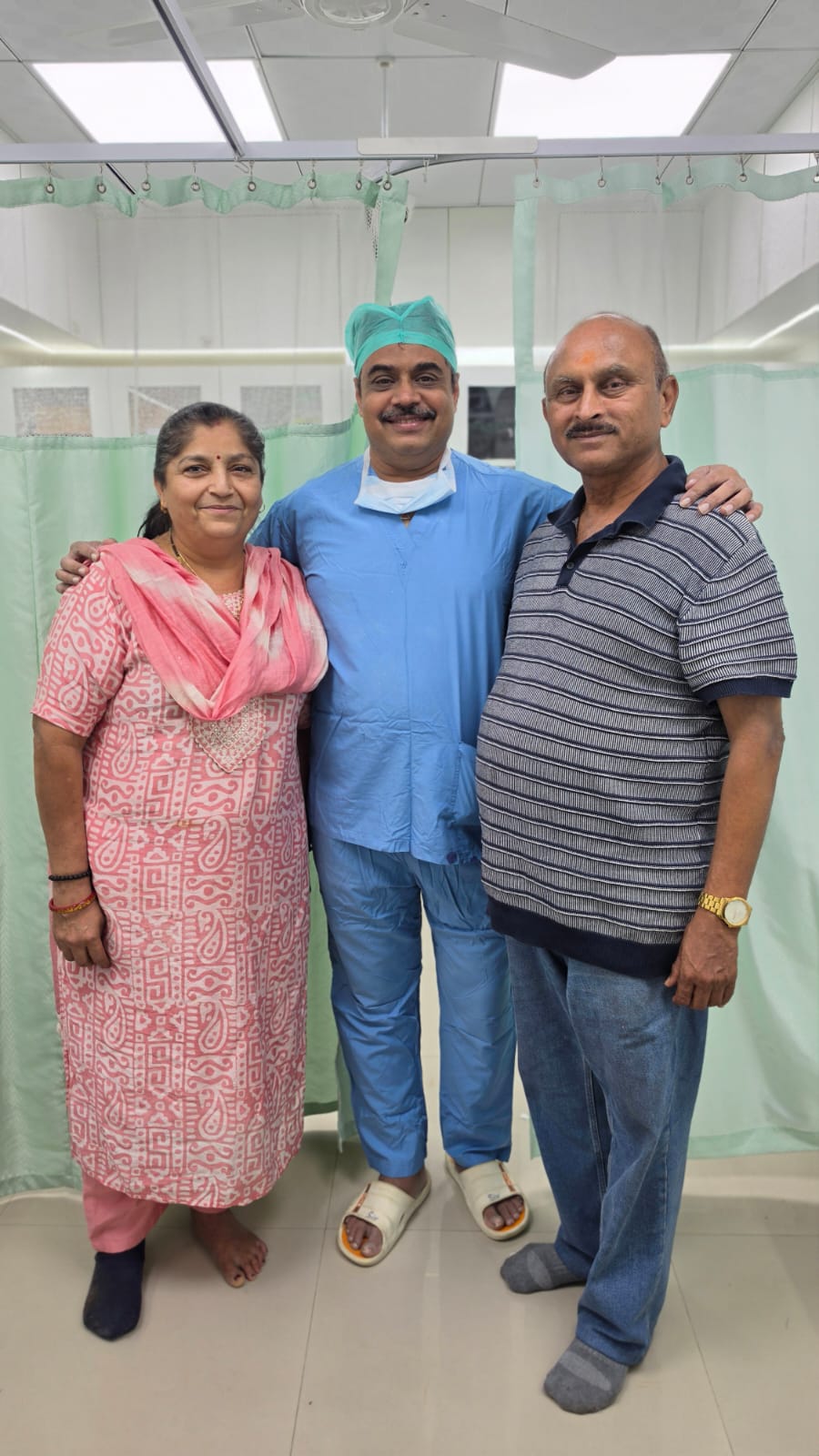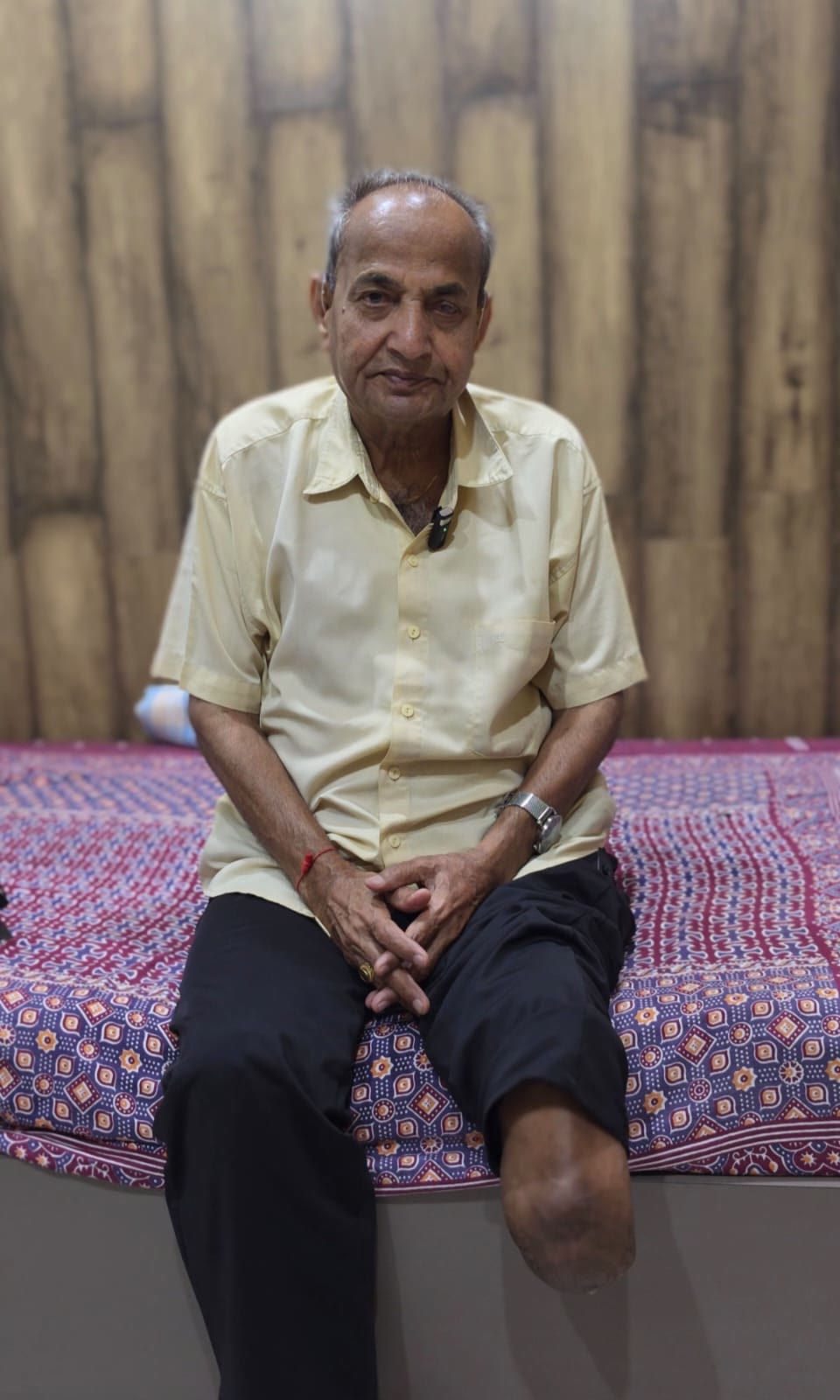
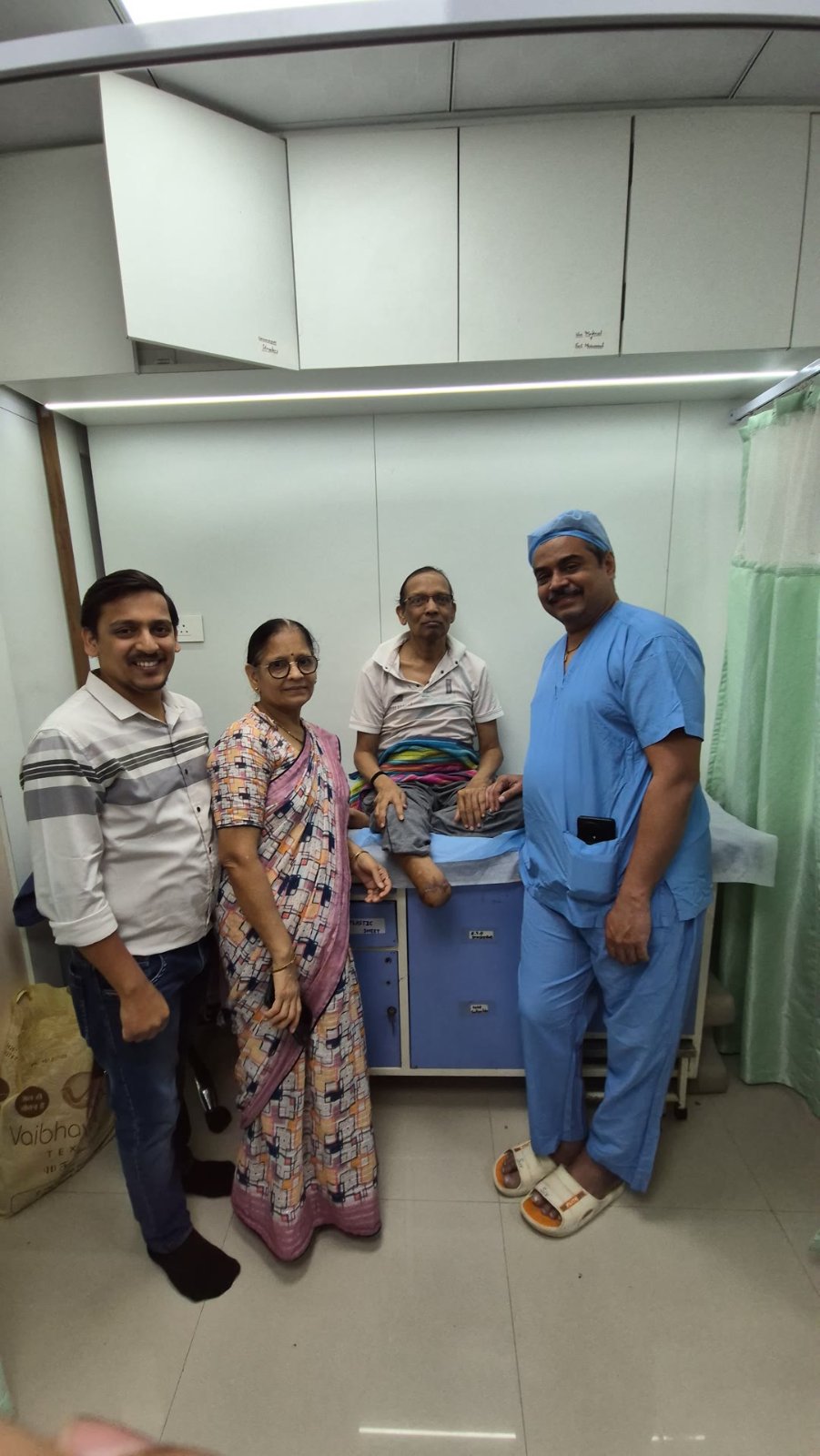
Dayalal Bafna needed a below-knee amputation for a severe diabetic foot condition. Dr. Ashutosh Shah performed it to control infection and preserve limb length, and he recovered well with rehabilitation guidance.
In short: Dayalal Bafna came to Elegance Diabetic Foot & Ulcer Clinic (EDFC), Surat, with a severe diabetic foot condition. To control the infection and protect his health, Dr. Ashutosh Shah, plastic surgeon and diabetic foot specialist, performed a below-knee (BK) amputation, planned to keep as much limb length as possible. With careful post-operative care and guidance for prosthetic rehabilitation, he recovered well and was happy with his treatment.
Presentation
Dayalal Bafna had a severe diabetic foot infection with tissue damage that could no longer be controlled by wound care or limb-saving surgery. When infection spreads this far, it can threaten the patient's overall health, including the risk of sepsis.
Treatment at EDFC
- Assessment and counselling: Dr. Ashutosh Shah assessed the foot and explained to Dayalal Bafna and his family why surgery was needed and what to expect.
- Below-knee amputation: the amputation was carried out with meticulous care to remove the source of infection while preserving maximum limb length below the knee.
- Post-operative wound care: the surgical wound was dressed and monitored at regular follow-ups until it healed.
- Rehabilitation guidance: he was guided through the next steps for prosthetic fitting and rehabilitation.
Outcome
The surgery controlled the infection and Dayalal Bafna recovered well. He shared his satisfaction with the overall treatment, and his feedback reflects his confidence in the surgical care, counselling and continuous support he received throughout his treatment.
Why preserving limb length matters
At EDFC, every effort is made to save the foot first through wound care and limb salvage surgery. When amputation becomes unavoidable, keeping as much of the leg below the knee as possible gives better balance, easier movement and a better fit for an artificial limb, which helps the patient return to walking and daily activities.
Questions about below-knee amputation in diabetic foot
When is a below-knee amputation needed in diabetic foot?
It is considered when a severe infection, gangrene or tissue damage spreads deep into the foot and cannot be controlled by debridement or reconstruction, and the infection puts the patient's health at risk.
Why is limb length important in a below-knee amputation?
A longer remaining limb below the knee usually gives better balance and control, and makes it easier to fit and use an artificial limb.
Can a person walk again after a below-knee amputation?
Many patients walk again with an artificial limb after the wound heals and they complete rehabilitation. Progress depends on healing, overall health and regular practice.
What happens after below-knee amputation surgery?
The wound is dressed and checked at follow-up visits until it heals. The patient is then guided through limb shaping, prosthetic fitting and physiotherapy to regain independent walking.
Medically reviewed by Dr. Ashutosh Shah, plastic surgeon and diabetic foot specialist, Elegance Diabetic Foot & Ulcer Clinic, Surat.
Have a foot wound that is not healing? Book a consultation with Dr. Ashutosh Shah early, before it becomes severe, or read Prabhubhai's debridement story.
Every patient is different. Results depend on the condition, its stage and overall health. Shared with the patient's consent. If you have a diabetic foot wound, please have it assessed in person. Send a photo on WhatsApp or book a consultation.