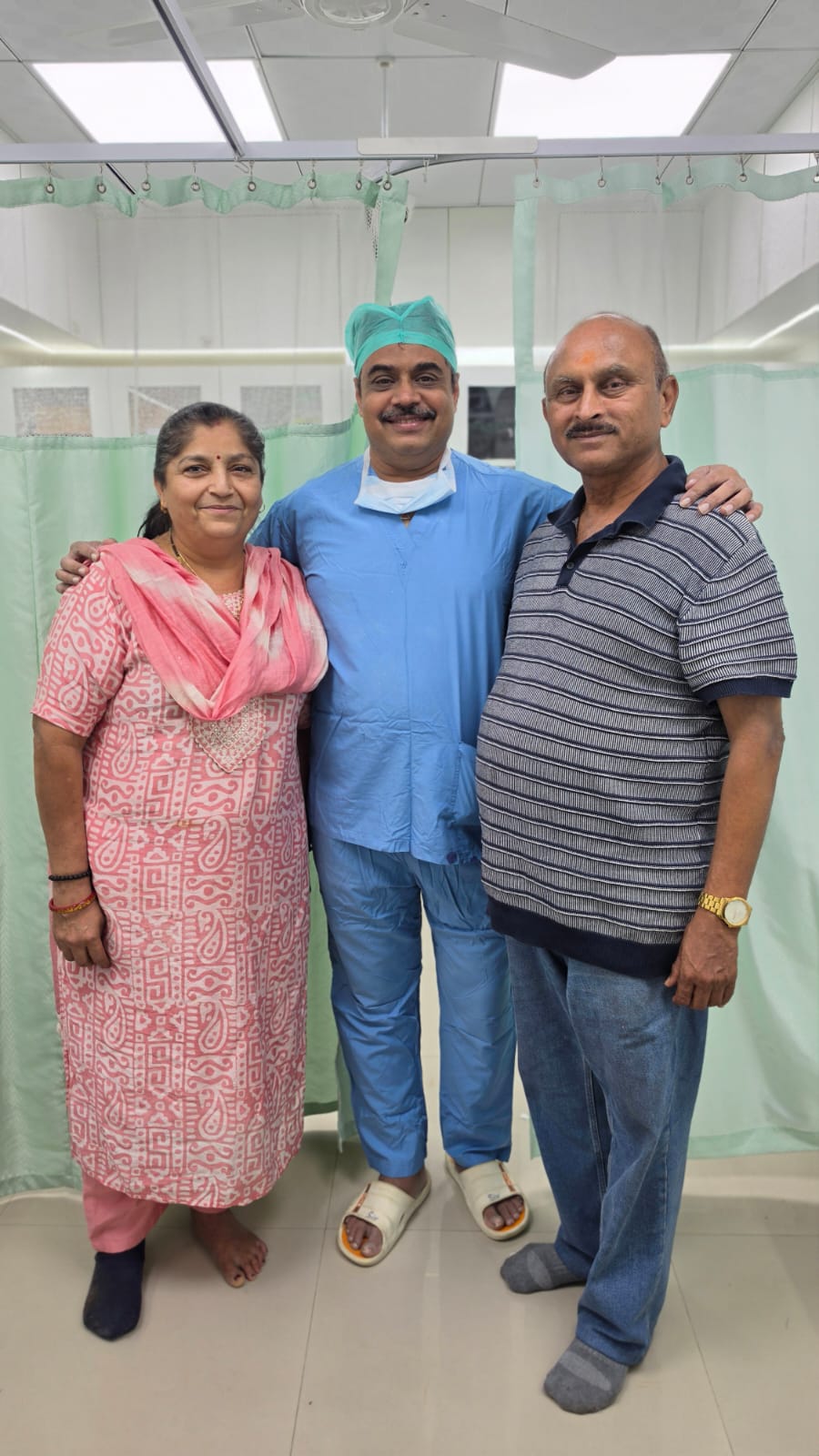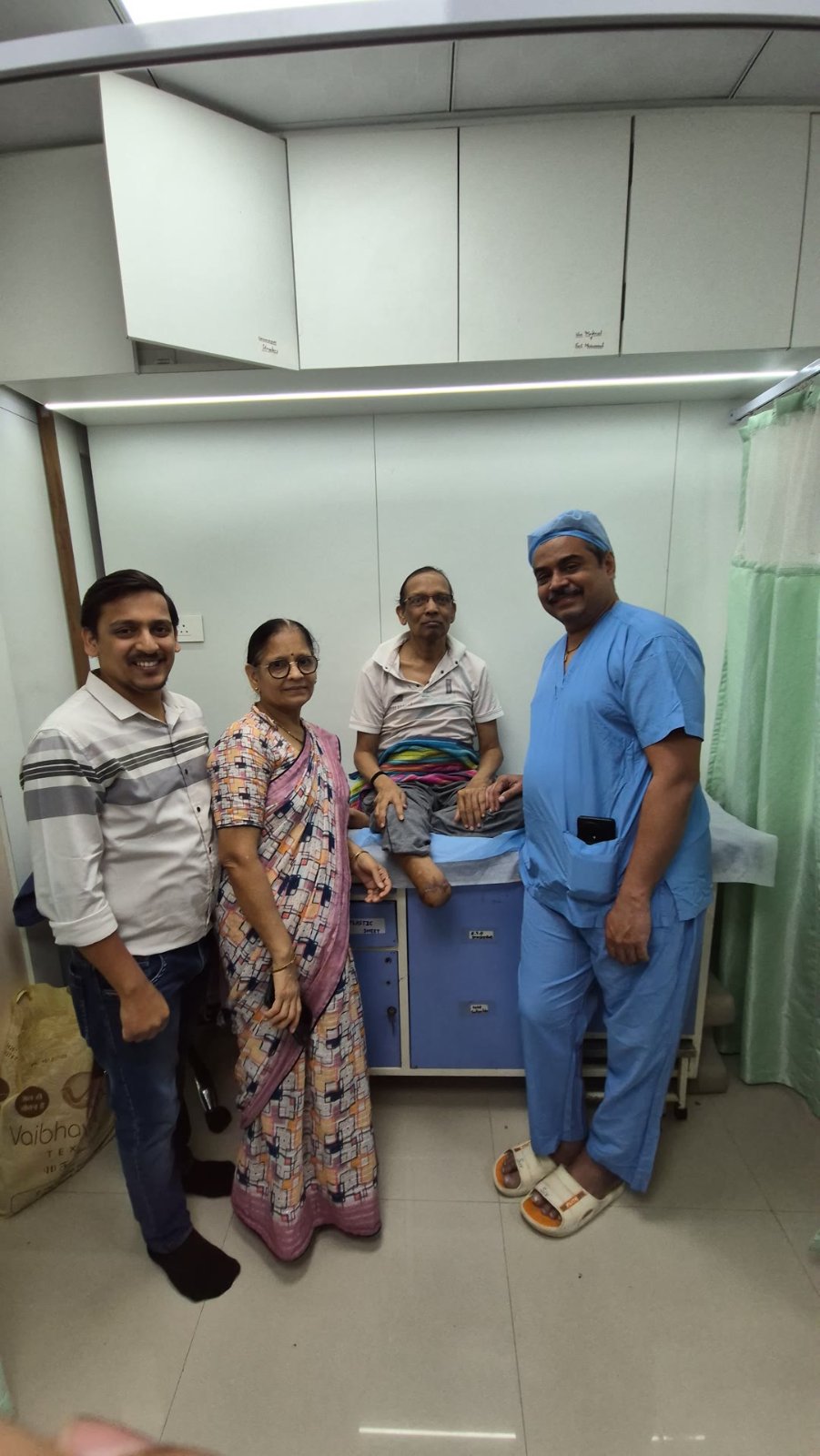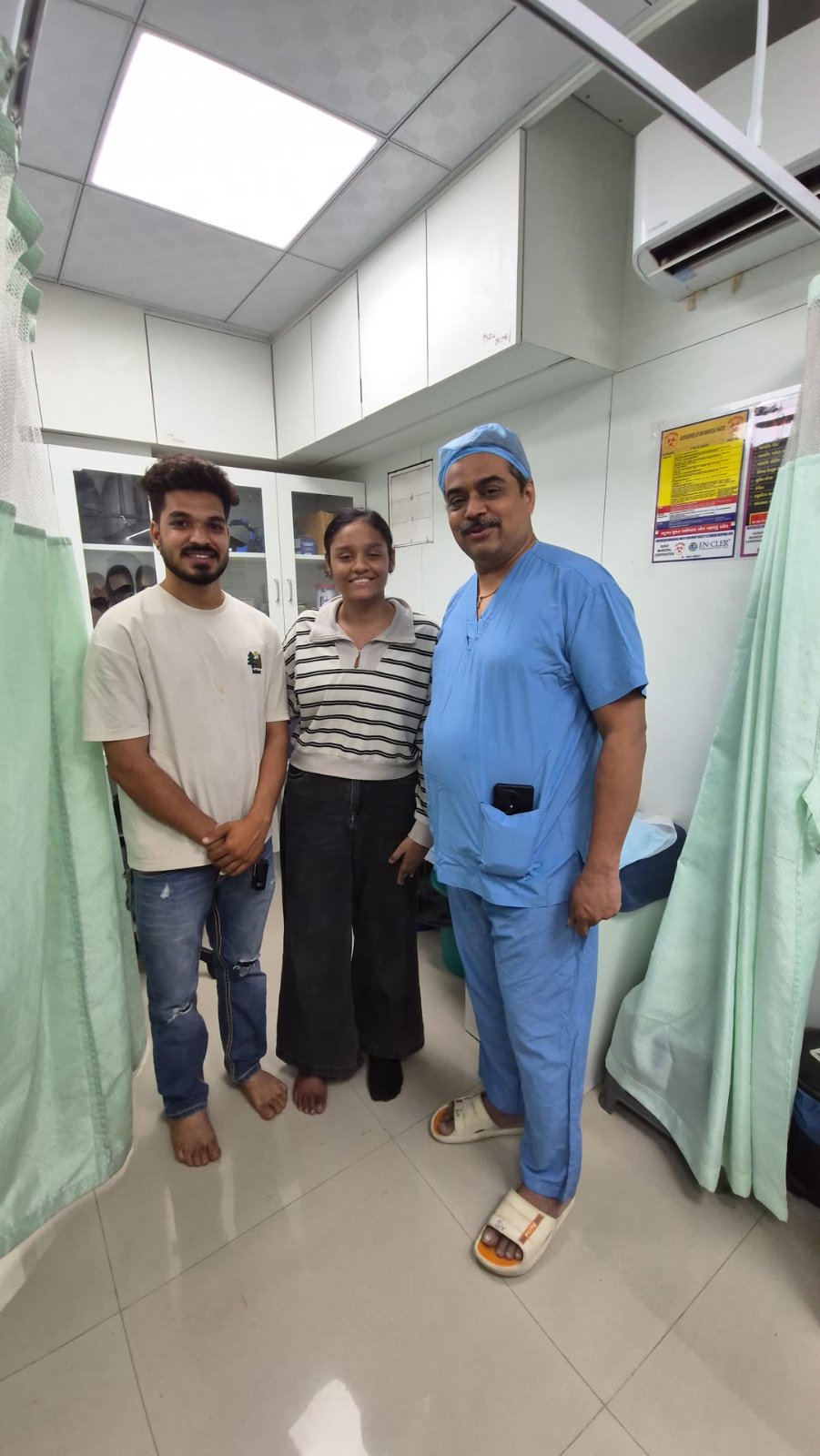
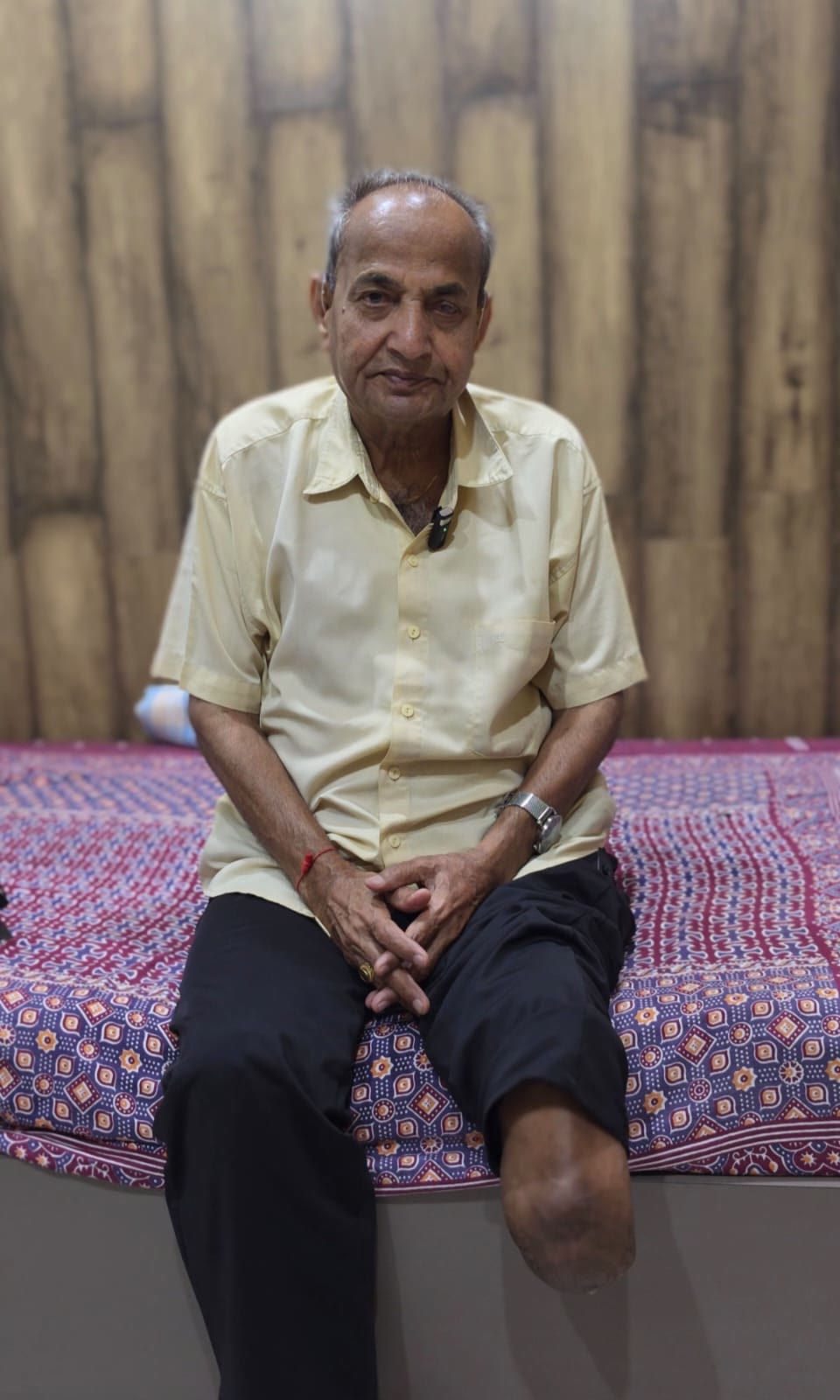
After a life-threatening diabetic foot infection, this patient underwent lower limb amputation by Dr. Ashutosh Shah at EDFC Surat. With an artificial limb and rehabilitation, he now walks, travels and manages daily life on his own.
In short: This patient came to Elegance Diabetic Foot & Ulcer Clinic (EDFC), Surat, with a severe, life-threatening diabetic foot infection. Dr. Ashutosh Shah, plastic surgeon and diabetic foot specialist, performed a lower limb amputation to stop the infection from spreading. After recovery and rehabilitation with an artificial limb, he now walks independently, travels comfortably and does his daily activities without help. In his video, he shares his experience in his own words.
Presentation
The patient had a severe diabetic foot infection that had spread deep into the tissues and could not be controlled by debridement or reconstruction. At this stage, the infection was a threat to his life, and removing the source of infection was the safest choice.
Treatment at EDFC
- Timely surgical decision: Dr. Ashutosh Shah explained the condition to the patient and family and planned the amputation at the right time to control the infection.
- Careful surgery: the amputation was planned to keep as much limb length below the knee as possible, which is important for balance, mobility and fitting an artificial limb.
- Post-operative care: the wound healed without further infection, with regular dressings and follow-ups.
- Prosthetic rehabilitation: he was fitted with an artificial limb and trained through rehabilitation to walk again.
Outcome
The patient recovered without further infection and was successfully rehabilitated with an artificial limb. Today he walks independently, travels comfortably and manages his daily activities without assistance. His confidence and satisfaction show how timely surgery, careful operative care and structured rehabilitation can restore mobility and quality of life, even after major limb surgery.
When amputation is the right step
At EDFC, saving the foot always comes first through wound care and limb salvage surgery. When a severe infection, gangrene or irreversible tissue damage threatens a patient's life, a well-planned amputation removes the source of infection and prevents complications such as sepsis. Done at the right time and followed by good rehabilitation, it helps patients return to an active, independent life.
Questions about walking with an artificial limb
How soon can you walk with an artificial limb after amputation?
The artificial limb is usually fitted once the surgical wound has healed and the remaining limb has settled in shape. Walking is then built up step by step with physiotherapy. The timeline is different for each patient.
Can a person travel and do daily work after a leg amputation?
Yes, many people return to walking, travelling and daily activities with a well-fitted artificial limb and regular practice, as this patient has.
What does prosthetic rehabilitation involve?
It includes care of the remaining limb, fitting of the artificial limb, balance and walking training, and follow-ups to adjust the fit as the limb changes.
Is amputation always the last option in diabetic foot?
Yes. Every effort is made to save the foot first. Amputation is advised only when infection or tissue damage cannot be controlled and the patient's health is at risk.
Medically reviewed by Dr. Ashutosh Shah, plastic surgeon and diabetic foot specialist, Elegance Diabetic Foot & Ulcer Clinic, Surat.
Have a foot wound that is not healing? Book a consultation with Dr. Ashutosh Shah early, or read Dayalal Bafna's below-knee amputation story.
Every patient is different. Results depend on the condition, its stage and overall health. Shared with the patient's consent. If you have a diabetic foot wound, please have it assessed in person. Send a photo on WhatsApp or book a consultation.