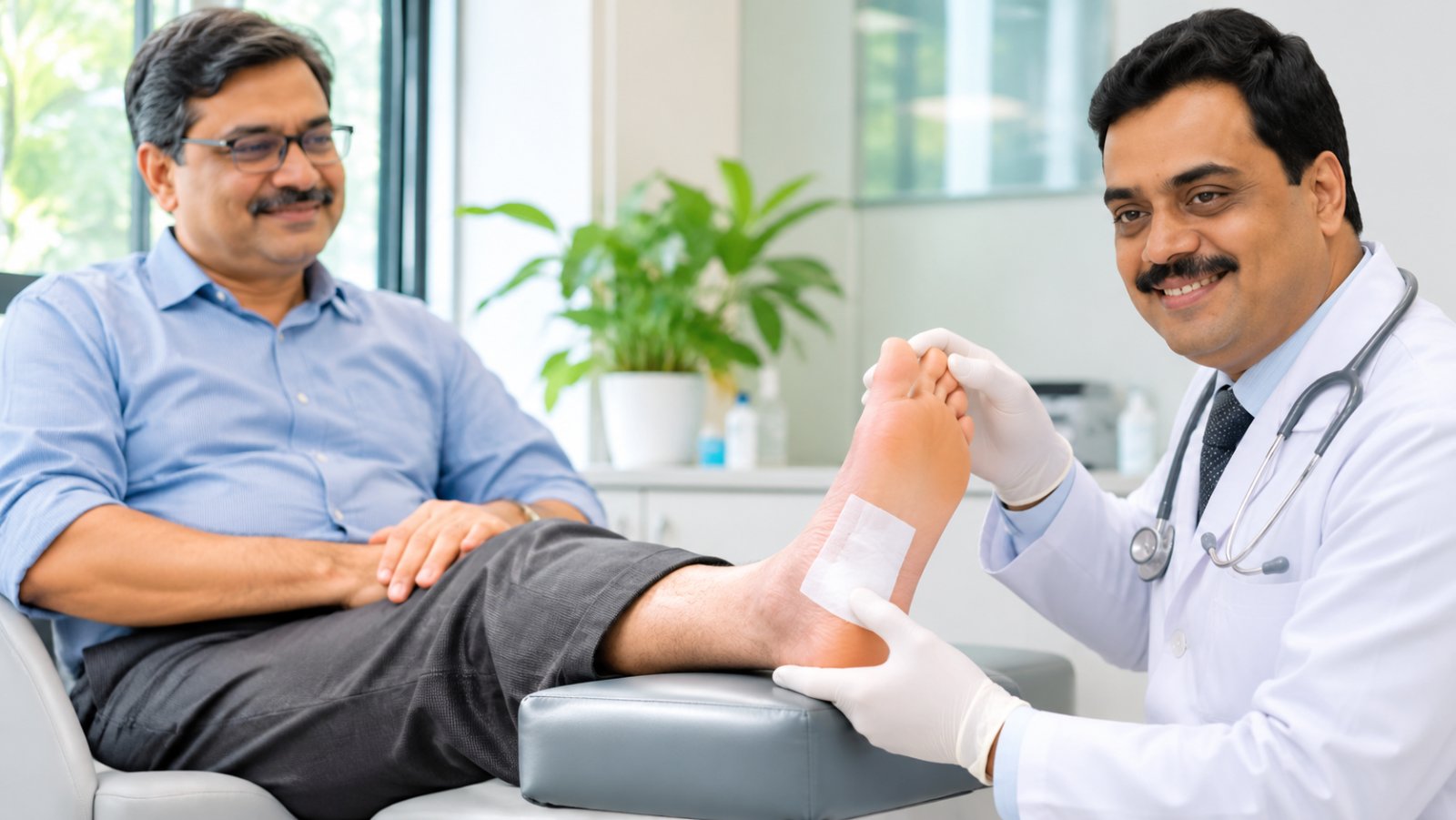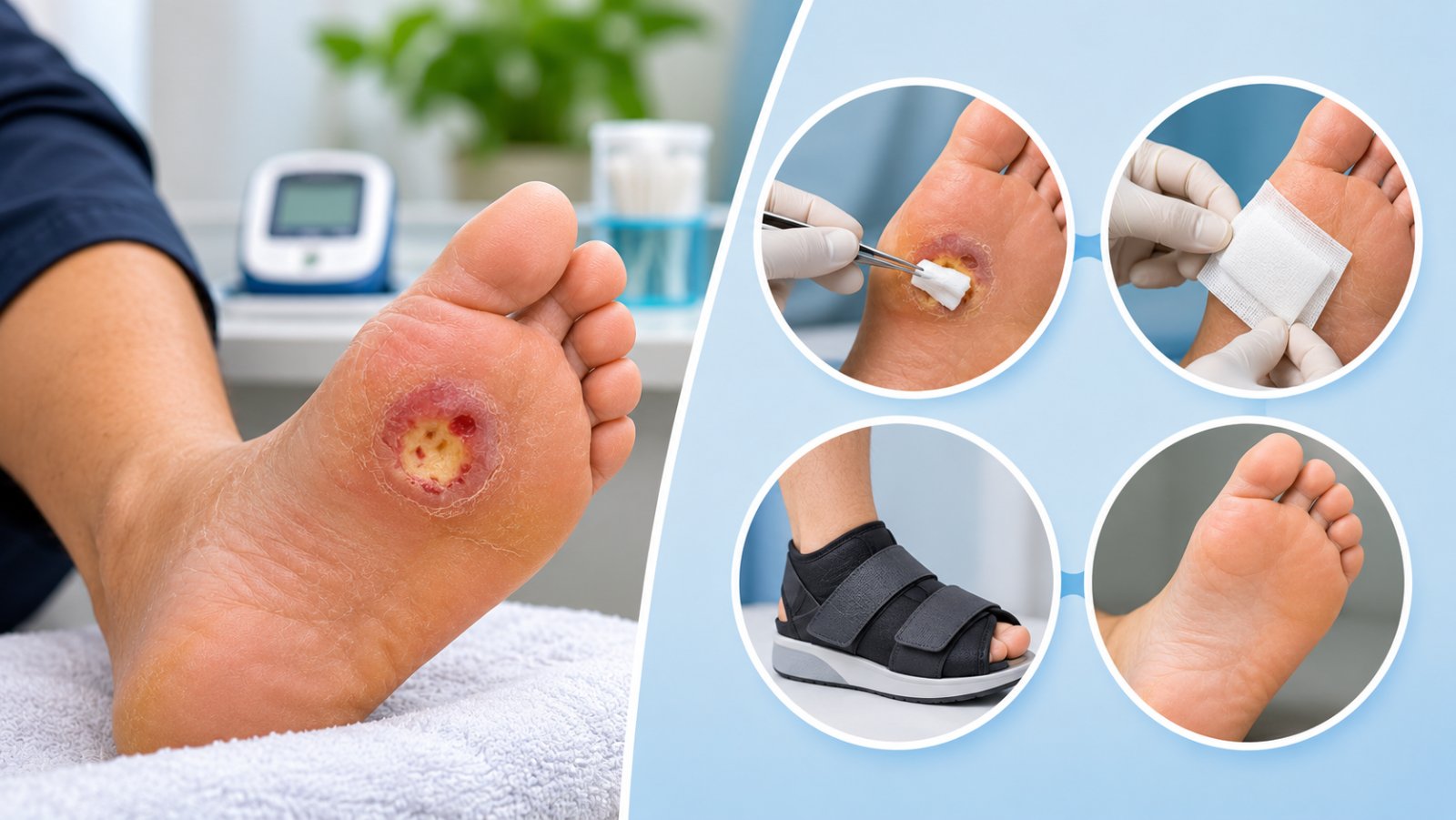
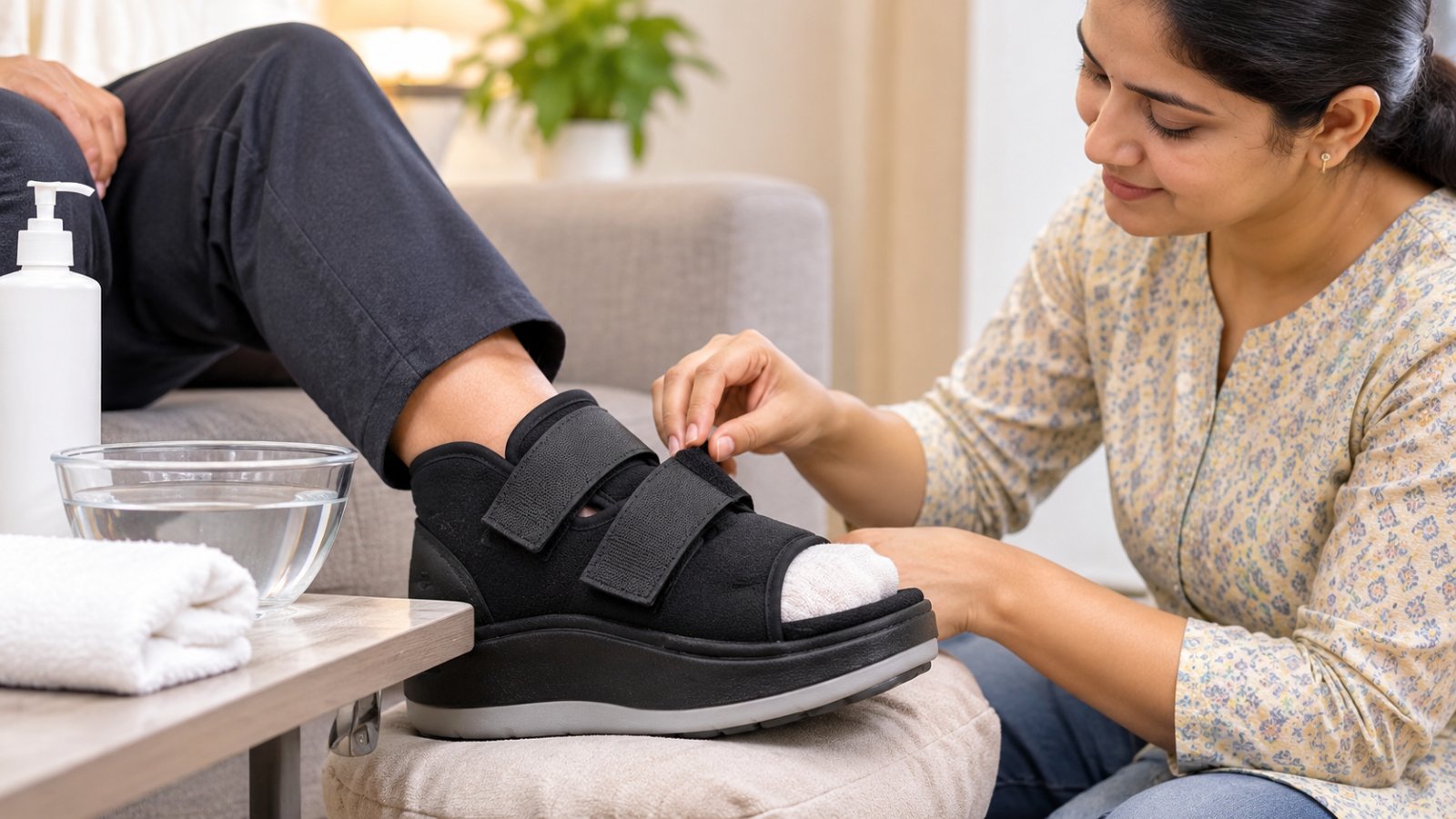
Home care during diabetic foot offloading means keeping the dressing clean and dry, checking both feet daily, keeping sugar under control and avoiding pressure on the wound. Families should know which changes need a same-day visit and keep follow-up dates without gaps. Following the specialist's instructions helps protect the affected foot.
Diabetic foot ulcers need careful attention because repeated pressure can delay wound healing. Patients with diabetic neuropathy may not feel pain even when the skin is injured.
Families play an important role in supporting treatment. They can help with foot inspections, medication reminders, safe movement and recognising warning signs.
However, family members should not remove prescribed casts, alter offloading devices or perform wound procedures without appropriate training.
A consistent routine makes home care during diabetic foot offloading easier to manage and reduces the risk of overlooking important changes.
What should the daily routine include?
A daily routine should focus on foot protection, prescribed wound care, blood glucose management and safe mobility.
Offloading devices reduce mechanical pressure on vulnerable areas of the foot. Depending on the condition, the specialist may prescribe a non-removable cast, removable walker or another pressure-relieving device.
Families should understand which activities are permitted and how the device must be used.
Morning: Start with a foot check
Inspect the visible parts of both feet for redness, swelling, blisters, cracks or changes in skin colour.
Check whether the dressing is dry and whether the offloading device feels secure.
If the patient uses a removable device, inspect the skin only as instructed by the treating clinician.
Take prescribed medicines and monitor blood glucose according to the individual care plan.
Afternoon: Protect the wound
Avoid unnecessary walking or standing on the affected foot.
Use prescribed mobility aids correctly. Keep the dressing protected from moisture, dirt and accidental damage.
Check for new discomfort, rubbing or swelling around the device.
Encourage regular meals, hydration and appropriate diabetes management.
Night: Review and prepare
Check the visible skin for new changes and confirm that the dressing remains intact.
Keep medicines, glucose-monitoring supplies and contact details accessible.
Prepare any approved mobility aids for the following day.
Never remove a non-removable offloading device at home.
Daily home-care checklist
| Time | What families should do | What to avoid |
|---|---|---|
| Morning | Inspect visible skin, check dressing, monitor glucose as advised | Walking barefoot |
| Afternoon | Protect dressing, use prescribed device, limit pressure | Unnecessary standing or walking |
| Night | Check for new symptoms, organise medicines and supplies | Removing casts or modifying devices |
For more information about pressure-relieving treatment, read offloading for diabetic foot ulcer.
Learn how diabetic foot offloading takes pressure off the wound so it can heal.
How to keep the dressing clean and dry
Correct dressing care helps protect the wound from contamination and further injury.
The type of dressing and how often it should be changed depend on the wound's condition, drainage and treatment plan.
Follow professional instructions
Dressings should be changed by a trained healthcare professional or a caregiver who has received appropriate instructions.
Do not remove a dressing simply to inspect the wound unless the clinician has advised this.
If the dressing becomes wet, loose, heavily soiled or soaked with discharge, contact the treating team for advice.
Keep water away from the wound
Avoid soaking the affected foot in water.
Bathing arrangements depend on the dressing and offloading device. Some casts must remain completely dry.
Ask the clinician about safe washing methods and whether a protective covering is appropriate.
Avoid unapproved products
Do not apply powders, oils, herbal pastes, antiseptics or household remedies without medical advice.
These products may irritate tissues, interfere with wound care or make infection harder to assess.
Understand specialist dressing options
Some patients may require advanced wound-care methods depending on their condition.
Families interested in treatment options can view prf dressing diabetic foot ulcer.
PRF is not a routine requirement for every diabetic foot wound. The treating specialist must determine whether any additional procedure is appropriate.
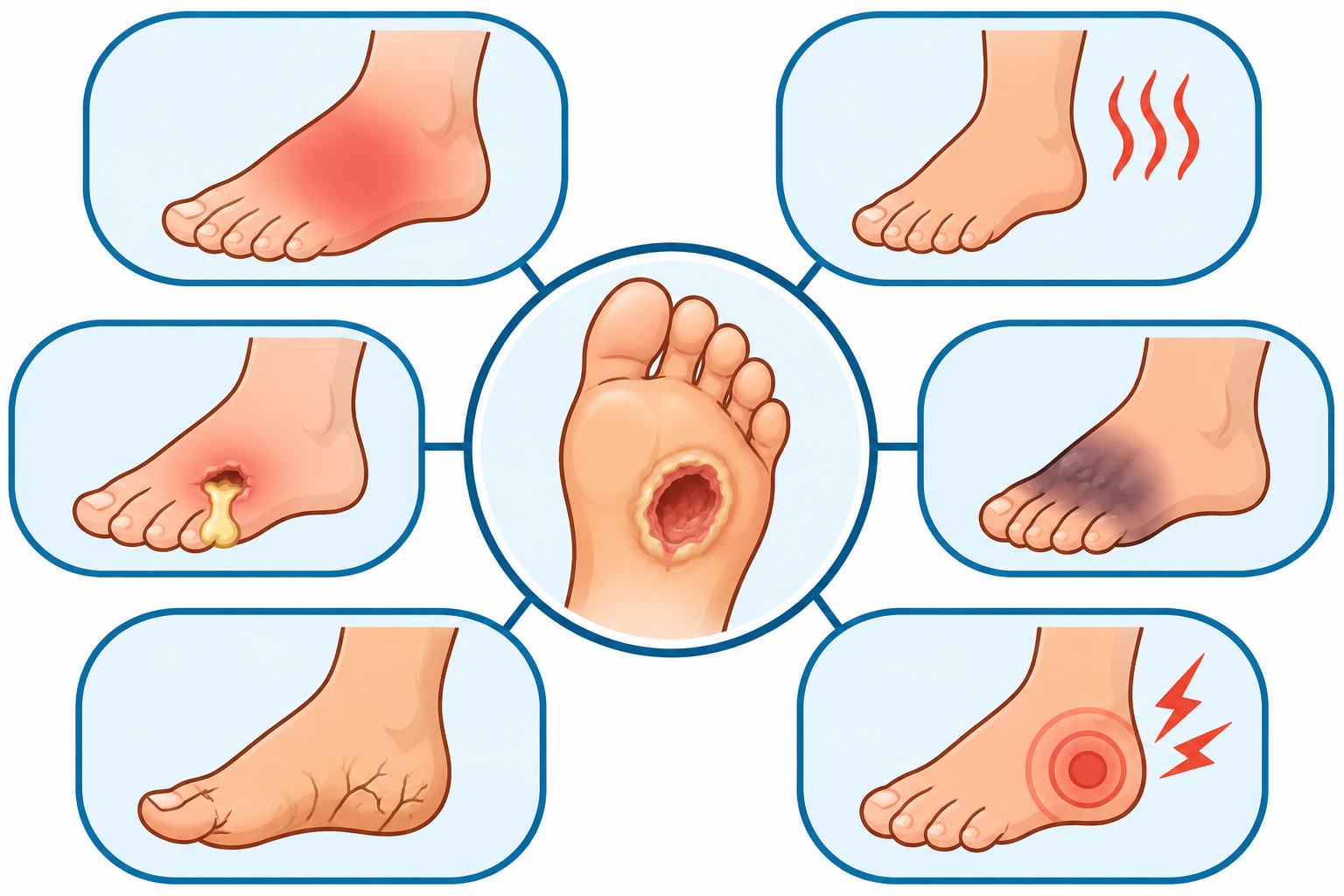
Which signs need a same-day visit?
During home care during diabetic foot offloading, recognising complications early is particularly important.
Diabetic neuropathy can reduce pain sensation. A wound may worsen without causing significant discomfort.
Warning signs to report promptly
-
Increasing redness or swelling.
-
New warmth around the wound.
-
Pus or unpleasant odour.
-
Increasing wound discharge.
-
A new blister or pressure mark.
-
A dressing that repeatedly becomes soaked.
-
A device causing rubbing or injury.
-
New changes in foot shape or colour.
If these changes occur, contact a healthcare professional for prompt assessment, ideally on the same day.
When is emergency care necessary?
Rapidly spreading redness, fever with significant illness, blackening skin or sudden loss of blood supply can indicate serious complications.
A suddenly cold, pale or blue foot also requires emergency evaluation.
Do not wait for a scheduled appointment when serious symptoms develop.
What should families record?
A simple diary can help track symptoms and treatment.
Record blood glucose readings as instructed, dressing concerns, new symptoms and appointment dates.
Photographs may be useful if the treating clinician requests them, but they should not replace a medical examination.
How to manage sugar at home
Blood glucose management is an important part of diabetic wound care.
Persistent high blood glucose may impair the body's ability to respond to infection and support tissue repair.
However, excessively low blood glucose can also be dangerous.
Follow an individual diabetes plan
Patients should take diabetes medicines or insulin exactly as prescribed.
Do not change doses independently because of a wound or reduced activity.
Maintain regular meals
Balanced meals containing appropriate protein, vegetables and other nutrient sources can support general health.
Patients with kidney disease or other dietary restrictions may need personalised nutritional advice.
Avoid skipping meals when taking medicines that can cause low blood glucose.
Monitor for unusual readings
Illness and infection can change glucose levels.
Families should know when to contact the diabetes-care team about persistently high readings, repeated low readings or symptoms such as confusion, sweating or weakness.
Good diabetes management supports home care during diabetic foot offloading, but it does not replace pressure relief or wound treatment.
What should be avoided at home?
Some common activities can interfere with treatment or increase the risk of another injury.
Walking barefoot
Avoid walking barefoot, even indoors.
Reduced sensation can prevent patients from noticing small injuries, sharp objects or excessive pressure.
Removing the offloading device
Never remove or adjust a non-removable cast yourself.
If a removable walker has been prescribed, follow instructions about when it must be worn.
Using ordinary footwear without approval
Regular shoes may not adequately reduce pressure on an active plantar ulcer.
Specialised insoles and protective footwear can be helpful in selected circumstances, particularly after healing, but they do not replace an appropriate active-ulcer offloading device.
For additional information, read offloading insoles for diabetic foot reduce pressure prevent ulcers improve healing.
Cutting calluses at home
Do not cut calluses, remove dead skin with sharp instruments or use chemical corn removers.
These actions can cause injuries that are difficult to detect in patients with neuropathy.
Skipping follow-up visits
Even if the wound appears smaller, treatment may still be necessary.
Regular reviews allow clinicians to assess healing, check device fit and adjust the care plan.
Diabetic foot offloading in piplod surat: Planning family support
Families arranging treatment should understand the patient's mobility limitations and follow-up needs before starting home care.
Arrange safe transport when walking is restricted. Keep the prescribed offloading device available and ask the clinician whether additional mobility aids are needed.
Elegance Diabetic Foot & Ulcer Clinic provides information about diabetic foot care and wound management.
Dr. Ashutosh Shah (M.S., M.Ch., D.N.B.) is a Plastic and Reconstructive Surgeon associated with the clinic.
Families can prepare a written list of questions about dressing changes, glucose monitoring, safe walking and emergency symptoms.
Conclusion
Home care during diabetic foot offloading requires a consistent routine, careful dressing protection, blood glucose management and strict adherence to pressure-relief instructions.
Families should inspect visible skin daily, avoid unapproved wound treatments and recognise symptoms that require urgent assessment.
Professional follow-up remains essential because an ulcer can worsen even when pain is absent.
For appointment information or questions about diabetic foot care, visit the contact us page.
quiz Frequently Asked Questions
This article is general education, not a diagnosis. If you have a diabetic foot wound, please have it assessed in person. Send a photo on WhatsApp or book a consultation.
About the Author

Dr. Ashutosh Shah, Plastic, Reconstructive & Diabetic Foot Surgeon, Elegance Diabetic Foot & Ulcer Clinic, Surat
Dr. Ashutosh Shah is a board certified plastic and reconstructive surgeon with over 22 years of experience and more than 10,000 limbs and feet saved. He founded Elegance Diabetic Foot & Ulcer Clinic, India's first chain of clinics dedicated to foot care, with centres in Surat and OPD partners across South Gujarat. He is known for a limb first approach, safe wound care and ethical, natural results.