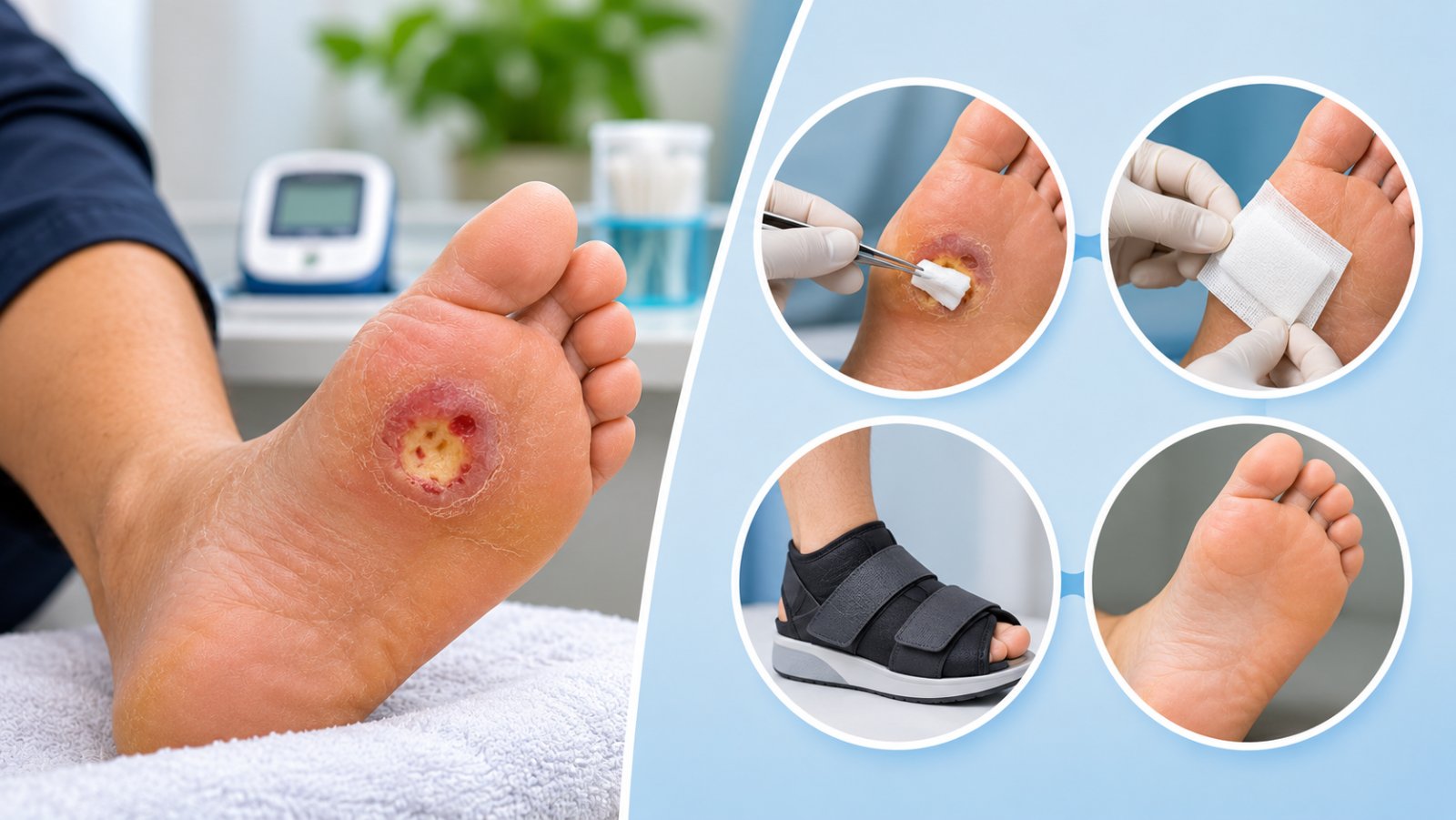
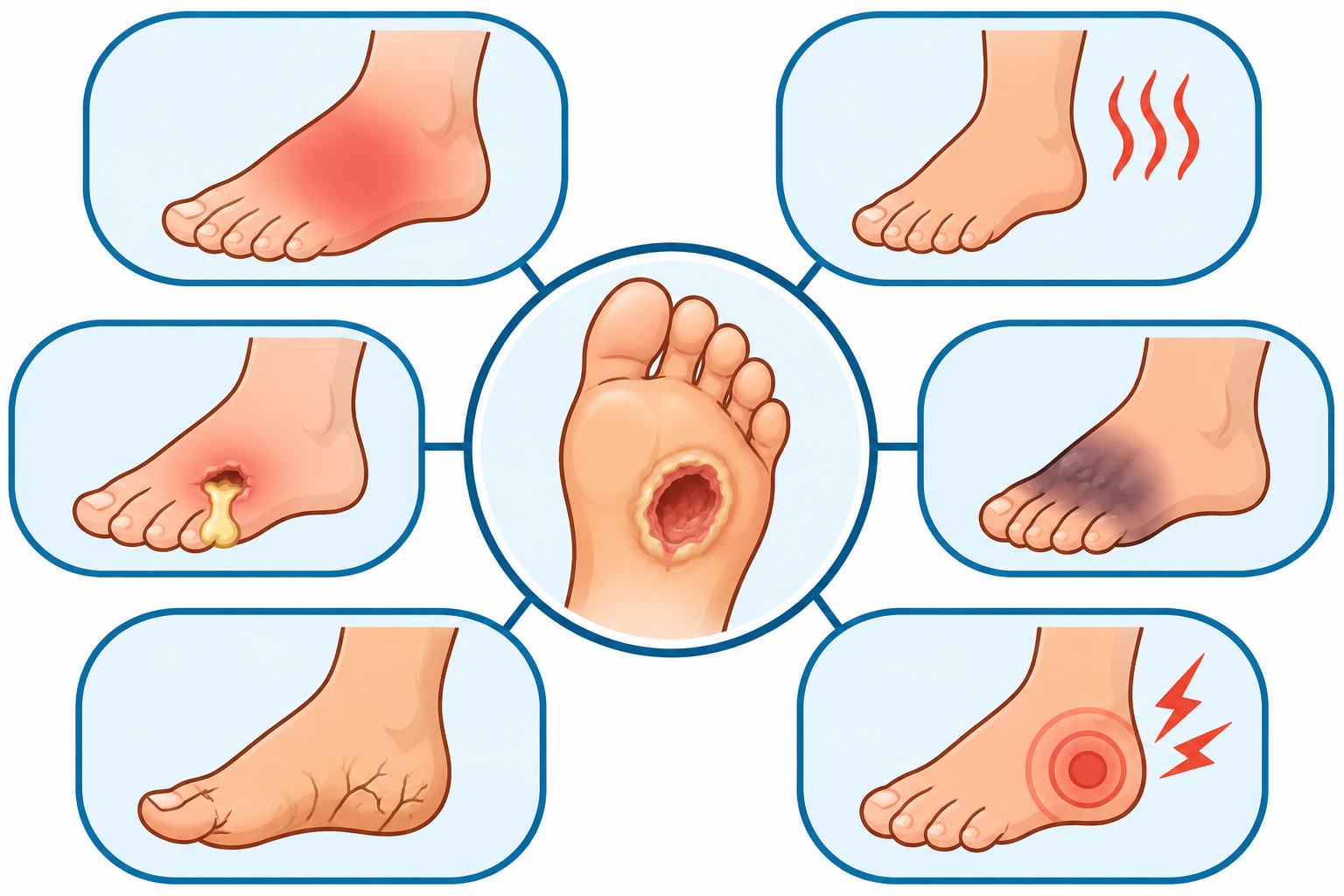
A diabetic foot needs urgent attention when there is a new wound, redness, swelling, warmth, bad smell, discharge, or a change in skin colour. Because nerve damage can reduce pain, a painless wound can still be serious. Seek same-day medical assessment when these signs appear; severe or rapidly worsening symptoms require emergency care.
Recognising diabetic foot ulcer treatment warning signs early can help prevent infection, deeper tissue damage, and avoidable complications.
People with diabetes may develop nerve damage, reduced circulation, or both. These conditions increase the risk of foot injuries going unnoticed and wounds becoming difficult to heal.
At Elegance Diabetic Foot & Ulcer Clinic, Dr. Ashutosh Shah (M.S., M.Ch., D.N.B.), a Plastic and Reconstructive Surgeon, is associated with diabetic foot and wound care services.
This guide explains which changes to check, why wounds may be painless, when urgent medical attention is needed, and how families can support daily foot care.
Which Foot Changes Should Be Checked Daily?
A daily foot examination is an important part of diabetes management, particularly for people with reduced sensation, previous ulcers, or circulation problems.
Diabetic foot ulcer treatment warning signs may initially appear minor. A small blister, skin crack, or unusual colour change should not be ignored.
Check these areas carefully
Toes and toenails: Look for swelling, redness, dark spots, ingrown nails, or changes in skin colour.
Between the toes: Check for cracks, excessive moisture, peeling skin, or fungal changes.
Soles: Look for blisters, calluses, cuts, pressure marks, or wounds hidden beneath thickened skin.
Heels: Examine dry skin, deep cracks, redness, and pressure-related injuries.
Entire foot: Compare both feet for unusual warmth, swelling, colour differences, or changes in shape.
Daily Foot-Check Checklist
| Area | What to Look For | Action |
|---|---|---|
| Toes | Black spots, redness, swelling | Seek urgent assessment for blackening or rapid changes |
| Between toes | Cracks, moisture, skin breakdown | Clean gently, dry carefully, and report wounds |
| Sole | Blisters, cuts, calluses | Avoid pressure and arrange assessment |
| Heel | Deep cracks, wounds | Protect the area and seek professional advice |
| Entire foot | Warmth, swelling, colour change | Arrange same-day assessment for suspected infection |
Use a mirror to examine the soles if bending is difficult. A family member can help when vision or mobility is limited.
For additional information, read the clinic's diabetic foot ulcer guide.
Why Can a Serious Wound Feel Painless?
One of the most dangerous aspects of diabetic foot disease is that a significant injury may cause little or no pain.
Understanding diabetic neuropathy
Long-standing diabetes can damage the nerves responsible for sensing pain, temperature, and pressure.
This condition is called diabetic peripheral neuropathy.
A person may develop a blister from tight footwear or step on a sharp object without noticing the injury immediately.
Why absence of pain is misleading
Pain normally alerts the body to injury. When sensation is reduced, that warning system becomes less reliable.
As a result, a wound may become deeper or infected before the patient realises something is wrong.
A painless diabetic foot wound is not necessarily a mild wound.
Other factors that delay healing
Reduced blood circulation can limit oxygen and nutrient delivery to damaged tissue.
Repeated pressure, infection, and poorly controlled blood glucose can also interfere with healing.
These problems may occur together, making professional assessment important.
The specialist may evaluate wound depth, circulation, sensation, infection, and footwear pressure before recommending treatment.
Diabetic Foot Ulcer Treatment in Citylight Surat: Which Signs Need a Same-Day Visit?
Certain foot changes require prompt medical assessment rather than home observation.
The most important diabetic foot ulcer treatment warning signs include increasing redness, warmth, swelling, discharge, and rapidly changing skin colour.
Seek same-day medical care for:
-
A new open wound or blister in a high-risk diabetic foot.
-
Increasing redness or warmth around an existing ulcer.
-
Swelling that develops or worsens unexpectedly.
-
Pus, cloudy discharge, or unpleasant odour.
-
A wound that becomes deeper or larger.
-
New dark or black areas of skin.
-
Sudden changes in foot temperature or appearance.
A warm, swollen foot without an obvious wound may also need urgent assessment, particularly when neuropathy is present.
When is emergency care necessary?
Go to an emergency department immediately if there is rapidly spreading redness, blackened tissue, severe systemic illness, confusion, or signs of a serious infection.
A cold, pale, or suddenly painful foot may indicate an acute circulation problem and also requires emergency evaluation.
Do not wait for routine clinic hours when these symptoms occur.
What happens during assessment?
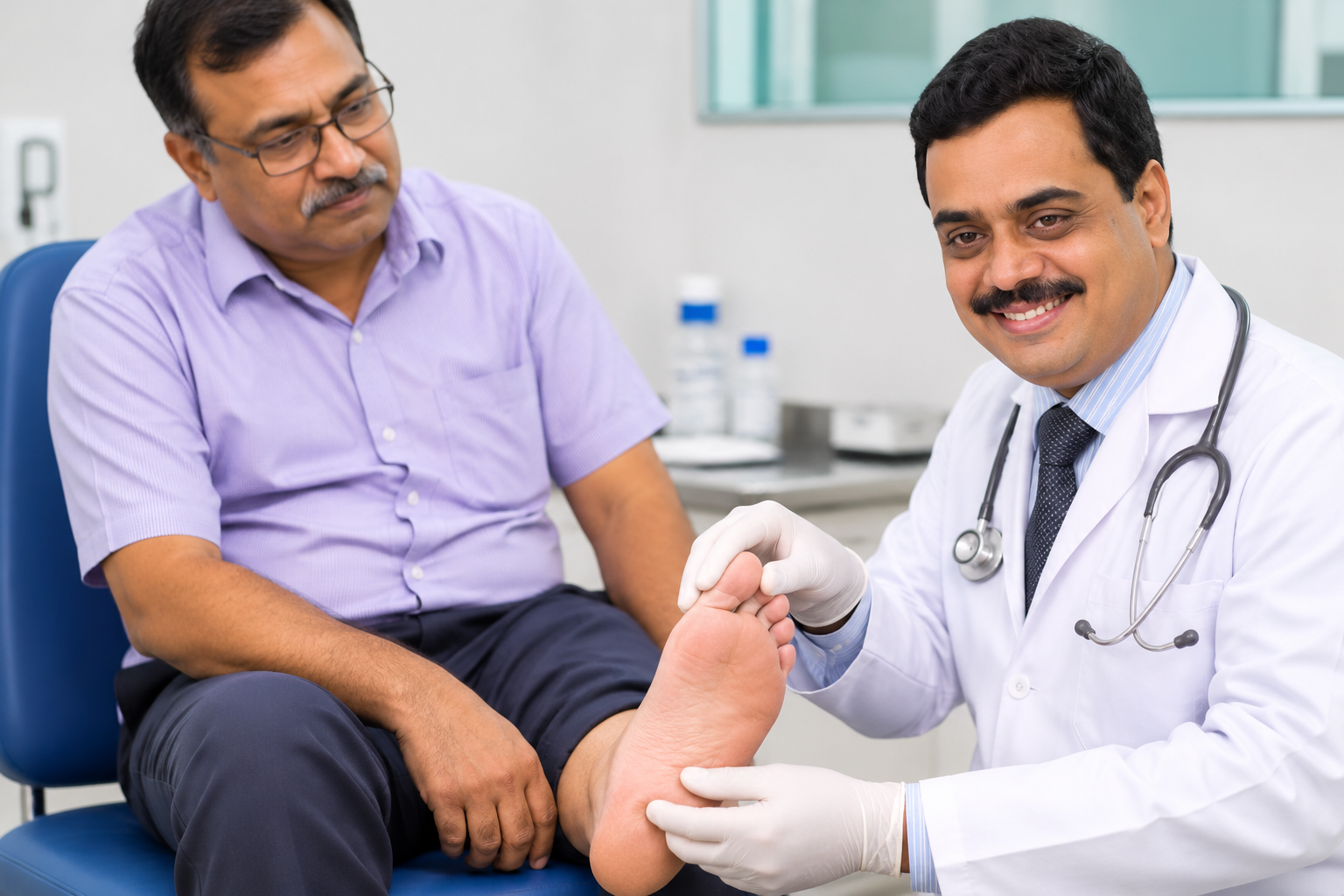
The specialist may check the wound, circulation, sensation, and signs of infection.
Depending on the findings, treatment may include wound cleaning, appropriate dressings, pressure relief, antibiotics for confirmed infection, or further investigations.
Not every ulcer needs antibiotics or surgery.
Learn more about diabetic foot ulcer treatment in surat.
What Should You Not Do at Home?
Home care should protect the foot until a qualified healthcare professional evaluates the problem.
Some commonly used remedies can worsen injuries or delay appropriate treatment.
Avoid these mistakes
Do not burst blisters. Opening a blister can create a wound and increase infection risk.
Do not cut calluses or dead skin. Sharp instruments may cause deeper injuries, especially when sensation is reduced.
Do not apply unprescribed chemicals or powders. Strong antiseptics, irritants, and home remedies may damage tissue or interfere with wound assessment.
Do not soak an ulcerated foot. Prolonged soaking can soften surrounding skin and increase the risk of breakdown.
Do not walk barefoot. Walking without protection increases the risk of injury and pressure.
Do not continue walking on an ulcer without advice. Some wounds require specialised offloading to reduce pressure.
What can you do safely?
Keep the affected area protected, avoid unnecessary pressure, and seek professional advice about appropriate dressings.
Follow prescribed medicines and glucose-monitoring instructions.
If an ulcer is already being treated, do not change its dressing plan without consulting the treating team.
Advanced treatments, including hyperbaric oxygen for diabetic foot ulcer, may be considered only for selected cases. They do not replace essential wound care, offloading, infection management, or circulation assessment.
How Can Families Help With Daily Checks?
Family members can play an important role when a person with diabetes has poor vision, reduced mobility, or limited foot sensation.
Recognising diabetic foot ulcer treatment warning signs together helps ensure that new changes are noticed and assessed promptly.
Create a simple daily routine
Choose a consistent time each day to inspect both feet.
Use good lighting and check the toes, spaces between toes, soles, heels, and surrounding skin.
Record new changes and report concerning findings to the treating clinician.
Help with footwear safety
Check inside shoes for stones, rough seams, or damaged insoles before they are worn.
Encourage properly fitting footwear and avoid tight shoes that create pressure points.
Support treatment adherence
Families can help patients remember appointments, follow offloading instructions, monitor blood glucose, and take prescribed medicines.
They should also understand when urgent care is necessary.
When should you contact the clinic?
A new wound, suspected infection, or unexplained foot swelling should prompt medical assessment without unnecessary delay.
For appointment information, visit the clinic's contact us page.
Conclusion
Understanding diabetic foot ulcer treatment warning signs can help patients and families recognise problems before they become more serious.
Daily foot checks, suitable footwear, glucose management, and timely specialist assessment are essential parts of prevention.
A painless wound, new black spot, spreading redness, or discharge should never be dismissed.
Dr. Ashutosh Shah (M.S., M.Ch., D.N.B.) is associated with Elegance Diabetic Foot & Ulcer Clinic.
quiz Frequently Asked Questions
This article is general education, not a diagnosis. If you have a diabetic foot wound, please have it assessed in person. Send a photo on WhatsApp or book a consultation.
About the Author

Dr. Ashutosh Shah, Plastic, Reconstructive & Diabetic Foot Surgeon, Elegance Diabetic Foot & Ulcer Clinic, Surat
Dr. Ashutosh Shah is a board certified plastic and reconstructive surgeon with over 22 years of experience and more than 10,000 limbs and feet saved. He founded Elegance Diabetic Foot & Ulcer Clinic, India's first chain of clinics dedicated to foot care, with centres in Surat and OPD partners across South Gujarat. He is known for a limb first approach, safe wound care and ethical, natural results.