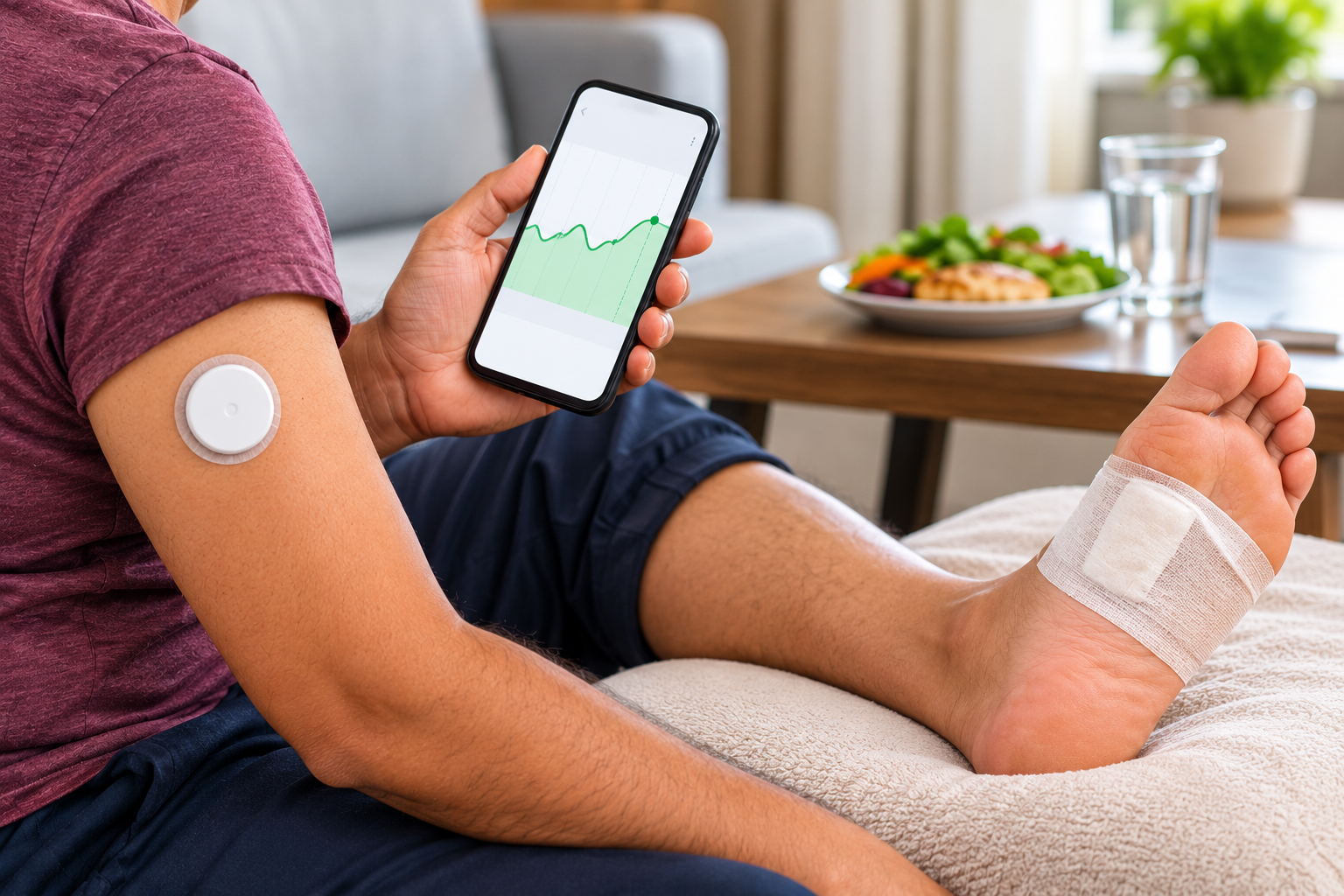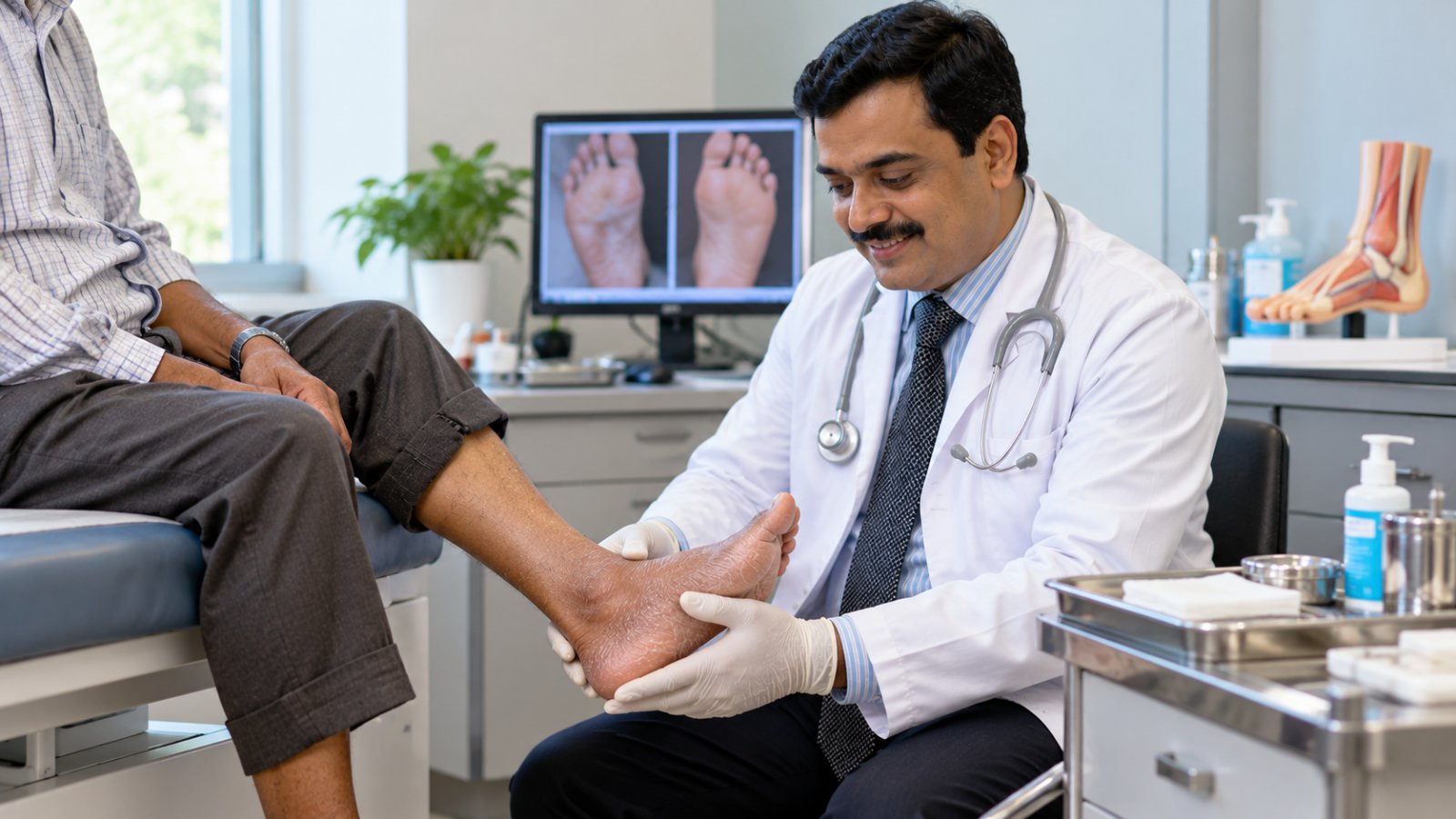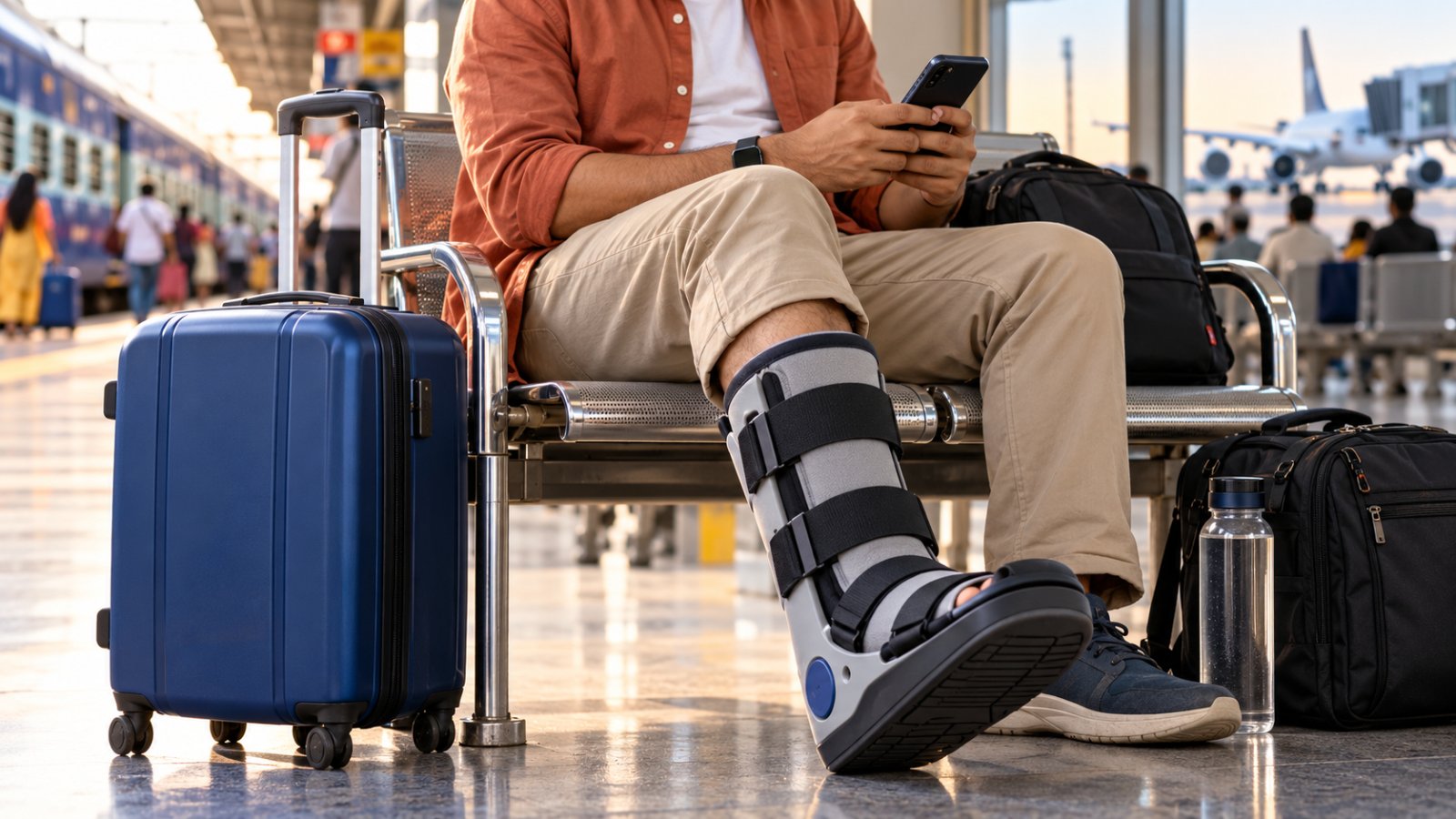
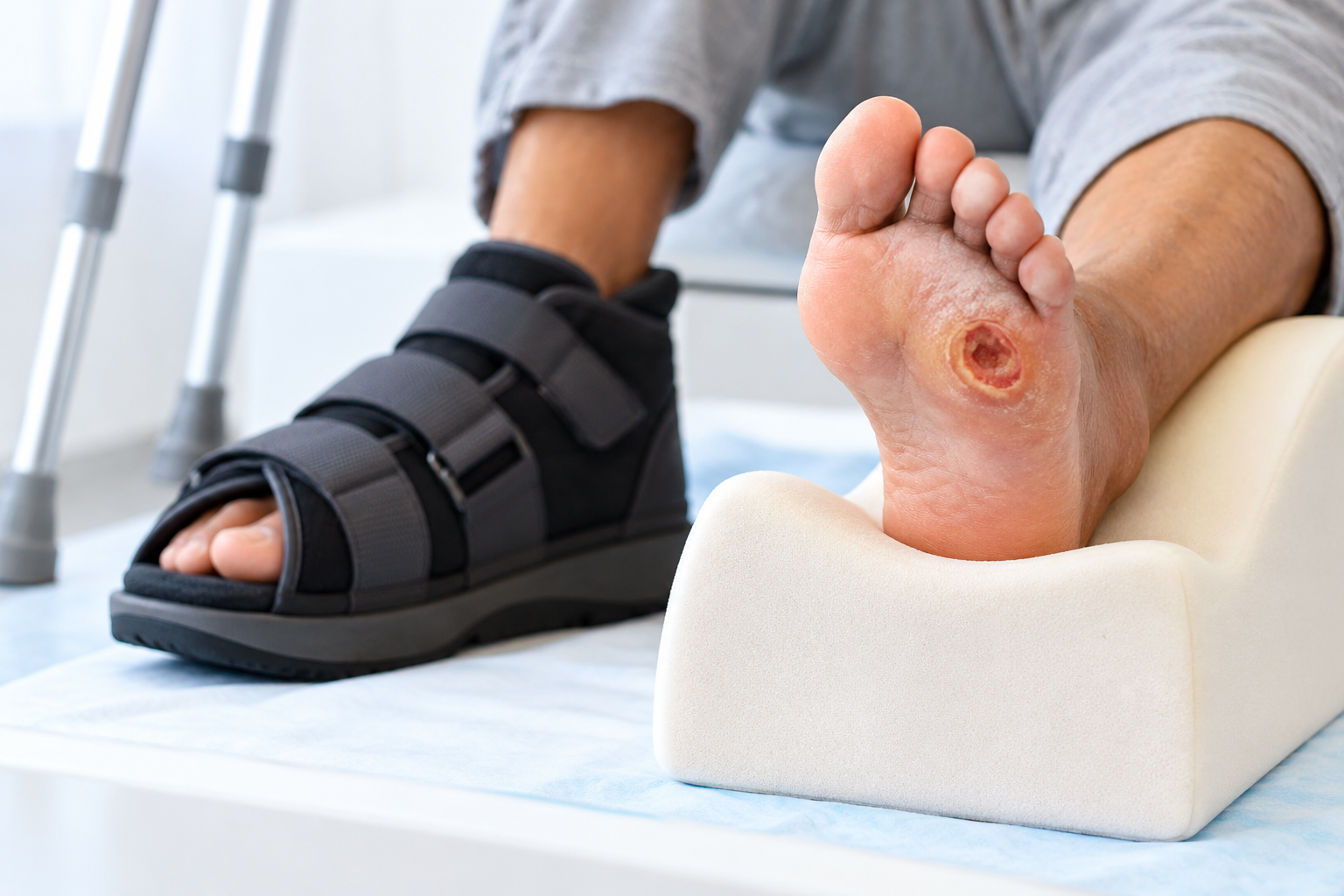
Offloading for diabetic foot ulcer treatment means reducing pressure on the injured part of the foot so the wound has a better chance of healing. Doctors use specialised casts, walking boots, footwear or other pressure-relieving devices. Offloading is particularly important for ulcers on the sole because repeated walking pressure can delay healing even when dressings and medications are used correctly.
What Is Offloading for Diabetic Foot Ulcers?
Offloading is a treatment method that reduces mechanical pressure and repeated stress on a diabetic foot ulcer.
When a person walks, body weight creates pressure on the heel, forefoot and other weight-bearing areas.
In patients with diabetes, nerve damage may reduce pain sensation. As a result, patients can continue walking on an ulcer without noticing that the wound is becoming worse.
Offloading for diabetic foot ulcer care helps protect the affected area by redistributing weight or limiting pressure during walking.
The treatment may involve:
-
Total contact casts
-
Non-removable knee-high offloading devices
-
Removable walking boots
-
Specialised diabetic footwear
-
Customised pressure-relieving insoles
-
Other devices selected for the wound's location and severity
The choice depends on the ulcer's location, blood circulation, infection status, mobility and overall health.
Why Is Pressure Relief Important for Diabetic Foot Ulcer Healing?
Pressure is one of the main reasons why ulcers on the sole of the foot fail to heal.
Even when a wound is covered with a suitable dressing, repeated walking can damage newly forming tissue.
1. Repeated Pressure Damages Healing Tissue
Every step places mechanical stress on the foot.
When an ulcer is located beneath a weight-bearing area, continued pressure can interfere with tissue repair.
2. Neuropathy Reduces Protective Sensation
Diabetic neuropathy can reduce the ability to feel pain and pressure.
Patients may continue their normal activities despite having an open wound.
3. Calluses Increase Local Pressure
Thickened skin or calluses can develop over areas exposed to repeated stress.
A callus may increase pressure around an ulcer and contribute to tissue damage.
4. Dressings Alone May Not Be Enough
Wound dressings help protect the ulcer and manage moisture, but they do not necessarily remove the mechanical cause of the injury.
For many plantar diabetic foot ulcers, pressure reduction is an essential part of the treatment plan.
Patients with non-healing wounds may also require diabetic foot wound assessment to identify infection, circulation problems and other factors delaying recovery.
Types of Offloading Devices for Diabetic Foot Ulcers
Different devices are used depending on the wound's location and the patient's clinical condition.
1. Total Contact Cast (TCC)
A total contact cast is a specially applied cast designed to distribute pressure across the foot and lower leg.
It is commonly used for suitable neuropathic ulcers on the sole of the forefoot or midfoot.
Potential benefits include:
-
Reducing pressure on the ulcer
-
Limiting repeated mechanical stress
-
Supporting adherence because the cast cannot be removed by the patient
-
Protecting the wound during appropriate weight-bearing activity
However, total contact casting is not suitable for every patient.
Significant infection, severe ischaemia, certain mobility problems or the need for frequent wound inspection may make another treatment more appropriate.
2. Non-Removable Knee-High Offloading Device
A non-removable knee-high walker provides pressure relief while helping prevent patients from removing the device during daily activity.
For suitable neuropathic plantar forefoot or midfoot ulcers, a non-removable knee-high device is generally recommended as first-line offloading treatment.
The clinician must assess whether the device can be used safely.
3. Removable Walking Boot
A removable walking boot helps redistribute pressure and protect the affected foot.
It may be recommended when a non-removable device is unsuitable.
The main limitation is that patients may remove the boot while walking indoors or performing daily activities.
Because pressure relief is needed during weight-bearing, inconsistent use can reduce treatment effectiveness.
4. Diabetic Offloading Footwear
Specialised diabetic footwear may help reduce pressure on vulnerable areas.
Depending on the clinical situation, it may include:
-
Extra-depth shoes
-
Customised insoles
-
Pressure-relieving modifications
-
Footwear designed for deformities
-
Protective shoes for patients with previous ulcers
However, ordinary therapeutic footwear is generally not the preferred first-line treatment for an active neuropathic plantar forefoot or midfoot ulcer when an appropriate offloading device is available.
Explore therapeutic footwear services for related information.
5. Customised Insoles
Custom insoles redistribute pressure across the foot.
They are particularly useful for reducing pressure on high-risk areas after an ulcer has healed.
For an active plantar ulcer, insoles alone may not provide sufficient pressure reduction.
Total Contact Cast vs Removable Walking Boot
Both devices may help reduce pressure, but they have important differences.
| Feature | Total Contact Cast | Removable Walking Boot |
|---|---|---|
| Removable by patient | No | Yes |
| Pressure redistribution | High when properly applied | Depends on device and fit |
| Daily adherence | Encouraged by non-removable design | Depends on patient use |
| Wound inspection | Requires clinical removal or cast change | Easier access |
| Suitable for every patient | No | No |
| Clinical monitoring | Essential | Essential |
For appropriate plantar forefoot and midfoot ulcers, non-removable knee-high devices are generally preferred because they provide effective pressure reduction and improve adherence.
The treating clinician should choose the device based on wound severity, circulation, infection and safety.
Who Needs Offloading for Diabetic Foot Ulcer Treatment?
Offloading for diabetic foot ulcer management is particularly important for patients with ulcers caused or worsened by pressure.
Patients who may benefit include those with:
-
Ulcers beneath the forefoot
-
Ulcers beneath the midfoot
-
Neuropathic plantar ulcers
-
Repeated ulcers at the same pressure point
-
Callus-related ulceration
-
Foot deformities causing abnormal pressure
-
Non-healing ulcers affected by walking
The device must be selected according to ulcer location.
For example, heel ulcers may require a different offloading approach from forefoot ulcers.
Patients with significant infection or poor circulation may need additional treatment before or alongside offloading.
Can Offloading Help a Diabetic Foot Ulcer Heal Faster?
Appropriate offloading can improve healing outcomes for many pressure-related diabetic foot ulcers.
When repeated mechanical stress is reduced, newly forming tissue is less likely to be damaged during walking.
However, healing depends on several factors:
-
Blood circulation: The wound requires adequate oxygen and nutrient delivery.
-
Infection control: Infected ulcers need appropriate medical treatment.
-
Pressure reduction: Repeated stress must be reduced effectively.
-
Blood sugar management: Diabetes control supports overall wound recovery.
-
Wound care: Dressings and other treatments must be appropriate for the wound.
-
Patient adherence: Offloading devices must be used as prescribed.
Offloading does not guarantee healing and cannot replace treatment for infection or peripheral artery disease.
If poor circulation is suspected, the doctor may recommend vascular assessment and treatment.
How Long Should Offloading Be Used?
The duration varies according to the wound's severity, location and healing progress.
Some ulcers improve within several weeks, while deeper or more complicated wounds may require longer treatment.
Doctors monitor:
-
Changes in wound size
-
Formation of healthy tissue
-
Signs of infection
-
Pressure distribution
-
Skin condition around the ulcer
-
Tolerance of the offloading device
Patients should not stop using an offloading device simply because pain has reduced.
Diabetic neuropathy may prevent patients from feeling pain even when the ulcer remains open.
The device should be continued or adjusted according to the treating clinician's instructions.
Can a Diabetic Foot Ulcer Heal Without Offloading?
Some diabetic foot ulcers may heal without specialised offloading devices, particularly when they are not located on weight-bearing surfaces.
However, pressure-related plantar ulcers often heal poorly if repeated mechanical stress continues.
Consider the following cycle:
Repeated pressure → Tissue damage → Ulcer formation → Dressing changes → Continued pressure → Delayed healing
If pressure is not addressed, wound care alone may be insufficient.
This is why offloading for diabetic foot ulcer treatment is considered a central component of managing many neuropathic plantar ulcers.
What Happens If an Offloading Device Is Not Used Correctly?
Incorrect or inconsistent use may reduce the benefits of treatment.
Potential problems include:
Delayed Wound Healing
Walking without the prescribed device can expose the ulcer to repeated pressure.
New Pressure Injuries
An incorrectly fitted cast or boot may create pressure points elsewhere on the foot.
Skin Irritation
Friction and moisture can cause skin damage if the device is unsuitable or poorly maintained.
Balance Problems
Some devices change walking mechanics and may increase fall risk.
Reduced Mobility
Patients may find certain devices uncomfortable or difficult to use during everyday activities.
Clinicians should assess mobility, fall risk and the condition of the opposite foot before prescribing a device.
Patients should report new rubbing, swelling, odour, wetness, unusual discomfort or changes in skin colour promptly.
Is Offloading Safe for Patients With Poor Blood Circulation?
Offloading may still be necessary when circulation is reduced, but the device must be selected carefully.
Severe peripheral artery disease can increase the risk of tissue damage and poor healing.
A non-removable cast may be inappropriate for some patients with significant ischaemia or infection because frequent inspection or urgent intervention may be necessary.
Doctors may recommend vascular investigations before selecting a device.
Patients with a suddenly cold, pale or painful foot, black tissue, fever or rapidly spreading infection should seek emergency medical assessment rather than relying on offloading alone.
Offloading Treatment at Elegance Diabetic Foot & Ulcer Clinic
At Elegance Diabetic Foot & Ulcer Clinic in Surat, Dr. Ashutosh Shah is associated with the evaluation and management of diabetic foot wounds.
A specialist consultation can help identify whether repeated pressure, neuropathy, infection or poor circulation is contributing to delayed wound healing.
Offloading for diabetic foot ulcer treatment may be considered as part of a comprehensive plan involving wound assessment, appropriate dressings, infection management and circulation evaluation.
The most suitable pressure-relieving device depends on the location and severity of the wound and the patient's medical condition.
Patients requiring complex wound management can also explore diabetic foot surgery and limb salvage services when surgical assessment is appropriate.
For consultation information, visit Elegance Diabetic Foot & Ulcer Clinic.
How Can Patients Use Offloading Devices Safely?
Following the clinician's instructions is essential for effective pressure relief.
1. Wear the Device as Prescribed
For removable devices, follow instructions about use during weight-bearing activities.
Do not remove a prescribed device to walk short distances unless the treating clinician has specifically advised it.
2. Keep Casts Dry
Moisture can damage casts and increase the risk of skin problems.
Contact the clinic if a cast becomes wet, loose or damaged.
3. Check Exposed Skin
Inspect visible toes and surrounding skin for swelling, discolouration or irritation.
Do not insert objects inside a cast.
4. Avoid Unnecessary Walking
Even with an offloading device, excessive activity may interfere with wound healing.
Follow the recommended activity restrictions.
5. Attend Regular Follow-Up Visits
The doctor may need to adjust the device as swelling reduces or the wound changes.
6. Protect the Other Foot
Changes in walking patterns can increase pressure on the opposite foot.
Suitable footwear and regular inspection of both feet are important.
How Can Offloading Help Prevent Ulcer Recurrence?
After an ulcer heals, the underlying pressure problem may remain.
Patients with neuropathy, deformities or previous ulcers have an increased risk of developing another wound.
Long-term prevention may involve:
-
Medical-grade therapeutic footwear
-
Custom pressure-relieving insoles
-
Regular callus assessment
-
Daily foot inspection
-
Appropriate foot hygiene
-
Diabetes management
-
Periodic specialist examinations
Footwear for a healed plantar ulcer should ideally demonstrate effective pressure reduction at the previously affected site.
Patients should continue preventive care even after the skin has closed.
Conclusion
Offloading for diabetic foot ulcer care is an important treatment approach for reducing repeated pressure on diabetic foot wounds.
Total contact casts, non-removable walkers, removable boots and specialised footwear may help protect affected areas when selected appropriately.
However, successful healing also requires suitable wound care, infection management, circulation assessment and diabetes control.
Patients with non-healing diabetic foot ulcers can contact Elegance Diabetic Foot & Ulcer Clinic for specialist evaluation and an individualised treatment plan.
For consultation enquiries: Visit Elegance Diabetic Foot & Ulcer Clinic
quiz Frequently Asked Questions
This article is general education, not a diagnosis. If you have a diabetic foot wound, please have it assessed in person. Send a photo on WhatsApp or book a consultation.
About the Author

Dr. Ashutosh Shah, Plastic, Reconstructive & Diabetic Foot Surgeon, Elegance Diabetic Foot & Ulcer Clinic, Surat
Dr. Ashutosh Shah is a board certified plastic and reconstructive surgeon with over 22 years of experience and more than 10,000 limbs and feet saved. He founded Elegance Diabetic Foot & Ulcer Clinic, India's first chain of clinics dedicated to foot care, with centres in Surat and OPD partners across South Gujarat. He is known for a limb first approach, safe wound care and ethical, natural results.