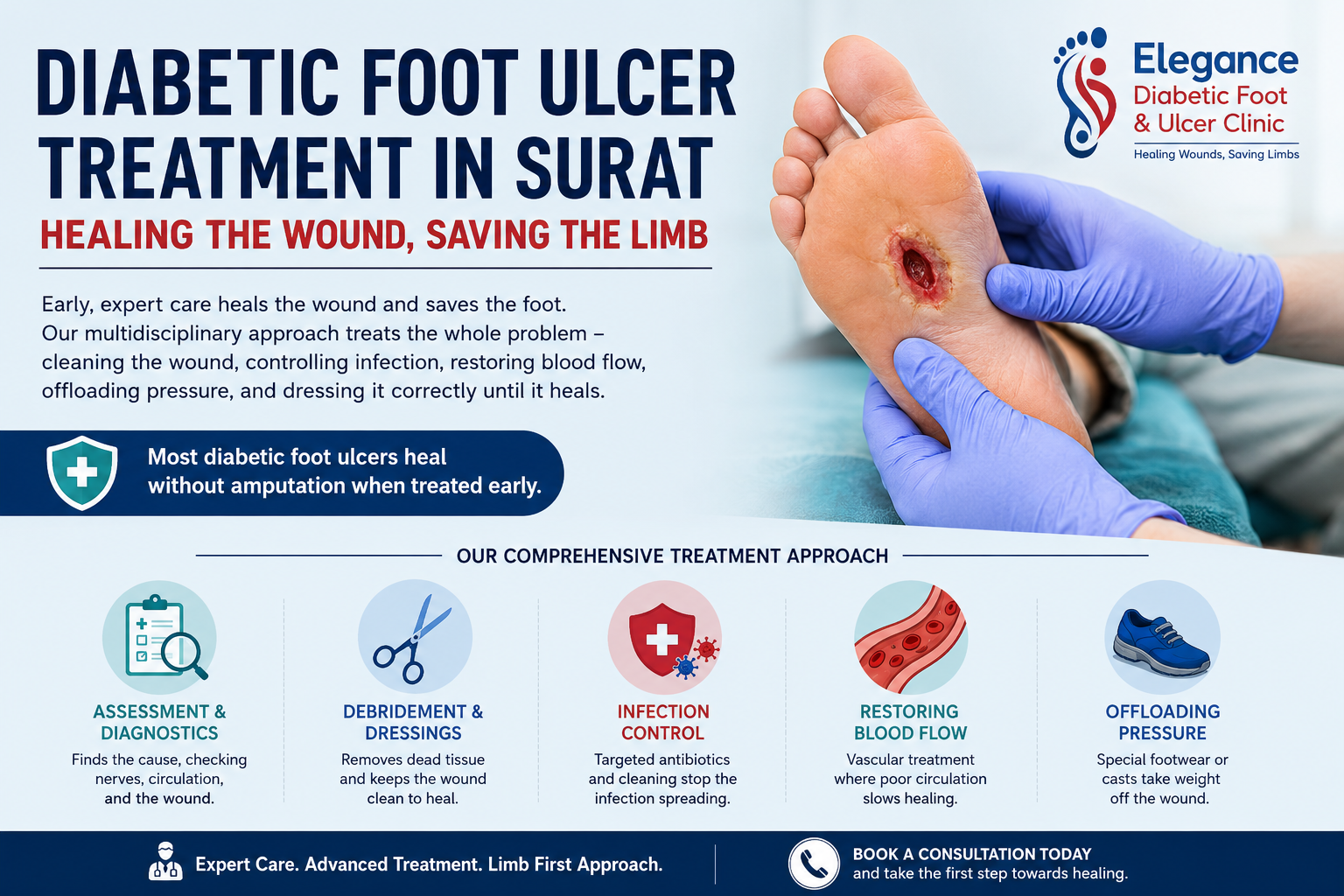
Diabetic foot ulcer treatment in Surat heals the wound and saves the limb by treating the whole problem: cleaning and debriding the ulcer, controlling infection, restoring blood flow, offloading pressure, and dressing the wound until it closes. Started early by an expert doctor, most diabetic foot ulcers heal without amputation.
A diabetic foot ulcer is an open wound that too often gets ignored, because nerve damage hides the pain. Yet with the right treatment, most of these ulcers heal and the foot is saved. This guide explains what proper diabetic foot ulcer treatment in Surat involves, and why acting early changes everything.
What Is Diabetic Foot Ulcer Treatment in Surat?
Diabetic foot ulcer treatment in Surat is the coordinated care that gets a diabetic foot wound to heal and prevents it from returning. It is not a single dressing but a combined plan: assessing the cause, cleaning and removing dead tissue, controlling infection, checking and restoring blood flow, taking pressure off the wound, and dressing it correctly until it closes. Blood sugar control runs alongside.
Because a diabetic foot ulcer involves nerves, circulation, pressure, and infection together, it needs specialist, multidisciplinary treatment rather than ordinary wound care.
Why Do Diabetic Foot Ulcers Need Specialist Treatment?
Because several problems combine to stop healing. In diabetes, nerve damage hides the injury, poor circulation starves the wound of oxygen and immune cells, and high sugar feeds bacteria, so a small ulcer can deepen and become infected fast. Ordinary dressings alone rarely fix this, since they do not address the pressure, blood flow, or infection driving the wound.
Specialist treatment tackles all of these at once, which is why an expert-led clinic heals ulcers that have stayed open for months elsewhere, and why early referral matters so much.
What Does Treatment Involve?
Effective treatment attacks the ulcer from several directions together. The table below outlines the core components used in Surat.
| Component | What it does |
|---|---|
| Assessment and diagnostics | Finds the cause, checking nerves, circulation, and the wound. |
| Debridement and dressings | Removes dead tissue and keeps the wound clean to heal. |
| Infection control | Targeted antibiotics and cleaning stop the infection spreading. |
| Restoring blood flow | Vascular treatment where poor circulation slows healing. |
| Offloading pressure | Special footwear or casts take weight off the wound. |
At EDFC these map to assessment and diagnostics, non-surgical wound management, footwear and offloading, and vascular services, with surgery when deeper repair is needed.
Do Diabetic Foot Ulcers Actually Heal?
Yes, most do, when treated properly. Offloading pressure is a cornerstone of healing, and the evidence shows strong results: a real-world cohort study on offloading strategies for plantar diabetic foot ulcers found a one-year healing rate of about 77% overall, and higher for uncomplicated ulcers, under proper multidisciplinary care. In other words, with the right treatment, the great majority of diabetic foot ulcers close.
It is honest to say healing takes time, often weeks to months, and complicated ulcers heal more slowly. But the message is clear: proper treatment works, and early treatment works best.
What Are the Warning Signs to Seek Treatment?
Because pain may be absent, watch for other signs and seek specialist care promptly if you notice any of these on a diabetic foot.
- A wound that will not heal: any sore or ulcer open more than a few days.
- Redness, warmth, or swelling: spreading redness suggests infection.
- Pus, discharge, or bad smell: signs of an infected ulcer.
- Dark or blackened skin: a sign of dying tissue that needs urgent care.
- Numbness or a callus over a pressure point: where ulcers often begin.
Early treatment is the single biggest factor in saving the foot, so these signs should never be left to wait.
Why Choose Elegance Diabetic Foot & Ulcer Clinic in Surat?
A diabetic foot ulcer heals fastest under experienced, coordinated care. Elegance Diabetic Foot & Ulcer Clinic (EDFC) in Surat is led by Dr. Ashutosh Shah, a plastic and microvascular surgeon and expert doctor practising since 2004, with a limb-first philosophy and a network of centres across South Gujarat. Assessment, wound care, offloading, vascular treatment, and surgery are coordinated under one roof, including a dedicated Bye-Bye Ulcer program. You can learn more about the clinic, or book a consultation for a diabetic foot ulcer.
Medical disclaimer: This article is for general information and education only and is not a substitute for personalised medical advice. A diabetic foot ulcer can become serious quickly, and outcomes depend on how early treatment starts. If you have a non-healing wound, redness, swelling, pus, or blackened skin on a diabetic foot, seek specialist care promptly. To be assessed, book a consultation at Elegance Diabetic Foot & Ulcer Clinic, Surat.
quiz Frequently Asked Questions
This article is general education, not a diagnosis. If you have a diabetic foot wound, please have it assessed in person. Send a photo on WhatsApp or book a consultation.
About the Author

Dr. Ashutosh Shah, Plastic, Reconstructive & Diabetic Foot Surgeon, Elegance Diabetic Foot & Ulcer Clinic, Surat
Dr. Ashutosh Shah is a board certified plastic and reconstructive surgeon with over 22 years of experience and more than 10,000 limbs and feet saved. He founded Elegance Diabetic Foot & Ulcer Clinic, India's first chain of clinics dedicated to foot care, with centres in Surat and OPD partners across South Gujarat. He is known for a limb first approach, safe wound care and ethical, natural results.