Written by Dr. Ashutosh Shah, Plastic & Microvascular Surgeon - Diabetic Foot & Limb Salvage Specialist, Elegance Diabetic Foot & Ulcer Clinic (EDFC). Practising since 2004 (22+ years). Read full bio.
Medically reviewed by Dr. Ashutosh Shah
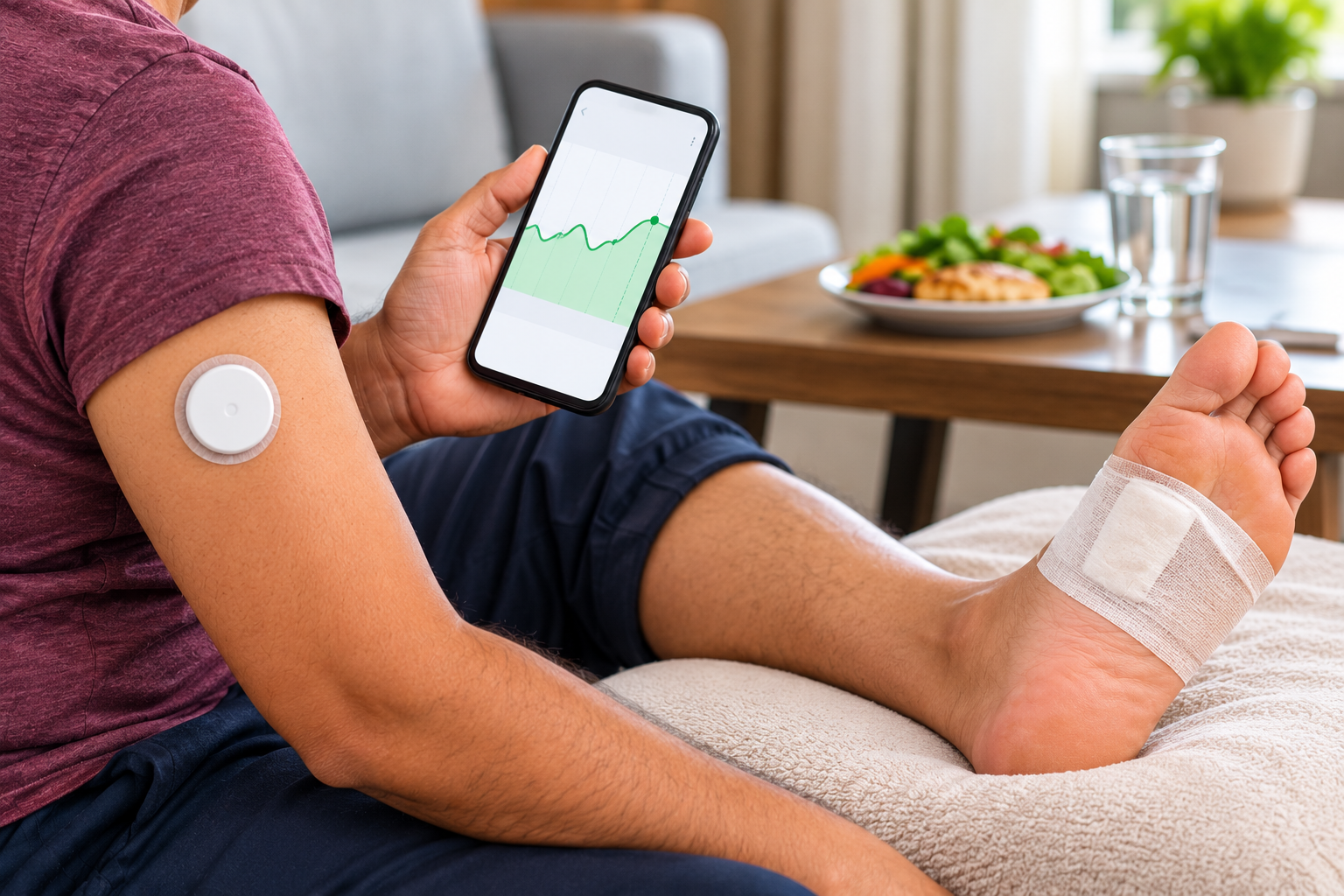
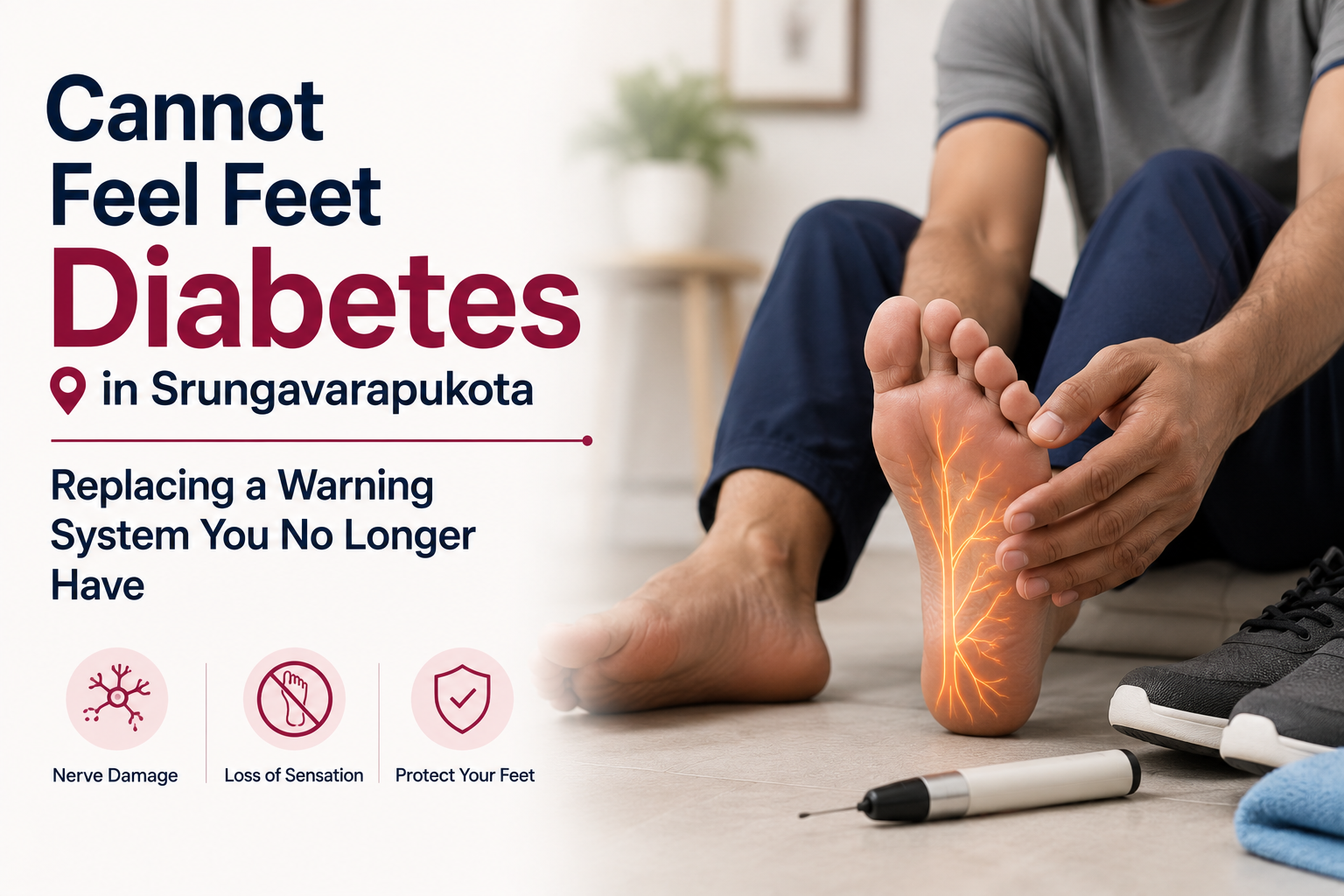
Cannot feel feet diabetes in Srungavarapukota describes lost protective sensation, and that sensation will probably not return. What can be replaced is its job. Pain used to warn you about heat, sharp objects and pressure, and from now on your eyes, your hands and a fixed daily routine have to do that instead.
This is not another explanation of nerve damage. It is a practical list of the specific dangers that numb feet cannot report, and what takes over each warning. If you want the medical background, our post on tingling feet in diabetes covers how the damage develops.
What exactly have you lost?
Protective sensation, which is the ability to notice injury while it is happening. Cannot feel feet diabetes in Srungavarapukota most often means this specific loss rather than total numbness. Not all feeling disappears at once, and people often keep some sense of pressure or position while losing the sharp, hot and painful signals that matter most for safety.
A simple way to think about it: the foot has stopped filing complaints. Everything that used to make you shift position, pull away or take off a shoe now happens without any signal reaching you.
| What feeling used to do | What replaces it now |
|---|---|
| Warn that water or a surface is too hot | Testing with the hand or elbow, always |
| Signal a stone or nail inside the shoe | Checking inside footwear before every use |
| Make you shift weight when a spot hurts | Correct footwear and scheduled position changes |
| Report a blister forming | Daily visual inspection, soles included |
| Tell you where the ground is | Vision, lighting and deliberate care on stairs |
Hazard one: heat
This causes the most severe injuries and almost none of them are felt happening. Burns from bath water, heaters, hot sand, sun-heated floors and stone temple flooring are a routine cause of serious foot wounds in people with numb feet.
- Test every water temperature with your hand or elbow, never with your foot.
- Never use a hot water bottle, heating pad or electric heater near the feet, including in winter.
- Avoid hot sand, sun-heated ground and stone flooring in the middle of the day.
- Do not sit close to a fire or heater with bare feet.
- Check the feet immediately afterwards if you have been near any heat source.
Hazard two: sharp objects and walking barefoot
A thorn, glass fragment or nail can enter a numb foot and stay there for days. The injury is silent, so the first sign is often swelling or discharge once infection has already set in.
- Never walk barefoot, indoors as well as outdoors, including at home and in temples.
- Wear footwear from the moment you get out of bed.
- Check inside shoes and slippers before wearing them, running a hand right through.
- Shake out footwear left outside before putting it on.
- Look at the soles of your feet daily for puncture marks, dark spots or small wounds.
Hazard three: footwear pressure
New or tight shoes cause blisters that a numb foot will not report. Normally discomfort makes you stop wearing them; without that signal, people walk on a developing wound all day.
- Break new footwear in gradually, an hour at a time, checking the skin after each wear.
- Choose shoes with a wide toe box, soft uppers and no internal seams over pressure points.
- Wear the prescribed insoles or footwear all the time, not only when going out.
- Replace worn footwear rather than stretching or repairing it.
- Check for redness after removing shoes; redness that does not fade within twenty minutes means the footwear is wrong.
Blisters in a numb foot are covered in our post on blisters on the foot with diabetes.
Hazard four: sustained pressure
Sitting or lying in one position causes damage that feeling would normally interrupt. This matters most for anyone unwell, recovering from surgery or spending long periods in a chair or bed.
- Change position regularly rather than waiting for discomfort, which will not come.
- Keep the heels off the mattress with a pillow under the calves when lying down.
- Avoid crossing the legs for long periods.
- Inspect the heels and outer ankles daily, which are the commonest pressure sites.
Heel pressure damage develops faster than most people expect, as covered in our post on pressure ulcers of the foot.
Hazard five: cold, chemicals and home treatments
Numb skin also fails to report cold injury and chemical burns. Corn removers, strong antiseptics and home remedies damage skin silently, and cold exposure can injure poorly perfused toes.
- Never use chemical corn or callus removers.
- Do not cut, file or dig at callus or nails yourself.
- Avoid strong antiseptics on intact or broken skin unless advised.
- Keep feet warm with socks, not with heat sources.
- Have callus and nails managed professionally as part of preventive foot care.
Hazard six: falling
Numb feet do not report where the ground is, which affects balance. This part of the problem is often missed, and a fracture or head injury from a fall can be more damaging than the foot problem itself.
- Light the route to the bathroom at night, since vision is now doing the work feeling used to do.
- Take stairs deliberately, using a handrail.
- Remove loose mats and trailing wires at home.
- Wear supportive footwear indoors rather than loose slippers.
- Mention unsteadiness to your doctor, as balance training genuinely helps.
What does the daily routine look like?
Five minutes, at the same time each day. The value is in consistency, because you are looking for change rather than for something dramatic.
- Sit in good light and look at the top, sides and soles of both feet, using a mirror or asking someone.
- Check between all the toes for cracks, softening or moisture.
- Compare the two feet for colour, swelling and temperature, using the back of your hand.
- Press any red area to see whether it goes pale.
- Photograph anything new so you can judge whether it is changing.
- Check inside your footwear before wearing it.
Can feeling ever come back?
Usually not, and it is better to plan on that basis. Established nerve damage does not reverse. Good blood sugar control slows or stops further loss, which is worth doing, but it does not restore what has gone.
There is one caveat worth acting on. Vitamin B12 deficiency, thyroid disorders, alcohol and certain medications can contribute to numbness and are treatable, so it is reasonable to have these checked even in someone with long-standing diabetes. Correcting them may improve symptoms; it will not rebuild lost nerve.
Circulation is a separate question and should be assessed too, since poor blood flow changes how any injury heals. That is done through our vascular services.
What still needs a clinic?
Anything that breaks the skin, and everything involving a blade. Your job is inspection and protection; treatment is not a home activity in a foot that cannot feel.
- Any wound, blister, crack or dark spot, however small and however painless.
- Callus and nail care, always professionally.
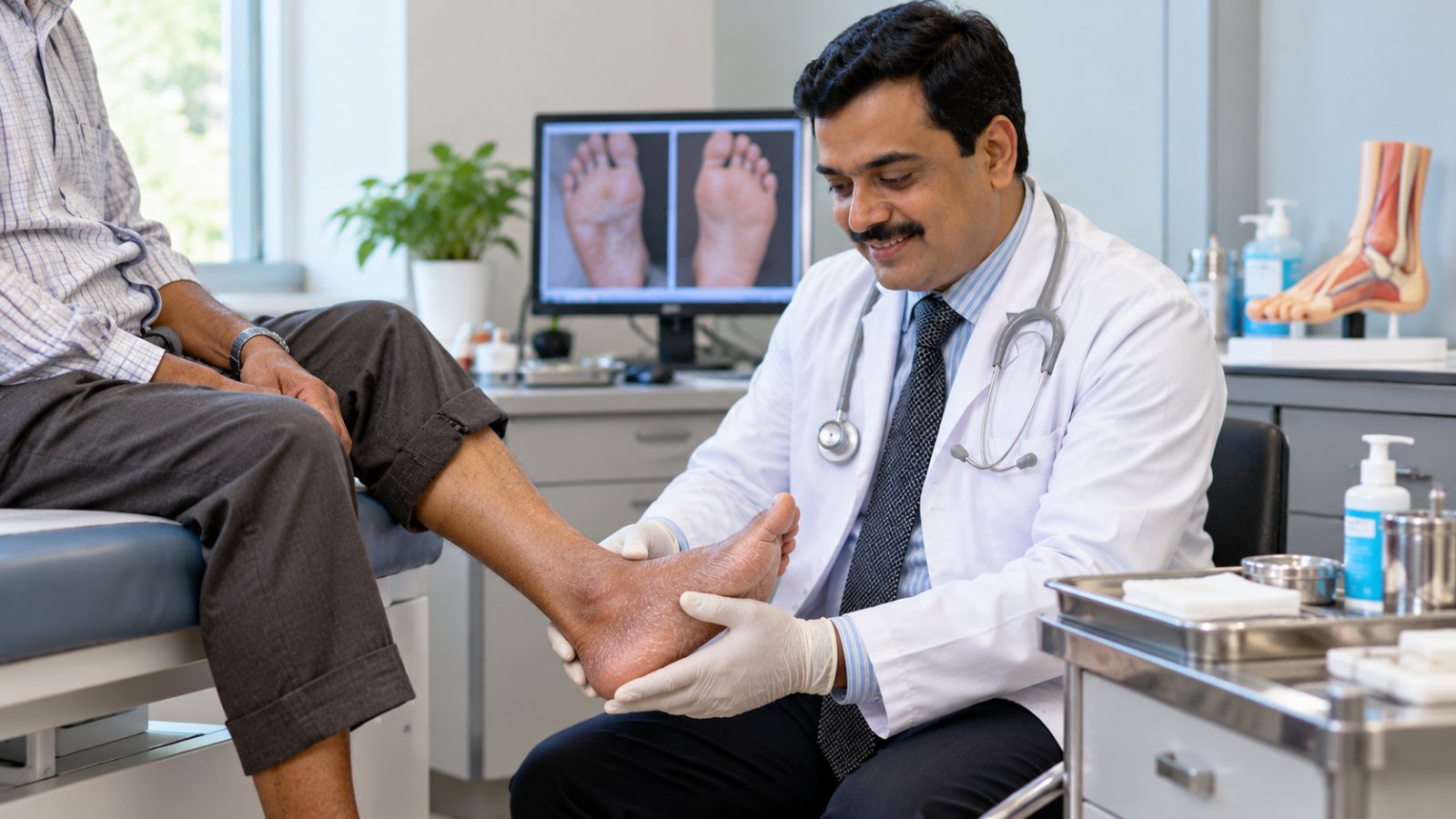
- Formal sensation testing with a monofilament, to record what you can still feel.
- Circulation testing, since numbness and poor blood flow often coexist.
- Footwear and insole assessment, repeated as feet change shape over time.
- Wound treatment under non-surgical wound management, and corrective surgery through diabetic foot surgery where deformity is causing repeated damage.
When should you be seen the same day?
A red, hot, swollen foot, any burn, or any wound with fever. Numbness itself is not an emergency, but it hides the things that are.
- A red, hot, swollen foot, with or without a wound, which can be infection or early Charcot foot.
- Any burn, however small it looks.
- Spreading redness, pus or foul smell.
- Fever with any foot problem.
- A cold, pale or blue foot, or blackening skin.
- Sudden numbness or weakness in one leg, which does not fit the usual pattern.
Night-time pain in feet that are otherwise numb has its own significance, covered in our post on stinging feet at night. The full range of problems is listed under foot conditions we treat.
Foot protection and assessment for Srungavarapukota
Elegance Diabetic Foot & Ulcer Clinic (EDFC), led by Dr. Ashutosh Shah, provides sensation and circulation testing, footwear assessment, ulcer treatment and limb salvage from its centre in Surat, with diabetic foot care expanding into the Vizianagaram district including Srungavarapukota. For anyone searching cannot feel feet diabetes in Srungavarapukota, the first useful step is recording exactly how much sensation remains.
You can send a clear photo of your feet to our team on WhatsApp for initial guidance and book a foot assessment. If there is a burn, a wound, fever or a red hot swollen foot, seek care the same day. Follow EDFC on Facebook, Instagram and YouTube for foot care guidance and real limb salvage stories.
Your eyes are now the warning system
Losing sensation does not mean losing the foot. It means the job of noticing has moved from your nerves to your eyes and your habits. People who make the daily check automatic mostly do well; people who wait for something to hurt usually present late, because nothing ever will.
Next step: book a sensation, circulation and footwear assessment with Dr. Ashutosh Shah at Elegance Diabetic Foot & Ulcer Clinic, or send a photo of your feet on WhatsApp today.
Medical disclaimer: This article is for educational purposes only and is not a substitute for professional medical diagnosis or treatment. Numbness in the feet should be formally assessed, including testing for treatable contributing causes and for circulation. Burns, wounds, fever or a red hot swollen foot need urgent in-person care. Please consult Dr. Ashutosh Shah or a qualified specialist about your condition. For further guidance, see the NHS guide to peripheral neuropathy and the IWGDF diabetic foot guidelines.
quiz Frequently Asked Questions
This article is general education, not a diagnosis. If you have a diabetic foot wound, please have it assessed in person. Send a photo on WhatsApp or book a consultation.
About the Author

Dr. Ashutosh Shah, Plastic, Reconstructive & Diabetic Foot Surgeon, Elegance Diabetic Foot & Ulcer Clinic, Surat
Dr. Ashutosh Shah is a board certified plastic and reconstructive surgeon with over 22 years of experience and more than 10,000 limbs and feet saved. He founded Elegance Diabetic Foot & Ulcer Clinic, India's first chain of clinics dedicated to foot care, with centres in Surat and OPD partners across South Gujarat. He is known for a limb first approach, safe wound care and ethical, natural results.