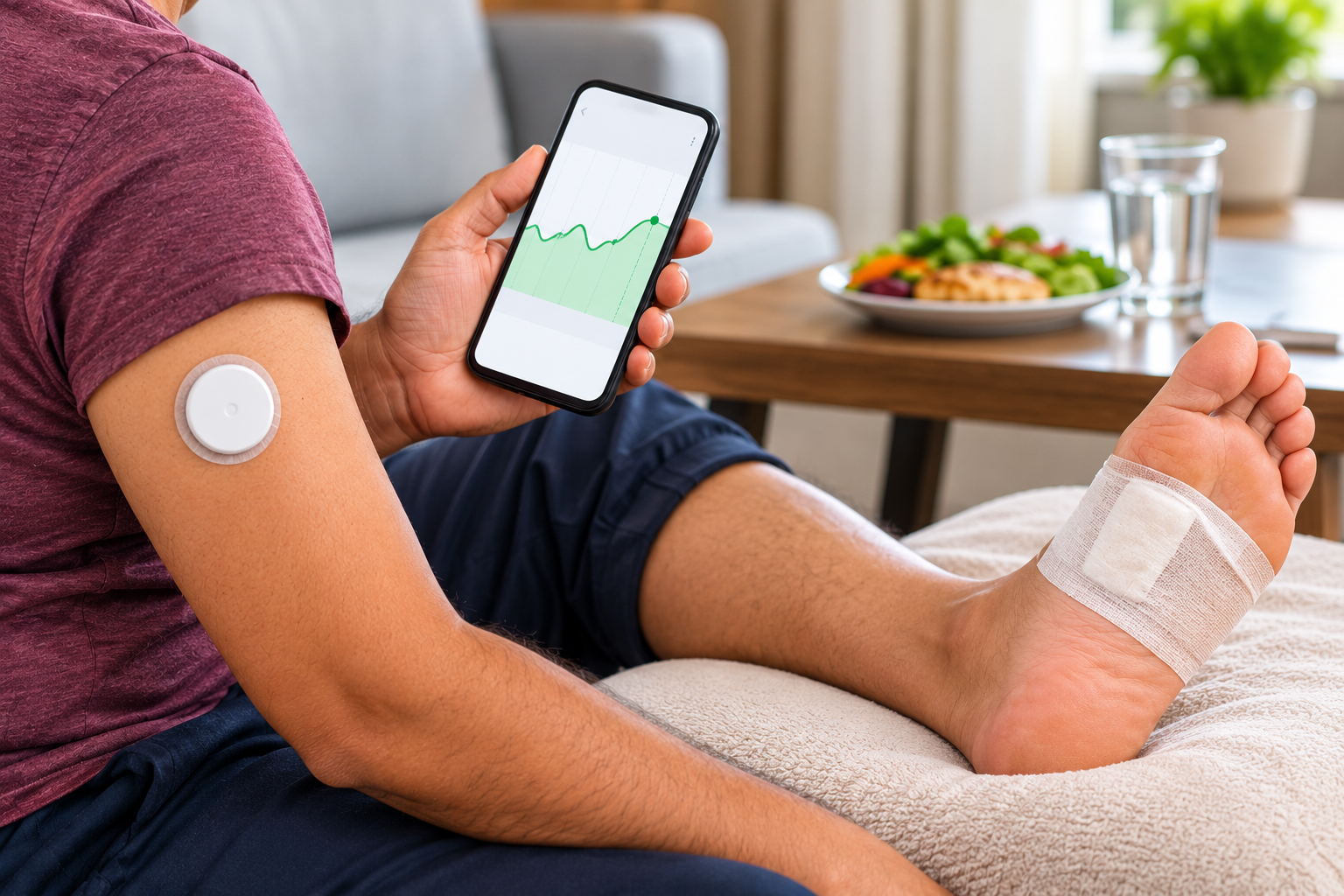
A continuous glucose monitor (CGM) shows how many hours a day glucose stays between 70 and 180 mg/dL. International consensus targets more than 70% time in range and under 4% below 70 mg/dL; for older or high-risk people, over 50% in range with under 1% low. During wound healing, a CGM catches night-time highs that finger-pricks miss.
A diabetic foot ulcer requires more than dressings. Blood glucose management, pressure relief, circulation assessment and infection treatment all contribute to the overall care plan.
A continuous glucose monitor for wound healing can help the diabetes team understand glucose patterns while the foot-care team monitors the ulcer. However, the sensor itself does not treat the wound.
This guide explains time-in-range targets, glucose variability, infection-related spikes and how CGM reports can support coordinated diabetic foot care.
Key Takeaways
-
A CGM measures glucose in the fluid beneath the skin throughout the day and night.
-
Time in range (TIR) is the percentage of time glucose remains between 70 and 180 mg/dL.
-
Many adults aim for more than 70% time in range, with less than 4% below 70 mg/dL.
-
Older or medically vulnerable adults may need less stringent targets.
-
Infection, inflammation, stress and changes in medication can increase glucose levels.
-
CGM reports can reveal overnight highs and repeated post-meal spikes.
-
Patients should not change insulin or other diabetes medicines without an agreed treatment plan.
-
Foot ulcer healing still requires offloading, wound care and appropriate treatment of infection or poor circulation.
What Is a Continuous Glucose Monitor and How Does It Work?
A continuous glucose monitor is a small wearable device that measures glucose in interstitial fluid, the fluid surrounding cells beneath the skin.
A sensor is commonly worn on the upper arm or another manufacturer-approved site.
Depending on the system, readings are displayed on a smartphone application or compatible receiver.
What Information Does a CGM Provide?
A CGM can show:
-
Current glucose readings
-
Whether glucose is rising or falling
-
Overnight glucose patterns
-
Post-meal glucose increases
-
Episodes of low glucose
-
Daily and weekly glucose trends
-
Time spent within and outside the target range
Some devices also provide alerts when glucose becomes too high or too low.
How Is CGM Different From Finger-Prick Testing?
A finger-prick test measures blood glucose at a particular moment.
CGM provides repeated measurements throughout the day, helping reveal patterns between individual tests.
However, CGM readings may lag behind blood glucose during rapid changes.
Patients should use a finger-prick test when symptoms do not match the sensor reading or when the device instructions recommend confirmation.
Is CGM Useful for Type 2 Diabetes?
A CGM sensor for type 2 diabetes may be particularly useful for people using insulin, experiencing hypoglycaemia or requiring closer glucose assessment.
It can also help selected patients understand how meals, medicines and activity affect their glucose.
Not every patient requires continuous monitoring. The diabetes clinician should decide whether the expected benefits justify the cost and practical requirements.
What Does Time in Range Mean?
Time in range describes the percentage of time glucose stays within a specified target.
For many nonpregnant adults with diabetes, the standard CGM range is:
70–180 mg/dL
This corresponds approximately to 3.9–10.0 mmol/L.
How Many Hours Is 70% Time in Range?
A day contains 24 hours.
If glucose remains in range for 70% of the day:
24 × 0.70 = 16.8 hours
This means approximately 16 hours and 48 minutes within the target range.
The remaining time may include readings above or below range.
Why Is Time in Range Useful?
HbA1c estimates average glucose exposure over approximately two to three months.
However, HbA1c does not reveal every episode of high or low glucose.
Two patients with similar HbA1c results may have very different glucose patterns.
One may have relatively stable readings, while another experiences frequent highs and lows.
CGM helps identify this variability.
What Is Glucose Variability?
Glucose variability refers to how much glucose readings fluctuate.
Frequent large changes can complicate diabetes management.
CGM reports often describe variability using the coefficient of variation (CV).
A CV of 36% or less is a commonly used general target.
Which CGM Targets Apply While a Diabetic Foot Ulcer Heals?
The International Consensus on Time in Range provides CGM targets for different groups of people with diabetes.
These are general diabetes-management targets, not separately validated targets that guarantee faster foot ulcer healing.
Standard Targets for Many Adults
For many nonpregnant adults with type 1 or type 2 diabetes:
-
Time in range (70–180 mg/dL): More than 70%
-
Time above 180 mg/dL: Less than 25%
-
Time above 250 mg/dL: Less than 5%
-
Time below 70 mg/dL: Less than 4%
-
Time below 54 mg/dL: Less than 1%
These targets should be achieved without exposing the patient to dangerous hypoglycaemia.
Targets for Older or High-Risk Adults
Some older adults or people at high risk of hypoglycaemia may have less stringent targets.
Common consensus goals include:
-
More than 50% time in range
-
Less than 50% above 180 mg/dL
-
Less than 10% above 250 mg/dL
-
Less than 1% below 70 mg/dL
The treating clinician should individualise targets according to frailty, medicines, kidney function and other medical conditions.
Does a Foot Ulcer Change the Target?
A foot ulcer does not automatically mean every patient needs a lower glucose target.
Infection, reduced appetite, kidney disease, hospitalisation and changes in activity can make glucose management more complicated.
For some patients, preventing severe hypoglycaemia is more important than aggressively increasing time in range.
The goal is safe, consistent diabetes management alongside appropriate wound treatment.
CGM Report Interpretation: What Should the Doctor Check?
A CGM ambulatory glucose profile (AGP) summarises glucose patterns over a selected period.
Where possible, clinicians commonly review approximately 14 days of data with adequate sensor wear.
Shorter periods may still be useful when urgent clinical decisions are necessary.
| CGM Metric | General Target | What a Miss May Suggest | Action and Responsible Clinician |
|---|---|---|---|
| Time in range (70–180 mg/dL) | >70% for many adults | Frequent readings outside range | Diabetes clinician reviews overall treatment |
| Time above range (>180 mg/dL) | <25% | Repeated hyperglycaemia | Diabetes clinician reviews patterns; wound team assesses infection if indicated |
| Time above 250 mg/dL | <5% | Significant hyperglycaemia | Prompt diabetes treatment assessment |
| Time below range (<70 mg/dL) | <4% | Hypoglycaemia risk | Diabetes clinician reviews medicines and safety |
| Time below 54 mg/dL | <1% | Clinically significant hypoglycaemia | Immediate low-glucose treatment when occurring; prompt clinical review |
| Glucose management indicator (GMI) | Individualised | Estimated glucose exposure may exceed goals | Diabetes clinician compares with HbA1c and clinical findings |
| Coefficient of variation (CV) | ≤36% | High glucose variability | Diabetes clinician reviews fluctuations and treatment timing |
Important: These are general consensus targets. They are not a substitute for an individual treatment plan.
What Is the Glucose Management Indicator?
GMI is calculated from average CGM glucose and expressed as a percentage resembling HbA1c.
However, GMI and laboratory HbA1c are not interchangeable.
Differences may occur because of anaemia, kidney disease, changes in red blood cell turnover or other factors.
The clinician should interpret both results in context.
Why Do Infected Foot Wounds Push Blood Sugar Up?
A diabetic foot infection can increase glucose levels even when the patient's diet has not changed.
During infection, the body releases stress hormones and inflammatory signals.
These can increase insulin resistance and stimulate glucose production.
Common Reasons for Glucose Spikes During Wound Healing
1. Infection
An infected ulcer may trigger persistent hyperglycaemia.
2. Inflammation
The body's inflammatory response can make glucose control more difficult.
3. Reduced Activity
Patients using offloading boots or casts may become less physically active, changing their usual glucose patterns.
4. Changes in Eating Habits
Reduced appetite, irregular meals or increased carbohydrate intake can affect readings.
5. Medication Changes
Steroids and certain other medicines may raise glucose.
6. Pain and Stress
Pain, poor sleep and physiological stress can contribute to higher glucose levels.
Can a Sudden Glucose Spike Mean the Wound Is Infected?
It can be a warning sign, but high glucose alone does not diagnose infection.
Other findings may include:
-
Increased redness
-
Swelling
-
Warmth
-
New discharge
-
Unpleasant odour
-
Worsening tissue condition
-
Fever or general illness
Some people with neuropathy or impaired immune responses may have fewer obvious symptoms.
A worsening ulcer requires clinical assessment, even if glucose readings are normal.
Does High Blood Sugar Slow Wound Healing?
Persistent hyperglycaemia can impair several processes involved in tissue repair.
These include immune function, inflammatory regulation and the activity of cells involved in wound healing.
High glucose may also increase susceptibility to infection.
However, wound healing depends on multiple factors.
A patient with excellent CGM readings may still have a non-healing ulcer because of:
-
Repeated pressure
-
Poor arterial circulation
-
Untreated infection
-
Inadequate wound care
-
Severe deformity
-
Other medical conditions
A continuous glucose monitor for wound healing supports glucose assessment but cannot replace the main components of diabetic foot treatment.
Patients can read about wound care and the importance of protecting the ulcer from repeated pressure.
How Should a CGM Report Be Reviewed During Dressing Visits?
CGM data can be reviewed alongside wound progress when clinically appropriate.
The foot-care team and diabetes clinician may focus on different aspects of the patient's condition.
Step 1: Review the Wound
The foot-care clinician assesses:
-
Wound size
-
Depth
-
Tissue condition
-
Discharge
-
Signs of infection
-
Offloading adherence
-
Circulation concerns
Step 2: Review the Glucose Pattern
The diabetes clinician considers:
-
Time in range
-
Time above range
-
Time below range
-
Overnight glucose trends
-
Post-meal spikes
-
Glucose variability
-
Sensor data quality
Step 3: Look for Changes Since the Previous Visit
For example, if time in range falls substantially while the ulcer becomes redder and more swollen, the team should assess for infection and other causes of hyperglycaemia.
However, a change in CGM data does not prove that the ulcer has worsened.
Step 4: Agree on the Next Action
The wound team may adjust dressings or offloading.
The diabetes clinician may review medicines, meal patterns or monitoring.
Patients should receive clear instructions about which clinician to contact for each problem.
What Should Change When CGM Readings Spike?
One elevated reading does not always require a medication change.
The important questions are how high the glucose is, how long it remains elevated and whether symptoms are present.
If Glucose Spikes After Meals
The diabetes clinician may review:
-
Meal composition
-
Portion sizes
-
Carbohydrate intake
-
Medicine timing
-
Existing diabetes treatment
Patients should not skip meals or make major dietary restrictions that compromise wound-healing nutrition.
For practical nutrition guidance, see diet and diabetes.
If Glucose Stays High Overnight
Persistent overnight hyperglycaemia may require review of:
-
Evening meals
-
Basal insulin, if prescribed
-
Other diabetes medicines
-
Infection or illness
-
Sleep and stress
Medication changes should follow an agreed clinical plan.
If Readings Rise Suddenly During Infection
The patient should contact the treating team, particularly when high glucose is accompanied by fever, wound deterioration or general illness.
Illness may require more frequent glucose checks, hydration guidance, medication review and ketone testing in patients at risk.
Patients taking SGLT2 inhibitors should be aware that ketoacidosis can sometimes occur without markedly elevated glucose.
Nausea, vomiting, abdominal pain, rapid breathing or unusual drowsiness require urgent assessment.
If Glucose Falls Below 70 mg/dL
Low glucose should be addressed promptly according to the patient's hypoglycaemia action plan.
For an alert adult who can swallow safely, this commonly involves taking approximately 15 g of fast-acting carbohydrate and rechecking glucose after 15 minutes, repeating if necessary.
Severe confusion, seizure or unconsciousness requires emergency assistance and should not be managed by giving food or drink by mouth.
Who Adjusts Diabetes Treatment During Wound Healing?
Diabetic foot treatment often requires collaboration between clinicians.
The foot-care team manages the wound, pressure relief, infection assessment and related complications.
The diabetes physician or endocrinologist manages glucose targets and medicines.
An endocrinologist opinion may be useful when glucose remains difficult to control or when treatment needs adjustment during illness.
Why Should Patients Avoid Changing Medicines Independently?
Changing insulin or other diabetes medicines without appropriate guidance can cause:
-
Hypoglycaemia
-
Severe hyperglycaemia
-
Dehydration
-
Medication-related complications
-
Diabetic ketoacidosis in susceptible patients
Patients should follow their established sick-day plan and contact their diabetes clinician when readings remain outside their agreed limits.
CGM for Diabetes in Jamnagar: Coordinating Glucose and Foot Care
Patients exploring cgm for diabetes in jamnagar should discuss whether continuous monitoring would improve their diabetes management during foot ulcer treatment.
At Elegance Diabetic Foot & Ulcer Clinic (EDFC), Dr. Ashutosh A Shah, MBBS, MS, MCh, DNB, a Plastic and Reconstructive Surgeon, is associated with complex diabetic foot care.
Wound progress and glucose management should be coordinated with the patient's treating diabetes physician or endocrinologist.
A clinical review may include wound measurements, infection assessment, offloading advice and discussion of glucose trends.
The clinic's metabolic health clinic page provides additional information about diabetes-related metabolic care.
What Should Patients Bring to Their Appointment?
Useful information includes:
-
CGM report or compatible application
-
Recent glucose readings
-
Current medication list
-
HbA1c results, if available
-
Recent infection or antibiotic history
-
Dietary changes
-
Notes about low-glucose episodes
-
Questions about wound progress
Sharing accurate information helps the treating clinicians make coordinated decisions.
Conclusion
A continuous glucose monitor for wound healing can help patients and diabetes clinicians identify glucose patterns while a diabetic foot ulcer is being treated.
Time in range, time above range, hypoglycaemia and glucose variability provide information that HbA1c alone cannot show.
For many adults, spending more than 70% of the day between 70 and 180 mg/dL is a useful general target, but individual circumstances may require different goals.
Persistent glucose spikes should prompt assessment of medicines, nutrition, illness and possible infection.
At Elegance Diabetic Foot & Ulcer Clinic, Dr. Ashutosh A Shah is associated with complex diabetic foot care, while glucose-management decisions should be coordinated with the patient's diabetes physician.
The goal is not simply a better CGM graph. It is safe glucose management alongside effective ulcer treatment, pressure relief and prevention of complications.
quiz Frequently Asked Questions
This article is general education, not a diagnosis. If you have a diabetic foot wound, please have it assessed in person. Send a photo on WhatsApp or book a consultation.
About the Author

Dr. Ashutosh Shah, Plastic, Reconstructive & Diabetic Foot Surgeon, Elegance Diabetic Foot & Ulcer Clinic, Surat
Dr. Ashutosh Shah is a board certified plastic and reconstructive surgeon with over 22 years of experience and more than 10,000 limbs and feet saved. He founded Elegance Diabetic Foot & Ulcer Clinic, India's first chain of clinics dedicated to foot care, with centres in Surat and OPD partners across South Gujarat. He is known for a limb first approach, safe wound care and ethical, natural results.