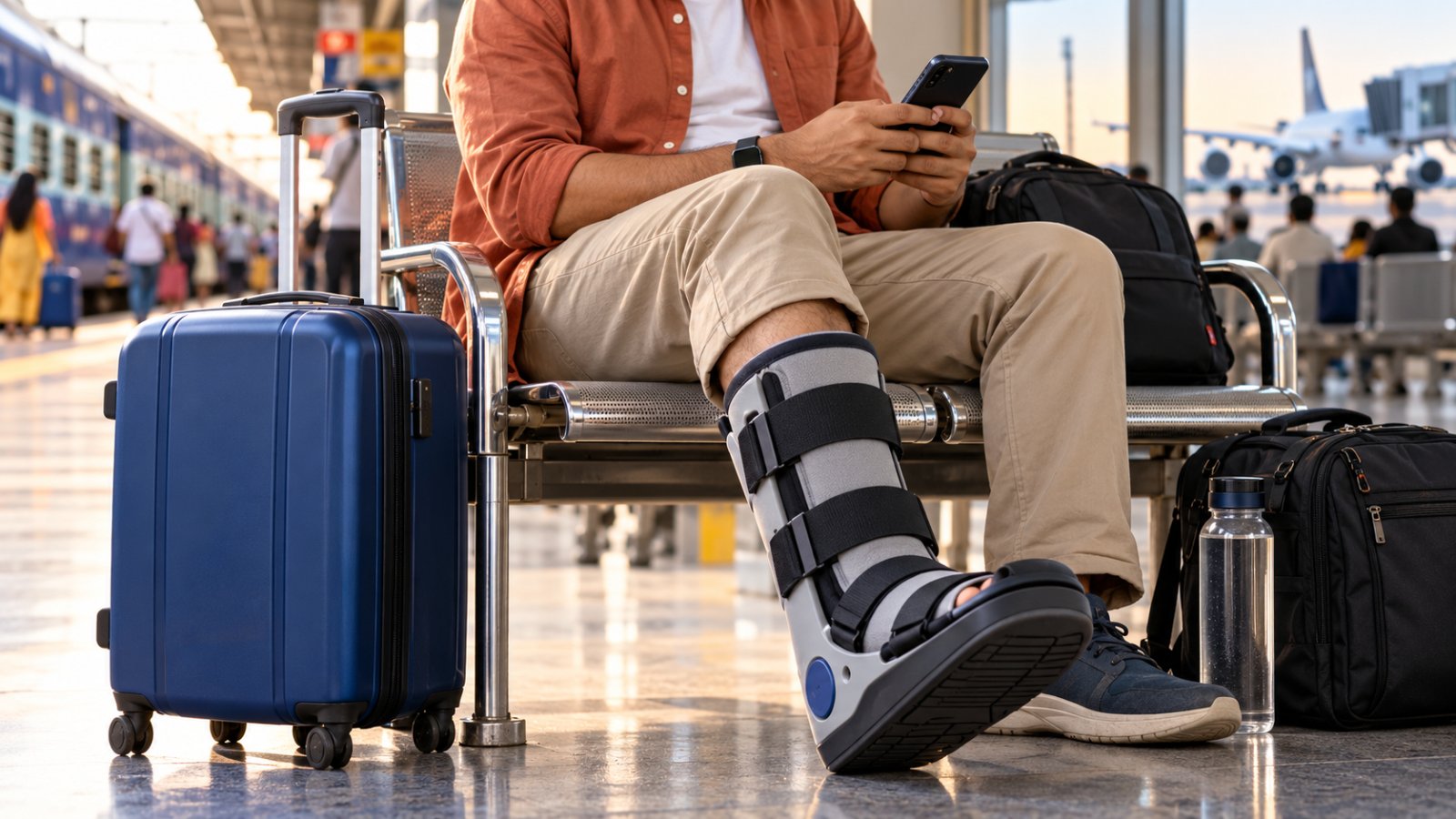
You can usually travel for Diwali in a total contact cast or offloading boot if your foot team agrees, the cast is checked within 48 hours of leaving, and you carry a wheelchair request, spare dressings and a doctor's letter. On journeys over four hours, move your hips and knees hourly and drink water to lower clot risk.
Travelling with a diabetic walking boot or total contact cast may be possible if your foot-care team confirms that your ulcer is stable and the journey is safe. Before leaving for Diwali, arrange a cast check, wheelchair assistance, dressing supplies and a doctor's letter. Long journeys also require precautions against swelling, pressure injuries and blood clots.
Diwali is a time for family gatherings, celebrations and travelling home. However, patients receiving treatment for diabetic foot ulcers need additional preparation before taking a train, flight or long road journey.
A cast or offloading boot protects the injured foot by reducing pressure on the wound. Travelling without proper planning can interrupt treatment, increase pressure on the ulcer and delay healing.
The goal is to enjoy the festival without compromising foot recovery.
Key Takeaways
-
Travel with a diabetic foot ulcer only after approval from your treating clinician.
-
Arrange a cast or boot examination before departure, ideally within 48 hours when practical.
-
Carry a doctor's letter, medicines, dressings and emergency contact information.
-
Request wheelchair assistance for stations and airports.
-
Do not remove a non-removable total contact cast yourself.
-
Keep the affected foot protected throughout the journey.
-
Long journeys over four hours may increase deep vein thrombosis (DVT) risk.
-
Seek urgent help for worsening pain, fever, unusual swelling, cold toes or suspected blood clots.
Should You Travel With a Diabetic Foot Ulcer in a Cast?
Not every patient with a diabetic foot ulcer is medically fit to travel.
The decision depends on the wound, infection status, circulation, mobility and type of offloading device.
A stable ulcer with a well-fitting cast may allow carefully planned travel.
However, patients with active infection, rapidly worsening wounds or significant circulation problems may need to postpone their journey.
When Might Travel Be Possible?
Your foot-care team may consider travel when:
-
The wound is stable or improving.
-
There are no signs of spreading infection.
-
The cast or boot fits correctly.
-
Blood circulation has been assessed where necessary.
-
The patient can avoid unnecessary walking.
-
Dressing changes and follow-up can continue.
-
Suitable medical support is available at the destination.
When Should Travel Be Postponed?
Travelling may be unsafe when you have:
-
Fever with a foot infection
-
Rapidly spreading redness
-
A worsening ulcer
-
Wet gangrene
-
Severe uncontrolled pain
-
Suspected acute limb ischaemia
-
A cast causing significant pressure or skin damage
-
A recent procedure requiring close monitoring
Patients with these findings need prompt medical assessment rather than routine travel clearance.
Why Is Offloading Important?
Offloading reduces pressure on the injured part of the foot.
According to the IWGDF 2023 offloading guideline, non-removable knee-high offloading devices are generally recommended as first-choice treatment for suitable neuropathic plantar forefoot or midfoot ulcers.
However, the appropriate device depends on wound location, infection, circulation and patient circumstances.
You can read more about offloading and preventive care.
What Should You Arrange Before Your Diwali Journey?
Preparation should begin before departure rather than after reaching the railway station or airport.
1. Schedule a Cast or Boot Check
Ask your treating team to examine the device shortly before travelling.
A review within 48 hours may be useful when practical, especially after recent cast changes or if swelling has changed.
The clinician should check:
-
Cast fit
-
Pressure points
-
Skin condition
-
Swelling
-
Wound progress
-
Signs of infection
-
Whether the device remains suitable for travel
A recent cast application may also affect airline eligibility.
2. Carry a Medical Letter
A doctor's letter should ideally include:
-
Diagnosis
-
Type of cast or offloading boot
-
Mobility restrictions
-
Whether weight-bearing is permitted
-
Current treatment
-
Required dressing schedule
-
Emergency contact details
The letter can help airport personnel, railway staff and another healthcare professional understand your needs.
3. Arrange Wheelchair Assistance
Walking long distances through stations and airports may place unnecessary pressure on a healing ulcer.
Request wheelchair assistance before the journey.
Confirm where assistance will begin and whether support is available during boarding, transfers and arrival.
4. Prepare a Dressing Kit
Carry sufficient supplies for the journey and possible delays.
Include:
-
Prescribed dressings
-
Medical tape or bandages
-
Hand sanitiser
-
Disposable gloves if recommended
-
Clean storage bags
-
Written wound-care instructions
Do not remove a total contact cast to change a dressing unless this is performed by an appropriately trained clinician.
5. Carry Medicines and Diabetes Supplies
Keep essential medicines in accessible hand luggage.
Depending on your treatment, this may include:
-
Diabetes medicines
-
Insulin and necessary storage supplies
-
Glucose meter or CGM supplies
-
Testing strips
-
Fast-acting glucose
-
Prescribed pain medicines
-
Other regular medicines
Carry enough medication for the planned stay and reasonable travel delays.
Pre-Travel Checklist for Foot Ulcer Patients
Use this checklist before leaving home.
| Checklist Item | What to Arrange |
|---|---|
| Cast or boot check | Review shortly before departure |
| Doctor's letter | Diagnosis, device details and mobility instructions |
| Wheelchair request | Arrange assistance in advance |
| Dressing kit | Carry sufficient prescribed supplies |
| Medicines | Keep medicines and prescriptions accessible |
| Glucose monitoring | Carry meter or CGM supplies and glucose records |
| Emergency contacts | Save the treating team's number and destination emergency contacts |
| Destination follow-up | Identify a clinician if wound care will be required |
| Footwear | Protect the unaffected foot with suitable footwear |
| Travel insurance | Check coverage and relevant exclusions where applicable |
Important: A checklist does not replace individual medical clearance.
Travelling by Train With a Total Contact Cast
Train journeys may involve crowded platforms, stairs, uneven surfaces and long periods of sitting.
These conditions require careful planning.
Before Boarding
-
Request available mobility assistance.
-
Arrive early to avoid rushing.
-
Use lifts or ramps where available.
-
Avoid carrying heavy luggage.
-
Ask a companion to help with boarding.
-
Keep the cast protected from rain and spills.
During the Journey
Avoid unnecessary walking through moving coaches.
Follow the weight-bearing restrictions provided by your treating clinician.
Keep the affected foot in a comfortable, supported position without placing pressure on the ulcer.
Do not rest the cast against hard edges for prolonged periods.
Can You Walk Normally in a Total Contact Cast?
Not necessarily.
Some total contact casts are designed for protected walking, while others require additional restrictions.
The ability to walk depends on the device, wound and treatment plan.
Patients should not assume that a walking cast permits unlimited activity.
Read more about the total contact cast for foot ulcers.
Flying With a Cast or Diabetic Walking Boot
Flying with a cast on the foot may be possible, but airline policies vary.
Some airlines restrict travel shortly after a full cast has been applied because swelling can develop.
They may require a medical fitness certificate or modification of the cast.
What Should You Confirm With the Airline?
Before departure, ask:
-
Is travel permitted with the current cast?
-
Is there a waiting period after cast application?
-
Is a fit-to-fly certificate required?
-
Must the cast be split or modified by a clinician?
-
Is wheelchair assistance available?
-
Are there restrictions related to seating or mobility?
Never cut, loosen or split a cast yourself to meet airline requirements.
What About Airport Security?
A cast or walking boot may require additional security screening.
Allow extra time and carry your medical documentation.
Follow the screening staff's instructions while explaining any restrictions on removing the device.
Should You Remove a Walking Boot During the Flight?
Not unless your treating clinician has specifically approved removal.
A removable boot may still be essential for protecting the ulcer.
Removing it for comfort can expose the wound to pressure during transfers or standing.
For additional information, see Aircast and walker boots.
Long Car Journeys: How to Protect Your Foot
Road travel can involve prolonged sitting, vibration and limited opportunities to change position.
Patients should plan the journey carefully.
Before Starting
Choose a seating arrangement that allows safe positioning of the affected leg.
Avoid placing luggage or other objects against the cast.
Plan stops when appropriate.
If your mobility is restricted, arrange help for entering and leaving the vehicle.
During the Journey
-
Follow prescribed offloading instructions.
-
Avoid pressure on the affected foot.
-
Change your sitting position when safe.
-
Perform permitted knee and hip movements.
-
Drink fluids regularly unless medically restricted.
-
Monitor for discomfort or swelling.
Can You Drive With an Offloading Boot?
Driving may be unsafe when a cast or boot interferes with pedal control.
This is particularly important when the right foot is affected.
Do not drive unless your treating clinician has confirmed that it is safe and you can control the vehicle normally.
You should also check applicable driving and insurance requirements.
How Can You Reduce DVT Risk During Travel?
Deep vein thrombosis is a blood clot that forms in a deep vein, usually in the leg.
Prolonged immobility can increase the risk.
Research from the WHO WRIGHT project found that venous thromboembolism risk increases after journeys lasting more than four hours.
The risk is particularly relevant when additional factors are present, such as recent surgery, reduced mobility or lower-limb immobilisation.
Practical Precautions
When medically appropriate:
-
Move your knees and hips regularly.
-
Change sitting position approximately every hour.
-
Take permitted movement breaks.
-
Maintain adequate hydration.
-
Avoid prolonged immobility.
-
Follow your prescribed activity restrictions.
Do not perform ankle exercises or remove immobilisation devices if these actions conflict with your treatment plan.
Should You Take Blood-Thinning Medicines?
Do not start aspirin or anticoagulants solely for travel without medical advice.
Patients with substantial clotting risk may require an individual prevention plan.
The treating clinician should assess the benefits and bleeding risks.
What Are the Warning Signs of DVT?
Possible symptoms include:
-
New calf pain
-
One-sided leg swelling
-
Unusual tenderness
-
Warmth or redness in the affected leg
A cast can make some symptoms harder to recognise.
Sudden breathlessness, chest pain, coughing blood or fainting may indicate pulmonary embolism and require emergency medical care.
Which Warning Signs Mean You Should Stop and Seek Help?
A cast should protect the foot, not cause worsening injury.
Patients must recognise symptoms that require urgent assessment.
Stop and Seek Help Table
| Warning Sign | Possible Concern | What to Do |
|---|---|---|
| Increasing pain or cast tightness | Pressure injury or swelling | Obtain urgent cast assessment |
| Fever or spreading redness | Infection | Seek urgent medical care |
| Unpleasant smell or discharge | Wound complication | Arrange prompt examination |
| New swelling above the cast | Swelling, pressure or possible clot | Seek medical assessment |
| New calf pain or one-sided swelling | Possible DVT | Obtain urgent medical evaluation |
| Sudden breathlessness or chest pain | Possible pulmonary embolism | Seek emergency care immediately |
| Cold, blue or newly numb toes | Circulation or pressure problem | Seek emergency assessment |
| Wet, cracked or damaged cast | Reduced protection and skin injury risk | Contact the treating team promptly |
What If the Cast Gets Wet?
A wet cast can soften, lose its shape or trap moisture against the skin.
This may increase the risk of pressure injury or skin damage.
Do not use a hairdryer or direct heat to dry the cast.
Keep weight off the affected foot as instructed and contact the treating team for advice.
How Should Dressings and Follow-Up Be Managed at Your Destination?
A Diwali journey should not interrupt essential wound care.
Before travelling, ask your clinician whether a dressing change will be required during the trip.
Arrange Local Wound Care When Necessary
If your dressing is due to be changed, identify a qualified healthcare professional at the destination.
Carry written instructions explaining:
-
Wound location
-
Dressing type
-
Frequency of changes
-
Infection warning signs
-
Offloading restrictions
-
When specialist reassessment is required
Do not allow an untrained person to remove or replace a total contact cast.
Can Follow-Up Be Done Online?
Some follow-up discussions may be suitable for teleconsultation.
However, a video consultation cannot reliably replace examination when there is concern about infection, circulation, pressure injury or cast fit.
Patients can check the availability of an online follow-up consultation.
What Should You Do After Returning?
Arrange the follow-up recommended by your foot-care team.
The clinician may reassess wound healing, swelling, skin condition and device fit.
Report any new symptoms that developed during the journey.
Offloading Boot for Diabetic Foot in Surat: Pre-Travel Assessment
Patients looking for an offloading boot for diabetic foot in surat should undergo an appropriate foot assessment before planning long-distance travel.
At Elegance Diabetic Foot & Ulcer Clinic (EDFC), Dr. Ashutosh A Shah, MBBS, MS, MCh, DNB, a Plastic and Reconstructive Surgeon, is associated with complex diabetic foot assessment and treatment planning.
A pre-travel review may involve examining the ulcer, checking the cast or walking boot, assessing mobility and providing written wound-care instructions.
Where appropriate, the treating team may also advise on follow-up arrangements during travel.
The need for in-person reassessment, device changes or specialist care depends on the patient's clinical condition.
Why Is Individual Advice Important?
Two patients wearing similar boots may have very different risks.
One may have a healing superficial ulcer, while another has infection, poor circulation or recent surgery.
Travel clearance should therefore be based on the individual patient's condition rather than the appearance of the device alone.
Conclusion
Travelling with a diabetic walking boot during Diwali requires more preparation than an ordinary journey.
A stable wound, properly fitted offloading device and clear medical instructions can make travel safer for selected patients.
Before leaving, arrange a foot examination, carry essential supplies and confirm wheelchair assistance where needed.
During train, flight or road travel, protect the affected foot, follow mobility restrictions and remain alert for pressure injuries, infection and blood-clot symptoms.
At Elegance Diabetic Foot & Ulcer Clinic, Dr. Ashutosh A Shah is associated with complex diabetic foot care and treatment planning.
The most important rule is simple: Do not allow holiday travel to interrupt prescribed offloading, wound care or urgent medical treatment.
quiz Frequently Asked Questions
This article is general education, not a diagnosis. If you have a diabetic foot wound, please have it assessed in person. Send a photo on WhatsApp or book a consultation.
About the Author

Dr. Ashutosh Shah, Plastic, Reconstructive & Diabetic Foot Surgeon, Elegance Diabetic Foot & Ulcer Clinic, Surat
Dr. Ashutosh Shah is a board certified plastic and reconstructive surgeon with over 22 years of experience and more than 10,000 limbs and feet saved. He founded Elegance Diabetic Foot & Ulcer Clinic, India's first chain of clinics dedicated to foot care, with centres in Surat and OPD partners across South Gujarat. He is known for a limb first approach, safe wound care and ethical, natural results.