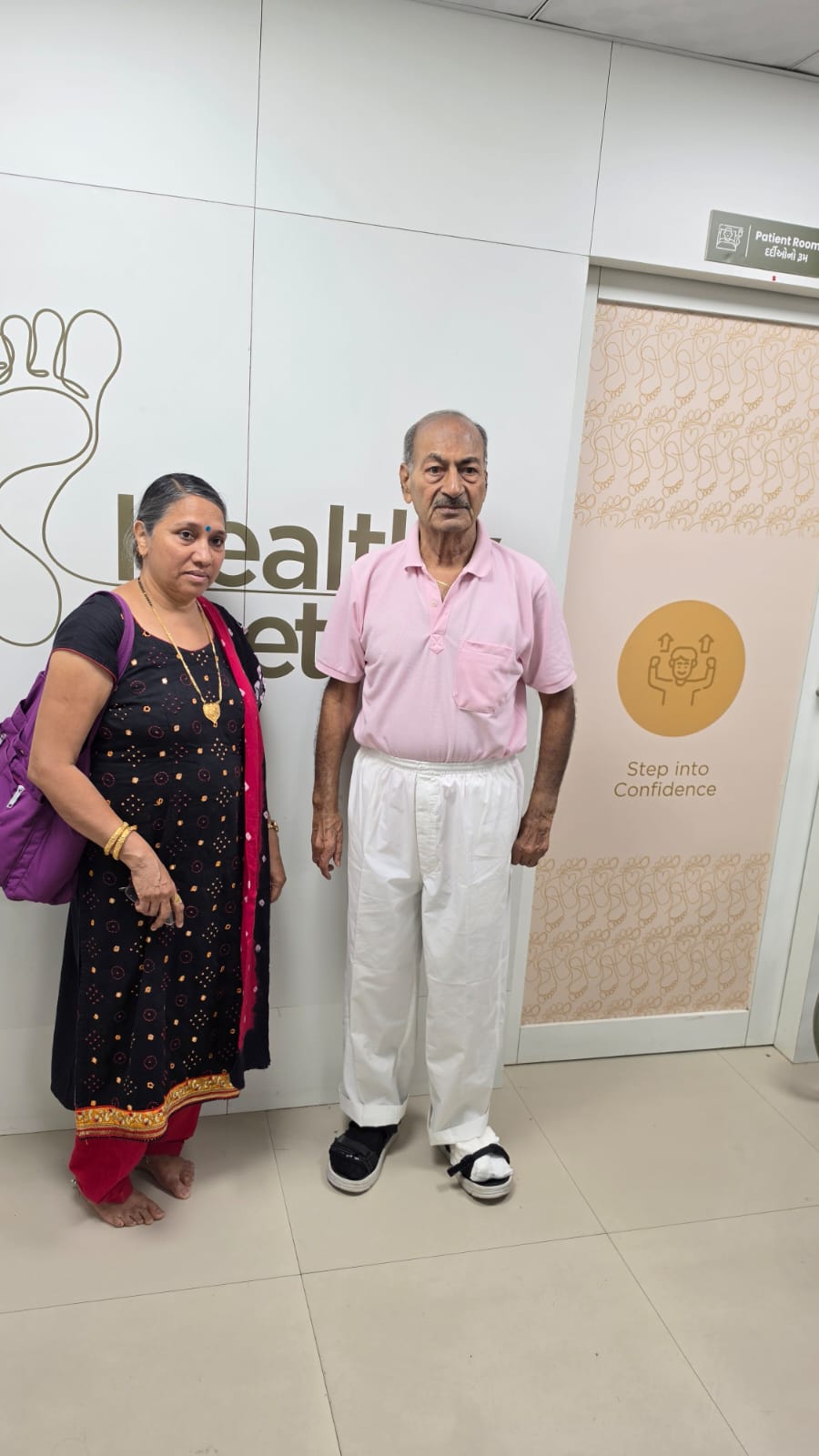
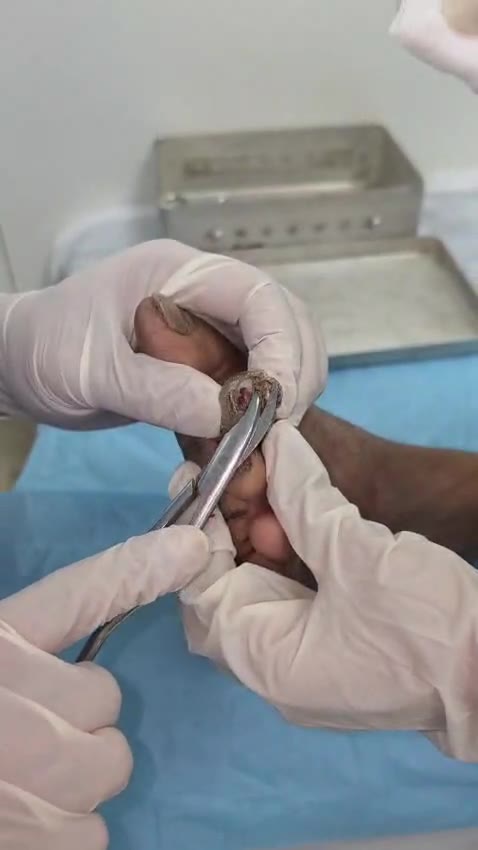
A diabetic patient's infected second toe with dead tissue was treated with careful surgical debridement by Dr. Ashutosh Shah at EDFC Surat, helping save the toe and prevent the infection from spreading.
In short: A diabetic foot patient came to Elegance Diabetic Foot & Ulcer Clinic (EDFC), Surat, with an infected second toe covered in dead tissue and infected slough. Dr. Ashutosh Shah, plastic surgeon and diabetic foot specialist, carefully removed the dead and infected tissue while preserving as much healthy structure as possible. With dressings and off-loading, the toe began to heal, helping save the toe and prevent the infection from reaching the bone.
Presentation
Because of nerve damage and reduced blood supply, the patient had developed necrotic (dead) tissue and infected slough around the second toe. This was stopping natural healing and raised the risk of the infection spreading to deeper tissue and bone.
Treatment at EDFC
- Assessment: Dr. Ashutosh Shah examined the toe to judge how far the dead tissue and infection had spread.
- Surgical debridement: all dead, infected and non-viable tissue was removed, keeping as much healthy toe structure as possible, as part of our wound care and debridement service.
- Modern dressings: suitable dressings were applied to keep the wound clean and support healing.
- Off-loading: pressure was kept off the toe with off-loading footwear.
Outcome
Debridement lowered the bacterial load and cleaned the wound bed, allowing healthy granulation tissue to form. Timely treatment helped save the toe and prevent complications such as osteomyelitis (bone infection) and amputation.
Why a small toe wound needs early care in diabetes
With nerve damage, a toe infection may not hurt, so it can go unnoticed until dead tissue or gangrene appears. Early debridement and dressing care give the best chance of saving the toe. Check your feet daily and see a doctor quickly if a toe changes colour, swells or has discharge.
Questions about infected toes in diabetes
Can an infected diabetic toe be saved without amputation?
Often yes, if it is treated early. Removing dead and infected tissue, good dressings, off-loading and infection control can save the toe. When infection has spread to the bone or blood supply is very poor, more surgery may be needed.
Why does a diabetic toe get infected easily?
Nerve damage can hide small injuries, and reduced blood flow slows healing and weakens the body's defence against infection, so a minor wound can quickly become infected.
What happens if a toe infection reaches the bone?
Infection in the bone, called osteomyelitis, is harder to treat and may need longer antibiotics or surgery to remove the infected bone. Early treatment helps prevent this.
What are the warning signs of a toe infection?
Redness, swelling, warmth, discharge, a bad smell, black or dark skin, or fever are warning signs. People with diabetes should get these checked the same day.
Medically reviewed by Dr. Ashutosh Shah, plastic surgeon and diabetic foot specialist, Elegance Diabetic Foot & Ulcer Clinic, Surat.
Have a foot wound that is not healing? Book a consultation with Dr. Ashutosh Shah, or read Prabhubhai's debridement story.
Every patient is different. Results depend on the condition, its stage and overall health. Shared with the patient's consent. If you have a diabetic foot wound, please have it assessed in person. Send a photo on WhatsApp or book a consultation.