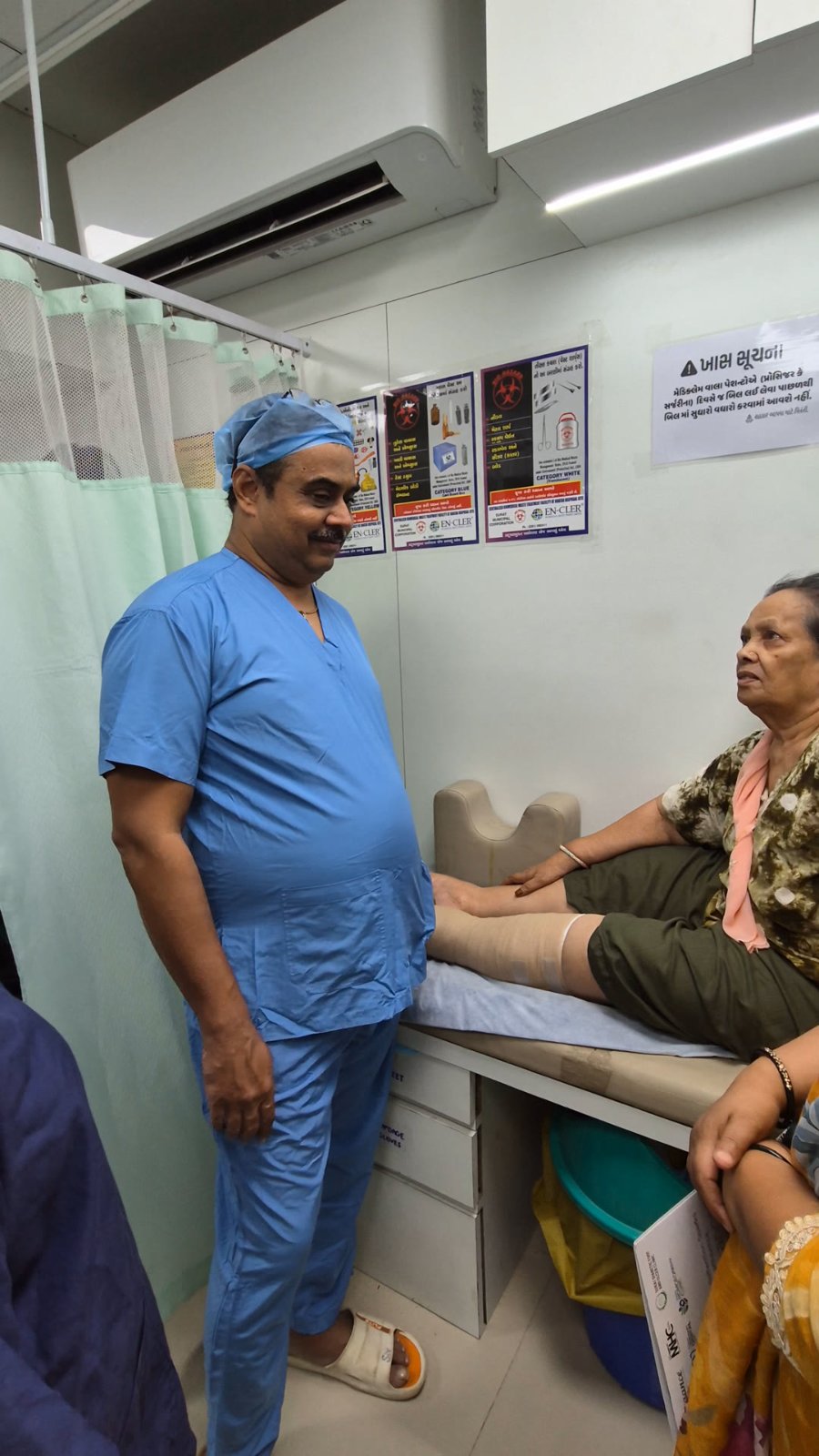
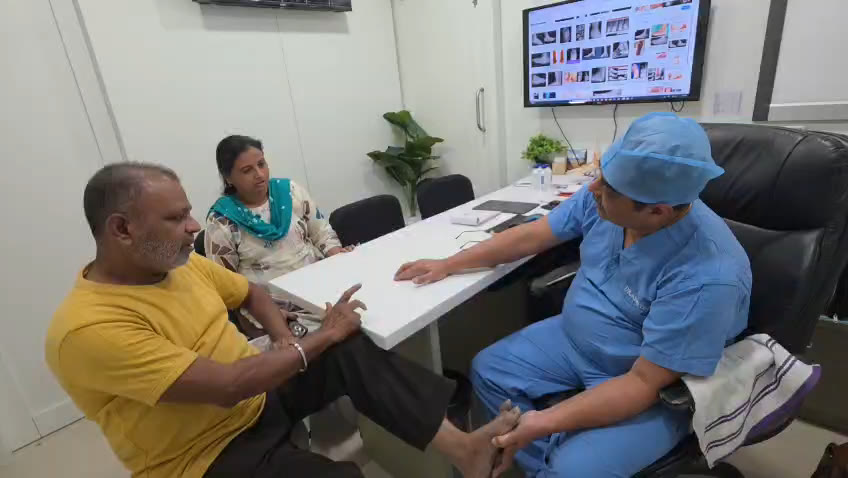
In this video, Dr. Ashutosh Shah explains to a patient how diabetes damages nerves and blood flow in the feet, why foot ulcers heal slowly, and what treatment and daily foot care help them heal.
In short: In this video, Dr. Ashutosh Shah, plastic surgeon and diabetic foot specialist at Elegance Diabetic Foot & Ulcer Clinic (EDFC), Surat, counsels a patient about a diabetic foot ulcer. He explains why the ulcer formed, why it heals slowly, and the steps needed to heal it: timely treatment, modern dressings, off-loading pressure, proper footwear and daily foot care.
What Dr. Ashutosh Shah explains in the video
- How diabetes affects the feet: diabetes can damage the nerves and reduce blood flow to the feet, so small cuts and blisters go unnoticed.
- Why ulcers form and do not heal: an unnoticed injury, constant pressure while walking and poor circulation can turn a small wound into a non-healing diabetic foot ulcer.
- Treatment steps: timely treatment, modern wound dressings, pressure off-loading and proper footwear.
- Daily foot care: checking the feet every day and knowing which warning signs need immediate medical attention.
Why patient counselling matters
Healing a diabetic foot ulcer depends as much on what the patient does at home as on treatment at the clinic. When patients understand why the ulcer formed, they are more likely to keep pressure off the foot, wear the right footwear and come for follow-ups. This counselling is a core part of our Bye-Bye Ulcer Program and foot care education.
Questions about diabetic foot ulcers
Why do diabetic foot ulcers heal slowly?
Diabetes can reduce blood flow and weaken the body's defence against infection, while nerve damage means pressure on the wound is not felt. Together, these slow down healing unless the wound is treated and protected properly.
What causes a diabetic foot ulcer?
Most ulcers start from a small injury, blister or pressure point that is not felt because of nerve damage. Repeated pressure from walking, poor-fitting footwear and reduced blood flow then turn it into an ulcer.
Which warning signs need immediate medical attention?
See a doctor the same day for redness, swelling, warmth, discharge, a bad smell, black or dark skin, a new wound that is not healing, or fever.
How can I prevent a diabetic foot ulcer?
Check your feet daily, keep blood sugar under control, wear well-fitted footwear, never walk barefoot, and get regular foot check-ups, especially if you have reduced feeling in your feet.
Medically reviewed by Dr. Ashutosh Shah, plastic surgeon and diabetic foot specialist, Elegance Diabetic Foot & Ulcer Clinic, Surat.
Have a foot wound that is not healing? Book a consultation with Dr. Ashutosh Shah, or read Bhavnaben's diabetic foot ulcer story.
Every patient is different. Results depend on the condition, its stage and overall health. Shared with the patient's consent. If you have a diabetic foot wound, please have it assessed in person. Send a photo on WhatsApp or book a consultation.