
Callus Management
Careful reduction of hard skin before the pressure underneath turns into an ulcer.
Key Takeaways
- Callus is a pressure signal, not just dry skin.
- Thick callus presses inward and ulcers often form underneath it, hidden from view.
- Blades, files and medicated caps used at home are a common cause of diabetic foot wounds.
- Lasting control needs offloading, so footwear and insoles are assessed alongside treatment.
What Is a Callus and Why Does It Form?
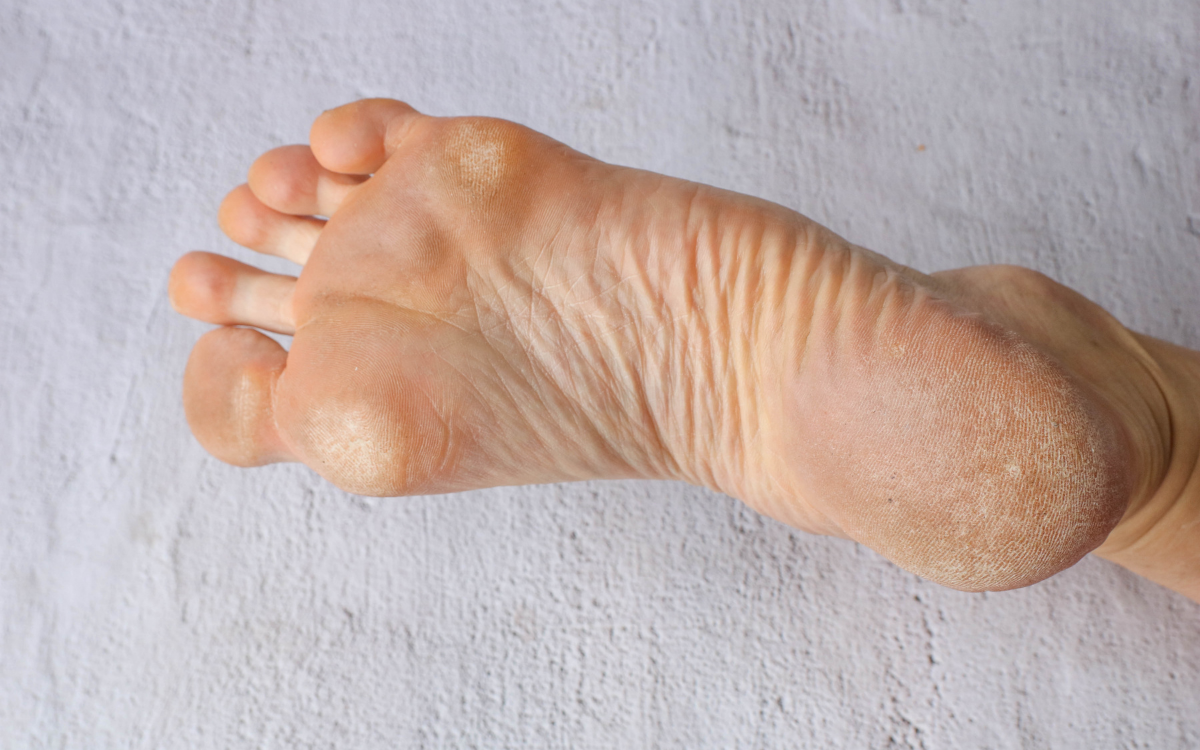
Callus: a thickened patch of skin that builds up where repeated pressure or friction falls on the foot.
The body creates callus to protect itself. However, in a diabetic foot the protection backfires. Hard skin is stiffer than normal skin, so it pushes pressure downward into the softer tissue below. Over time, that tissue breaks down and a wound forms under the callus, often unnoticed until the surface finally opens.
Why Is Home Callus Removal Dangerous?
Because the tools are blunt instruments in a sensitive situation. Blades cut deeper than intended, pumice files break fragile skin, and medicated callus caps contain acid that burns healthy tissue around the callus. Since sensation is reduced, none of this hurts at the time.
Many ulcers we treat in Surat began exactly this way, with a patient trying to tidy up hard skin at home over a weekend.
How Does Clinical Callus Management Work?
Hard skin is reduced in thin layers using sterile instruments, stopping well before healthy tissue. Meanwhile, we look underneath for the dark spot or soft area that signals a wound forming. If bleeding, fluid or a cavity appears, treatment shifts immediately to wound care.
Afterwards, attention turns to why the callus formed. Pressure mapping, footwear checks and insoles all reduce the load on that spot, which is what stops it returning so fast.
How Often Should Callus Be Treated?
Every six to eight weeks works for most patients, though feet with deformity or previous ulcers may need monthly care. Regular reduction is safer than waiting until the callus is thick, because thick callus is harder to remove without disturbing the skin below.
What Does Callus Treatment Cost?
Callus reduction forms part of a medical pedicure and is inexpensive. Compare that with an ulcer, which needs months of dressings and sometimes surgery. Preventive sessions remain one of the cheapest ways to protect a diabetic foot.