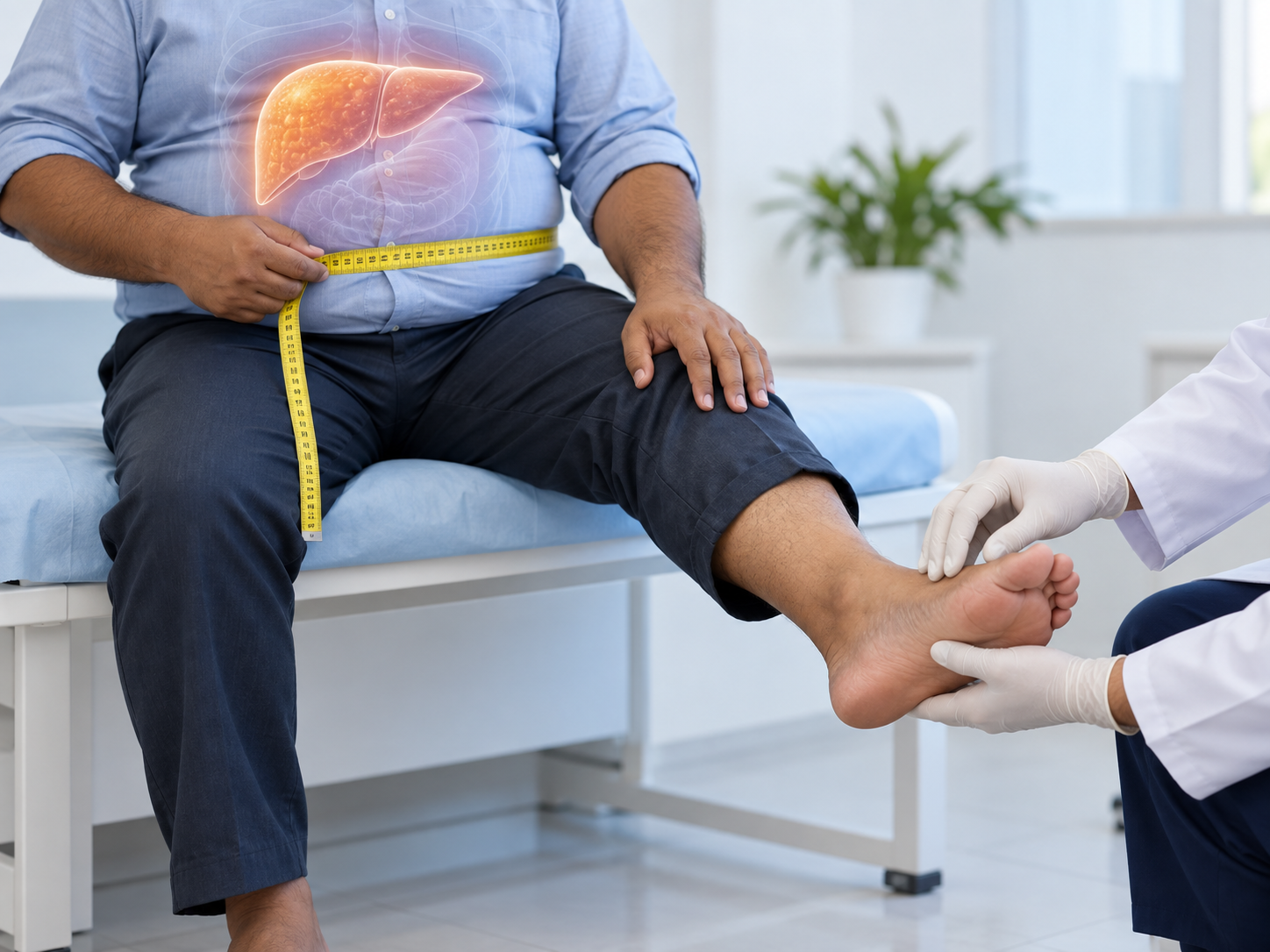
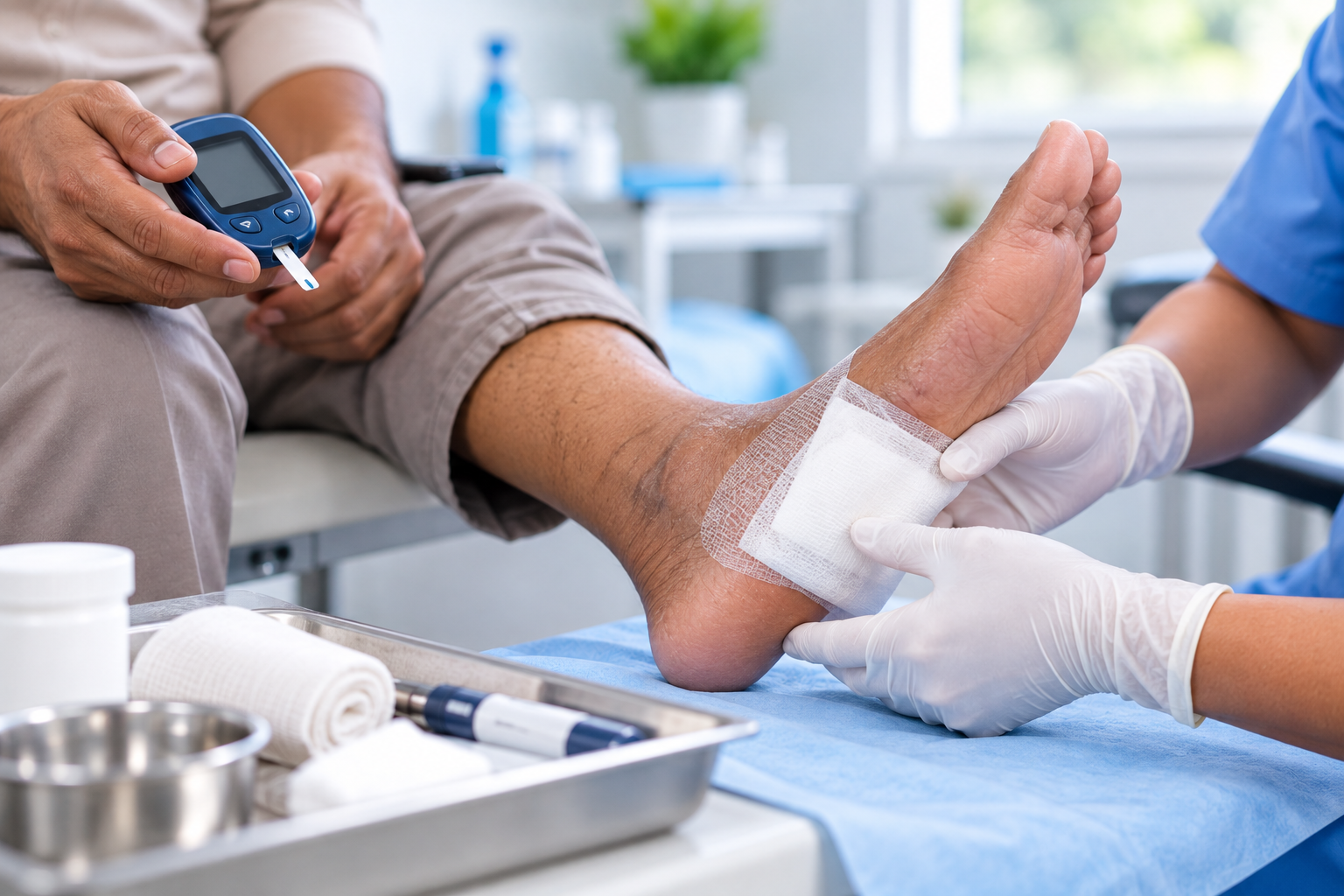
Aim for fasting sugar of 100–140 mg/dL and post-meal sugar below 180 mg/dL while a wound is healing. Infection raises blood sugar even without a change in diet, so many patients are temporarily moved from tablets to insulin during treatment and moved back once the wound closes.
At Elegance Diabetic Foot & Ulcer Clinic, Dr. Ashutosh A Shah considers glucose control alongside wound care, infection, circulation, pressure relief and nutrition. Good sugar control for wound healing is one part of the treatment plan; controlling glucose alone cannot replace proper wound treatment.
What Sugar Targets Does a Healing Wound Actually Need?
The supplied treatment plan gives practical glucose targets during wound healing:
-
Fasting blood sugar: 100–140 mg/dL
-
Post-meal blood sugar: under 180 mg/dL
These targets provide a working range during treatment rather than a guarantee that a wound will heal simply because the numbers are achieved.
A diabetic foot wound can remain difficult to heal because of infection, inadequate blood supply, repeated pressure, poor nutrition or deeper tissue involvement even when glucose control improves.
This is why sugar control for wound healing should be considered together with treatment of the wound itself.
Patients who need broader diabetes management can read about the Diabetes remission clinic.
Why Does Infection Push Sugars Up Even Without a Diet Change?
A patient may say:
“My diet has not changed, so why has my sugar suddenly gone up?”
The wound infection itself can be part of the explanation.
During infection, the body is under physiological stress. Blood glucose can rise even when the patient has not suddenly started eating more carbohydrates or sweets.
This creates an important clinical problem.
The wound infection can make glucose control more difficult at the same time that glucose management is becoming more important.
A sudden rise in sugar during an infected diabetic foot should therefore not automatically be blamed on diet alone.
The wound and infection also need reassessment.
Why Did My Sugar Rise When the Wound Got Infected?
An infection places additional stress on the body and can increase blood glucose.
This means previously acceptable glucose readings may become harder to maintain during an active diabetic foot infection.
The treatment plan may therefore need adjustment while the infection is being treated.
Once the infection and wound improve, glucose requirements may change again.
That is one reason medication changes made during an active infection should not automatically be assumed to be permanent.
Why Are Tablets Often Switched to Insulin During Wound Treatment?
The supplied plan states that many patients are moved from tablets to insulin during infection and moved back once the wound closes.
This does not mean every patient with an ulcer automatically needs insulin.
It means that medication requirements can change when the body is dealing with infection and an active wound.
Insulin may be used during this period as part of an individual diabetes-management plan.
The decision should be made by the clinician managing the patient's glucose rather than by the patient independently stopping tablets or starting insulin.
For specialist diabetes input during wound treatment, see Endocrinologist opinion.
Will I Stay on Insulin Forever?
Not necessarily.
According to the supplied plan, many patients who are moved from tablets to insulin during wound treatment may be moved back after the wound closes.
However, this is an individual medical decision.
Whether insulin remains necessary depends on the patient's diabetes, glucose readings, infection status and overall treatment requirements.
Patients should therefore not stop insulin themselves simply because the wound appears better.
Medication changes should follow the clinician managing their diabetes.
Can High Sugar Alone Stop a Wound Healing?
High blood glucose can make wound management more difficult, which is why sugar control for wound healing is included in the treatment plan.
However, a wound that is not progressing should not automatically be blamed only on sugar.
Other important causes may include:
-
Persistent infection
-
Poor arterial circulation
-
Continued pressure on the wound
-
Inadequate offloading
-
Nutritional problems
-
Deeper infection
-
Other wound-related factors
A stalled wound therefore needs reassessment rather than simply increasing diabetes medication and continuing the same wound treatment indefinitely.
What About HbA1c and Foot Ulcer Healing?
HbA1c provides a broader picture of glucose control over time, whereas fasting and post-meal readings show what is happening more immediately.
Both can contribute useful information during wound treatment.
However, the supplied 27 September plan does not specify a single HbA1c percentage that guarantees wound healing.
This is important because a wound does not heal according to HbA1c alone.
The clinical team must also consider infection, circulation, pressure, wound depth and nutrition.
What HbA1c Is Needed for a Foot Wound to Heal?
There is no specific HbA1c target supplied in this content plan that guarantees a diabetic foot wound will heal.
HbA1c is useful for understanding longer-term glucose control, but wound healing also depends on adequate blood supply, infection control, pressure relief and appropriate wound management.
The patient's target should therefore be individualised by the diabetes team.
How Do Steroids and Some Antibiotics Affect Sugars?
The supplied plan specifically requires glucose monitoring when steroids or certain antibiotics are being used during wound treatment.
Medication can change glucose readings during an illness.
Steroids are particularly relevant because patients may notice higher readings while taking them.
The supplied source does not provide specific numerical adjustments for insulin or diabetes tablets in response to steroids or antibiotics.
Those changes should therefore be made individually by the treating clinician.
Do not independently increase, reduce or stop prescribed diabetes medication simply because glucose changes after starting another medicine.
Sugar Management During Wound Healing
| Measurement | Target While the Wound Is Healing | What an Out-of-Range Value Means | Action |
|---|---|---|---|
| Fasting sugar | 100–140 mg/dL | Glucose is outside the supplied treatment target | Record readings and discuss persistent abnormal values with the diabetes team |
| Post-meal sugar | Below 180 mg/dL | Repeated higher readings suggest control needs review | Review glucose management with the treating clinician |
| HbA1c | No exact target specified in the supplied plan | Shows longer-term glucose control but does not determine wound healing alone | Individualise the target with the diabetes team |
| Ketones | No numerical target supplied in the plan | Presence can be important when the patient is unwell or glucose is markedly elevated | Seek medical advice according to the clinical situation |
| Red flag | Sugar above 300 mg/dL with vomiting, drowsiness or a smelling foot | Potentially serious illness in a patient with an active wound | Go to hospital the same day |
How Often Should Sugars Be Checked During Treatment?
Blood glucose needs closer attention while an active wound or infection is being treated.
The supplied plan requires this question to be addressed but does not specify an exact universal testing frequency.
How often an individual patient should test depends on factors such as:
-
Current diabetes treatment
-
Whether insulin is being used
-
Infection severity
-
Recent glucose readings
-
Medication changes
-
Steroid treatment
-
Whether the patient is eating normally
-
Instructions from the diabetes team
A person taking insulin during an active infection may therefore have a different monitoring schedule from someone with stable readings managed on tablets.
Keep a Record of Your Readings
When monitoring glucose during wound treatment, recording the results can make the review more useful.
A simple record can include:
-
Fasting reading
-
Post-meal reading
-
Time of measurement
-
Insulin or diabetes medicine taken
-
Changes in appetite
-
Fever or other symptoms
-
New medications
-
Changes in the foot wound
This allows the treating team to see whether glucose changes are temporary or persistent and whether they correspond with infection or medication changes.
How Do Diet and Nutrition Fit Into Wound Healing?
Glucose control should not lead to ignoring nutrition.
A healing wound still places nutritional demands on the body.
Rather than making extreme dietary restrictions simply to lower a single glucose reading, nutrition should be considered as part of the overall wound-healing plan.
Patients can read the clinic's Diet and nutrition information and Diet and diabetes guidance for further guidance.
Why Sugar Control Cannot Replace Wound Treatment
A patient may improve their glucose substantially while the ulcer still fails to close.
That does not necessarily mean the glucose treatment has failed.
It may mean another barrier to wound healing remains.
For example, a plantar ulcer that is repeatedly walked on still needs pressure relief.
A wound with poor arterial circulation needs circulation assessment.
An infected wound needs appropriate infection management.
A deeper wound may require investigation for involvement of deeper tissues.
Therefore, sugar control for wound healing works alongside wound-specific treatment rather than replacing it.
What Happens When the Wound Starts Healing?
As infection settles and the wound improves, glucose requirements may change.
A patient who temporarily required insulin during active infection may not necessarily need the same plan indefinitely.
However, medication should not be reduced or stopped simply because the wound looks smaller.
The diabetes team should review glucose readings and decide whether treatment needs adjustment.
This is particularly important if appetite, activity levels or other medications have also changed during recovery.
Which Sugar Readings With a Wound Mean Going to Hospital Today?
The supplied plan identifies one clear same-day red flag:
Blood sugar above 300 mg/dL together with vomiting, drowsiness or a smelling foot means going to hospital the same day.
The combination matters.
A patient with a diabetic foot wound who is becoming systemically unwell should not simply wait for the next routine dressing appointment.
Vomiting or drowsiness alongside very high glucose can indicate a more serious problem requiring urgent medical assessment.
A foul or smelling foot can also suggest significant infection.
Do Not Treat the Glucose Number and Ignore the Foot
A glucose reading is only one part of the clinical picture.
If sugar is high because a foot infection is worsening, simply increasing attention to glucose without reassessing the wound can miss the underlying problem.
Similarly, a patient whose glucose appears acceptable can still have a serious diabetic foot infection.
The wound itself must continue to be assessed for changes in:
-
Swelling
-
Smell
-
Infection
-
Tissue condition
-
Circulation
-
Depth
-
Healing progress
The safest approach is to treat the patient, the diabetes and the wound together.
Conclusion
Good sugar control for wound healing supports diabetic foot treatment, but glucose is only one part of the healing process. The supplied plan uses fasting readings of 100–140 mg/dL and post-meal readings below 180 mg/dL while a wound is healing, with medication adjusted according to the patient's clinical situation.
At Elegance Diabetic Foot & Ulcer Clinic, Dr. Ashutosh A Shah works within a wound-care approach that considers glucose control alongside infection, circulation, pressure relief and nutrition. Patients whose glucose rises significantly during an infected wound should have both the diabetes and the foot reassessed rather than concentrating on only one problem.
quiz Frequently Asked Questions
This article is general education, not a diagnosis. If you have a diabetic foot wound, please have it assessed in person. Send a photo on WhatsApp or book a consultation.
About the Author

Dr. Ashutosh Shah, Plastic, Reconstructive & Diabetic Foot Surgeon, Elegance Diabetic Foot & Ulcer Clinic, Surat
Dr. Ashutosh Shah is a board certified plastic and reconstructive surgeon with over 22 years of experience and more than 10,000 limbs and feet saved. He founded Elegance Diabetic Foot & Ulcer Clinic, India's first chain of clinics dedicated to foot care, with centres in Surat and OPD partners across South Gujarat. He is known for a limb first approach, safe wound care and ethical, natural results.