Written by Dr. Ashutosh Shah, Plastic & Microvascular Surgeon - Diabetic Foot & Limb Salvage Specialist, Elegance Diabetic Foot & Ulcer Clinic (EDFC), Surat. Practising since 2004 (22+ years). Read full bio.
Medically reviewed by Dr. Ashutosh Shah
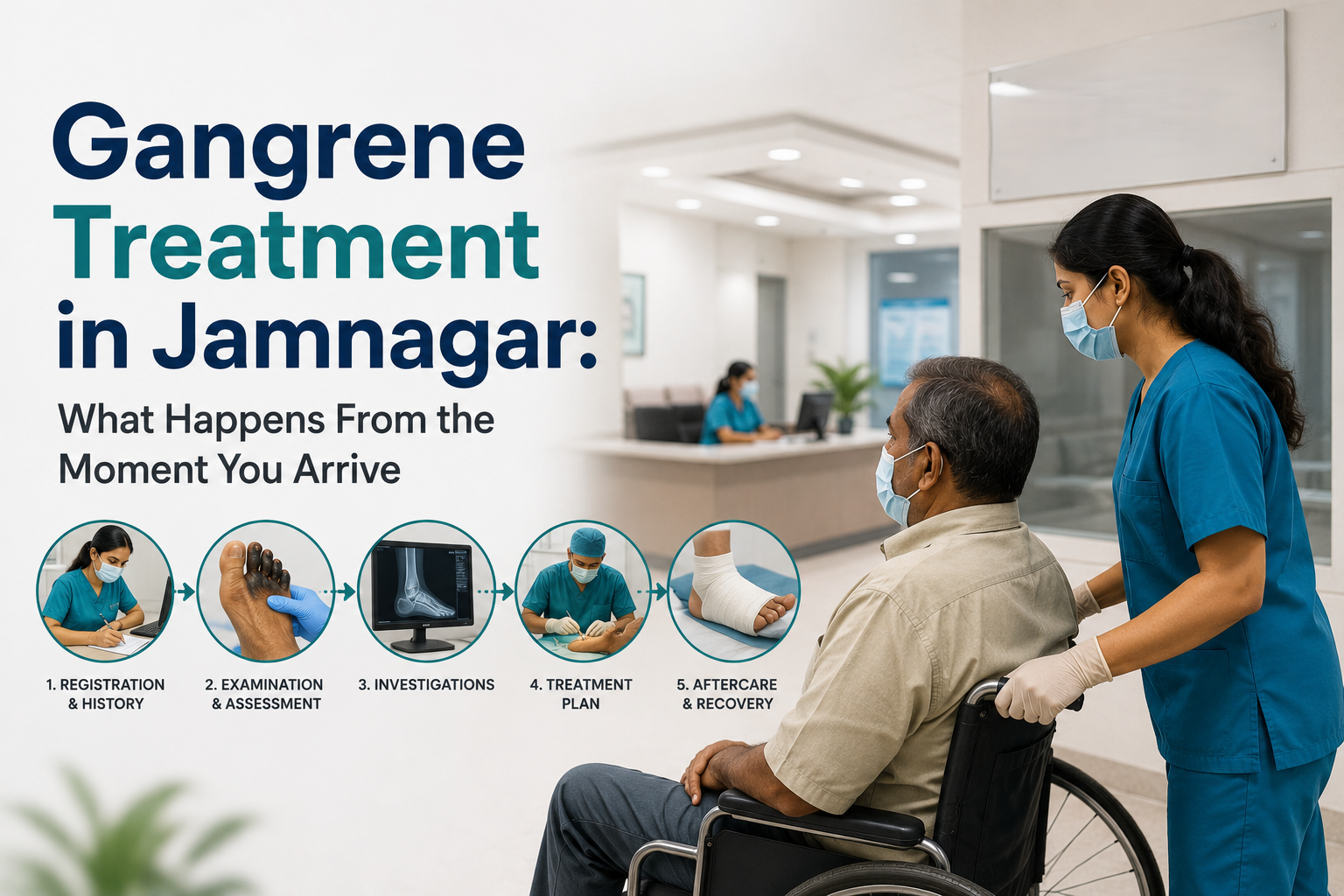
If tissue on your foot is turning black, go to a hospital today. Gangrene treatment in Jamnagar is staged: stabilise the person, remove dead tissue, restore blood flow, control infection, then reconstruct. What decides the outcome is how early that sequence starts.
Read the next section first if you are looking at a blackening toe right now. The rest of this page explains what will happen once you present, because knowing the sequence makes a frightening admission easier to follow.
Should you go now, or can it wait?
Go now if there is any of the following. Gangrene with infection can become life-threatening within a day, and every hour of delay costs tissue that cannot be recovered.
- Spreading blackening or darkening of a toe or part of the foot.
- Swelling, redness spreading up the foot, pus or foul smell.
- Fever, chills, confusion or feeling suddenly very unwell.
- A cold, pale or blue foot, with or without pain.
- Severe pain, or new pain in a foot that is normally numb.
Painlessness is not reassurance. In a foot with nerve damage, dead tissue frequently causes no pain at all, which is exactly why people arrive late.
One thing to be clear about: our clinic is in Surat, several hundred kilometres away. If this is an emergency, do not travel here instead of attending a hospital locally. Get treated in Jamnagar today. We can help afterwards with reconstruction, a second opinion or follow-up.
The first hour: what will they do?
Assess how sick you are, not just how the foot looks. The immediate priority is deciding whether infection is threatening your life, because that changes everything about the plan.
- Examination of the foot and leg, checking how far the dead tissue extends.
- Pulses and circulation check, often with a handheld Doppler.
- Blood tests: infection markers, sugar, kidney function, haemoglobin.
- Blood sugar stabilisation, often with insulin and fluids.
- Intravenous antibiotics started immediately where infection is present.
- X-ray to look for gas in the tissue or bone involvement.
- Cultures taken before or during the first surgery.
The first 24 hours: surgery or wait?
Wet gangrene goes to theatre urgently; dry gangrene may be given a little more time. That distinction drives the whole first day, and it is explained more fully in our post on diabetic gangrene treatment.
| Type | What it looks like | Usual first step |
|---|---|---|
| Wet gangrene | Swollen, moist, foul smelling, pus, spreading redness, fever | Emergency surgery, often the same day |
| Gas gangrene | Rapid swelling, crackling under the skin, very unwell | Immediate surgery, intensive care |
| Dry gangrene | Dry, shrunken, black, clear border, no discharge | Urgent assessment, circulation work-up first |
If surgery is needed, the first operation is a debridement: dead and infected tissue is removed and pus drained. It is not the definitive operation, and the surgeon will usually say so in advance. Its job is to stop the spread.
Days two to seven: why more than one operation?
Because the boundary between dead and living tissue is not fully visible on day one. Planned repeat inspections every day or two are normal practice, not a sign something went wrong.
- Repeat debridement until the remaining tissue is clean and viable.
- Antibiotics narrowed once culture results identify the organism.
- Circulation investigation: Doppler, angiography, and angioplasty or bypass where arteries are blocked, as provided through our vascular services.
- Negative pressure dressings to manage the wound between procedures, described under non-surgical wound management.
- Blood sugar, nutrition and anaemia corrected, since all three affect healing.
Restoring blood flow is often the step that changes everything. A wound that looked hopeless can begin healing within weeks once the artery feeding it is reopened.
Will you lose part of the foot?
Some tissue that has already died will be removed, yes. Dead tissue cannot be revived. The realistic goal is losing as little as possible, and often removing a toe is precisely what allows the rest of the foot to be saved.
The honest position is that nobody can promise an intact foot before the tissue is assessed. What can be promised is that the aim is the smallest removal compatible with a healed, weight-bearing foot, and that the alternatives to a major amputation are properly explored. That process is set out in our post on limb preservation surgery.
Weeks two to six: rebuilding
Once infection is controlled and blood flow is adequate, attention turns to closing the wound. This is the reconstructive phase, and it is staged rather than done in one operation.
- Wound bed preparation until the surface is clean and granulating.
- Skin grafting where the base is vascular, covered in our post on skin grafting for diabetic wounds.
- Flap reconstruction where bone or tendon is exposed and a graft cannot survive.
- Correction of pressure points so the healed area is not immediately re-injured, through diabetic foot surgery.
- Gradual weight bearing in protective footwear.
When is amputation the right decision?
When the tissue cannot be saved, when infection threatens life, or when the foot would never bear weight or be free of pain. In those situations a planned amputation is the safer and kinder choice, not a failure.
- Overwhelming infection or sepsis despite surgery and antibiotics.
- Arteries that cannot be reopened, so healing is impossible.
- Tissue loss so extensive that no usable foot would remain.
- Frailty or illness that makes months of staged reconstruction unsafe.
Anyone who tells you every limb can be saved is not being honest. The right question is whether circulation was properly assessed and a reconstructive opinion sought before that decision was made.
The months after: keeping what was saved
A healed foot after gangrene stays healed only with lifelong protection. The diabetes and circulation problems that caused it have not gone away, and the healed area is thinner and more fragile than normal skin.
- Custom insoles and protective footwear, worn all the time rather than outdoors only.
- Daily foot inspection, including between the toes and the soles.
- Never walking barefoot.
- Prompt review of any new wound, within days rather than weeks.
- Blood sugar control and stopping smoking, both of which directly affect recurrence.
- Scheduled follow-up under preventive foot care.
What should the family do while this is happening?
Gather the paperwork and keep a record. Staged treatment involves several teams, and a complete file prevents repeated tests and delayed decisions.
- Collect all imaging and reports, including any Doppler or angiogram.
- Keep a written list of medicines and current insulin doses.
- Note the questions you want answered before each ward round.
- Ask whether circulation has been formally tested, and what it showed.
- Ask what the plan is for closing the wound, not just for controlling infection.
- Take dated photographs of the wound with permission, so change is objective.
If you want a structured way to judge the care being given, our post on choosing a diabetic foot clinic in Jamnagar sets out eight capabilities to check. The full range of related problems is listed under foot conditions we treat, with more on gangrene specifically.
How EDFC can help, and how it cannot
Elegance Diabetic Foot & Ulcer Clinic is in Surat, not Jamnagar, and we do not have a branch there. For an active emergency, local hospital care comes first, always.
Where we can help is after the emergency is controlled: a reconstructive opinion when closure is being planned, a second opinion when amputation has been advised without circulation testing, and ongoing limb salvage care for patients able to travel. Send clear photographs and reports on WhatsApp and book a consultation. Follow EDFC on Facebook, Instagram and YouTube for real limb salvage stories.
Hours decide how much is saved
Gangrene does not stabilise on its own and does not respond to dressings, tablets or home remedies. The amount of foot that can be kept is largely decided in the first days, which is why presenting today rather than next week matters more than anything else on this page.
Next step: if tissue is blackening, go to a hospital in Jamnagar now. Once treatment has started, send photographs and reports to Dr. Ashutosh Shah at Elegance Diabetic Foot & Ulcer Clinic, Surat for a view on reconstruction and limb salvage options.
Medical disclaimer: This article is for educational purposes only and is not a substitute for professional medical diagnosis or treatment. Gangrene is a medical emergency and requires immediate in-person assessment. Elegance Diabetic Foot & Ulcer Clinic is located in Surat, Gujarat, and does not operate a facility in Jamnagar; do not delay local emergency care in order to seek a remote opinion. Please consult a qualified specialist about your condition. For further guidance, see the NHS guide to gangrene and the IWGDF diabetic foot guidelines.
quiz Frequently Asked Questions
This article is general education, not a diagnosis. If you have a diabetic foot wound, please have it assessed in person. Send a photo on WhatsApp or book a consultation.
About the Author

Dr. Ashutosh Shah, Plastic, Reconstructive & Diabetic Foot Surgeon, Elegance Diabetic Foot & Ulcer Clinic, Surat
Dr. Ashutosh Shah is a board certified plastic and reconstructive surgeon with over 22 years of experience and more than 10,000 limbs and feet saved. He founded Elegance Diabetic Foot & Ulcer Clinic, India's first chain of clinics dedicated to foot care, with centres in Surat and OPD partners across South Gujarat. He is known for a limb first approach, safe wound care and ethical, natural results.