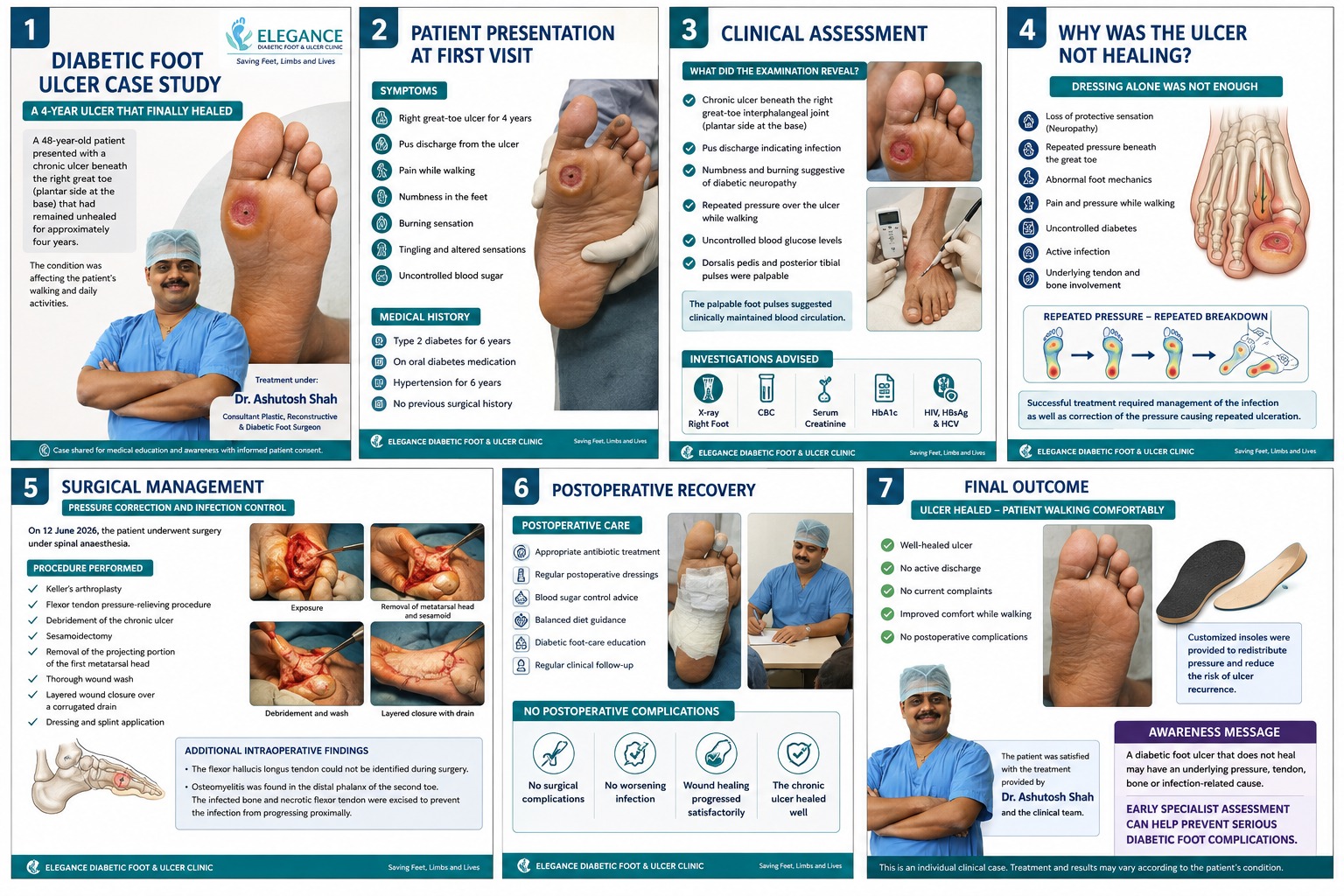
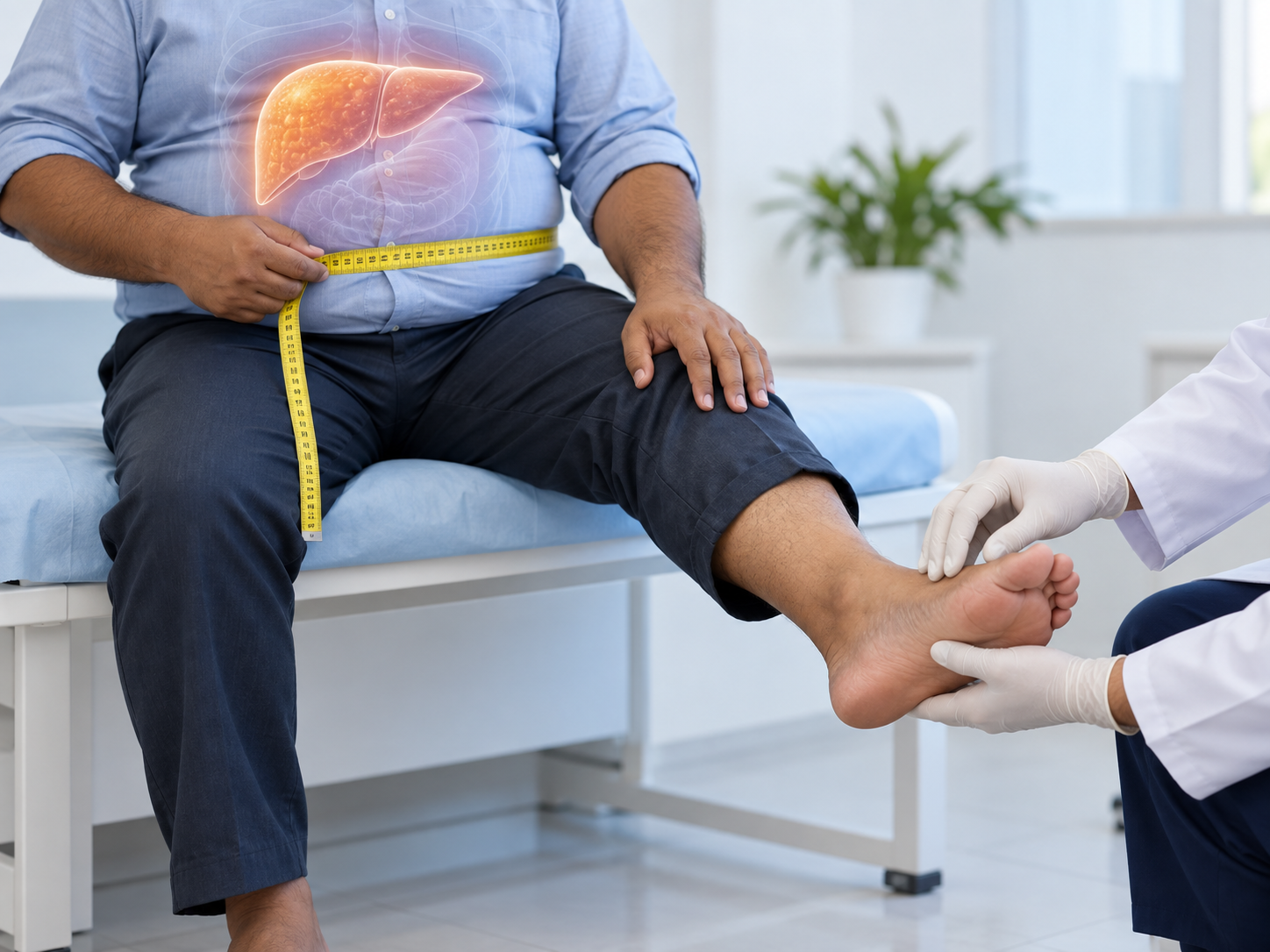
Fatty liver, now called MASLD, and type 2 diabetes feed each other through insulin resistance: liver fat raises glucose output, and high glucose drives more liver fat. Losing 7 to 10 percent of body weight reduces liver fat and can bring diabetes into remission. For feet, that same metabolic control protects nerves and helps wounds heal.
Key Takeaways
- Fatty liver and type 2 diabetes commonly occur together because both are strongly associated with insulin resistance.
- Fatty liver is now commonly described as metabolic dysfunction-associated steatotic liver disease (MASLD).
- Blood tests and imaging can help identify liver fat and estimate the risk of liver fibrosis.
- Even modest, sustained weight loss can reduce liver fat, while greater weight loss may provide additional metabolic and liver benefits.
- Treatment should address glucose, body weight, blood pressure, lipids, nutrition and physical activity rather than focusing only on the liver.
- Better metabolic control is also relevant to diabetic foot health because prolonged hyperglycaemia contributes to neuropathy, vascular disease and impaired wound healing.
How Are Fatty Liver and Type 2 Diabetes Connected?
The relationship between fatty liver and type 2 diabetes works in both directions.
Insulin normally helps regulate how the body uses and stores glucose. When tissues become resistant to insulin, the pancreas may initially compensate by producing more insulin. Over time, glucose levels can rise and type 2 diabetes may develop.
Insulin resistance also changes the way fat is handled. More fatty acids can reach the liver, while the liver may also produce and store additional fat.
This helps explain the fatty liver and diabetes relation.
A person with type 2 diabetes and fatty liver therefore does not necessarily have two completely separate problems. They may be different consequences of the same underlying metabolic dysfunction.
People who want structured support for improving weight and metabolic health can learn more about the Diabetes remission clinic.
What Is MASLD?
The term MASLD stands for metabolic dysfunction-associated steatotic liver disease. It describes excess liver fat occurring in association with metabolic risk factors.
Some people have liver fat without advanced liver injury. Others may develop inflammation and progressive fibrosis. In a smaller proportion of patients, advanced fibrosis can eventually lead to cirrhosis and its complications.
This is why the objective is not simply to ask:
“Do I have fatty liver?”
The more important clinical questions include:
“Is there evidence of liver fibrosis, and how high is my future liver risk?”
This distinction is particularly important in people with type 2 diabetes.
Which Tests Show Liver Fat and Scarring?
Different tests answer different questions.
Liver Blood Tests
Tests such as ALT and AST may be included when evaluating liver health. However, liver enzymes alone cannot reliably tell how much fibrosis is present.
A person can have significant metabolic liver disease without dramatic elevations in liver enzymes.
Ultrasound
Abdominal ultrasound can identify features suggestive of fatty liver, particularly when liver fat is more substantial.
However, a routine ultrasound is not a complete fibrosis assessment.
FIB-4
The FIB-4 score is a non-invasive calculation that uses:
- Age
- AST
- ALT
- Platelet count
It is commonly used as an initial tool to estimate the likelihood of advanced liver fibrosis.
A low-risk result may help identify people less likely to have advanced fibrosis, while an indeterminate or high result may lead to additional assessment.
The result should be interpreted in clinical context rather than used as a stand-alone diagnosis.
FibroScan
Transient elastography, commonly known by the brand name FibroScan, can help assess liver stiffness and provide additional information about liver fat.
It may be considered when initial risk assessment suggests that further evaluation is appropriate.
People taking several diabetes medicines or struggling with glucose control may also benefit from an Endocrinologist opinion as part of broader metabolic management.
How Much Weight Loss Changes Liver Fat?
Weight reduction is one of the most important interventions for people with excess body weight and metabolic fatty liver disease.
However, the goal should not be an extreme short-term diet. The objective is sustainable weight reduction that can be maintained.
Different levels of weight loss can produce different metabolic benefits.
| Weight-loss milestone | Potential liver benefit | Possible glucose benefit | Useful monitoring |
|---|---|---|---|
| About 5% | Liver fat can begin to decrease | Insulin sensitivity and glucose control may improve | Weight, ALT/AST, HbA1c |
| About 7–10% | Greater improvement in liver fat and metabolic liver disease may occur | More meaningful improvement in insulin resistance and HbA1c may occur | HbA1c, liver tests, FIB-4 |
| More than 10% | Greater weight reduction may provide additional liver and metabolic benefit in suitable patients | Some people can achieve major improvement in diabetes control; remission is possible in selected individuals | HbA1c, medicines, liver assessment and nutritional status |
These are not guaranteed outcomes. The response depends on the person's starting weight, diabetes duration, liver condition, medications, physical activity and ability to maintain the weight loss.
For practical food planning, the Diet and nutrition service can help patients develop an eating pattern that supports glucose, weight and overall metabolic health.
Can Weight Loss Reverse Fatty Liver?
Liver fat can decrease substantially when the underlying metabolic drivers improve.
For someone who is overweight, gradual weight reduction can improve insulin sensitivity and reduce the amount of fat stored in the liver.
But the word “reverse” needs to be used carefully.
Reducing liver fat does not automatically mean that advanced fibrosis or cirrhosis has completely disappeared. The stage of liver disease matters.
Similarly, improving blood glucose is not always the same as achieving diabetes remission.
Patients interested in understanding the difference between better glucose control and true remission can read Diabetes remission explained.
What Should a Fatty Liver and Diabetes Diet Actually Look Like?
There is no single food that removes liver fat.
A useful fatty liver and diabetes diet generally focuses on improving overall energy balance, glucose control and food quality while creating sustainable weight loss when required.
A practical eating pattern may emphasize vegetables, adequate protein, high-fibre foods, pulses and legumes, minimally processed foods and appropriate portions of carbohydrates.
Foods and drinks that can make metabolic control more difficult when consumed frequently include sugar-sweetened drinks, excessive sweets, refined carbohydrates and calorie-dense ultra-processed foods.
Portion size remains important even when a food is considered healthy.
Diet also needs to be individualized. A patient using insulin or medicines capable of causing hypoglycaemia should not drastically reduce food intake without considering how medication doses and meal patterns interact.
Do GLP-1 Medicines or Pioglitazone Help Both Conditions?
Medication decisions should be based on the patient's complete medical picture rather than choosing a drug only because fatty liver is present.
GLP-1-Based Treatment
GLP-1 receptor agonists and related incretin-based therapies can improve glucose control and may produce clinically meaningful weight loss in appropriate patients.
Because weight reduction and improved insulin sensitivity can reduce liver fat, these treatments may also improve metabolic liver parameters in selected patients.
However, the choice of medication depends on factors including diabetes control, body weight, kidney function, other medical conditions, side effects and current medicines.
Pioglitazone
Pioglitazone improves insulin sensitivity and may be considered in selected patients with type 2 diabetes and metabolic liver disease.
It is not appropriate for everyone. Potential adverse effects and the patient's other medical conditions must be considered before treatment.
Do not start, stop or change diabetes medicines solely to treat fatty liver without medical review.
Fatty Liver and Diabetes Doctor in Jamnagar: When Should You Seek Metabolic Review?
Someone looking for a fatty liver and diabetes doctor in Jamnagar should consider a structured metabolic assessment when fatty liver occurs together with poorly controlled diabetes, excess weight, abnormal liver tests or other metabolic risk factors.
The assessment may include HbA1c, current diabetes medicines, weight and waist measurements, liver blood tests and an initial fibrosis-risk calculation such as FIB-4. Further liver assessment can then be considered according to the findings.
The objective is not simply to lower one laboratory value. It is to understand the combined metabolic risk and develop a sustainable management plan.
Why Does Metabolic Control Matter to a Diabetic Foot?
Fatty liver does not directly mean that a person will develop a diabetic foot ulcer.
The connection is broader.
Persistently elevated glucose can contribute to peripheral neuropathy, reducing protective sensation in the feet. Diabetes is also associated with vascular disease and other factors that can make foot problems more difficult to manage.
A person may therefore fail to notice a blister, cut or pressure injury early when sensation is reduced.
Poor metabolic control can also complicate wound healing and infection management.
This is why diabetic foot care should not focus only on what is happening below the ankle. Glucose control, nutrition, body weight, blood pressure, lipids and other metabolic factors are also relevant to long-term risk.
At Elegance Diabetic Foot & Ulcer Clinic (EDFC), diabetic foot management can therefore be considered alongside the broader metabolic factors affecting the patient.
How Can Better Metabolic Health Protect the Feet?
Improving metabolic health cannot guarantee that a diabetic foot problem will never occur, but it can address several important risk factors.
For example, better glucose control reduces prolonged exposure to hyperglycaemia. Appropriate nutrition provides the protein, vitamins, minerals and energy needed for normal tissue maintenance and wound healing.
Weight management can also improve insulin sensitivity and mobility in suitable patients.
However, metabolic improvement does not replace direct foot care.
A person with neuropathy still needs to inspect the feet regularly, use suitable footwear and seek assessment when a new wound, blister, callus, swelling or colour change appears.
Why Rapid Weight Loss Is Not Always the Goal
When someone learns that weight loss may improve both fatty liver and diabetes, it can be tempting to pursue the fastest possible reduction.
That is not necessarily the safest or most sustainable strategy.
Very restrictive diets may be inappropriate for some people taking glucose-lowering medication because food intake and medicine doses can become mismatched.
People with an active diabetic foot wound also need adequate nutrition for tissue repair. Excessive calorie restriction without appropriate nutritional planning may be counterproductive.
The target should therefore be clinically appropriate and sustainable metabolic improvement, not simply the largest possible change on the weighing scale.
What Should Be Monitored During Treatment?
Monitoring depends on the individual, but clinicians may follow several measures over time.
These can include body weight, waist circumference, HbA1c, home glucose readings where appropriate, liver enzymes, platelet count and FIB-4.
Additional liver imaging or specialist evaluation may be recommended according to fibrosis risk.
Diabetes medicines may also need review as weight and glucose levels change. A medication dose that was appropriate before substantial weight loss may not always remain appropriate afterward.
For patients with foot-risk factors, metabolic monitoring should be combined with ongoing foot assessment.
Conclusion
Understanding the fatty liver and diabetes relation means looking beyond two separate diagnoses. Insulin resistance, excess body fat, glucose control and liver fat can be closely interconnected, so improving metabolic health can benefit several areas at the same time.
Sustainable weight reduction can decrease liver fat and improve glucose control, but treatment should be individualized according to diabetes medicines, fibrosis risk, nutritional needs and other medical conditions.
This broader metabolic approach also matters for diabetic foot health. Better glucose and nutritional management supports long-term nerve, tissue and wound health, while direct foot screening and preventive care remain essential.
At Elegance Diabetic Foot & Ulcer Clinic (EDFC), Dr. Ashutosh Shah and the clinical team consider diabetic foot problems in the context of the patient's wider health rather than treating the wound in isolation.
quiz Frequently Asked Questions
This article is general education, not a diagnosis. If you have a diabetic foot wound, please have it assessed in person. Send a photo on WhatsApp or book a consultation.
About the Author

Dr. Ashutosh Shah, Plastic, Reconstructive & Diabetic Foot Surgeon, Elegance Diabetic Foot & Ulcer Clinic, Surat
Dr. Ashutosh Shah is a board certified plastic and reconstructive surgeon with over 22 years of experience and more than 10,000 limbs and feet saved. He founded Elegance Diabetic Foot & Ulcer Clinic, India's first chain of clinics dedicated to foot care, with centres in Surat and OPD partners across South Gujarat. He is known for a limb first approach, safe wound care and ethical, natural results.