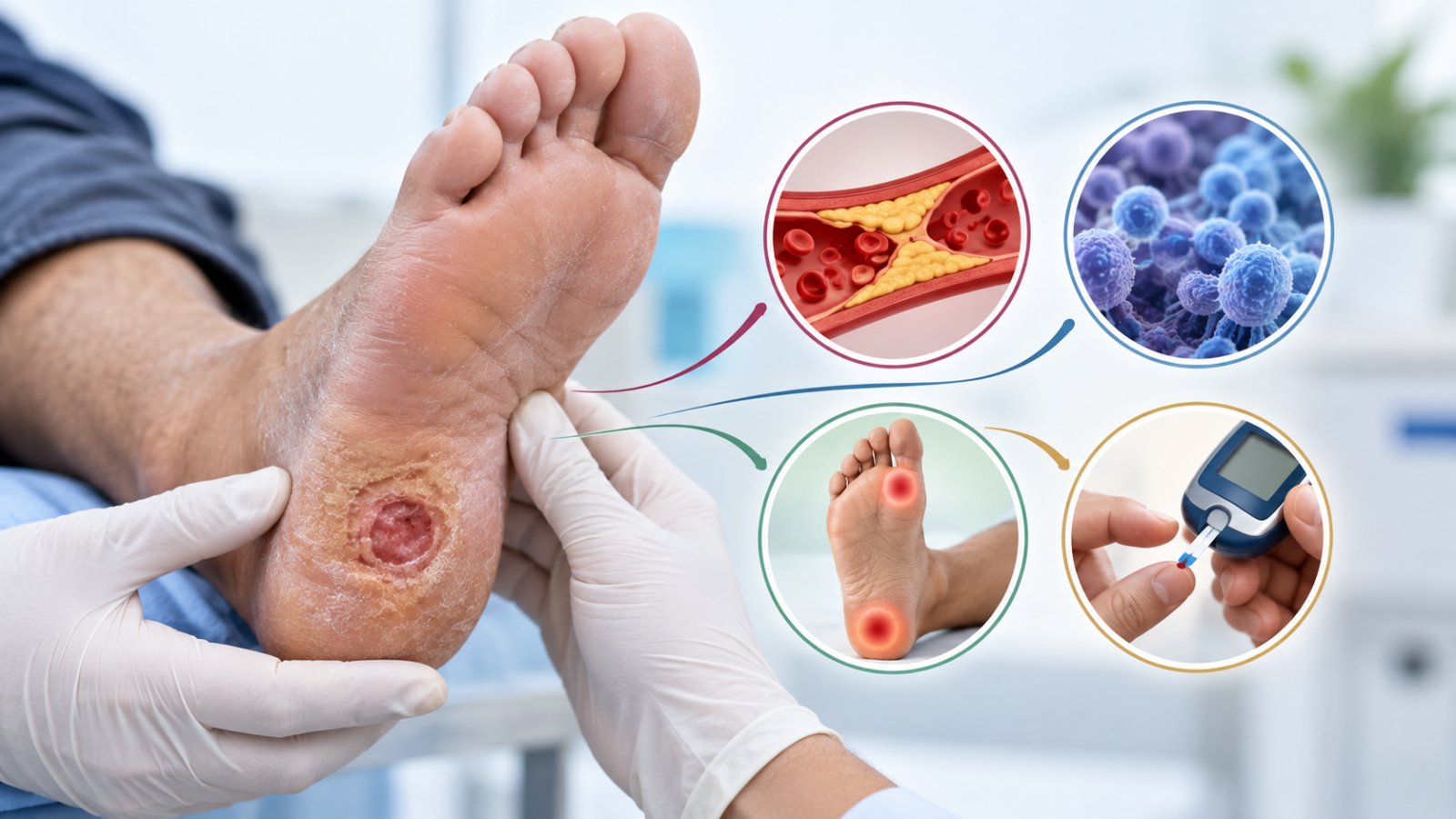
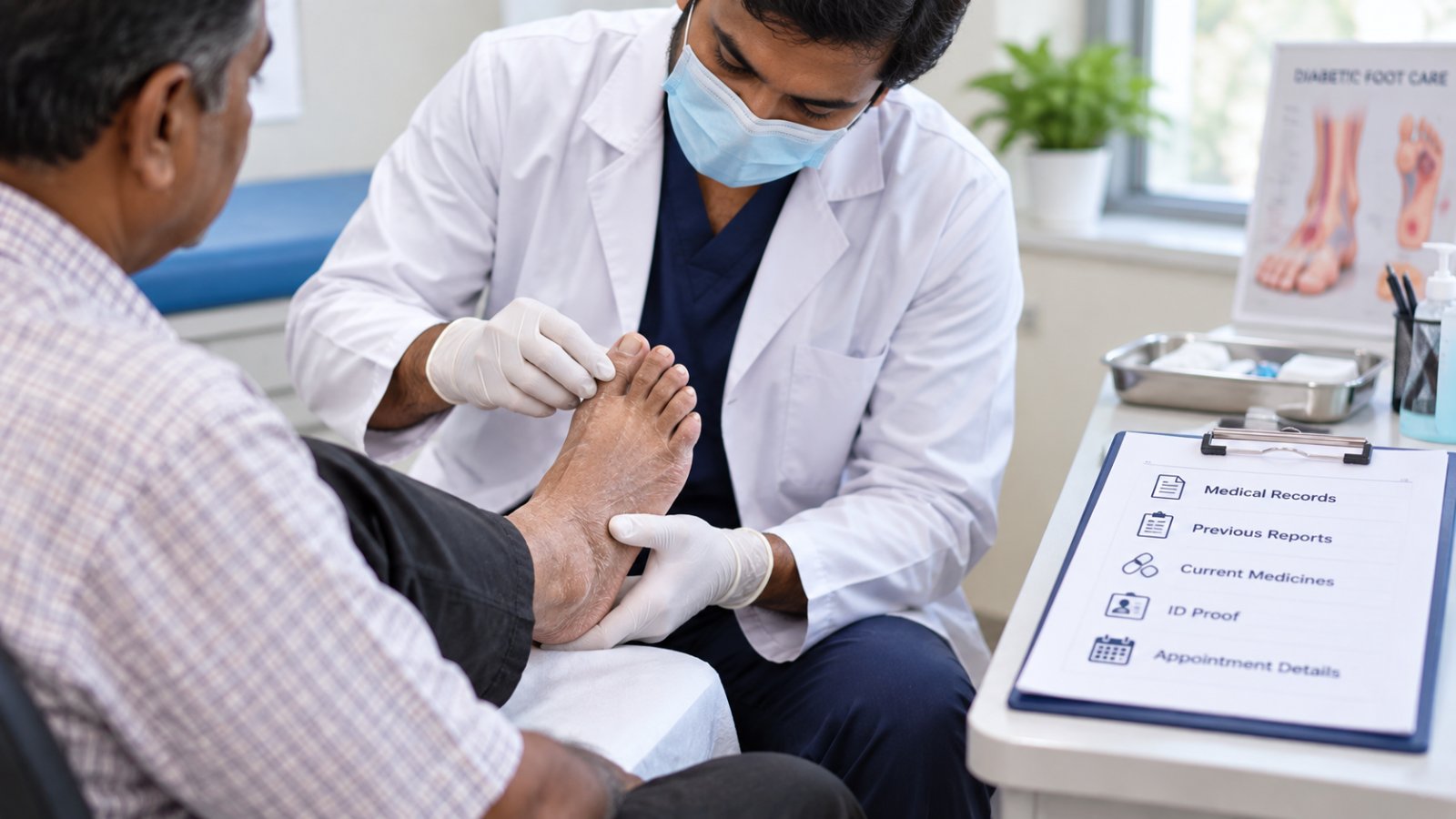
Bring your sugar reports from the last three months, current medicines, previous wound photographs and the footwear you actually wear. The first visit assesses the wound, circulation and pressure points, and usually includes dressing and a written plan on the same day.
At Elegance Diabetic Foot & Ulcer Clinic, diabetic foot assessment focuses on more than simply changing a dressing. Under the guidance of Dr. Ashutosh Shah, the aim is to identify why the wound developed, whether infection or poor circulation is affecting healing, and whether pressure from walking or footwear is contributing to repeated tissue damage.
Being prepared for your first appointment can make the assessment more useful. Patients should bring their previous reports and details of earlier treatment rather than relying only on a description of what has happened.
Before attending the diabetic foot clinic in Ahmedabad, patients can review the Preparing for your visit guidance.
Which Days Is the Ahmedabad Diabetic Foot OPD Held and How Are Slots Booked?
Patients planning a diabetic foot OPD Ahmedabad appointment should confirm the current OPD days, timings and appointment availability directly with the clinic before travelling.
This is particularly important if you are coming from outside Ahmedabad or need wound assessment, dressing or further investigations.
When booking, explain the main reason for the visit. For example, tell the clinic if you have:
- A new diabetic foot ulcer
- A wound that is not healing
- Recurrent ulceration
- Redness or swelling
- Discharge from the wound
- Black or discoloured skin
- Foot deformity or repeated callus
- Previous diabetic foot surgery
- Previous toe or foot amputation
- Known circulation problems
Current centre information can also be checked through the All OPD centres page.
An OPD appointment is appropriate for planned assessment, but an emergency should not be delayed simply because the next clinic slot is on another day.
If you have fever with a wound, a black toe, spreading redness, foul smell or sudden swelling, seek hospital care that day rather than waiting for your OPD appointment.
What Reports, Medicines and Footwear Should You Bring?
Knowing what to bring for a foot ulcer first visit can help the clinical team understand both your diabetes and the history of the wound.
Sugar reports
Bring your diabetes reports from the last three months when available.
These may include:
- Blood glucose reports
- HbA1c
- Kidney function tests
- Recent blood investigations
These reports provide useful background information when planning diabetic foot care.
Previous wound records
If the wound has already been treated elsewhere, bring any available:
- Wound culture reports
- Doppler reports
- Vascular investigations
- X-rays
- MRI scans
- Hospital discharge summaries
- Previous surgery records
- Dressing or wound-care records
You do not need to delay your appointment if some reports are unavailable. Bring whatever records you already have.
Current medicines
Bring your current medicine list or the medicine strips themselves.
This should include medicines used for:
- Diabetes
- Blood pressure
- Cholesterol
- Blood thinning
- Infection
- Pain
- Other ongoing medical conditions
If you have recently taken antibiotics for the foot wound, bring the name and duration of the antibiotic if possible.
Previous wound photographs
If you have photographs showing how the wound looked over the previous days or weeks, keep them available on your phone.
They may help show whether the ulcer has become larger, smaller, deeper, more swollen or more discoloured.
Your usual footwear
Bring the footwear you actually wear regularly.
Do not wear or bring only a new pair specifically for the appointment.
Shoes, sandals or slippers used every day can provide useful information about pressure, friction and repeated injury.
What Is Assessed on Visit One: Wound, Circulation and Pressure?
At a diabetic foot clinic in Ahmedabad, the first visit should assess more than the visible surface of the wound.
Three important areas are the wound, circulation and pressure.
Wound assessment
The wound may be examined for:
- Location
- Size
- Depth
- Discharge
- Odour
- Dead tissue
- Callus
- Surrounding redness
- Swelling
- Exposed deeper structures
The doctor may also review how long the wound has been present and whether it has improved or worsened with previous treatment.
A small wound is not automatically a minor problem. Depth, infection and circulation can be more important than surface size alone.
Circulation assessment
A wound needs adequate blood supply to heal.
The first consultation may therefore include assessment of circulation through clinical examination and available vascular tests.
If circulation appears reduced, further investigation may be required before deciding on the wound treatment plan.
Pressure and sensation assessment
Diabetes can reduce sensation in the feet. When this happens, a person may continue walking on an injured area without receiving the normal warning signal of pain.
The foot may therefore be assessed for:
- Reduced sensation
- Callus
- Foot deformity
- Pressure points
- Abnormal loading while walking
- Footwear-related pressure
For more information about what may be included, see the Comprehensive foot evaluation.
First-Visit Planner for a Diabetic Foot Clinic in Ahmedabad
| First-Visit Item | What to Prepare or Expect |
|---|---|
| OPD days and timings | Confirm the current Ahmedabad OPD schedule before travelling |
| Document checklist | Bring recent sugar reports, HbA1c, previous wound records, scans and hospital documents |
| Medicines | Bring your current medicine list or medicine strips |
| Previous wound photos | Bring photographs showing how the wound has changed |
| Footwear | Bring the shoes, sandals or slippers you normally wear |
| Tests done on site | Depend on clinical findings and facilities available at the OPD |
| Tests referred out | Advanced imaging or vascular investigations may require referral or separate scheduling |
| Expected duration | Depends on wound complexity, assessment, investigations and treatment required |
| Cost bands | Depend on consultation, dressing, investigations and procedures required |
| RED FLAG | Fever, black toe, spreading redness, foul smell or sudden swelling: go to hospital today rather than waiting for the appointment |
Because OPD schedules, facilities, visit duration and costs can change, these operational details should be confirmed directly with the centre when booking.
Which Procedures Can Be Done the Same Day and Which Need Scheduling?
What can be completed during the first appointment depends on what the initial examination finds.
For some patients, the first visit may include:
- Wound examination
- Wound measurement
- Basic circulation assessment
- Sensation assessment
- Pressure-point assessment
- Footwear review
- Dressing
- Review of existing reports
- Planning of additional investigations
- Written treatment instructions
A straightforward wound may be assessed and dressed during the same visit.
However, some conditions require additional investigation or more complex treatment. Advanced imaging, specialised vascular assessment or surgical procedures may therefore need separate scheduling or referral.
The first appointment is intended to establish the problem and determine the next step rather than perform every possible treatment immediately.
Patients who want to understand the assessment pathway can read How the consultation works.
When Is a Patient Advised to Travel to the Surat Theatre Instead?
Some diabetic foot conditions require treatment beyond what can be provided during a routine outpatient visit.
Whether a patient needs referral for treatment at the Surat theatre depends on the findings during assessment and the facilities required for the planned procedure.
Factors that may influence referral include:
- Severity of infection
- Depth of the ulcer
- Extent of tissue damage
- Suspected bone involvement
- Poor circulation
- Need for vascular intervention
- Need for surgical reconstruction
- Need for more complex surgery
- Patient's overall medical condition
If referral is recommended, the clinical team should explain why the procedure cannot be completed at the local OPD and what the next stage of treatment involves.
However, patients with rapidly worsening infection should not delay urgent hospital care while making travel arrangements.
Which Patients Should Not Wait for an OPD Day at All?
A diabetic foot clinic in Ahmedabad can provide planned assessment and follow-up, but certain symptoms require urgent hospital evaluation.
Go to hospital today if you have:
- Fever with a foot wound
- A black or blue toe
- Spreading redness
- Foul smell from the wound
- Pus or rapidly increasing discharge
- Sudden swelling of the foot
- Rapid worsening of an existing ulcer
- Significant general illness or confusion
Do not use pain alone to decide whether the wound is serious.
Diabetic neuropathy can reduce sensation, meaning a severe wound or infection may cause surprisingly little pain.
If any of these warning signs develop before your scheduled diabetic foot OPD Ahmedabad appointment, seek urgent medical assessment instead of waiting for the appointment date.
What Happens After the First Visit?
The next step depends on what the first assessment identifies.
A treatment plan may involve:
- Regular wound care
- Pressure relief or offloading
- Footwear changes
- Infection management
- Further circulation testing
- Imaging
- Additional investigations
- Surgical assessment
- Follow-up appointments
A diabetic foot ulcer may continue to struggle despite regular dressing if the underlying reason for poor healing has not been addressed.
For example, persistent pressure can repeatedly damage the same area. Poor circulation may prevent adequate healing. Infection may require additional treatment, while a deformity may continue creating abnormal pressure.
This is why diabetic foot care should consider the whole problem rather than only changing the dressing.
Preparing for Your First Ahmedabad Diabetic Foot Visit
Before leaving for the appointment, check that you have:
- Sugar reports from the last three months
- Recent HbA1c report, if available
- Current medicines or a medicine list
- Previous wound culture reports
- Previous wound photographs
- Doppler or vascular reports
- X-rays or MRI scans, if previously performed
- Previous hospital or surgical records
- Details of antibiotics already taken
- The footwear you normally use
Keeping these items together can make it easier to provide a complete history during the consultation.
Why Your Normal Footwear Matters
Footwear is particularly important in diabetic foot assessment because repeated pressure can contribute to skin breakdown.
A patient may have a wound under the forefoot, toe, heel or another pressure-bearing area without realising that everyday footwear is repeatedly loading the same point.
Examining the shoes or sandals you regularly use may help identify:
- Tight areas
- Friction points
- Uneven wear
- Pressure over prominent toes
- Inadequate cushioning
- Footwear that does not accommodate deformity
This is why the 23 Sep first-visit checklist specifically includes the footwear you actually wear rather than simply asking what type of footwear you use.
Why a Written Treatment Plan Is Useful
A first visit can involve a lot of information.
A written plan helps clarify what should happen after the consultation. Depending on the patient's condition, it may cover wound care, dressing, pressure relief, investigations, follow-up and referral.
It can also make clear which changes should trigger earlier reassessment.
Patients and family members should understand the difference between a routine follow-up issue and a warning sign that should not wait.
Conclusion
Your first visit to a diabetic foot clinic in Ahmedabad should assess the wound, circulation, sensation and pressure rather than focusing only on dressing.
Bring your sugar reports from the last three months, current medicines, previous wound photographs and the footwear you actually use. Depending on the findings, the first visit may include wound assessment, circulation and pressure checks, dressing and a written treatment plan.
Some investigations or procedures may need separate scheduling, while more complex cases may require referral for higher-level treatment.
Most importantly, fever, a black toe, spreading redness, foul smell or sudden swelling should not wait for the next OPD day. Seek urgent hospital assessment if these warning signs develop.
quiz Frequently Asked Questions
This article is general education, not a diagnosis. If you have a diabetic foot wound, please have it assessed in person. Send a photo on WhatsApp or book a consultation.
About the Author

Dr. Ashutosh Shah, Plastic, Reconstructive & Diabetic Foot Surgeon, Elegance Diabetic Foot & Ulcer Clinic, Surat
Dr. Ashutosh Shah is a board certified plastic and reconstructive surgeon with over 22 years of experience and more than 10,000 limbs and feet saved. He founded Elegance Diabetic Foot & Ulcer Clinic, India's first chain of clinics dedicated to foot care, with centres in Surat and OPD partners across South Gujarat. He is known for a limb first approach, safe wound care and ethical, natural results.