
Written by Dr. Ashutosh Shah, Plastic & Microvascular Surgeon - Diabetic Foot & Limb Salvage Specialist, Elegance Diabetic Foot & Ulcer Clinic (EDFC), Surat. Practising since 2004 (22+ years). Read full bio.
Medically reviewed by Dr. Ashutosh Shah
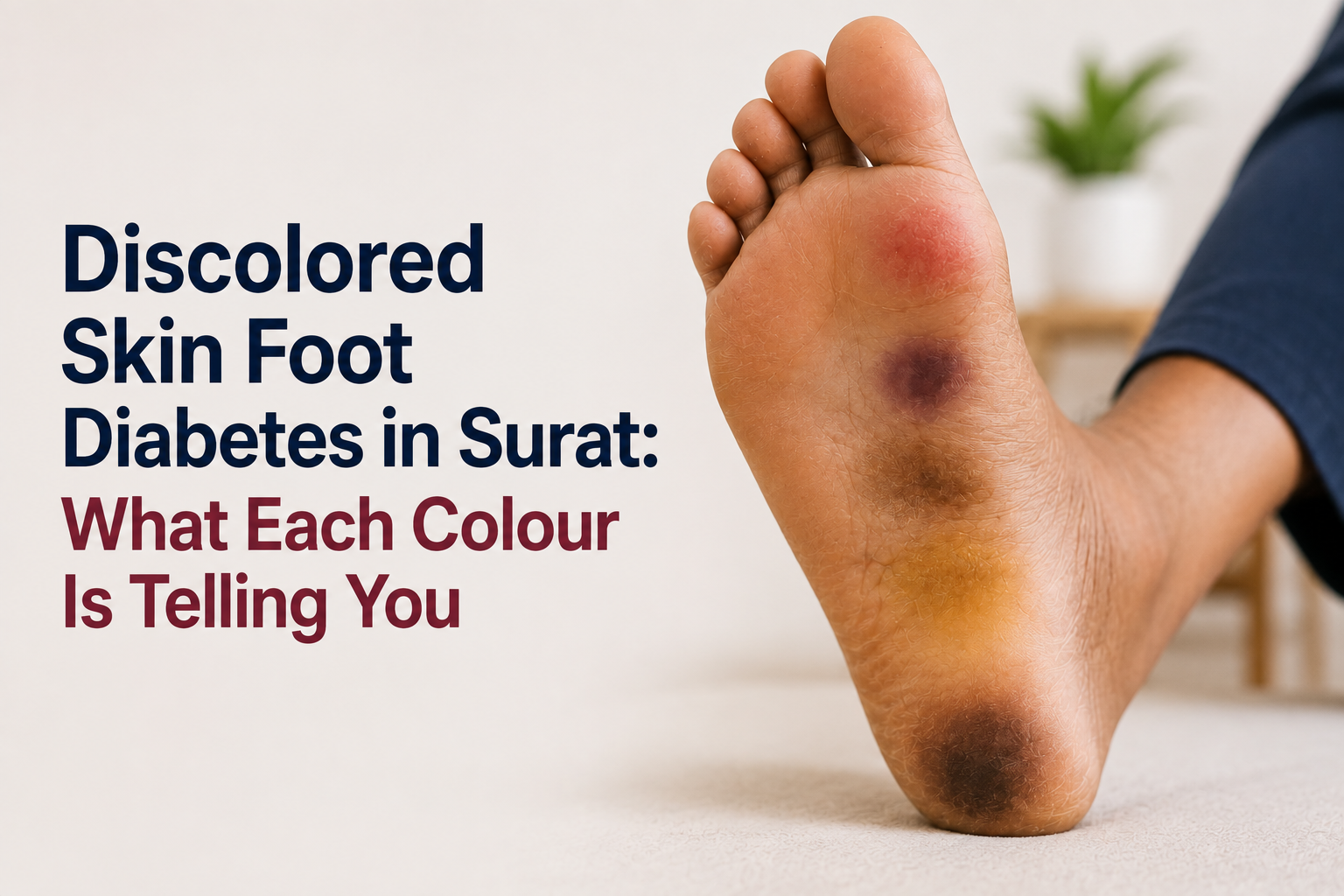
Discolored skin foot diabetes in Surat is a signal about blood flow, pressure or infection, not a skin problem to be treated with creams. Red, pale, blue, black, yellow and brown each point to different causes, and each carries a different level of urgency.
Skin colour is the cheapest diagnostic test on a diabetic foot. It is visible before pain arrives, and in a numb foot it often arrives instead of pain. This guide is keyed by colour: find yours, read that block, and act on the urgency given.
Which colour means what? A quick lookup
| Colour | Most likely meaning | How urgent |
|---|---|---|
| Red and hot, swollen, no wound | Early Charcot foot, or infection | Same day |
| Red spreading, with wound or fever | Spreading infection | Same day |
| Pale or white, cold | Poor arterial blood flow | Same day if sudden, days if long-standing |
| Blue or purple | Blocked small vessel or severe ischaemia | Same day |
| Black or brown-black | Dead tissue, gangrene | Same day |
| Yellow, thick, hard | Callus, or fungal nail change | Within days if a dark centre is present |
| Brown around the ankles | Venous staining | Routine review |
Red: what does a red foot mean in diabetes?
Red usually means inflammation, infection or Charcot foot. A red, hot, swollen foot needs same-day assessment, whether or not there is a wound, because the two conditions that cause it are both time-critical.
The one most often missed is Charcot neuroarthropathy. In someone with neuropathy, the foot becomes red, hot and swollen with no wound and often no fever, and it is frequently mistaken for infection, gout or a sprain. The bones are softening, and if the person keeps walking on it the arch can collapse permanently within weeks. A hot swollen foot in a numb foot is Charcot until proven otherwise.
Redness with a wound, spreading up the foot, with fever, swelling or discharge, means infection instead. That also needs same-day care.
There is a third pattern worth knowing. If the foot turns dark red or purple when it hangs down and goes pale when you raise it, that is dependent rubor, and it is a sign of severe arterial disease. The redness looks like good circulation and means the opposite.
Simple self-check: press the red area firmly for a few seconds. If it goes pale and then refills, that is ordinary redness. If it stays red under pressure, that is significant and needs review.
Pale or white: what does a pale, cold foot mean?
Pale or white skin means blood is not reaching the foot. A sudden pale, cold, painful foot is an emergency. Gradual pallor with cold feet points to long-standing narrowing of the leg arteries.
Supporting clues are cold feet compared with the other side, weak or absent pulses, shiny hairless skin, slow-growing nails, night pain relieved by hanging the leg over the edge of the bed, and calf pain that comes on after a set walking distance.
Why it matters beyond the colour: a foot with poor arterial supply cannot heal a wound, cannot fight infection well, and cannot support surgery. Circulation testing through our vascular services is usually the first investigation, because everything else depends on the answer.
Blue or purple: what does a blue toe mean?
Blue or purple means the tissue is starved of oxygen. It needs same-day assessment even when the foot feels warm and painless, because the underlying cause is often ongoing.
Two patterns matter. A whole foot that is cold and blue suggests severe arterial blockage. One or two toes that turn blue suddenly while the foot stays warm with good pulses suggests a small clot or fragment of plaque has travelled down and blocked a toe vessel, which means the source further up may send more.
Purple discolouration on the heel of someone bed-bound or in a cast is deep pressure damage, where the tissue underneath has died while the skin is still intact.
Black or dark brown: what does blackening skin mean?
Black skin means tissue has died. This is gangrene, and it needs same-day care, particularly if it is spreading, wet, foul smelling, or accompanied by fever.
Painlessness is not reassurance here. In a numb foot, dead tissue frequently causes no pain at all, which is exactly why people present late. Dark spots have several other causes too, from bruising under a callus to pigmented lesions, and those are covered in detail in our post on dark spots on the feet in diabetes.
Yellow: what does yellow skin or nail mean?
Yellow is usually thickened skin or a nail problem, not a circulation emergency. Yellow, hard, raised skin on the sole is callus, and yellow-brown crumbling nails are typically fungal.
Callus matters more than it looks. It forms where pressure is highest, and pressure is what creates ulcers. The point to watch for is a dark or reddish centre inside the callus, which means bleeding underneath and a wound forming beneath intact skin. That needs assessment within days, and the callus must never be cut at home.
Discoloured, thickened nails are covered in our post on toenail fungus removal, including why many thick yellow nails are not fungal at all.
Brown: what does brown staining around the ankles mean?
Brown staining at the ankles is usually venous, not arterial. Iron from red blood cells leaks into the skin over years of raised vein pressure, typically alongside leg swelling, varicose veins and itchy dry skin.
It is not dangerous in itself and needs no cosmetic treatment. Its significance is that this skin is fragile, breaks down easily and heals slowly, and it is where venous leg ulcers develop. Small round brown patches on the shins are a different thing entirely: diabetic dermopathy, which is harmless.
Why does colour change so early in a diabetic foot?
Because the warning systems fail before the skin does. Neuropathy removes pain, so damage is silent. Reduced circulation changes skin colour early. Together, colour becomes the first visible sign of a problem that would otherwise announce itself through pain.
That is why daily inspection is worth more in diabetes than in anyone else. You are looking for change over days, not for a perfect-looking foot. Regular checks through preventive foot care catch changes while they are still reversible.
How should you check your own feet?
Compare both feet daily in good light. Asymmetry is the strongest clue: a change present on one foot only deserves far more attention than something identical on both.
- Look at the soles and between the toes, using a mirror or asking someone to check.
- Feel both feet with the back of your hand to compare temperature.
- Press any red patch to see whether it blanches.
- Raise the leg, then hang it down, watching for pallor on raising and deep redness on lowering.
- Look inside every callus for a dark or reddish centre.
- Photograph anything new in the same light, so change is measurable.
- Check your shoes for stones, seams or worn areas causing pressure.
What should you never do to discoloured foot skin?
Never treat it as a cosmetic problem. Discolouration on a diabetic foot is a circulation, pressure or infection sign, and cosmetic treatment risks turning an intact warning into an open wound.
- Do not use whitening creams, scrubs, acids or bleaching agents.
- Do not cut or file callus yourself to see what is underneath.
- Do not apply heat, hot water or hot compresses to a cold or discoloured foot.
- Do not massage a discoloured patch.
- Do not have it treated at a roadside or salon.
- Do not wait weeks to see whether the colour settles.
If a wound is already present, treatment is covered in our post on non-healing ulcer treatment in Surat, with care managed under non-surgical wound management and diabetic foot surgery. The full range of problems is listed under foot conditions we treat.
Diabetic foot assessment at our Surat clinic
Elegance Diabetic Foot & Ulcer Clinic is based in Surat and led by Dr. Ashutosh Shah, a plastic and microvascular surgeon specialising in diabetic foot care, chronic wounds and limb salvage. For discolored skin foot diabetes in Surat, assessment covers circulation testing, sensation testing, examination of both feet and identification of the pressure or infection source, with the specialty background explained in our post on choosing a reconstructive foot surgeon.
For non-urgent changes you can send a clear, well-lit photo to our team on WhatsApp and book a foot assessment. For a red hot swollen foot, a cold pale foot, blue or blackening skin, or any colour change with fever or discharge, come in or attend hospital the same day rather than waiting for a reply. Follow EDFC on Facebook, Instagram and YouTube for foot care guidance and real limb salvage stories.
Colour arrives before pain does
In a foot that has lost sensation, colour is doing the job pain would normally do. A foot that is newly red and hot, newly pale and cold, or newly blue is telling you something days or weeks before a wound appears. That window is the whole opportunity.
Next step: book a foot and circulation assessment with Dr. Ashutosh Shah at Elegance Diabetic Foot & Ulcer Clinic, Surat, call +91 83205 00350, or send a clear photo on WhatsApp for initial guidance.
Medical disclaimer: This article is for educational purposes only and is not a substitute for professional medical diagnosis or treatment. Skin colour change cannot be diagnosed from a description or photograph alone. A red hot swollen foot, a cold pale foot, blue or blackening skin, or any colour change with fever or discharge needs immediate in-person assessment. Please consult Dr. Ashutosh Shah or a qualified specialist about your condition. For further guidance, see the NHS guide to peripheral arterial disease and the IWGDF diabetic foot guidelines.
quiz Frequently Asked Questions
This article is general education, not a diagnosis. If you have a diabetic foot wound, please have it assessed in person. Send a photo on WhatsApp or book a consultation.
About the Author

Dr. Ashutosh Shah, Plastic, Reconstructive & Diabetic Foot Surgeon, Elegance Diabetic Foot & Ulcer Clinic, Surat
Dr. Ashutosh Shah is a board certified plastic and reconstructive surgeon with over 22 years of experience and more than 10,000 limbs and feet saved. He founded Elegance Diabetic Foot & Ulcer Clinic, India's first chain of clinics dedicated to foot care, with centres in Surat and OPD partners across South Gujarat. He is known for a limb first approach, safe wound care and ethical, natural results.