Written by Dr. Ashutosh Shah, Plastic & Microvascular Surgeon - Diabetic Foot & Limb Salvage Specialist, Elegance Diabetic Foot & Ulcer Clinic (EDFC), Surat. Practising since 2004 (22+ years). Read full bio.
Medically reviewed by Dr. Ashutosh Shah
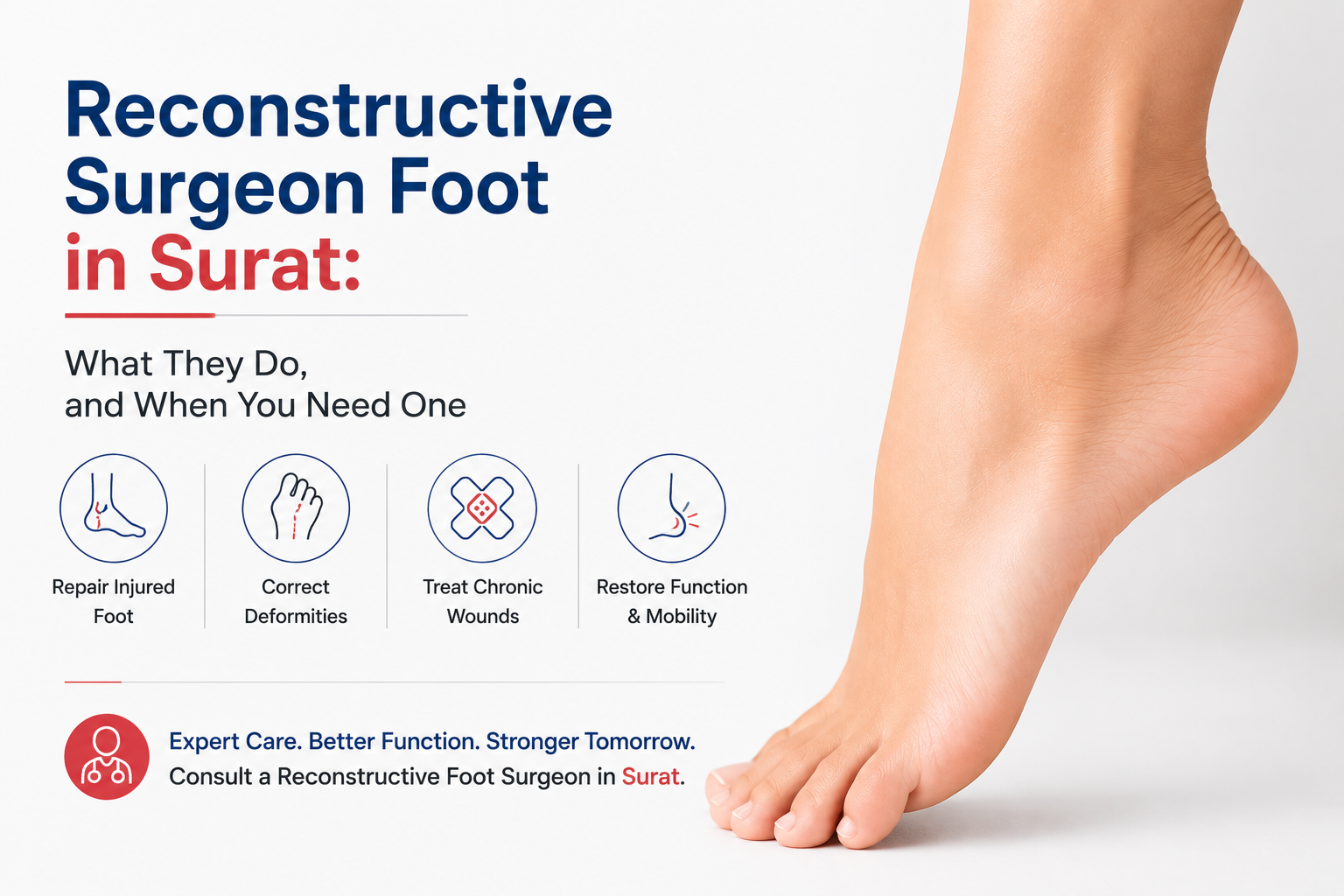
A reconstructive surgeon foot in Surat rebuilds feet damaged by diabetes, infection, trauma or tissue loss. The work covers closing wounds that will not heal, replacing lost skin and soft tissue, correcting deformity, and saving limbs that have been recommended for amputation.
Most people arrive at this specialty late, after months of dressings or after being told a leg cannot be saved. Knowing what a reconstructive foot surgeon actually does, and when that skill set is the one you need, usually saves a lot of that time.
What is reconstructive foot surgery?
Reconstructive foot surgery restores form and function to a foot that has lost tissue or structure. Rather than only removing what is damaged, it rebuilds what remains into a foot that heals, bears weight and fits into footwear.
The tools are different from routine foot surgery. They include skin grafts, local flaps and free tissue transfer, where tissue is moved with its own blood supply and the vessels are joined under a microscope. That microvascular capability is what allows large defects on a foot to be closed rather than amputated.
Which problems does a reconstructive foot surgeon treat?
They treat tissue loss and structural damage in the foot: chronic wounds that will not close, large defects after infection or trauma, exposed bone or tendon, and deformity that keeps causing ulcers.
- Non-healing diabetic foot ulcers needing surgical closure rather than more dressings.
- Large tissue defects after severe infection, covered in our post on necrotizing fasciitis of the foot.
- Exposed bone or tendon, which needs flap cover rather than a graft.
- Wounds after trauma, burns or crush injury.
- Deformity causing recurrent ulceration, needing corrective bone or tendon surgery.
- Limbs recommended for amputation, discussed in our post on limb preservation surgery.
- Heel and weight-bearing surface defects, which are technically demanding to rebuild.
The full range is listed under foot conditions we treat and diabetic foot surgery.
How is this different from other foot specialists?
Several specialties treat feet, and they overlap. The practical difference is what each is trained to do when tissue is missing: a reconstructive surgeon can rebuild soft tissue cover, which is often the step that decides whether a foot is saved.
| Specialist | Main focus | Best suited to |
|---|---|---|
| Reconstructive / plastic surgeon | Soft tissue cover, flaps, grafts, limb salvage | Tissue loss, exposed bone, wounds that cannot close |
| Orthopaedic surgeon | Bones, joints, fractures, deformity correction | Fractures, joint problems, structural deformity |
| Vascular surgeon | Arteries and veins, restoring blood flow | Blocked leg arteries, poor circulation |
| Podiatrist | Routine foot care, nails, callus, orthotics | Prevention, footwear, nail and skin care |
| Diabetologist / physician | Blood sugar and medical control | Diabetes management alongside foot treatment |
Serious diabetic foot problems usually need more than one of these working together. Circulation must be assessed before reconstruction is attempted, which is why our vascular services run alongside surgical care.
When should you see a reconstructive foot surgeon?
See one when a wound will not close despite proper treatment, when tissue has been lost, when bone or tendon is visible, or when amputation has been advised without a reconstructive opinion having been sought.
- A wound open for more than a few weeks despite good care. This is explored in our post on non-healing ulcer treatment.
- Visible bone, tendon or joint in the base of a wound.
- A defect too large to close on its own, which may need a skin graft or flap.
- Amputation recommended without circulation testing or a reconstructive assessment.
- Repeated ulcers in the same place from an uncorrected deformity.
- Significant tissue loss after trauma or infection.
What happens at a first consultation?
A first consultation is mostly assessment rather than treatment. The wound is examined and measured, both feet are checked, circulation and sensation are tested, imaging is reviewed, and you leave with an explanation of the cause and a staged plan.
- History, including how long the problem has been present and what has already been tried.
- Examination of both feet, not only the affected one.
- Circulation testing: pulses, Doppler or toe pressures.
- Sensation testing for neuropathy.
- Wound measurement and photography for objective tracking.
- Review of imaging and blood results.
- A staged plan with what happens first, and what each stage depends on.
What should you bring with you?
Bring anything that saves repeating tests. Previous reports, imaging, discharge summaries, your medicine list and your usual footwear together give a far more complete picture than the wound alone.
- All previous reports: X-rays, MRI, Doppler or angiogram, with the films or CDs.
- Discharge summaries from any previous admission or surgery.
- Recent blood tests, including sugar control and kidney function.
- A written list of current medicines.
- The shoes you wear daily, which often explain the pressure point.
- Photographs of the wound over time, if you have them.
What questions are worth asking any foot surgeon?
Before agreeing to surgery anywhere, ask what is causing the problem, whether circulation has been tested, what the alternatives are, and what happens if the first operation does not work. Clear answers to these matter more than the size of the hospital.
- What is actually causing this, in my case?
- Has my circulation been formally tested, and what did it show?
- What are the alternatives, including doing nothing for now?
- How many stages will this take, and how long between them?
- What will my foot be able to do afterwards?
- What happens if this does not work?
- Who looks after the wound between operations?
These are worth asking of any surgeon, including us. A specialist who welcomes them is usually the one worth choosing.
About Dr. Ashutosh Shah
Dr. Ashutosh Shah is a plastic and microvascular surgeon in Surat specialising in diabetic foot care, chronic wounds, reconstruction and limb salvage, in practice since 2004. He leads Elegance Diabetic Foot & Ulcer Clinic (EDFC), where wound care, circulation assessment, reconstructive surgery and long term foot protection are provided together rather than across separate visits to separate places.
Ongoing care after reconstruction continues through non-surgical wound management and preventive foot care, because a rebuilt foot needs lifelong protection to stay healed.
Foot reconstruction and limb salvage in Surat
Elegance Diabetic Foot & Ulcer Clinic is based in Surat and provides assessment and treatment for non-healing wounds, tissue loss, deformity and threatened limbs. If you are looking for a reconstructive surgeon foot in Surat, bring your reports and imaging so the assessment can be completed in one visit rather than several.
You can also send clear photos of the foot, along with any reports, to our team on WhatsApp for initial guidance and book a consultation. If there is fever, spreading redness, swelling or foul discharge, seek care the same day. Follow EDFC on Facebook, Instagram and YouTube for real limb salvage stories.
Ask before the decision is made, not after
Reconstruction is most useful when it is considered early, while there is still tissue and circulation to work with. If a wound has stalled or amputation has been raised, a reconstructive opinion is worth seeking within days rather than months.
Next step: book a consultation with Dr. Ashutosh Shah at Elegance Diabetic Foot & Ulcer Clinic, Surat, call +91 83205 00350, or send photos and reports on WhatsApp today.
Medical disclaimer: This article is for educational purposes only and is not a substitute for professional medical diagnosis or treatment. Whether reconstruction is possible depends on circulation, infection, tissue loss and general health, and can only be judged after in-person assessment. Fever, spreading redness or foul discharge needs urgent care. Please consult Dr. Ashutosh Shah or a qualified specialist about your condition. For further guidance, see the NHS guide to plastic surgery and the IWGDF diabetic foot guidelines.
quiz Frequently Asked Questions
This article is general education, not a diagnosis. If you have a diabetic foot wound, please have it assessed in person. Send a photo on WhatsApp or book a consultation.
About the Author
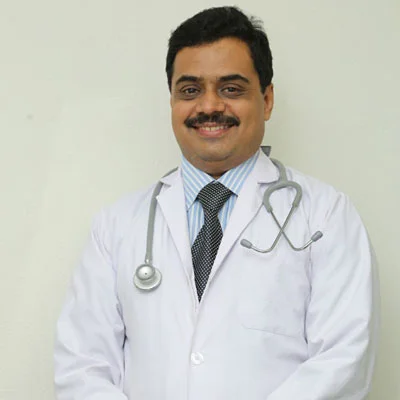
Dr. Ashutosh Shah, Plastic, Reconstructive & Diabetic Foot Surgeon, Elegance Diabetic Foot & Ulcer Clinic, Surat
Dr. Ashutosh Shah is a board certified plastic and reconstructive surgeon with over 22 years of experience and more than 10,000 limbs and feet saved. He founded Elegance Diabetic Foot & Ulcer Clinic, India's first chain of clinics dedicated to foot care, with centres in Surat and OPD partners across South Gujarat. He is known for a limb first approach, safe wound care and ethical, natural results.