Diabetic heel ulcer treatment in Jamnagar involves identifying why a wound has developed on the heel, checking blood circulation, managing infection and reducing pressure on the affected area. Treatment may include wound cleaning, suitable dressings, heel offloading and surgical care when necessary. Early assessment is important because heel ulcers can become deep and difficult to heal.
What Is a Diabetic Heel Ulcer?
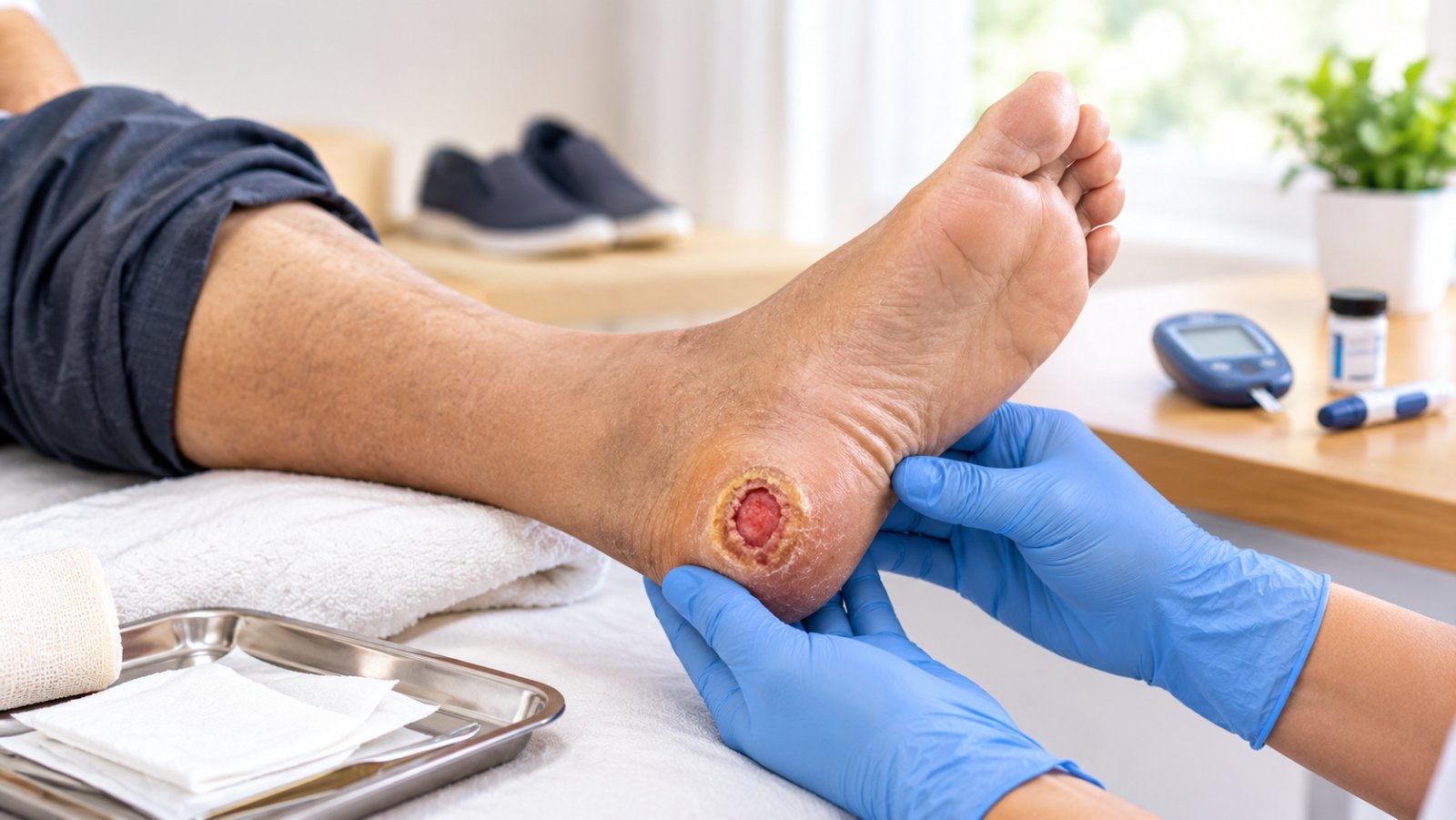
A diabetic heel ulcer is an open wound that develops on the heel of a person with diabetes.
The heel supports body weight during standing and walking. It can also experience prolonged pressure when a person remains in bed or sits with the heel resting against a hard surface.
People with diabetes may develop heel ulcers because of nerve damage, poor circulation or repeated pressure.
Common locations include:
-
The underside of the heel
-
The back of the heel
-
The outer edge of the heel
-
Areas exposed to footwear friction
A heel ulcer may begin as a small blister, skin crack or discoloured patch before developing into a deeper wound.
Because diabetic neuropathy can reduce pain sensation, some patients may not notice the injury immediately.
Why Do Diabetic Heel Ulcers Develop?
Several factors can contribute to heel ulcer formation.
1. Diabetic Neuropathy
Diabetic neuropathy reduces protective sensation in the feet.
A patient may not feel excessive pressure, friction or minor injuries.
Repeated damage can eventually cause the skin to break down.
2. Prolonged Heel Pressure
The heel is particularly vulnerable when a patient spends long periods lying in bed.
Continuous pressure can reduce local blood flow and damage the skin.
Patients with limited mobility are at increased risk of heel pressure injuries.
3. Poor Blood Circulation
Peripheral artery disease reduces blood supply to the foot.
Without adequate circulation, heel tissue may struggle to heal.
Severe circulation problems can cause tissue death or gangrene.
Patients with suspected vascular disease may require vascular assessment and treatment.
4. Dry or Cracked Heel Skin
Dry skin can develop deep cracks that allow bacteria to enter.
Cracked heels are especially concerning when diabetes and reduced sensation occur together.
5. Improper Footwear
Tight shoes or stiff heel counters can create friction and pressure.
Repeated rubbing may cause blisters and ulcers.
6. Previous Foot Ulcers
Patients with a history of diabetic foot ulcers have a greater risk of developing another wound.
Regular foot examinations and preventive care are important.
What Are the Early Signs of a Diabetic Heel Ulcer?
Early symptoms may be subtle.
Warning signs include:
-
Redness or persistent skin discolouration
-
A blister on the heel
-
Cracked or broken skin
-
A small open wound
-
Swelling
-
Wound discharge
-
Unpleasant odour
-
Black or darkened tissue
-
A wound that does not improve
Some heel ulcers may develop without significant pain.
A painless heel wound can still be serious, particularly when diabetes has affected the nerves.
Patients should not wait for pain before seeking medical advice.
When Should You Seek Diabetic Heel Ulcer Treatment in Jamnagar?
Patients with diabetes should arrange prompt medical assessment when a heel wound develops.
Early diabetic heel ulcer treatment in Jamnagar can help identify infection, pressure damage and poor circulation before complications progress.
Seek urgent care if the wound develops:
-
Increasing redness
-
Spreading swelling
-
Pus or worsening discharge
-
Fever
-
Black or discoloured tissue
-
Rapidly increasing depth
-
Severe pain
-
A cold or pale foot
Rapidly spreading infection, suspected wet gangrene, fever with systemic illness or sudden loss of circulation requires immediate hospital assessment.
Patients with emergency symptoms should seek treatment at the nearest appropriate hospital rather than delaying care to travel for a routine consultation.
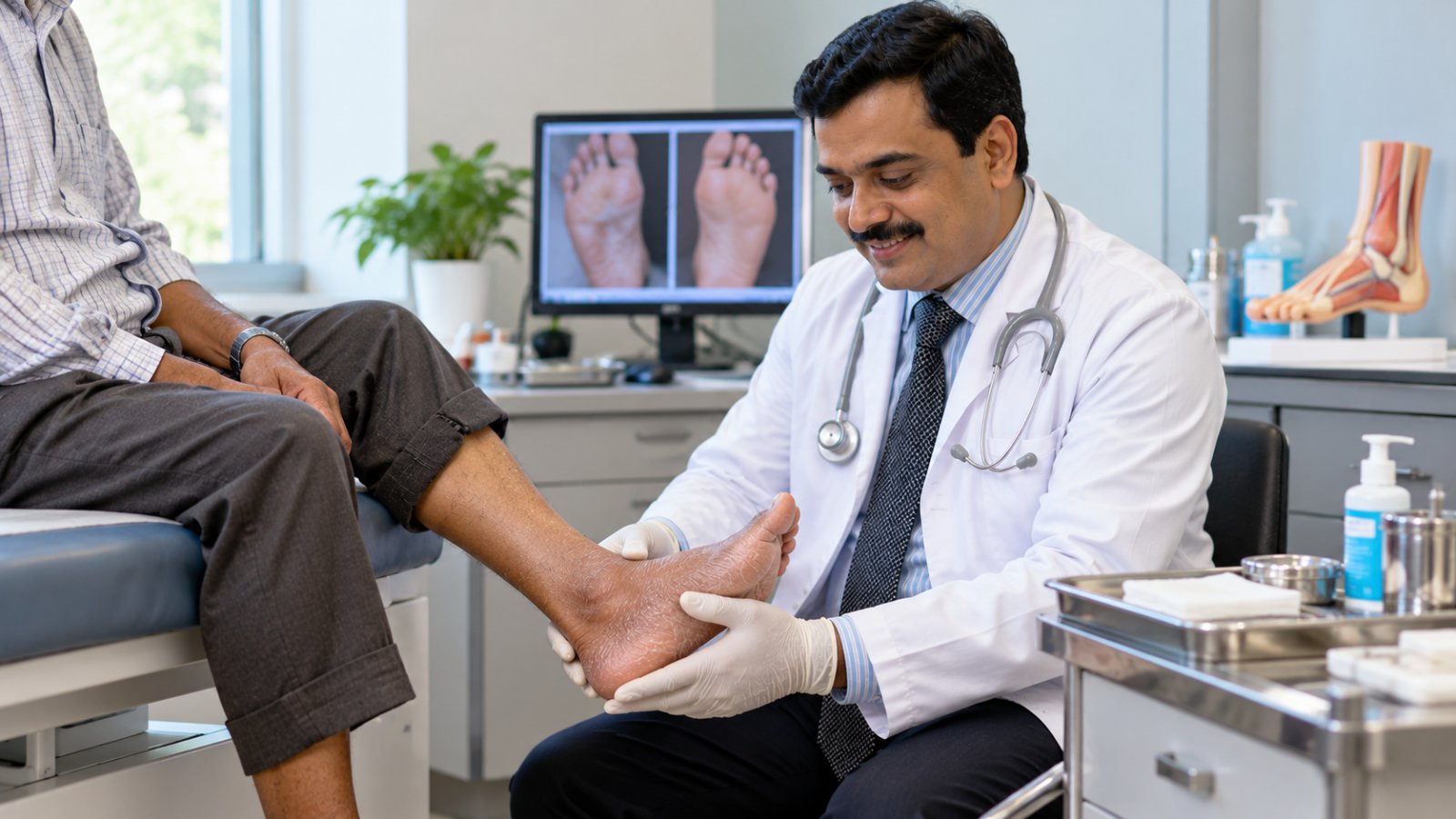
How Do Doctors Examine a Diabetic Heel Wound?
A thorough assessment helps determine the wound's severity and treatment requirements.
Medical History
The doctor may ask about:
-
Duration of diabetes
-
Previous foot ulcers
-
Current medications
-
Blood glucose management
-
Mobility limitations
-
Footwear
-
Previous wound treatments
Heel Wound Examination
The clinician assesses:
-
Wound size and depth
-
Location on the heel
-
Surrounding skin
-
Drainage
-
Dead tissue
-
Signs of infection
Nerve Assessment
Monofilament testing may help identify reduced protective sensation.
Circulation Assessment
Foot pulses and vascular investigations may be used to assess blood supply.
Infection Investigations
Blood tests, appropriate tissue cultures or imaging may be recommended when infection is suspected.
Bone Assessment
A deep heel ulcer may require examination for possible heel-bone involvement.
X-rays or MRI may be considered when osteomyelitis is suspected.
What Are the Treatment Options for Diabetic Heel Ulcers?
Treatment depends on wound depth, infection severity, circulation and pressure-related factors.
1. Wound Cleaning
Appropriate wound cleaning removes surface contamination and helps prepare the wound for dressing.
Patients should avoid using harsh chemicals or unprescribed products on open wounds.
2. Heel Ulcer Dressings
Dressings help protect the wound and manage moisture.
Options may include:
-
Foam dressings
-
Alginate dressings
-
Hydrofibre dressings
-
Other suitable wound dressings
The dressing is selected according to wound characteristics.
No single dressing is suitable for every heel ulcer.
Patients can explore non-surgical diabetic foot wound management for additional information.
3. Debridement
Debridement removes dead or infected tissue when clinically appropriate.
However, a stable, dry, intact heel eschar without signs of infection may sometimes be left undisturbed, particularly when circulation is inadequate. It should not be removed at home.
The decision depends on infection, perfusion and specialist assessment.
4. Infection Management
Clinically infected heel ulcers may require antibiotics, drainage or surgical treatment.
Antibiotics are not routinely recommended for uninfected ulcers.
Read more about diabetic foot infection management.
5. Heel Pressure Offloading
Reducing pressure on the heel is an essential part of treatment.
Doctors may recommend heel suspension devices, suitable offloading boots or other pressure-relieving methods.
6. Blood Circulation Treatment
Patients with peripheral artery disease may require vascular assessment and, in selected cases, revascularisation.
7. Surgical Treatment
Deep infections, extensive dead tissue or bone involvement may require surgery.
The type of procedure depends on the severity of the condition.
Why Is Heel Pressure Offloading Important?
The heel is a weight-bearing area.
Repeated pressure can damage healing tissue and delay recovery.
Heel offloading aims to remove or reduce pressure on the wound.
Offloading While Lying in Bed
For patients with limited mobility, the heel may need to be completely suspended above the mattress using an appropriate heel-protection device or positioning method.
Pressure should be distributed along the lower leg without creating excessive pressure elsewhere.
Offloading While Walking
Patients with plantar heel ulcers may require specialised walking devices.
The correct device depends on wound location, infection severity, circulation and mobility.
Footwear Modifications
Appropriate footwear may help protect the heel and reduce friction after healing.
Patients can review therapeutic footwear services for related information.
Ordinary soft footwear or extra padding may not provide sufficient pressure relief for an active heel ulcer.
Offloading should be prescribed and reviewed by an appropriate clinician.
How Are Infected Diabetic Heel Ulcers Treated?
An infected heel ulcer requires prompt medical evaluation.
Treatment depends on infection severity.
Mild Infection
A mild infection may involve limited redness, warmth or swelling.
Treatment may include appropriate antibiotics and wound care.
Moderate Infection
A moderate infection may extend into deeper tissues.
The doctor may recommend imaging, drainage or surgical assessment.
Severe Infection
A severe infection may cause systemic illness, including fever, confusion or low blood pressure.
Hospital treatment is necessary.
Severe cases may require intravenous antibiotics and urgent surgery.
Can an Infected Heel Ulcer Heal Without Amputation?
Yes. Many infected heel ulcers can be treated without amputation.
However, extensive gangrene, uncontrolled infection or irreversible tissue damage may make amputation necessary.
Treatment decisions should prioritise patient safety and preservation of healthy tissue.
Can a Deep Heel Ulcer Affect the Heel Bone?
Yes. A deep heel ulcer can sometimes lead to infection of the calcaneus, also called the heel bone.
This condition is known as calcaneal osteomyelitis.
Possible warning signs include:
-
A deep or persistent heel wound
-
Exposed or probe-detectable bone
-
Recurrent infection
-
Increasing discharge
-
Swelling
-
Poor response to appropriate treatment
Not every deep ulcer has bone infection.
Doctors may use clinical examination, X-rays, MRI and other investigations when indicated.
Treatment may involve antibiotics, surgical debridement or other procedures.
Early diagnosis is important because heel-bone infection can make treatment more complex.
When Does a Diabetic Heel Ulcer Require Surgery?
Not every heel ulcer requires surgery.
Surgery may be considered when there is:
-
A deep abscess
-
Extensive infected or dead tissue
-
Severe infection
-
Selected cases of heel-bone infection
-
Gangrene
-
Complex wounds requiring reconstruction
Procedures may include drainage, debridement or selected reconstructive techniques.
Patients can explore diabetic foot surgery services for further information.
For complicated wounds, doctors may also consider limb salvage treatment.
Limb salvage cannot be guaranteed in every case.
How Long Does a Diabetic Heel Ulcer Take to Heal?
Healing time varies significantly.
Some uncomplicated heel ulcers may improve over several weeks with appropriate care.
Deep ulcers, poor circulation, infection or bone involvement can require prolonged treatment.
Factors affecting recovery include:
-
Wound size and depth
-
Blood circulation
-
Infection status
-
Heel pressure reduction
-
Diabetes management
-
Mobility
-
Nutritional status
-
Other medical conditions
A wound that does not show meaningful improvement after approximately four weeks of appropriate treatment should undergo reassessment.
Doctors may investigate circulation, pressure, infection or other reasons for delayed healing.
A worsening wound requires earlier review.
Can Diabetic Heel Ulcers Heal Without Surgery?
Yes. Some diabetic heel ulcers can heal without surgery.
Non-surgical treatment may include:
-
Appropriate wound cleaning
-
Suitable dressings
-
Heel pressure offloading
-
Infection treatment when indicated
-
Blood glucose management
-
Circulation assessment
-
Regular follow-up
However, deep infection, extensive tissue damage or severe circulation problems may require procedural or surgical treatment.
The treatment plan should be individualised.
Diabetic Heel Ulcer Care at Elegance Diabetic Foot & Ulcer Clinic
At Elegance Diabetic Foot & Ulcer Clinic in Surat, Dr. Ashutosh Shah is associated with the assessment and management of diabetic foot ulcers, complex wounds and limb-preservation concerns.
Patients with heel ulcers may require evaluation of wound depth, infection, blood circulation and pressure-related factors.
Depending on the findings, treatment planning may involve:
-
Heel wound assessment
-
Wound dressings
-
Infection management
-
Debridement when appropriate
-
Heel offloading
-
Vascular evaluation
-
Surgical assessment
-
Follow-up monitoring
The objective is to identify the factors delaying healing and select medically appropriate treatment.
Patients considering specialist consultation should contact the clinic before travelling.
How Can Diabetic Heel Ulcers Be Prevented?
Prevention is particularly important for patients with neuropathy, reduced mobility or previous ulcers.
Inspect Both Heels Daily
Look for redness, blisters, cracks, swelling and open wounds.
Avoid Prolonged Heel Pressure
Patients spending extended periods in bed may require appropriate heel-protection devices and regular repositioning.
Wear Suitable Footwear
Avoid tight shoes and footwear that rubs against the heel.
Keep Skin Moisturised
Use suitable moisturiser on dry heel skin, avoiding application between the toes unless advised otherwise.
Avoid Walking Barefoot
Protect the feet from unnoticed injuries.
Maintain Diabetes Management
Follow prescribed medications and monitoring recommendations.
Attend Regular Foot Examinations
Patients at higher risk may require more frequent reviews.
Seek Early Medical Care
Do not ignore a blister, skin crack or open heel wound.
Conclusion
Early diabetic heel ulcer treatment in Jamnagar can help identify pressure damage, infection and circulation problems before complications become severe.
Effective heel ulcer management requires more than dressings. Appropriate heel offloading, infection control, circulation assessment and regular follow-up are important for wound healing.
Patients with persistent or complicated heel ulcers can contact Elegance Diabetic Foot & Ulcer Clinic for specialist assessment and an individualised treatment plan.
quiz Frequently Asked Questions
This article is general education, not a diagnosis. If you have a diabetic foot wound, please have it assessed in person. Send a photo on WhatsApp or book a consultation.
About the Author

Dr. Ashutosh Shah, Plastic, Reconstructive & Diabetic Foot Surgeon, Elegance Diabetic Foot & Ulcer Clinic, Surat
Dr. Ashutosh Shah is a board certified plastic and reconstructive surgeon with over 22 years of experience and more than 10,000 limbs and feet saved. He founded Elegance Diabetic Foot & Ulcer Clinic, India's first chain of clinics dedicated to foot care, with centres in Surat and OPD partners across South Gujarat. He is known for a limb first approach, safe wound care and ethical, natural results.