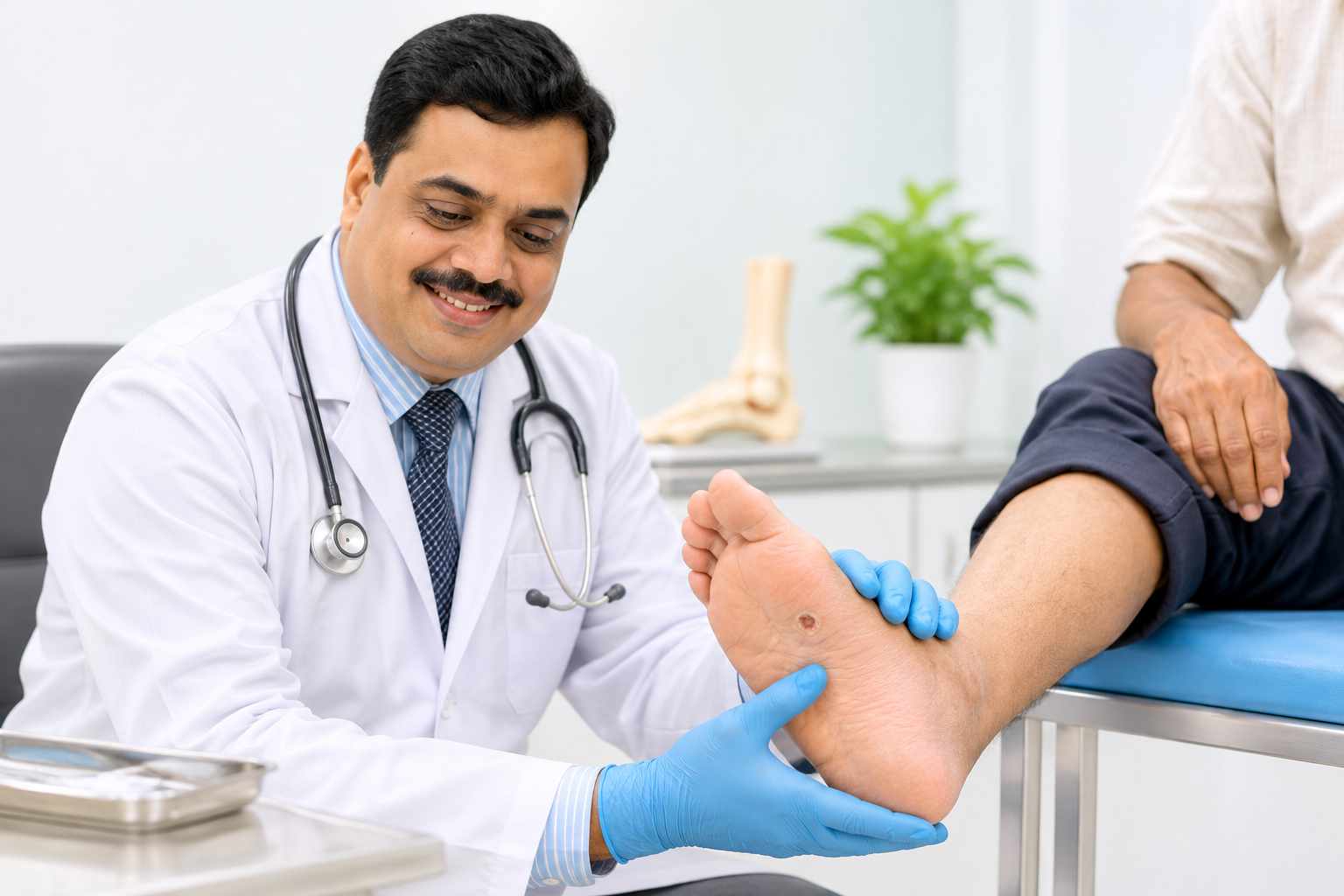
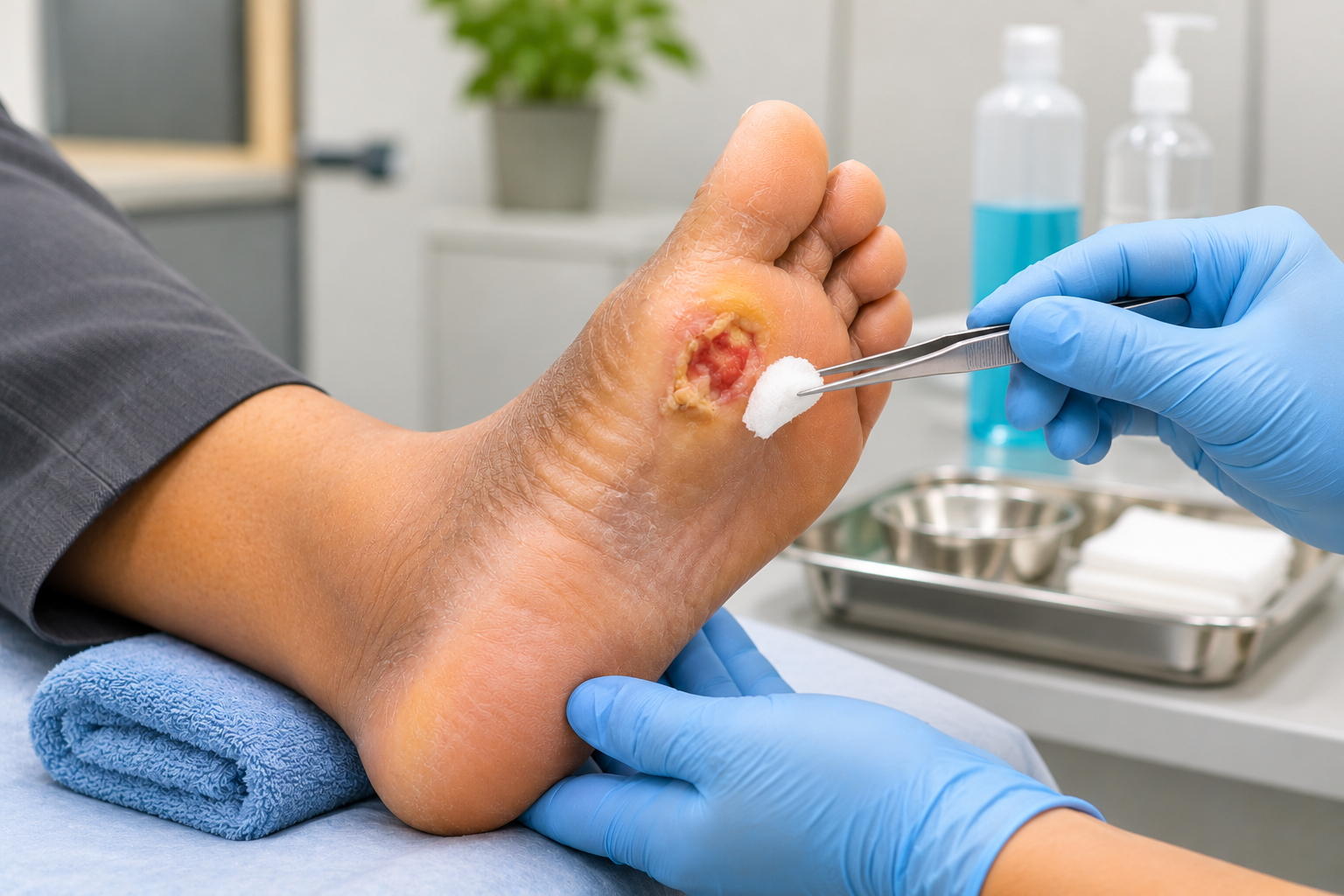
Diabetic foot infection treatment begins with a specialist consultation, wound examination and tests to determine the severity of infection. Treatment may include wound cleaning, antibiotics, pressure relief or surgery when necessary. Patients from Adajan should seek prompt assessment rather than delay care, as serious infections can progress quickly and require hospital treatment.
What Is Diabetic Foot Infection Treatment and Who Is It For?
A diabetic foot infection occurs when bacteria infect the skin or deeper tissues of the foot in a person with diabetes. Infection often develops around an existing ulcer, blister, cut or wound.
Diabetes can damage nerves and reduce blood circulation. Consequently, patients may not notice an injury until redness, swelling, discharge or other complications develop.
Treatment aims to control infection, protect healthy tissue, support wound healing and reduce the risk of serious complications.
Patients who may require specialist evaluation include those experiencing:
-
Redness, swelling or warmth around a foot wound
-
Pus or discharge from an ulcer
-
Increasing pain or tenderness
-
An unpleasant smell from a wound
-
Skin discolouration or blackening
-
Fever or unexplained weakness
-
A wound that becomes deeper or spreads
-
Reduced sensation accompanied by a new injury
Importantly, some patients with diabetic neuropathy may have a serious infection without significant pain.
A diabetic foot infection is diagnosed clinically. A wound that is slow to heal is not necessarily infected, and antibiotics are not appropriate for every diabetic foot ulcer.
For additional information about causes, symptoms and complications, read about diabetic foot infection.
How Is Diabetic Foot Infection Treatment in Adajan Surat Planned?
Patients looking for diabetic foot infection treatment in adajan surat should begin with an appropriate medical assessment.
The doctor evaluates the wound, signs of infection, blood circulation, nerve sensation and overall diabetes management.
Mild infections may sometimes be treated on an outpatient basis. Moderate or severe infections may require urgent investigations, hospital admission, intravenous antibiotics or surgery.
The appropriate setting depends on the patient's clinical condition, not simply the size of the visible wound.
Quick facts: treatment and recovery
| Factor | What patients should know |
|---|---|
| Initial assessment | Wound examination, infection severity assessment and relevant tests |
| Treatment duration | [Doctor to confirm typical duration for clinic-managed cases] |
| Anaesthesia | May not be required for routine assessment; local, regional or general anaesthesia may be needed for procedures |
| Hospital stay | Some patients receive outpatient care; severe infections may require admission |
| Return to work | [Doctor to confirm typical guidance based on infection severity and occupation] |
| Follow-up visits | [Doctor to confirm usual clinic follow-up schedule] |
| Antibiotic treatment | Depends on infection severity, organisms, tissue involvement and clinical response |
| Recovery | Varies with infection control, circulation, wound depth and pressure relief |
Important: These details are general guidance. The treating specialist must confirm individual treatment and recovery expectations.
How Is the Procedure Done, Step by Step?
Diabetic foot infection treatment is not one fixed operation. It is a combination of medical and, when necessary, surgical measures selected according to infection severity.
Step 1: Initial consultation and wound examination
The specialist checks the wound's location, depth, surrounding redness, swelling and discharge.
The examination may include:
-
Measuring the wound
-
Assessing surrounding skin
-
Checking foot pulses
-
Testing protective sensation
-
Looking for exposed or infected deeper tissue
-
Reviewing glucose levels and medical history
Patients with fever, rapidly spreading infection or other signs of serious illness require urgent evaluation.
Step 2: Diagnostic investigations
Not every patient needs every investigation.
Depending on clinical findings, the doctor may recommend blood tests, X-rays, vascular studies or other imaging.
Tests can help identify infection severity, possible bone involvement and circulation problems.
When microbiological testing is indicated, an appropriately collected tissue specimen may be preferable to a superficial swab.
For more details, explore diabetic foot infection tests.
Step 3: Wound cleaning and debridement
The wound is cleaned using appropriate medical techniques.
Debridement may be required to remove dead or infected tissue and expose healthier tissue.
However, the procedure must be planned carefully when blood circulation is inadequate.
Patients should not attempt to remove dead tissue or cut around an infected wound at home.
Step 4: Infection control
Antibiotics are selected according to infection severity, likely or identified bacteria, patient factors and clinical guidelines.
Mild infections may be treated with oral antibiotics when appropriate.
Severe infections can require intravenous treatment and urgent hospital management.
Some patients need surgical drainage or removal of infected tissue in addition to antibiotics.
The medical team should reassess treatment when the infection does not improve as expected.
Step 5: Pressure relief and wound protection
Excess pressure on an infected ulcer can delay healing.
Depending on the wound and infection severity, the specialist may recommend protective dressings, offloading footwear or another suitable pressure-relief device.
Certain casts and non-removable devices may be unsuitable during significant infection or impaired circulation.
The treating team should determine which device is safe.
Step 6: Circulation assessment and treatment
Poor circulation can make infection harder to control and slow tissue healing.
Patients with suspected peripheral arterial disease may require vascular investigations and specialist consultation.
In selected cases, procedures to improve blood flow may be necessary.
Step 7: Follow-up and reassessment
The doctor monitors wound appearance, infection symptoms, treatment response and healing progress.
Further procedures, imaging or changes to antibiotics may be required if complications develop.
Patients should follow the prescribed review schedule and seek earlier attention if symptoms worsen.
For a broader overview, read diabetic foot infection treatment in Surat.
Recovery: What Do the First Weeks Look Like?
Recovery from diabetic foot infection depends on how quickly the infection responds, whether surgery is needed and whether adequate blood circulation is present.
Infection control and complete wound closure are different milestones. An infection may improve before the ulcer has fully healed.
Initial treatment period
The first priority is controlling infection and protecting the affected foot.
Patients may require antibiotics, wound dressings, pressure relief and close monitoring.
Some patients need urgent hospital treatment rather than routine outpatient follow-up.
Early recovery
As treatment works, the doctor looks for reduced redness, swelling, discharge and other infection symptoms.
The wound may still require regular dressing changes and protection.
Patients should not resume unrestricted walking simply because pain or redness has improved.
Following weeks
Wound healing continues as new tissue forms.
The doctor may reassess wound dimensions, blood circulation, footwear and diabetes management.
The need for further procedures depends on the clinical response.
Longer-term recovery
Deep infections, bone infections and circulation problems can require prolonged treatment.
Even after the infection resolves, patients may need ongoing ulcer care and preventive footwear.
What can delay recovery?
Common reasons include uncontrolled blood glucose, inadequate blood supply, continued pressure on the wound, deep infection and difficulty following the treatment plan.
A lack of meaningful progress should prompt reassessment rather than repeated dressing changes without investigating the cause.
Which Factors Change the Cost?
The cost of diabetic foot infection treatment varies considerably because different patients require different levels of care.
A small, uncomplicated infection may involve consultations, medicines and dressings. A severe infection can require imaging, surgery, admission and specialist procedures.
Treatment cost factors
| Component | Why the cost varies |
|---|---|
| Initial consultation | Clinical assessment and treatment planning |
| Laboratory tests | Number and type of investigations |
| Imaging | X-ray, MRI or other imaging when indicated |
| Antibiotics | Medicine selection, route and duration |
| Wound dressings | Materials and frequency of dressing changes |
| Debridement | Extent and setting of the procedure |
| Hospital admission | Severity and required level of care |
| Vascular procedures | Need for circulation assessment or intervention |
| Follow-up visits | Frequency and total duration of care |
Estimated cost: [Doctor or clinic to provide approved consultation, dressing, and procedure price ranges.]
Patients should request a written estimate that separates consultation fees, investigations, dressings, procedures and follow-up costs.
Because infection severity can change, the final cost may differ from the initial estimate.
Treatment should not be delayed when symptoms indicate a serious infection while waiting for a routine cost comparison.
How Can Patients Reach the Clinic From Adajan?
Patients from Adajan can contact Elegance Diabetic Foot & Ulcer Clinic to confirm the appropriate consultation location and appointment availability.
Before visiting, it is helpful to prepare:
-
Previous prescriptions and investigation reports
-
Recent blood sugar and HbA1c results, if available
-
Details of previous antibiotics or wound treatment
-
A list of current medicines and allergies
-
Information about how long the wound has been present
Patients should ask whether their symptoms require immediate hospital assessment.
For appointments and enquiries, contact us.
Why Is Specialist Care Important for Diabetic Foot Infections?
Diabetic foot infections may involve skin, deeper soft tissue or bone.
Treatment therefore requires more than simply prescribing antibiotics or changing dressings.
Dr. Ashutosh Shah (M.S., M.Ch., D.N.B.), a Plastic and Reconstructive Surgeon associated with Elegance Diabetic Foot & Ulcer Clinic, has expertise relevant to complex wound management, diabetic foot surgery and reconstructive care.
Depending on the patient's condition, treatment may also require coordination with diabetes physicians, vascular specialists, infectious disease specialists or hospital teams.
The goal is to control infection, preserve viable tissue, support healing and reduce the risk of preventable complications.
Treatment decisions should always be based on the individual patient's examination and investigation results.
What Questions Should You Ask Before Deciding on Treatment?
Patients and family members should understand the treatment plan before proceeding, whenever the clinical situation allows.
Useful questions include:
-
How severe is the infection?
-
Is the infection limited to soft tissue or is bone involvement suspected?
-
Are antibiotics sufficient, or is surgery required?
-
Is blood circulation adequate for healing?
-
Will hospital admission be necessary?
-
How should pressure be removed from the affected foot?
-
What warning signs require immediate attention?
-
How often should the wound be reviewed?
-
What costs and follow-up visits should be expected?
-
What can be done to reduce the risk of another infection?
For rapidly progressing or severe infections, emergency treatment takes priority over elective planning.
Conclusion
Diabetic foot infections require timely assessment, appropriate infection control and careful wound management.
The treatment plan may involve antibiotics, debridement, pressure relief, circulation assessment or surgery, depending on the severity of infection.
For patients from Adajan, Elegance Diabetic Foot & Ulcer Clinic offers a point of contact for specialist diabetic foot evaluation and treatment planning.
Dr. Ashutosh Shah and the clinical team can help patients understand their treatment options, recovery considerations and follow-up requirements.
For appointments: Contact Elegance Diabetic Foot & Ulcer Clinic.
quiz Frequently Asked Questions
This article is general education, not a diagnosis. If you have a diabetic foot wound, please have it assessed in person. Send a photo on WhatsApp or book a consultation.
About the Author

Dr. Ashutosh Shah, Plastic, Reconstructive & Diabetic Foot Surgeon, Elegance Diabetic Foot & Ulcer Clinic, Surat
Dr. Ashutosh Shah is a board certified plastic and reconstructive surgeon with over 22 years of experience and more than 10,000 limbs and feet saved. He founded Elegance Diabetic Foot & Ulcer Clinic, India's first chain of clinics dedicated to foot care, with centres in Surat and OPD partners across South Gujarat. He is known for a limb first approach, safe wound care and ethical, natural results.