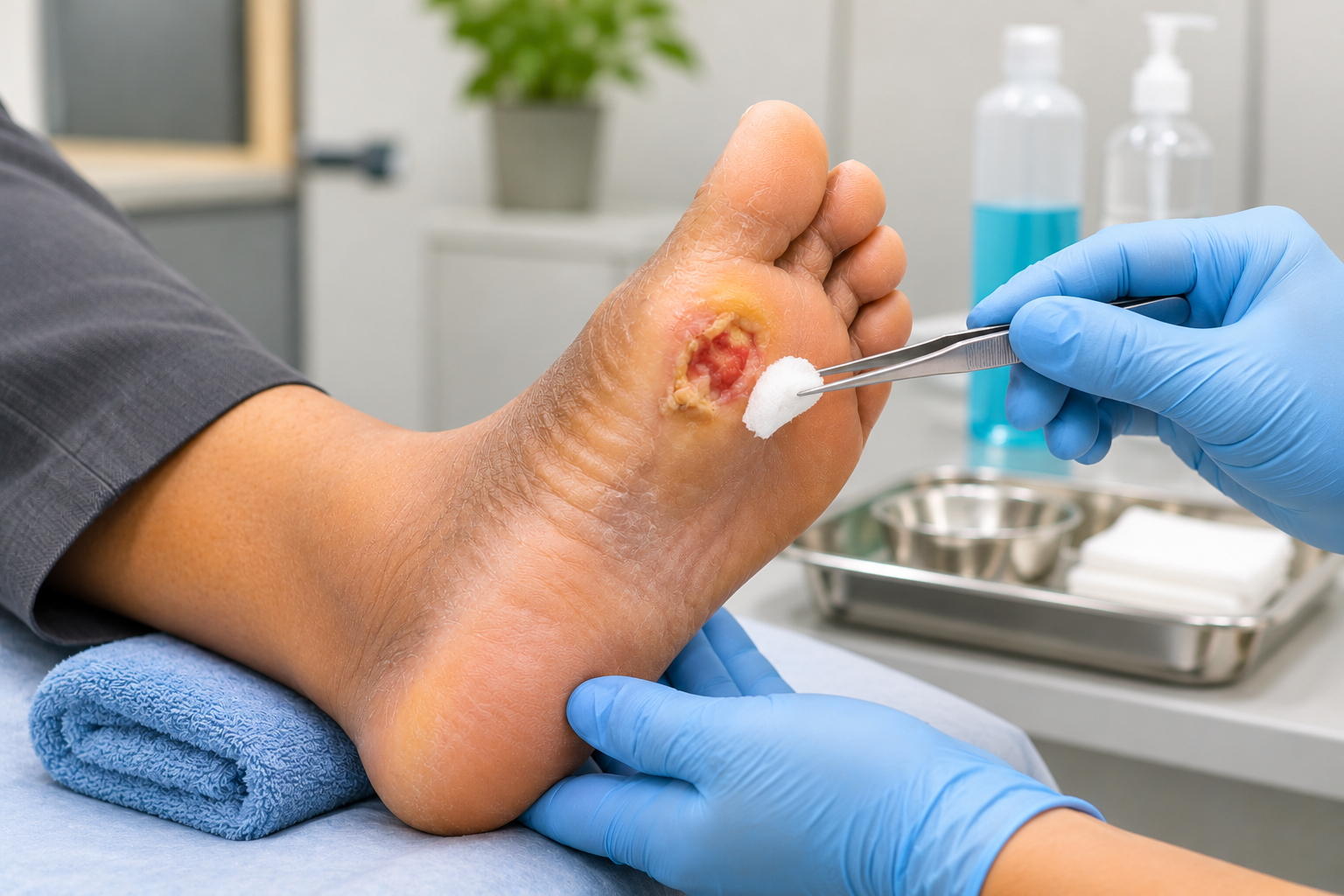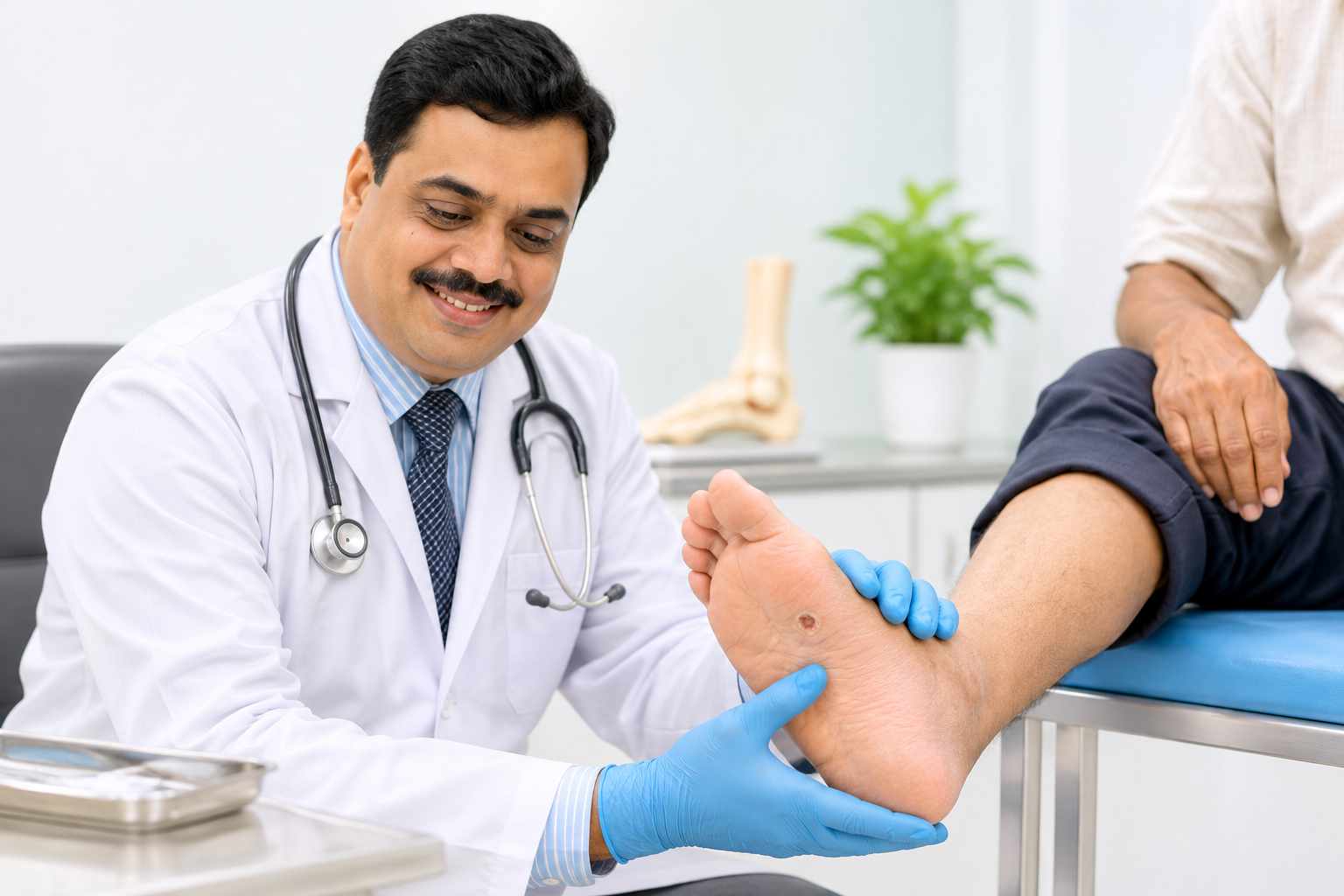

If you are searching for a diabetic foot specialist in ankleshwar, seek medical assessment for foot ulcers, infections, numbness, swelling or wounds that are not healing. Early treatment can help reduce complications. Patients from Ankleshwar may also consider specialist diabetic foot care in Surat when advanced wound assessment or surgical management is required.
Diabetes can affect foot sensation, blood circulation and wound healing. Even a small blister or cut may become serious if it is not examined promptly.
Who Is a Diabetic Foot Specialist?
A diabetic foot specialist is a healthcare professional experienced in assessing and managing diabetes-related foot problems.
Diabetic foot care often involves a multidisciplinary team, which may include surgeons, diabetes physicians, vascular specialists, wound-care professionals and other healthcare providers.
A specialist assessment focuses on identifying the underlying cause of the problem rather than treating only the visible wound.
Common areas of care include:
-
Diabetic foot ulcer assessment
-
Foot infection management
-
Non-healing wound treatment
-
Peripheral neuropathy evaluation
-
Blood circulation assessment
-
Wound cleaning and debridement
-
Pressure-relief planning
-
Preventive foot care
Not every diabetic foot problem requires surgery. Many patients benefit from early assessment, appropriate wound care and pressure reduction.
However, deep infections, severe tissue damage and circulation problems may require urgent specialist or hospital-based treatment.
When Should You Visit a Diabetic Foot Specialist in Ankleshwar?
People with diabetes should not ignore changes in their feet.
Seek prompt medical assessment if you notice:
-
A new cut, blister or open wound
-
A foot ulcer that is not improving
-
Redness, swelling or unusual warmth
-
Pus or discharge
-
Numbness or reduced sensation
-
Repeated callus formation
-
Skin colour changes
-
A wound that repeatedly reopens
People with diabetic neuropathy may not experience pain even when an injury is serious.
Which symptoms require emergency care?
Seek urgent medical attention for rapidly spreading redness, fever, blackening tissue, a suddenly cold or pale foot, or signs of severe infection.
Do not delay emergency treatment to arrange a distant routine appointment.
For less urgent but persistent problems, a specialist consultation can help determine the next steps.
Which Diabetic Foot Problems Need Specialist Treatment?
Different diabetic foot conditions require different approaches.
Diabetic foot ulcers
A diabetic foot ulcer is an open wound that commonly develops where repeated pressure or friction damages the skin.
Reduced sensation can allow the injury to worsen without being noticed.
Treatment may include wound assessment, dressings, pressure relief and circulation evaluation.
Read more about diabetic foot ulcer and its management.
Diabetic foot infections
An infection may cause redness, warmth, swelling, discharge or other symptoms.
Some infections affect only the skin, while others extend into deeper tissues or bone.
Treatment may require antibiotics, drainage, debridement or hospital care, depending on severity.
Explore the causes and warning signs of diabetic foot infection.
Non-healing wounds
A wound may heal slowly because of infection, poor blood circulation, repeated pressure or other medical conditions.
Simply changing dressings may not be enough when the underlying cause remains untreated.
Diabetic neuropathy
Nerve damage can reduce protective sensation, making it difficult to detect injuries.
Regular foot examinations and appropriate footwear are important for prevention.
Poor blood circulation
Reduced blood supply can delay healing and increase the risk of tissue damage.
Some patients require vascular investigations and treatment to improve circulation.
What Happens During a Diabetic Foot Consultation?
A consultation usually begins with a discussion of symptoms, diabetes history and previous treatment.
The specialist may assess:
-
Wound condition: Location, depth, size and surrounding skin.
-
Infection: Redness, swelling, discharge and deeper tissue involvement.
-
Sensation: Whether protective feeling is reduced.
-
Circulation: Foot pulses and signs of inadequate blood flow.
-
Foot pressure: Areas exposed to repeated pressure or friction.
-
Diabetes management: Blood glucose history, medicines and relevant reports.
Depending on the findings, the doctor may recommend blood tests, imaging or vascular investigations.
Treatment may involve appropriate dressings, antibiotics when infection is present, offloading or procedures to remove unhealthy tissue.
For further information, explore wound care.
When Should Patients From Ankleshwar Travel to Surat?
Patients may consider travelling to Surat when a local healthcare professional recommends advanced diabetic foot assessment or when specialist services are required.
Possible reasons include:
-
A wound that remains open despite appropriate treatment
-
Recurrent diabetic foot ulcers
-
Suspected deep infection
-
A wound requiring surgical assessment
-
Possible bone involvement
-
Suspected poor blood circulation
-
Complex wounds requiring coordinated specialist care
Elegance Diabetic Foot & Ulcer Clinic is a specialist care option in Surat for patients seeking assessment of diabetic foot problems.
However, travelling is not always the safest first step.
If an infection is rapidly spreading or the patient has fever, severe illness or signs of critical circulation problems, urgent assessment at the nearest appropriate emergency facility is more important than arranging a routine specialist visit.
What should you consider before travelling?
Ask whether the patient's condition is stable enough for travel, whether urgent hospital admission is needed and whether the wound requires pressure protection.
The treating doctor should advise on safe mobility and transportation.
How Can You Plan an OPD Visit From Ankleshwar?
Planning an outpatient consultation can make the visit more organised.
Before travelling, contact the clinic to confirm its current OPD location, appointment availability and whether the required assessment is offered.
OPD visit planning checklist
| What to prepare | Why it matters |
|---|---|
| Previous prescriptions | Helps the doctor review earlier treatment |
| Recent blood sugar reports | Provides diabetes management information |
| HbA1c report, if available | Shows longer-term glucose control |
| Previous wound photographs | May help document changes over time |
| X-rays or scans, if available | Helps avoid unnecessary duplication |
| Current medicine list | Supports safe treatment planning |
| Allergy information | Important when selecting medicines |
| Previous dressing records | Helps assess treatment response |
Patients should also ask whether the visit is expected to be an outpatient consultation or whether hospital evaluation may be required.
For appointments, contact us.
Why Choose Dr. Ashutosh Shah for Diabetic Foot Care?
Dr. Ashutosh Shah (M.S., M.Ch., D.N.B.) is a Plastic and Reconstructive Surgeon associated with Elegance Diabetic Foot & Ulcer Clinic.
His surgical expertise is relevant to complex wound management, diabetic foot surgery, tissue reconstruction and limb-preservation planning.
Patients with diabetic foot ulcers or non-healing wounds may benefit from specialist assessment to determine whether wound care, infection management, pressure relief or surgical intervention is appropriate.
Complex diabetic foot problems may also require collaboration with diabetes physicians, vascular specialists and other healthcare professionals.
The treatment plan depends on the patient's wound condition, circulation, infection severity and overall health.
How Can You Reduce the Risk of Diabetic Foot Problems?
Preventive foot care is important for people living with diabetes.
Recommended measures include:
-
Inspect both feet every day.
-
Check between the toes and under the soles.
-
Wear properly fitting footwear.
-
Avoid walking barefoot.
-
Keep feet clean and dry.
-
Avoid cutting corns or calluses yourself.
-
Follow prescribed diabetes treatment.
-
Attend recommended foot examinations.
-
Seek medical attention for new wounds.
People with reduced sensation or a previous ulcer may require more frequent specialist examinations.
Conclusion
Finding an appropriate diabetic foot specialist is an important step when diabetes causes ulcers, infections, numbness or non-healing wounds.
Early evaluation can identify complications and help patients receive appropriate treatment before the condition worsens.
Patients from Ankleshwar who require specialist wound assessment can enquire about consultation options at Elegance Diabetic Foot & Ulcer Clinic, Surat, where Dr. Ashutosh Shah provides surgical expertise relevant to complex diabetic foot conditions.
For appointment information: Contact Elegance Diabetic Foot & Ulcer Clinic.
quiz Frequently Asked Questions
This article is general education, not a diagnosis. If you have a diabetic foot wound, please have it assessed in person. Send a photo on WhatsApp or book a consultation.
About the Author

Dr. Ashutosh Shah, Plastic, Reconstructive & Diabetic Foot Surgeon, Elegance Diabetic Foot & Ulcer Clinic, Surat
Dr. Ashutosh Shah is a board certified plastic and reconstructive surgeon with over 22 years of experience and more than 10,000 limbs and feet saved. He founded Elegance Diabetic Foot & Ulcer Clinic, India's first chain of clinics dedicated to foot care, with centres in Surat and OPD partners across South Gujarat. He is known for a limb first approach, safe wound care and ethical, natural results.