
Achilles Tendon Reconstruction
Repair or rebuilding of a ruptured or badly degenerated Achilles tendon.
Key Takeaways
- Diabetes weakens tendon structure, raising rupture risk and slowing repair.
- Reconstruction rebuilds a tendon that has ruptured or degenerated beyond simple repair.
- Healing takes longer in diabetes, so protection periods are deliberately extended.
- Skin over the Achilles is thin, making wound healing a genuine consideration.
Why Do Diabetic Achilles Tendons Fail?
Sugar bonds permanently to collagen, stiffening the fibres and reducing their ability to absorb load. Blood supply to the tendon is already limited by design, and diabetes reduces it further. As a result, a tendon that looks intact can tear during ordinary activity such as climbing stairs.
Additionally, previous steroid injections and certain antibiotics increase rupture risk, which is why both are used cautiously in these patients.
When Is Reconstruction Needed?
- Complete rupture with a palpable gap in the tendon
- Chronic degeneration where the tendon has thickened and weakened
- Failed previous repair
- Rupture presenting late, where the ends have retracted and scarred
How Is It Performed?
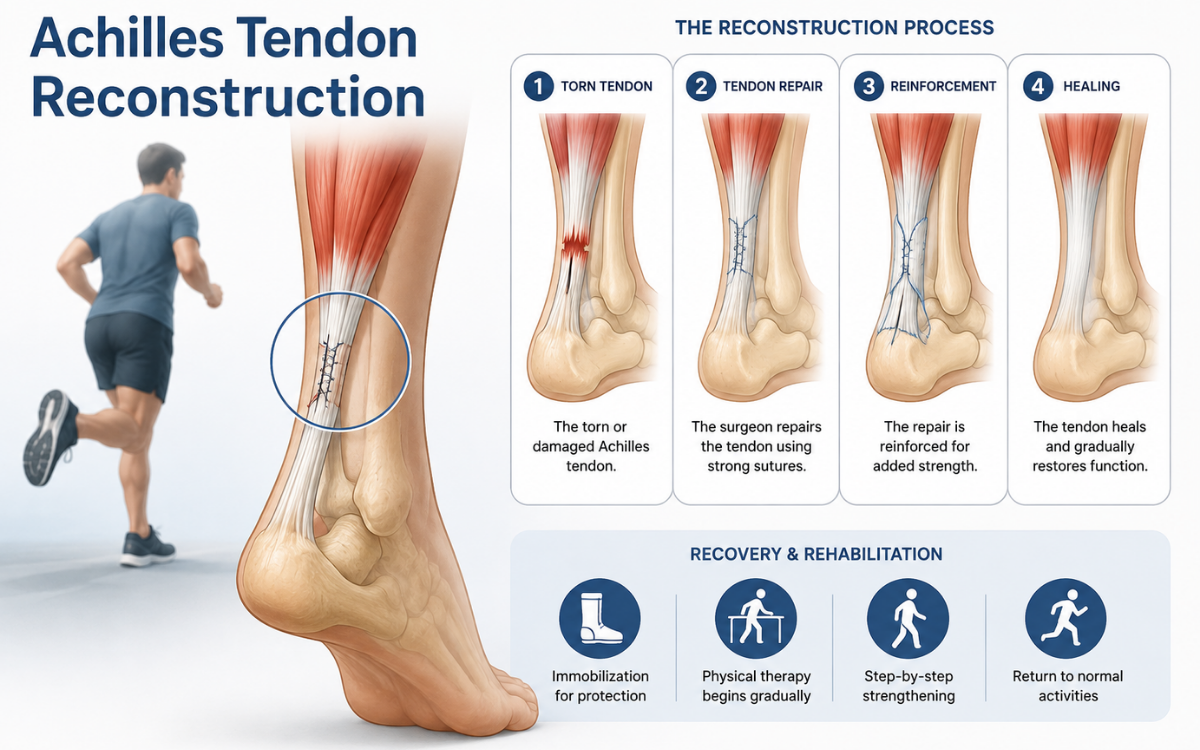
Fresh ruptures are repaired directly where the ends meet. Where a gap exists or tissue quality is poor, the tendon is reinforced using a tendon transfer, most often the flexor hallucis longus, which brings healthy tissue and its own blood supply into the repair.
Skin closure receives particular attention here, since the overlying skin is thin and wound problems in this area are the commonest complication.
What Is Recovery Like?
Expect a cast or boot for six to eight weeks, followed by graduated weight bearing and several months of rehabilitation. Diabetic patients are protected for longer than standard protocols suggest, because healing genuinely takes more time. Full strength return typically takes six to nine months.
What Does It Cost and What Are the Risks?
Reconstruction is a significant procedure, quoted individually after assessment and imaging. The main risks are wound healing problems, infection and re rupture, all of which are higher in diabetes and all of which are reduced by good sugar control and adequate circulation, checked through our vascular assessment before surgery.