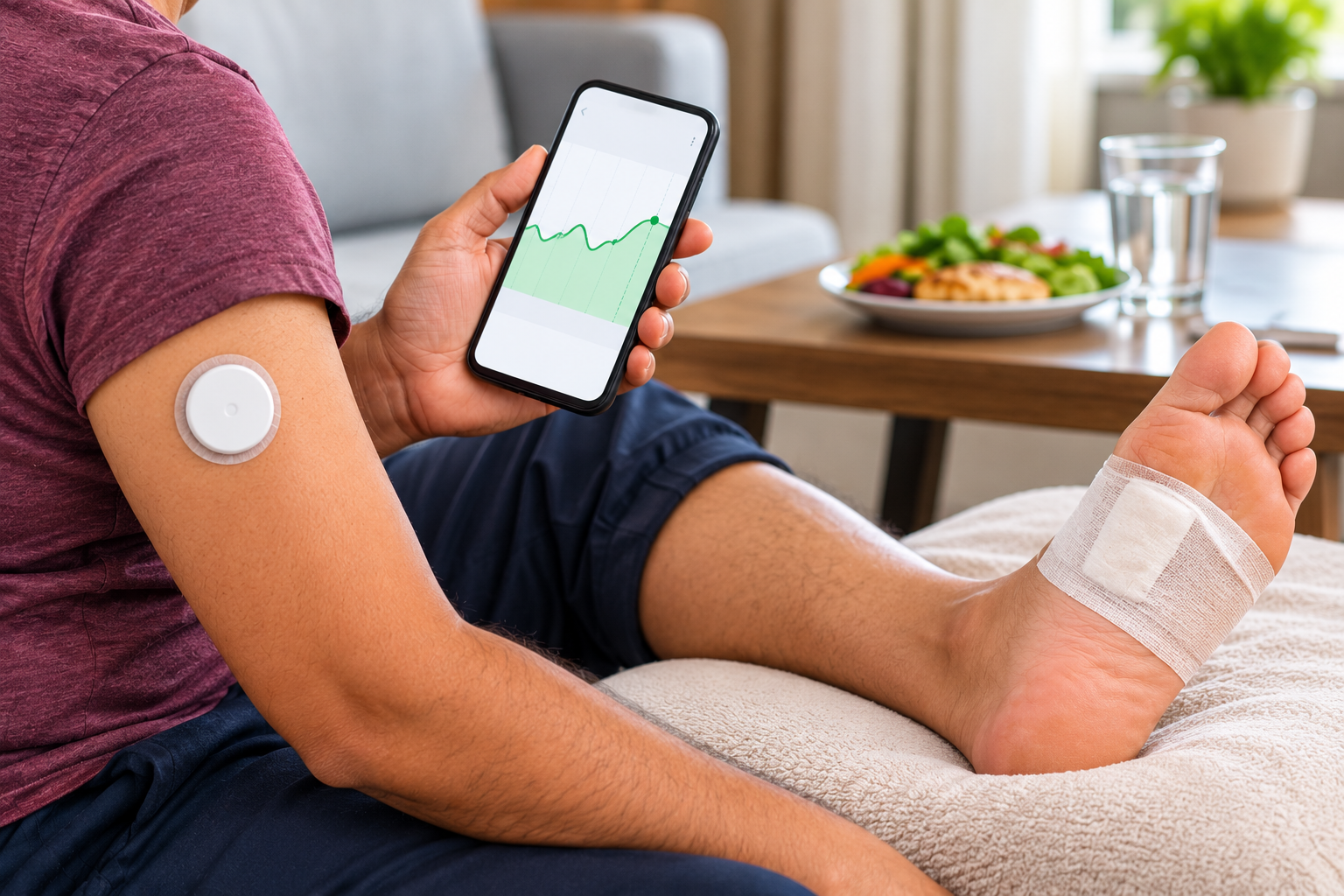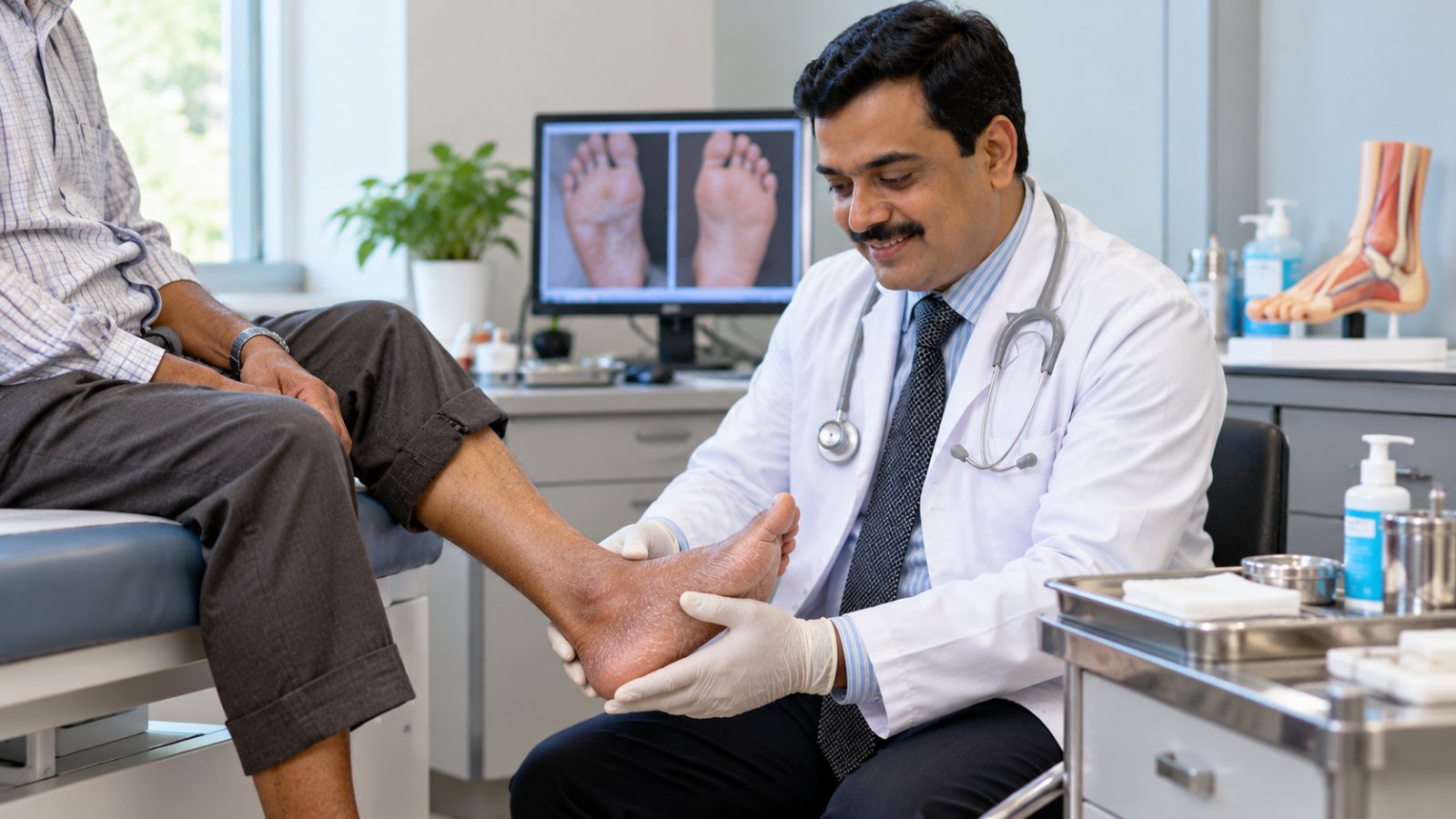

Peripheral artery disease in diabetics is a narrowing of the leg arteries that cuts blood flow to the feet. Consequently, wounds heal slowly, infections spread faster, and amputation risk rises. However, when the blockage is found early and circulation is restored, most feet can be saved.
Key Takeaways
- Peripheral artery disease reduces blood supply to the foot, therefore no wound treatment works well until circulation is corrected.
- Studies estimate that roughly half of all patients with a diabetic foot ulcer also have some degree of arterial blockage.
- Nerve damage masks the usual leg pain, so many diabetics reach the clinic with advanced disease and no warning symptoms.
- A simple pulse check and ankle brachial index test can detect the problem in minutes.
- Angioplasty or bypass surgery can reopen blocked arteries, and healing often restarts within weeks afterwards.
- In diabetics, blockages usually sit below the knee, which makes expert assessment more important than a general leg scan.
Table of Contents
- What is peripheral artery disease in diabetics?
- Why does diabetes damage the leg arteries?
- What are the warning signs of poor circulation in feet?
- How is the blockage diagnosed?
- How is peripheral artery disease treated?
- What does treatment cost in India?
- How can diabetics protect their circulation?
- When should you see a doctor?
- Why patients across India choose EDFC
What is peripheral artery disease in diabetics?
Peripheral artery disease in diabetics means the arteries carrying blood to the legs and feet have narrowed or blocked, usually because of long standing high blood sugar and cholesterol. As a result, oxygen and nutrients cannot reach the tissue properly. Therefore even a small cut can turn into a non healing ulcer.
Peripheral artery disease: narrowing or blockage of the arteries supplying the legs and feet, which reduces blood flow and slows healing.
Think of the arteries as delivery roads. Antibiotics, growth factors, and repair cells all travel along them. When the road is blocked, meanwhile, the delivery never arrives, no matter how good the medicine is. That single fact explains why so many diabetic foot ulcers stay open for months despite regular dressings.
Why does diabetes damage the leg arteries?
High blood sugar slowly injures the inner lining of arteries, therefore fat, calcium, and scar tissue build up inside the vessel wall. In addition, diabetes often travels with high cholesterol, high blood pressure, smoking, and chronic inflammation. Together, these speed up narrowing far more than any single risk factor would alone.
Location matters too. In non diabetics, blockages typically sit in the larger thigh arteries. In diabetics, however, the disease favours the smaller vessels below the knee, exactly the ones that feed the toes and heel. Consequently, a scan that only looks at the upper leg can miss the real problem.
Critical limb ischemia: a severe stage of arterial blockage where blood flow is too low to keep tissue alive, causing rest pain, ulcers, or gangrene.
Kidney disease adds another layer, since it hardens vessels further. For this reason, our team assesses kidney function alongside circulation whenever a wound refuses to progress.
What are the warning signs of poor circulation in feet?
Watch for cramping calf pain while walking that eases on rest, cold or pale feet, thin shiny skin, hair loss on the shins, thickened nails, and weak or absent foot pulses. Above all, treat any wound that has not shrunk in four weeks as a circulation problem until proved otherwise.
Claudication: muscle cramp or ache in the calf or thigh that appears during walking and settles within a few minutes of rest.
Here is the trap. Diabetic nerve damage removes pain, therefore the classic walking cramp may never appear. Many patients walk comfortably right up to the day a black patch shows on a toe. Similarly, night rest pain gets dismissed as cramps or age.
Signs that need same day attention
- A toe or heel turning blue, purple, or black
- Foul smelling discharge from any foot wound
- Spreading redness, swelling, or fever
- Sudden pain, coldness, and numbness in one foot
- An ulcer with exposed bone or tendon
Untreated blockage is the usual road to gangrene, and gangrene is where limbs get lost. Early referral, meanwhile, changes that outcome dramatically.
How is the blockage diagnosed?
Diagnosis starts with feeling the pulses at the ankle and foot, followed by an ankle brachial index reading and a colour Doppler study. If those suggest significant blockage, then a CT or catheter angiogram maps the exact level. Each step is painless and completed quickly in the clinic.
Ankle brachial index: a simple comparison of blood pressure at the ankle and the arm, used to estimate how well blood is reaching the foot.
One caution applies to diabetics. Hardened, calcified arteries can give a falsely normal ankle reading, therefore experienced clinicians combine several tests rather than trusting one number. Our full diabetic foot assessment and diagnostics pathway is built around exactly this problem.
How is peripheral artery disease treated?
Treatment has two parts, namely restoring blood flow and protecting the artery long term. Angioplasty opens the blocked segment with a balloon and sometimes a stent, while bypass surgery routes blood around it. Afterwards, medication, sugar control, and structured walking keep the vessel working.
Restoring the blood supply
Angioplasty is now the first choice for most below knee blockages, because it needs only a small puncture and a short stay. Bypass surgery, meanwhile, suits long blockages or failed angioplasty. Our circulation assessment and treatment team decides between them after mapping the whole leg.
Protecting the artery afterwards
Reopening a vessel is not the end of the story. Therefore patients continue on antiplatelet medicines and statins, stop tobacco completely, and work on HbA1c and blood pressure. In addition, supervised walking encourages small natural bypass channels to develop over months.
What does treatment cost in India?
Basic circulation testing usually costs a few thousand rupees at most clinics. Angioplasty, however, commonly runs into the low lakhs, depending on the city, the number of segments treated, and the balloons or stents required. Bypass surgery and hospital stay add further to the total.
Insurance frequently covers limb salvage procedures, so ask about approval early. Above all, request a written estimate for the complete pathway rather than a single procedure price, since dressings, footwear, and follow up visits continue for weeks afterwards.
How can diabetics protect their circulation?
Prevention is unglamorous, yet it works. Keep HbA1c, cholesterol, and blood pressure within target. Stop smoking entirely, because tobacco is the single fastest way to close a leg artery. Meanwhile, inspect both feet daily, and never walk barefoot, even indoors.
- Check the soles, heels, and between the toes every evening, using a mirror if needed
- Wash and dry feet properly, then moisturise everywhere except between the toes
- Wear well fitted footwear that protects pressure points
- Get pulses examined at least once a year, or sooner if any wound appears
- Report colour change, coldness, or numbness immediately instead of waiting
When should you see a doctor?
Book an urgent review if a foot wound has not improved in two weeks, or the same day if you notice black tissue, foul discharge, fever, or a sudden cold and painful foot. Meanwhile, avoid home remedies, since arterial blockage worsens quietly and quickly.
Time is the currency here. Every week spent on the wrong treatment is a week of tissue loss that cannot be recovered later.
Why patients across India choose EDFC
Elegance Diabetic Foot & Ulcer Clinic is India's first chain of clinics dedicated only to diabetic foot care, led by Dr. Ashutosh Shah, a plastic, reconstructive and diabetic foot surgeon with 22+ years of experience and 10,000+ limbs and feet saved. Our team works from Elegance Clinic, Surat, with centres expanding into Jamnagar and Vizianagaram.
Patients often search for peripheral artery disease in diabetics after a wound refuses to close, and our message stays simple. Check the blood supply first, restore it where possible, then heal the wound properly. Book a consultation at Elegance Diabetic Foot & Ulcer Clinic, or send a photo of your foot concern on WhatsApp for quick guidance, through our consultation booking page.
This article is for general information only and does not replace an in-person medical examination. Please consult a qualified doctor about your own foot condition.
quiz Frequently Asked Questions
This article is general education, not a diagnosis. If you have a diabetic foot wound, please have it assessed in person. Send a photo on WhatsApp or book a consultation.
About the Author

Dr. Ashutosh Shah, Plastic, Reconstructive & Diabetic Foot Surgeon, Elegance Diabetic Foot & Ulcer Clinic, Surat
Dr. Ashutosh Shah is a board certified plastic and reconstructive surgeon with over 22 years of experience and more than 10,000 limbs and feet saved. He founded Elegance Diabetic Foot & Ulcer Clinic, India's first chain of clinics dedicated to foot care, with centres in Surat and OPD partners across South Gujarat. He is known for a limb first approach, safe wound care and ethical, natural results.