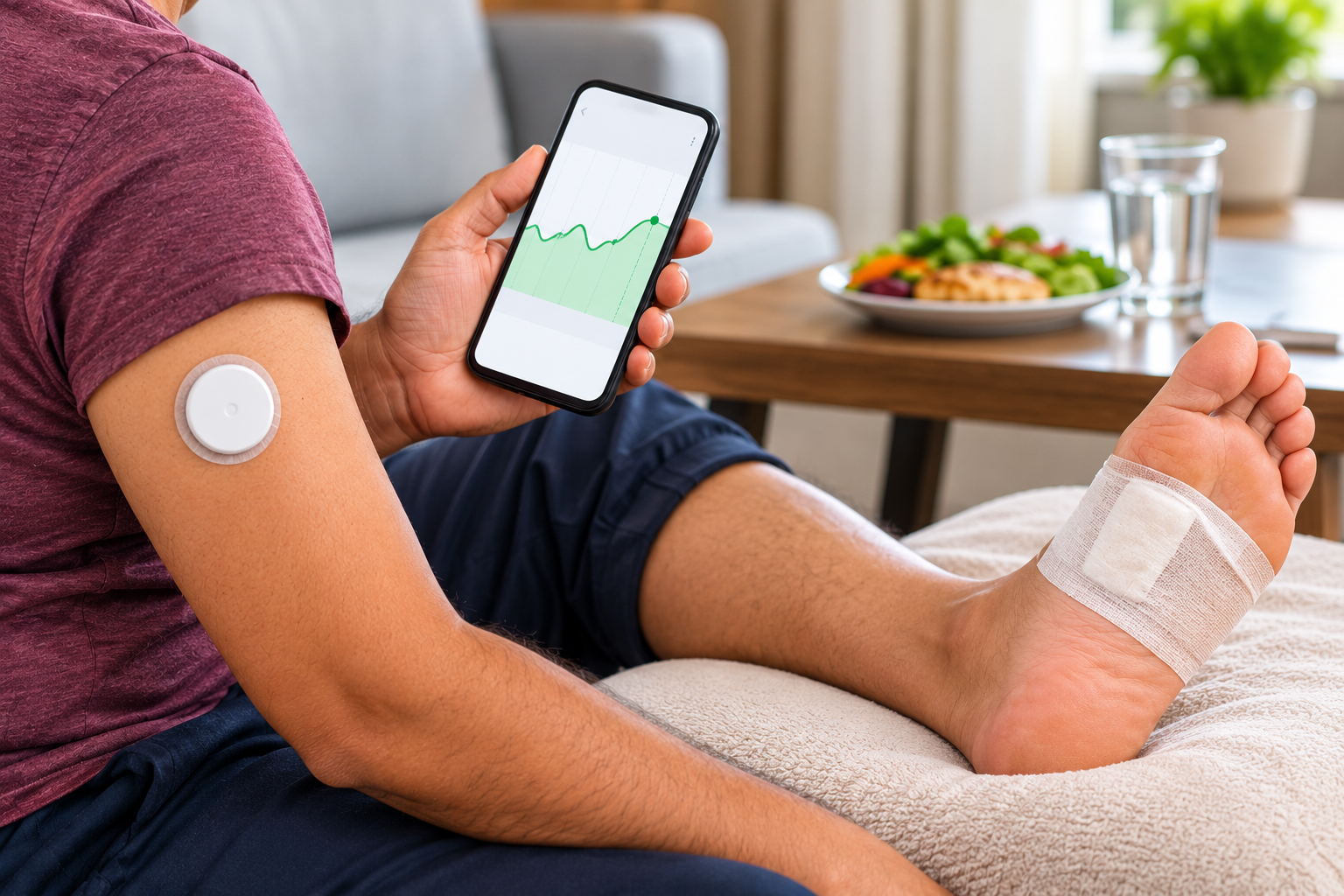
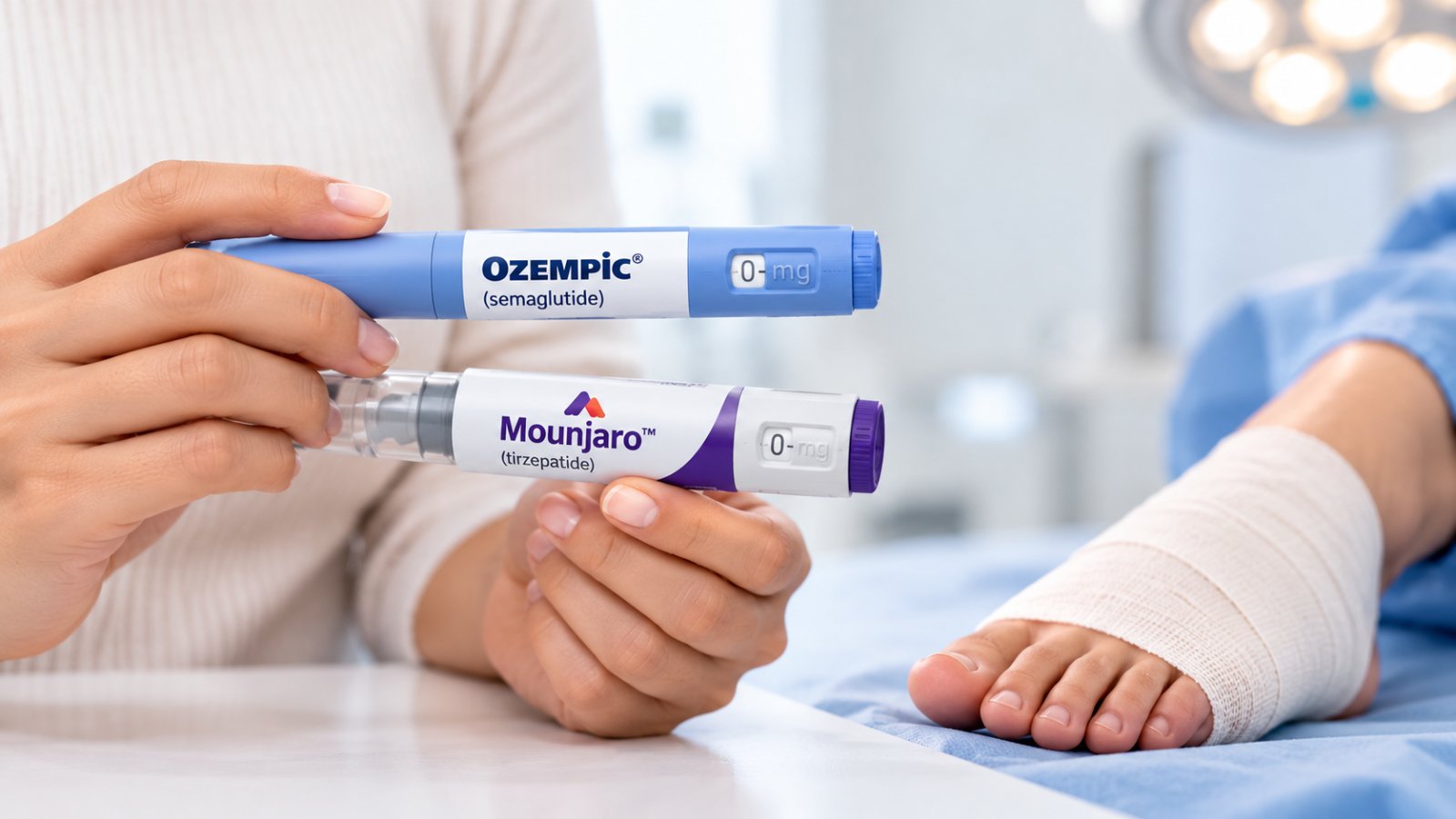
People on weekly GLP-1 or GIP/GLP-1 injections such as semaglutide (Ozempic) or tirzepatide (Mounjaro) may have slowed stomach emptying, which raises aspiration risk under anaesthesia. Current multi-society guidance mostly allows continuing them before surgery, with a liquid diet for 24 hours in higher-risk patients; the anaesthetist, surgeon and diabetologist decide together.
Should you stop Ozempic before surgery? Not always. Patients taking weekly semaglutide (Ozempic) or tirzepatide (Mounjaro) may be able to continue treatment before planned diabetic foot surgery. Updated 2024 multi-society guidance recommends individual assessment, with a 24-hour liquid diet or additional anaesthesia precautions for selected higher-risk patients. Never change your injection schedule without consulting your medical team.
Key Takeaways
-
Ozempic and Mounjaro can slow stomach emptying, potentially increasing aspiration risk during general anaesthesia or deep sedation.
-
The 2023 American Society of Anesthesiologists (ASA) guidance suggested withholding weekly GLP-1 injections for seven days before elective surgery.
-
Updated 2024 multi-society guidance allows most low-risk patients to continue their prescribed medication.
-
Patients with significant nausea, vomiting, recent dose increases or suspected gastroparesis need additional assessment.
-
A liquid-only diet for at least 24 hours may be recommended for selected higher-risk patients.
-
Stopping diabetes medication can affect blood glucose control and requires an individual plan.
-
Emergency diabetic foot surgery should not be delayed solely because a patient recently took an injection.
-
The anaesthetist, surgeon and treating diabetes specialist should agree on the safest approach.
Why Do GLP-1 Injections Matter to the Anaesthetist?
GLP-1 receptor agonists are medicines used to manage type 2 diabetes and, in some formulations, obesity.
Two commonly discussed weekly injections are:
-
Ozempic: Contains semaglutide, a GLP-1 receptor agonist.
-
Mounjaro: Contains tirzepatide, which acts on both GIP and GLP-1 receptors.
These medicines help regulate blood glucose and can reduce appetite.
One important effect is delayed gastric emptying, meaning food may remain in the stomach longer than usual.
What Is Delayed Gastric Emptying?
Normally, the stomach gradually moves food into the small intestine.
GLP-1-based medicines can slow this process.
Some patients experience:
-
Nausea
-
Vomiting
-
Abdominal fullness
-
Bloating
-
Constipation
-
Reduced appetite
These effects are often more noticeable when treatment is first started or the dose is increased.
Not everyone experiences significant symptoms, and delayed gastric emptying may become less pronounced with continued treatment.
Why Is a Full Stomach Dangerous During Anaesthesia?
During general anaesthesia or deep sedation, normal protective airway reflexes may be reduced.
If stomach contents move backwards into the throat, they may enter the lungs.
This is called pulmonary aspiration.
Aspiration can cause serious respiratory complications, including aspiration pneumonitis.
Patients are therefore given fasting instructions before procedures involving anaesthesia.
However, standard fasting does not always guarantee that the stomach is empty in someone with delayed gastric emptying.
This is why semaglutide and anaesthesia risk became an important topic in surgical safety guidance.
Does Every Patient Taking Ozempic Have This Risk?
No.
The risk varies according to:
-
Duration of treatment
-
Recent dose increases
-
Current dose
-
Gastrointestinal symptoms
-
Other conditions affecting stomach emptying
-
Planned anaesthesia technique
Taking a GLP-1 medicine does not automatically make surgery unsafe.
The anaesthesia team evaluates the individual situation.
What Changed Between the 2023 and 2024 Guidance?
Patients searching for whether to stop Ozempic before surgery may encounter different recommendations.
This is partly because professional guidance changed as more evidence became available.
ASA Guidance in June 2023
In June 2023, the American Society of Anesthesiologists issued consensus-based guidance addressing GLP-1 medicines before elective procedures.
The recommendations suggested:
-
Holding daily GLP-1 medicines on the day of surgery.
-
Holding weekly GLP-1 medicines for one week before surgery.
-
Assessing gastrointestinal symptoms on the day of the procedure.
-
Using additional aspiration precautions when appropriate.
The recommendations were precautionary because evidence about the actual frequency of aspiration was limited.
What Changed in October 2024?
In October 2024, a multi-society group released updated clinical practice guidance.
The participating organisations included the ASA, American Gastroenterological Association, American Society for Metabolic and Bariatric Surgery, International Society of Perioperative Care of Patients with Obesity and Society of American Gastrointestinal and Endoscopic Surgeons.
The updated approach recognised that withholding medication may create problems, including worsening blood glucose control.
It also recognised that not every patient taking a GLP-1 medicine has a high risk of retained stomach contents.
The guidance therefore recommended individual risk assessment rather than routine withholding for everyone.
2023 vs 2024 Guidance Comparison
| Guidance | General Recommendation | Important Consideration |
|---|---|---|
| ASA 2023 | Consider holding weekly GLP-1 medicines for seven days before elective surgery | Precaution against delayed gastric emptying |
| Multi-society 2024 | Most lower-risk patients may continue treatment | Individual risk assessment |
| Higher-risk patients | Consider liquid-only diet for at least 24 hours and other precautions | Symptoms, dose escalation and other risk factors |
| Patients with severe gastrointestinal symptoms | Consider postponing elective surgery until symptoms improve | Increased concern about retained stomach contents |
| Urgent surgery | Proceed according to clinical urgency with appropriate precautions | Do not delay necessary treatment solely for injection timing |
Important: The 2024 guidance does not mean every patient must continue the medicine. The final decision remains individual.
Who Should Hold the Injection and for How Long?
There is no single answer that applies to every patient taking Ozempic or Mounjaro.
Some patients can continue their weekly injection, while others may need temporary withholding, dietary adjustments or a change in the surgical plan.
Patients Who May Continue Their Injection
Continuation may be appropriate when a patient:
-
Has been taking a stable dose.
-
Has no significant gastrointestinal symptoms.
-
Has no known condition causing severe delayed stomach emptying.
-
Is undergoing an elective procedure with an agreed anaesthesia plan.
-
Has been assessed as lower risk by the treating team.
Even when the medicine is continued, the patient must follow the hospital's fasting and preparation instructions.
Patients Who Need Additional Precautions
The following situations warrant closer assessment.
1. Recently started treatment
Patients beginning GLP-1 treatment may experience more pronounced gastrointestinal effects.
The dose-escalation phase often lasts several weeks.
Elective surgery may be deferred until this phase has passed and symptoms have settled.
2. Recent dose increase
A recent increase in Ozempic or Mounjaro dosage may temporarily increase gastrointestinal symptoms.
The anaesthetist should know when the dose changed.
3. Persistent nausea or vomiting
Significant gastrointestinal symptoms raise concern about delayed stomach emptying.
Elective surgery may need postponement until symptoms improve.
4. Higher medication doses
Higher doses may be associated with more gastrointestinal side effects.
Some patients may benefit from a liquid-only diet for at least 24 hours before surgery, as instructed by their medical team.
5. Existing gastroparesis
People with diabetes may develop gastroparesis, a condition that slows stomach emptying.
This can increase concern about retained stomach contents during anaesthesia.
If the Medicine Must Be Held, Is Seven Days Enough?
The 2023 ASA guidance suggested a seven-day hold for weekly formulations.
The 2024 multi-society guidance does not establish a universally effective withholding period that guarantees an empty stomach.
When withholding is selected, the team may use the earlier timing recommendation as a reference while also considering symptoms and other precautions.
Therefore, patients should not assume that skipping one dose completely eliminates aspiration risk.
Preoperative Guide: Continue or Hold?
The following table explains how the decision may vary with the planned procedure.
| Surgery Situation | Continue or Hold? | Preoperative Diet | Extra Precaution |
|---|---|---|---|
| Planned foot surgery under general anaesthesia | Most lower-risk patients may continue; higher-risk patients need an individual plan | Standard fasting; liquid-only diet for at least 24 hours in selected cases | Assess symptoms and aspiration risk |
| Surgery under spinal or regional anaesthesia | Individual decision | Depends on sedation and possibility of conversion to general anaesthesia | Inform anaesthetist about injection timing |
| Minor procedure under local anaesthesia | Often may continue if no significant sedation is planned | Follow the specific procedure instructions | Confirm whether sedation is expected |
| Emergency surgery for severe diabetic foot infection | Do not delay necessary treatment solely for medication timing | Follow emergency anaesthesia instructions | Full-stomach precautions when indicated |
This table is educational and should not replace hospital-specific instructions.
How Is Blood Sugar Controlled If the Dose Is Held?
A major concern for patients is whether temporarily withholding their weekly diabetes injection will increase blood glucose.
This is possible, especially when the medicine contributes significantly to diabetes control.
Poorly controlled blood glucose around surgery may increase the risk of infection and complicate wound healing.
For this reason, medication changes require planning.
What Happens If Ozempic Is Temporarily Stopped?
Semaglutide remains in the body for an extended period because it is a long-acting medicine.
Its glucose-lowering effects do not disappear immediately after one missed dose.
However, blood glucose may rise over time when treatment is interrupted.
The effect varies between patients.
How Is Glucose Monitored Before Surgery?
Depending on the clinical situation, the medical team may recommend:
-
Home glucose monitoring before admission
-
Blood glucose measurement on admission
-
Repeat monitoring during fasting
-
Additional testing after surgery
-
Temporary adjustments to other diabetes medicines
-
Insulin treatment when clinically necessary
For patients who are fasting in hospital, glucose may be checked approximately every four to six hours, although frequency depends on the clinical condition and treatment protocol.
Patients receiving insulin or experiencing unstable glucose levels may need more frequent checks.
Should Other Diabetes Medicines Be Changed?
Not without medical advice.
Different medicines have different perioperative considerations.
For example, insulin management differs from the management of GLP-1 injections.
Patients taking multiple diabetes medicines should obtain an individual plan from their treating physician.
An endocrinologist opinion may be helpful when medication adjustments are complicated.
Can Urgent Foot Surgery Go Ahead the Same Day?
Yes. Urgent diabetic foot surgery may still proceed when medically necessary, even if a patient recently took Ozempic or Mounjaro.
A severe diabetic foot infection can progress rapidly.
Delaying essential treatment may increase the risk of tissue damage, systemic infection or limb loss.
When Is Foot Surgery Urgent?
Urgent assessment may be necessary for:
-
Rapidly spreading infection
-
Deep foot abscess
-
Wet gangrene
-
Necrotising infection
-
Severe tissue destruction
-
Infection associated with systemic illness
-
Limb-threatening complications
Some patients require urgent surgical drainage or removal of infected tissue.
Others may need more extensive limb salvage surgery.
What If the Patient Took Mounjaro Yesterday?
The anaesthetist should be informed immediately.
The team will assess:
-
When the injection was taken.
-
The medication dose.
-
Whether the patient has nausea or vomiting.
-
When the patient last ate or drank.
-
Whether the procedure is urgent.
-
Which anaesthesia technique is appropriate.
When necessary, the anaesthesia team may manage the patient as having a potentially full stomach.
Additional measures may include airway-protection techniques or gastric ultrasound when available and appropriate.
Can Gastric Ultrasound Help?
In selected cases, point-of-care gastric ultrasound can help assess whether significant stomach contents remain.
However, the technique requires trained personnel and appropriate equipment.
It is not available in every hospital and cannot replace clinical judgment.
The final decision depends on the patient's condition and the urgency of surgery.
Diabetic Foot Surgeon in Surat: Preparing for Surgery While Taking GLP-1 Medicines
Patients taking Ozempic, Mounjaro or another weekly diabetes injection should inform the surgical team before undergoing diabetic foot treatment.
A preoperative consultation helps identify medication-related risks and prepare a suitable glucose-management plan.
At Elegance Diabetic Foot & Ulcer Clinic (EDFC), Dr. Ashutosh Shah is associated with diabetic foot assessment and surgical treatment planning. Patients seeking a diabetic foot surgeon in surat should provide their complete medication history so that the surgeon, anaesthetist and treating diabetes specialist can coordinate the appropriate preoperative approach.
What Should You Bring to Your Consultation?
Patients should prepare:
-
Current diabetes medicine list
-
Ozempic or Mounjaro dose
-
Date of the most recent injection
-
Date of the next scheduled dose
-
Recent blood glucose records
-
HbA1c report, if available
-
Details of nausea, vomiting or constipation
-
Information about other medical conditions
-
Previous anaesthesia history
The preparing for your visit page provides additional information about consultation preparation.
Questions to Ask Before Foot Surgery
Before the procedure, ask:
-
Should I continue my weekly injection?
-
Do I need a liquid-only diet before surgery?
-
What fasting instructions should I follow?
-
Will I need general, regional or local anaesthesia?
-
What happens if my blood glucose increases?
-
Should I change my other diabetes medicines?
-
When can I resume the injection after surgery?
These questions help patients understand the treatment plan.
When Can Ozempic or Mounjaro Be Restarted After Surgery?
Restarting treatment depends on several factors.
The team may consider:
-
Whether the patient is eating and drinking normally
-
Persistent nausea or vomiting
-
Postoperative gastrointestinal symptoms
-
Blood glucose stability
-
Hydration
-
Kidney function
-
Whether further surgery is planned
Patients should not automatically restart an injection immediately after surgery without checking their discharge instructions.
If several weekly doses have been missed, the prescriber may need to review the restarting dose to reduce gastrointestinal side effects.
The correct approach depends on the specific medicine and the length of interruption.
Patients should also follow their after surgery care instructions for wound management and recovery.
Conclusion
Patients taking Ozempic or Mounjaro do not always need to stop their weekly injection before diabetic foot surgery.
The decision depends on the patient's gastrointestinal symptoms, medication history, anaesthesia requirements and surgical urgency.
The 2023 ASA guidance suggested withholding weekly GLP-1 medicines for seven days before elective procedures.
However, the 2024 multi-society guidance supports continuing treatment for most lower-risk patients while applying additional precautions when necessary.
For patients asking whether to stop Ozempic before surgery, the safest approach is an individual plan agreed upon by the anaesthetist, surgeon and treating diabetes specialist.
At Elegance Diabetic Foot & Ulcer Clinic, Dr. Ashutosh Shah is associated with diabetic foot evaluation and surgical planning. Patients should discuss their full medication history before any planned procedure.
Urgent diabetic foot infections require prompt assessment, and necessary treatment should not be delayed solely because of recent GLP-1 injection use.
quiz Frequently Asked Questions
This article is general education, not a diagnosis. If you have a diabetic foot wound, please have it assessed in person. Send a photo on WhatsApp or book a consultation.
About the Author

Dr. Ashutosh Shah, Plastic, Reconstructive & Diabetic Foot Surgeon, Elegance Diabetic Foot & Ulcer Clinic, Surat
Dr. Ashutosh Shah is a board certified plastic and reconstructive surgeon with over 22 years of experience and more than 10,000 limbs and feet saved. He founded Elegance Diabetic Foot & Ulcer Clinic, India's first chain of clinics dedicated to foot care, with centres in Surat and OPD partners across South Gujarat. He is known for a limb first approach, safe wound care and ethical, natural results.