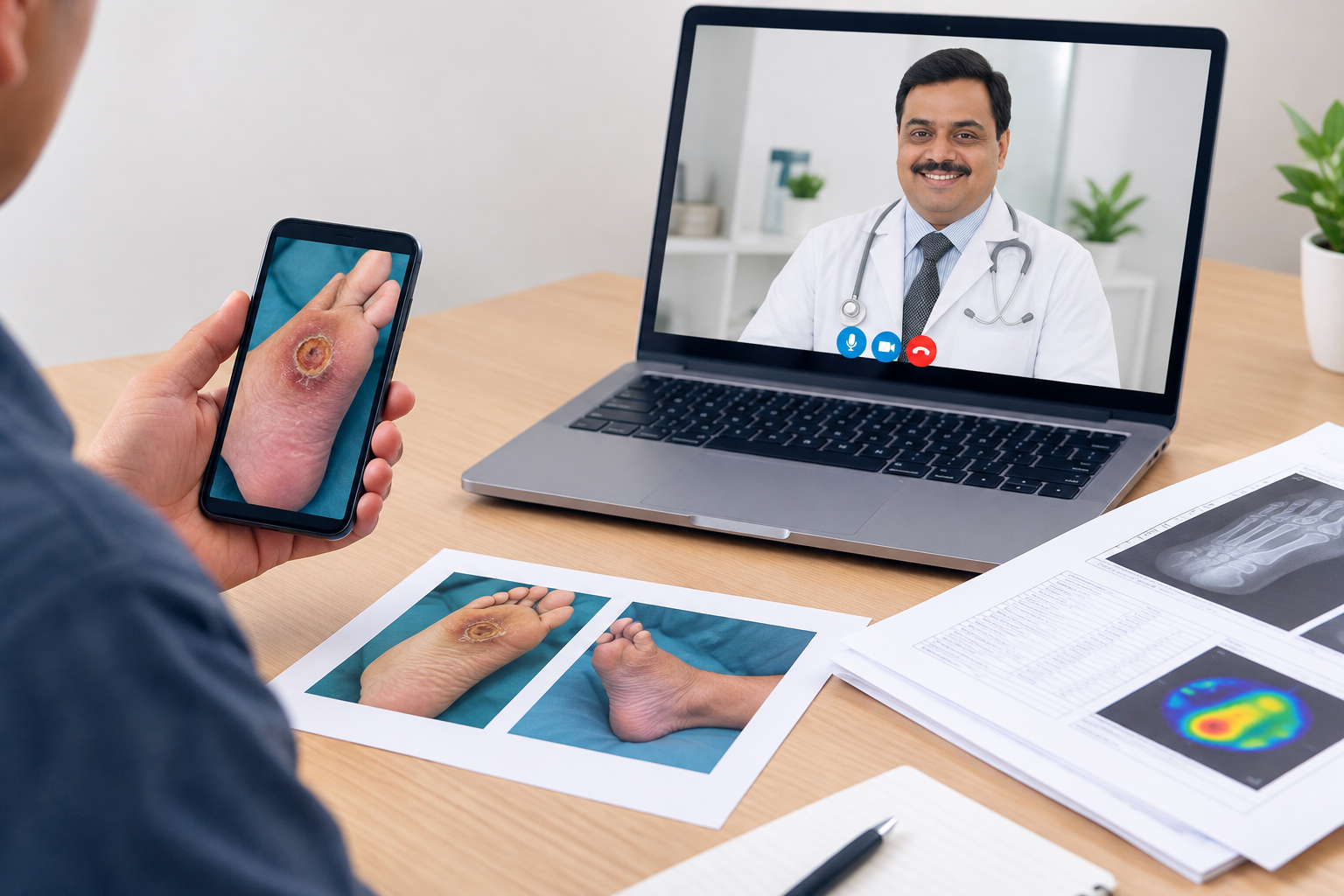
An online diabetic foot consultation can safely triage a wound if you send four photos (top, sole, side and a close-up beside a ruler), a recent HbA1c, creatinine and any Doppler or X-ray report. For patients in Mumbai, the EDFC team uses these to decide local care, an in-person visit this week, or emergency care tonight.
Key Takeaways
-
An online diabetic foot consultation can help assess symptoms, review wound photographs and determine how urgently a patient needs an in-person examination.
-
Four useful photographs show the top, sole, side and a close-up of the affected area beside a ruler.
-
Recent HbA1c, kidney function tests, prescriptions and available Doppler or X-ray reports help provide clinical context.
-
Video calls cannot reliably determine wound depth, protective sensation, circulation or the full extent of infection.
-
Patients with fever, spreading redness, black tissue or rapidly worsening wounds should seek urgent in-person medical care.
-
A local treating doctor can continue wound care while coordinating with a diabetic foot specialist.
What Is an Online Consultation for Diabetic Foot Problems?
An online consultation for diabetic foot concerns allows patients to discuss wounds, swelling, skin changes, infection symptoms and previous treatment with a qualified medical professional through video or another permitted telemedicine method.
For patients who cannot immediately travel to a specialist clinic, teleconsultation may help determine the urgency of further assessment.
A specialist may review photographs, discuss symptoms, examine available reports and provide recommendations for the next step.
However, teleconsultation is primarily useful for initial assessment, triage, follow-up and coordination of care. It cannot replace every aspect of a physical diabetic foot examination.
Patients seeking specialist guidance can start by reviewing the EDFC online consultation information.
What Can and Cannot Be Judged Over a Video Call?
A video consultation can provide valuable information, but its limitations must be clearly understood.
What a Doctor May Assess Online
During a video consultation, the doctor may review:
-
The visible location and appearance of a foot wound
-
Changes in wound size or colour
-
Visible swelling and redness
-
Discharge reported by the patient
-
Duration of the wound
-
Previous treatments and dressings
-
Blood glucose history
-
Available investigations
-
Symptoms suggesting infection or vascular problems
These details can help determine whether the patient needs immediate medical attention or a scheduled in-person assessment.
What Cannot Be Reliably Confirmed Online?
Some findings require direct clinical examination.
These include:
-
Actual wound depth and probing findings
-
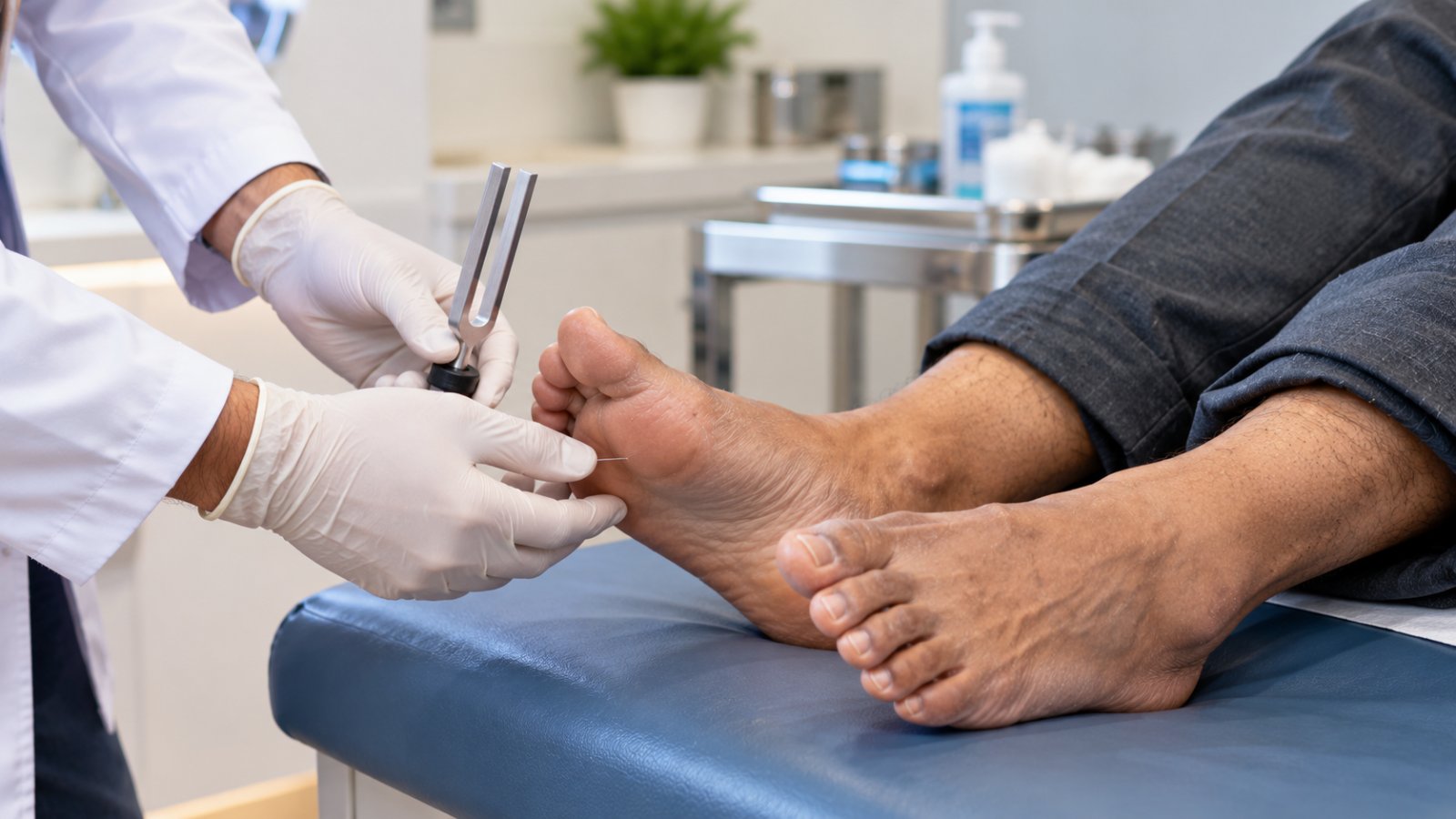
Protective sensation using a monofilament
-
Pedal pulses and objective blood-flow measurements
-
Full assessment of infection severity
-
Undermining, sinus tracts or deep tissue involvement
-
Bone involvement or osteomyelitis
-
The need for debridement or a surgical procedure
Photographs may also underestimate infection or tissue damage.
A diabetic foot wound that appears small in a photograph can sometimes involve deeper structures.
Therefore, a diabetic foot doctor online should clearly explain when an in-person examination is necessary.
How Should the Foot Be Photographed Before an Online Consultation?
Good photographs make it easier for the doctor to understand the location and visible appearance of a wound.
Poor lighting, blurred images or photographs showing only a small portion of the ulcer can limit assessment.
Ideally, patients should send four clear photographs.
Photo and Report Checklist
|
View or Document |
How to Take or Obtain It |
Why It Matters |
|---|---|---|
|
Top of foot |
Photograph the entire upper surface in natural lighting |
Shows visible swelling, redness and overall appearance |
|
Sole of foot |
Photograph the entire sole without placing pressure on the wound |
Helps identify plantar wounds and their location |
|
Side view |
Capture the affected foot from the side |
Shows visible deformity, swelling and wound position |
|
Close-up with ruler |
Place a clean ruler beside, not inside, the wound |
Provides a size reference |
|
HbA1c report |
Share the most recent available result |
Provides information about recent glucose control |
|
Serum creatinine/eGFR |
Share recent kidney function results if available |
Helps assess relevant medical risks |
|
Doppler report |
Share previous vascular investigation results |
Provides information about assessed circulation |
|
X-ray or MRI report |
Share available imaging reports |
May provide information about bone or deeper tissue problems |
|
Medicine list |
Share current medicines and doses |
Helps the doctor understand existing treatment |
Photographs should be taken without touching or probing the wound.
Patients should not remove an essential dressing, disturb a recent surgical wound or delay urgent care merely to obtain better images.
Why Are Diabetic Foot Ulcer Photos Important?
Clear diabetic foot ulcer photos can help a specialist compare visible changes over time.
For example, photographs taken on different dates may show whether redness is spreading, the visible wound area is changing or new skin damage has appeared.
However, photographs should be interpreted alongside symptoms and clinical information.
A wound that looks cleaner in a photograph may still have deeper infection, poor circulation or pressure-related problems.
This is why photographs support medical assessment but cannot independently establish that a wound is healing safely.
Which Medical Reports Should Be Ready Before the Call?
Patients do not need to obtain every possible investigation before requesting a consultation.
However, existing reports should be kept ready.
HbA1c and Blood Glucose Records
HbA1c provides information about average glucose levels over recent months.
Recent home glucose readings may also help the doctor understand current diabetes control.
Kidney Function Tests
Serum creatinine and estimated glomerular filtration rate (eGFR) can provide important information about kidney function.
This may be relevant when reviewing overall health and existing medicines.
Vascular Investigations
If the patient has previously undergone arterial Doppler testing, ankle-brachial index measurement, toe-pressure assessment or another vascular investigation, the available report should be shared.
These investigations may provide information about peripheral arterial disease.
X-ray or MRI Reports
Previous imaging can help the doctor understand whether bone changes, deformity or suspected deeper infection have already been investigated.
The doctor may recommend additional imaging after an in-person examination when necessary.
Previous Prescriptions and Treatment History
Patients should also share previous antibiotic prescriptions, wound-care recommendations, discharge summaries and information about any earlier diabetic foot surgery.
A complete treatment history helps avoid repeating ineffective approaches without reviewing the underlying cause.
Online Diabetic Foot Consultation in Mumbai: When Is It Appropriate?
An online diabetic foot consultation in mumbai may be useful for patients who need specialist guidance about an existing foot problem but cannot immediately attend the clinic.
Suitable situations may include reviewing an established treatment plan, discussing previous reports, arranging follow-up after a physical examination or determining the urgency of a new concern.
For example, a patient with a previously assessed, stable wound may benefit from a remote review when a local clinician is already providing hands-on wound care.
However, a newly infected wound, rapidly increasing swelling or suspected loss of blood supply should not be managed through photographs alone.
The purpose of teleconsultation is to help patients reach the right level of care at the right time, not to replace emergency assessment.
How Is the Triage Decision Made and Shared?
Triage means determining how urgently a patient requires medical attention.
After reviewing symptoms, photographs and available reports, the clinician may recommend one of several next steps.
Diabetic Foot Triage Outcomes
|
Outcome |
When It May Apply |
Recommended Next Step |
|---|---|---|
|
Local care with planned follow-up |
Previously assessed, stable wound without concerning new symptoms, with suitable local medical supervision |
Continue the agreed treatment and arrange appropriate follow-up |
|
In-person assessment within seven days |
Stable but non-healing wound requiring hands-on examination, without signs requiring more urgent review |
Arrange an examination within the advised timeframe |
|
Emergency assessment today |
Spreading infection, black tissue, fever, rapidly worsening swelling, suspected acute ischaemia or systemic illness |
Seek immediate local emergency medical care |
These categories are illustrative. Some patients need assessment within 24–48 hours or sooner, even without obvious emergency symptoms.
A seven-day appointment should never be used as the default waiting period for a newly infected or deteriorating diabetic foot ulcer.
The clinician should communicate the recommended next step clearly and explain the warning signs that require earlier care.
Which Diabetic Foot Warning Signs Require Emergency Care?
Some diabetic foot symptoms need immediate medical attention.
These include:
-
Fever or chills with a foot wound
-
Rapidly spreading redness
-
Black or suddenly discoloured skin
-
A cold, pale or blue foot
-
Sudden severe pain or sudden loss of sensation
-
Rapidly increasing swelling
-
Foul-smelling discharge with worsening tissue damage
-
Severe weakness, confusion or other signs of systemic illness
A person with diabetes may have a serious infection without severe pain because neuropathy can reduce protective sensation.
Patients should review the warning signs that need emergency care and seek immediate in-person assessment when concerning symptoms develop.
Do not wait for a video appointment if a diabetic foot problem appears to be rapidly worsening.
Can a Diabetic Foot Ulcer Be Treated Completely Online?
A diabetic foot ulcer usually requires some degree of direct clinical examination.
Online consultation can help with reviewing reports, discussing treatment progress, identifying concerning changes and coordinating care.
However, procedures such as debridement, vascular testing, wound-depth assessment and certain offloading interventions require in-person care.
A patient may also need local nursing support for dressings and a qualified clinician to examine the foot regularly.
The safest approach is often a combination of remote specialist advice and direct local treatment when clinically appropriate.
How Is Care Shared With a Local Doctor?
Remote consultation can be particularly useful when the patient already has a local doctor or surgeon managing the wound.
The specialist may review the clinical history and available reports, then communicate recommendations that the local treating team can consider.
For example, the local clinician may continue dressings, assess infection, examine circulation and arrange investigations.
The specialist can help identify whether additional assessment or treatment is needed.
This collaborative approach avoids assuming that every patient must travel for every dressing or follow-up visit.
Doctors seeking specialist input can use the For doctors: refer a patient pathway.
What Happens If the Specialist Recommends an In-Person Visit?
Sometimes, photographs and reports are not enough to make a safe treatment decision.
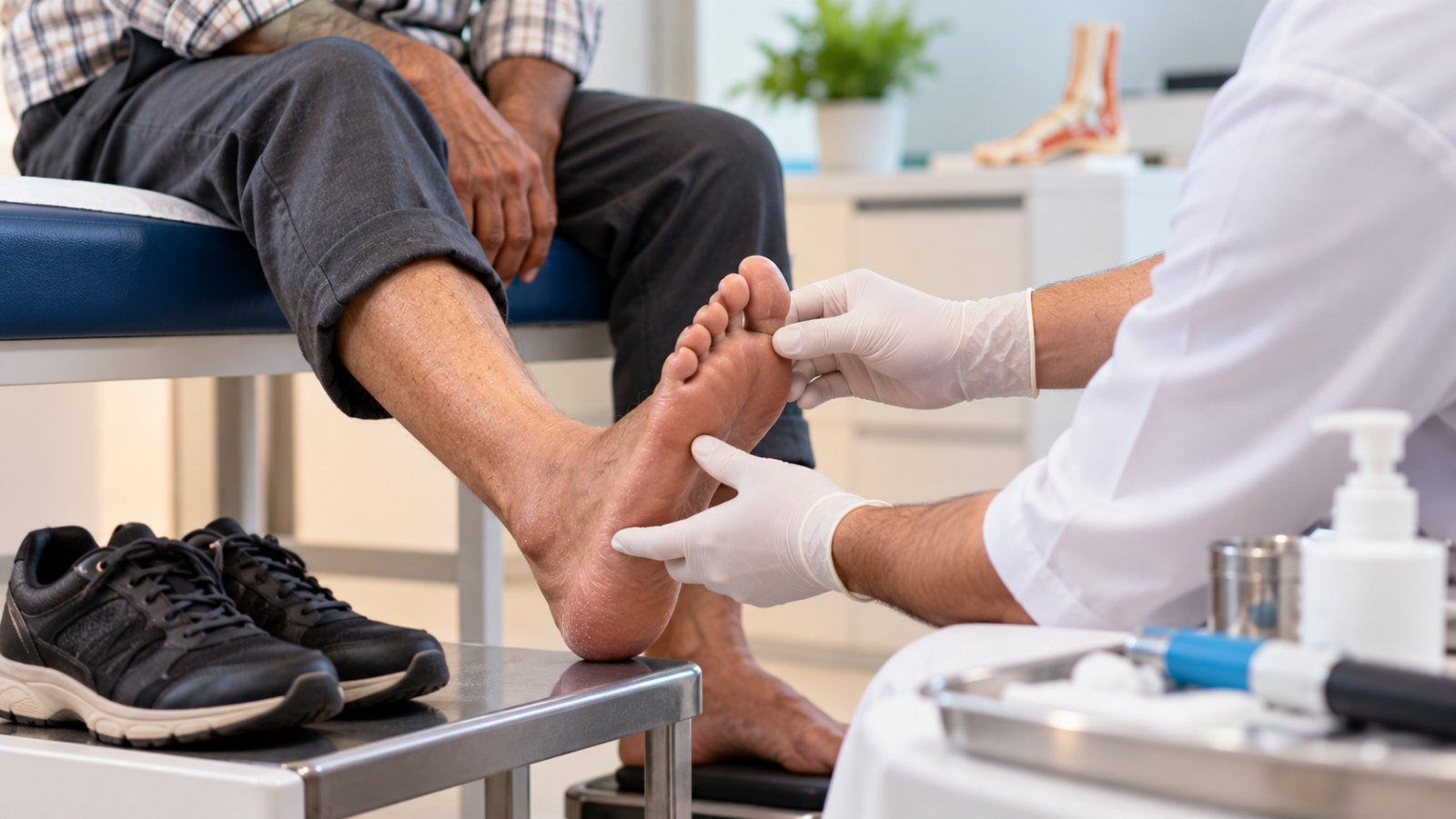
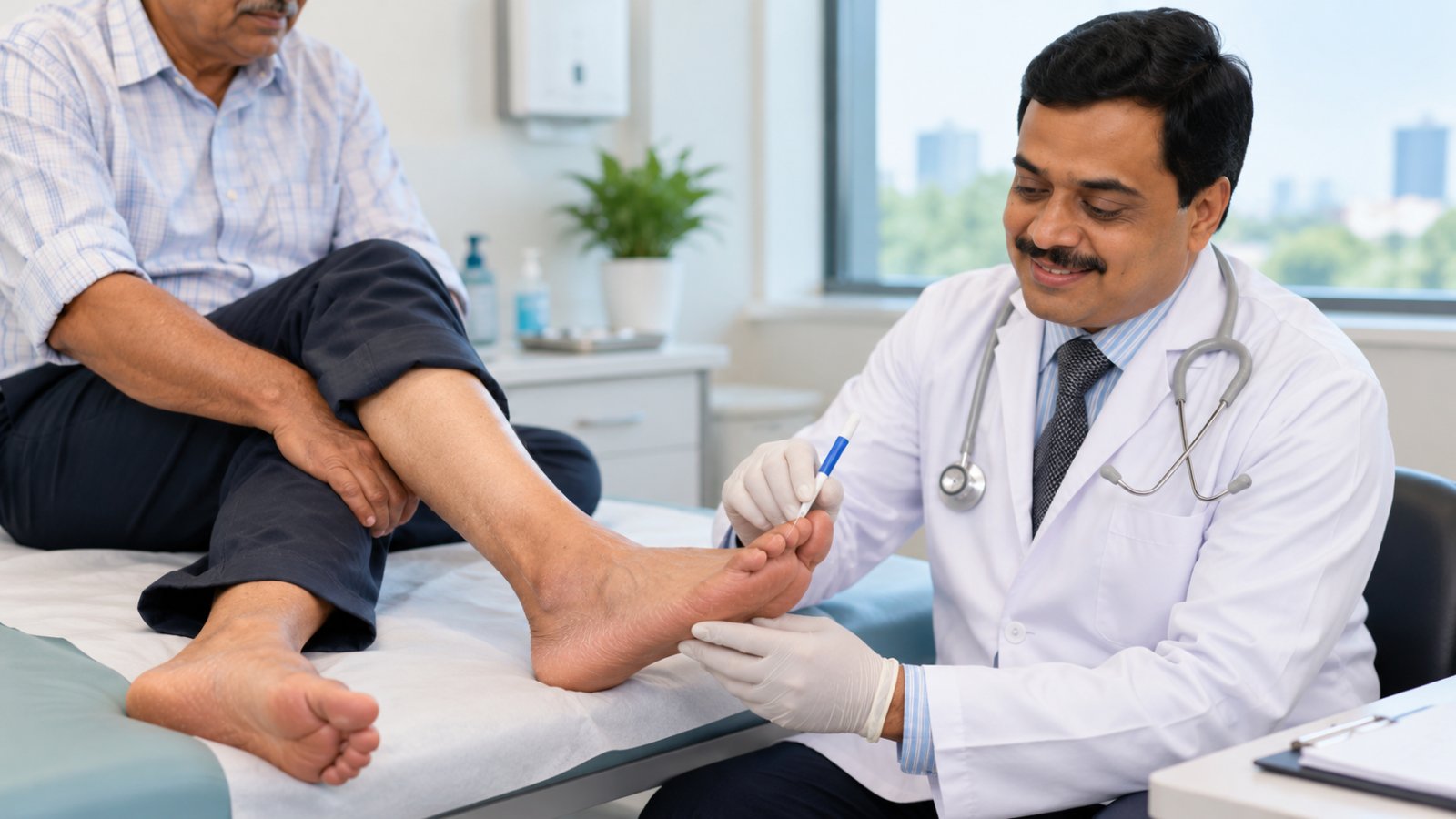
An in-person visit may be necessary when the clinician needs to examine the wound, assess pulses and sensation, evaluate pressure distribution or investigate suspected deeper infection.
Before travelling, patients should confirm the appointment and bring available medical records.
The Preparing for your visit information can help patients organize previous prescriptions, investigation reports and treatment details.
However, if emergency care is required, patients should attend an appropriate nearby emergency facility rather than delaying treatment for long-distance travel.
Is an Online Diabetic Foot Prescription Valid in India?
India's Telemedicine Practice Guidelines provide a framework for registered medical practitioners to conduct teleconsultations.
Prescribing medicines remotely depends on the consultation method, the clinical circumstances and the categories of medicines permitted under applicable rules.
Not every medicine can be prescribed through every type of teleconsultation.
A doctor may also decline to prescribe when a physical examination is necessary for safe treatment.
This is particularly relevant for diabetic foot infections because antibiotic choice and the need for surgical treatment depend on infection severity and clinical findings.
Patients should not assume that sending an ulcer photograph automatically qualifies them for an antibiotic prescription.
How Does EDFC Approach Remote Diabetic Foot Assessment?
At Elegance Diabetic Foot & Ulcer Clinic, online diabetic foot assessment can support patients who need specialist guidance about wound concerns, medical reports or the urgency of an in-person examination.
Dr. Ashutosh Shah, Consultant Plastic, Reconstructive & Diabetic Foot Surgeon, reviews diabetic foot concerns in the context of the patient's medical history, wound appearance, available investigations and the limitations of remote examination.
When clinically appropriate, follow-up may be arranged by video after approximately 7–14 days, or sooner if the wound condition requires it.
The aim is to identify patients who can continue suitable local care and those who need more urgent examination or intervention.
Conclusion
An online consultation for diabetic foot concerns can be a useful first step when patients need specialist advice but cannot immediately attend a clinic.
Clear wound photographs, relevant medical reports and an accurate description of symptoms can help clinicians determine the next step.
However, the safety of teleconsultation depends on recognizing its limitations.
A photograph cannot reliably assess circulation, wound depth, protective sensation or the full extent of infection. Patients with concerning symptoms must receive prompt in-person assessment.
At Elegance Diabetic Foot & Ulcer Clinic (EDFC), remote consultation under Dr. Ashutosh Shah can help support clinical triage, follow-up planning and coordination with local treating doctors when appropriate.
The goal is not to treat every diabetic foot problem online. It is to help patients obtain timely, appropriate and safe medical care.
quiz Frequently Asked Questions
This article is general education, not a diagnosis. If you have a diabetic foot wound, please have it assessed in person. Send a photo on WhatsApp or book a consultation.
About the Author

Dr. Ashutosh Shah, Plastic, Reconstructive & Diabetic Foot Surgeon, Elegance Diabetic Foot & Ulcer Clinic, Surat
Dr. Ashutosh Shah is a board certified plastic and reconstructive surgeon with over 22 years of experience and more than 10,000 limbs and feet saved. He founded Elegance Diabetic Foot & Ulcer Clinic, India's first chain of clinics dedicated to foot care, with centres in Surat and OPD partners across South Gujarat. He is known for a limb first approach, safe wound care and ethical, natural results.