Looking for a diabetic foot doctor in bharuch? A doctor experienced in diabetic foot care can assess ulcers, infections, numbness, swelling and poor blood circulation. Treatment may involve wound dressings, pressure offloading, infection management, vascular assessment or surgery. Early consultation is important because diabetic foot problems can become serious even without noticeable pain.
For people living with diabetes, even a small blister or cut can develop into a complicated wound when protective sensation or blood circulation is reduced.
The right doctor can help identify the underlying cause, recommend suitable treatment and determine whether additional specialist care is necessary.
This guide explains who treats diabetic foot problems, what happens during an OPD consultation and when patients may consider advanced treatment.
What Does a Diabetic Foot Doctor Treat?
A diabetic foot doctor assesses and manages foot complications associated with diabetes.
Long-term diabetes can damage peripheral nerves and blood vessels, increasing the risk of unnoticed injuries, infections and delayed wound healing.
Common conditions include:
-
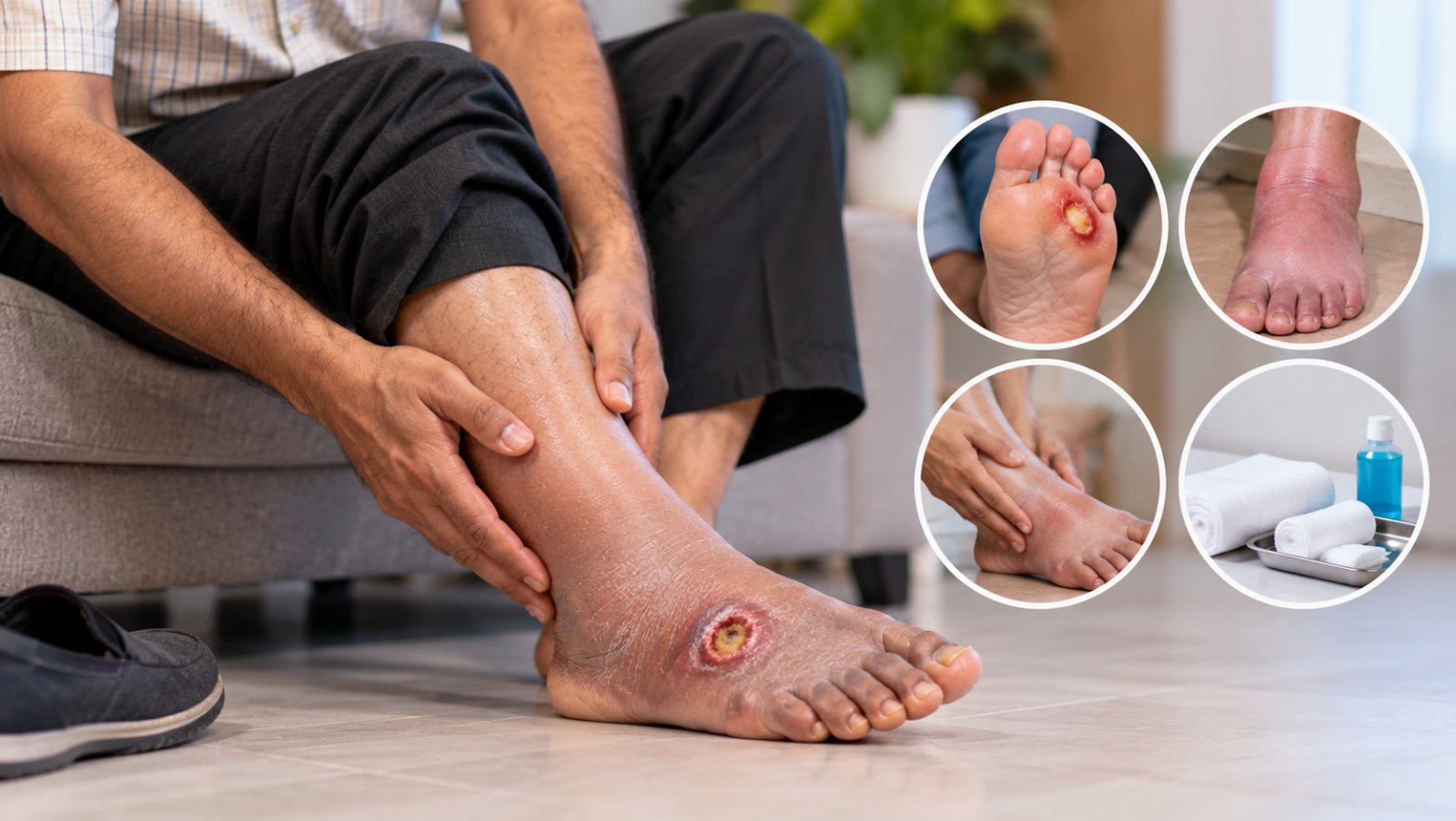
Diabetic foot ulcers
-
Non-healing foot wounds
-
Diabetic foot infections
-
Peripheral neuropathy
-
Peripheral artery disease
-
Foot swelling and redness
-
Gangrene
-
Deep tissue infections
-
Suspected bone infections
-
Recurrent pressure injuries
-
Foot deformities
-
Charcot neuroarthropathy
The aim of treatment is to address the underlying problem, support healing and preserve healthy tissue and foot function.
Not every patient requires surgery. Many diabetic foot conditions can be managed through appropriate wound care, pressure offloading, diabetes management and regular follow-up.
Who Should Consult a Diabetic Foot Doctor?
People with diabetes should seek medical assessment whenever they notice a new wound or unexplained change in their feet.
Patients With Non-Healing Foot Wounds
A cut, blister or ulcer that is not improving may require specialist evaluation.
Poor circulation, infection or repeated pressure may contribute to delayed healing.
Patients With Foot Numbness
Diabetic neuropathy can reduce the ability to feel pain, heat and pressure.
Patients may develop injuries without noticing them.
Patients With Redness or Swelling
Redness, warmth and swelling may indicate infection, inflammation or Charcot foot.
Patients With Persistent Foot Pain
Pain may be associated with neuropathy, circulation problems or musculoskeletal conditions.
Patients With Skin Discolouration
Black, purple, pale or unusually dark skin can indicate serious tissue or circulation problems.
Patients With Previous Foot Ulcers
People who have experienced a diabetic foot ulcer are at increased risk of developing another.
Regular preventive examinations may be recommended.
A diabetic foot wound can be serious even when it does not cause pain.
When to See a Diabetic Foot Doctor in Bharuch
Patients searching for a diabetic foot doctor in bharuch should arrange prompt medical assessment when a foot wound, infection or circulation problem develops.
Early evaluation may help prevent a minor injury from progressing into a more serious complication.
Symptoms That Need Prompt Assessment
-
A new open wound
-
Increasing foot swelling
-
Redness around an ulcer
-
A wound that is not healing
-
Recurrent blisters
-
Reduced foot sensation
-
Changes in skin colour
-
Foot deformity with pressure-related skin damage
-
Discharge from a wound
-
A warm, swollen foot
Symptoms That Require Emergency Hospital Care
-
Rapidly spreading infection
-
Fever with a worsening foot wound
-
Blackened tissue or suspected wet gangrene
-
Sudden severe foot pain
-
A suddenly cold or pale foot
-
Confusion or severe weakness
-
Rapid tissue deterioration
These symptoms may indicate severe infection, sepsis or an acute circulation emergency.
Patients should visit the nearest appropriate hospital immediately rather than delaying treatment for a distant specialist appointment.
Which Specialists Treat Diabetic Foot Problems?
Diabetic foot care often requires coordination between different medical professionals.
Diabetologist or Endocrinologist
These doctors help manage diabetes and associated metabolic conditions.
They may review medications and blood glucose management during wound treatment.
Diabetic Foot Surgeon
A surgeon experienced in diabetic foot complications may assess infected wounds, tissue damage and the need for surgical intervention.
Vascular Surgeon
A vascular surgeon evaluates blood circulation problems.
Patients with significant peripheral artery disease may require vascular imaging or revascularisation.
Plastic and Reconstructive Surgeon
Reconstructive procedures may be considered for selected wounds after infection and circulation problems have been addressed.
Orthopaedic Surgeon
Orthopaedic specialists may assist with bone, joint or structural complications.
Wound Care Professionals
Trained wound care professionals help with dressings, pressure management, patient education and wound monitoring.
The appropriate specialist depends on the patient's condition.
What Happens During a Diabetic Foot OPD Consultation?
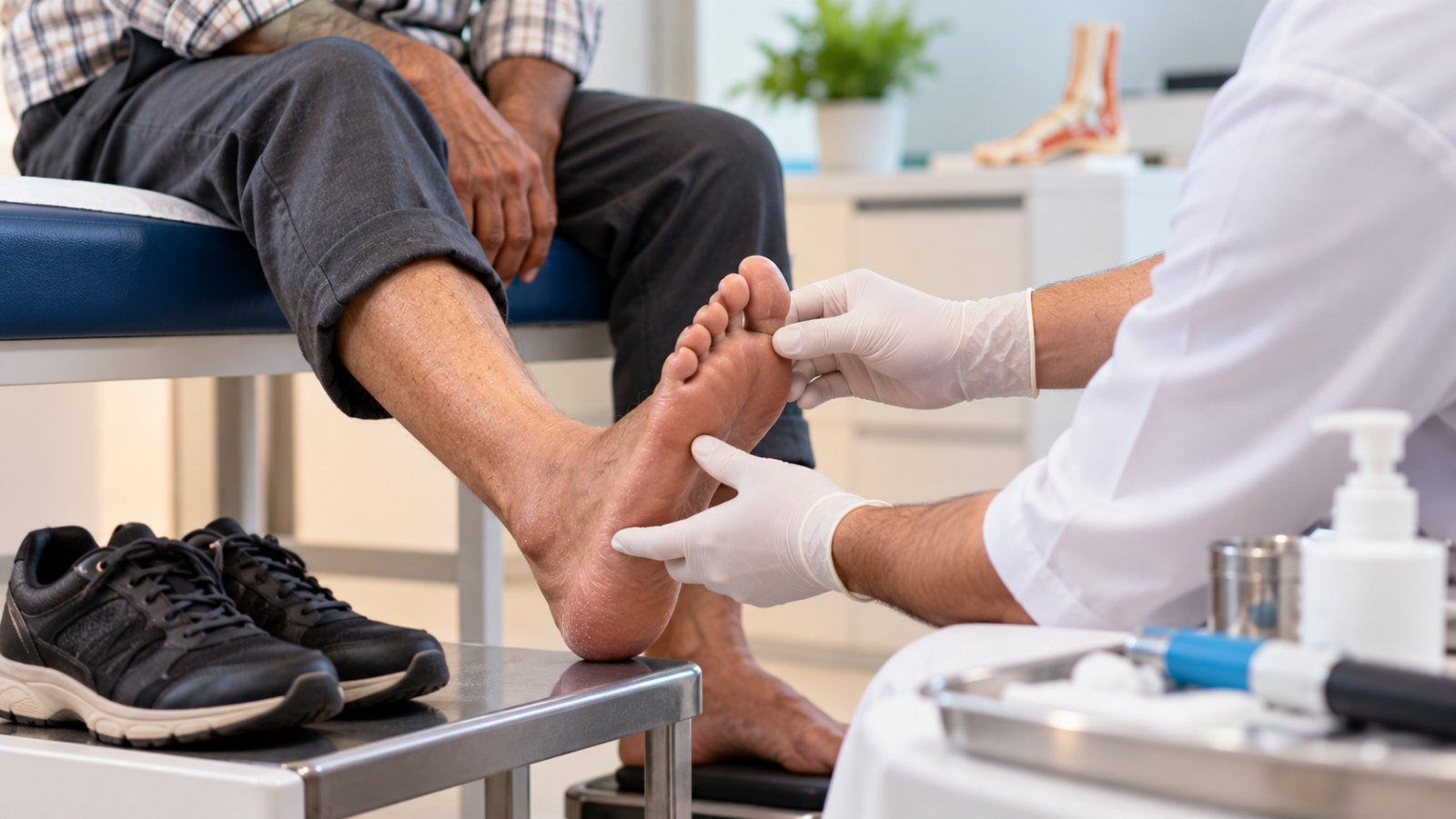
An outpatient consultation usually begins with a detailed medical history and foot examination.
Step 1: Medical History
The doctor may ask about:
-
Duration of diabetes
-
Blood glucose management
-
Previous foot ulcers
-
Previous surgeries
-
Current medications
-
Smoking history
-
Kidney disease
-
Footwear habits
-
Recent injuries
-
Previous infection treatment
Step 2: Examination of Both Feet
The clinician checks for:
-
Open wounds
-
Skin cracks
-
Swelling
-
Redness
-
Calluses
-
Foot deformities
-
Pressure points
-
Infection signs
Both feet should be examined even when symptoms affect only one foot.
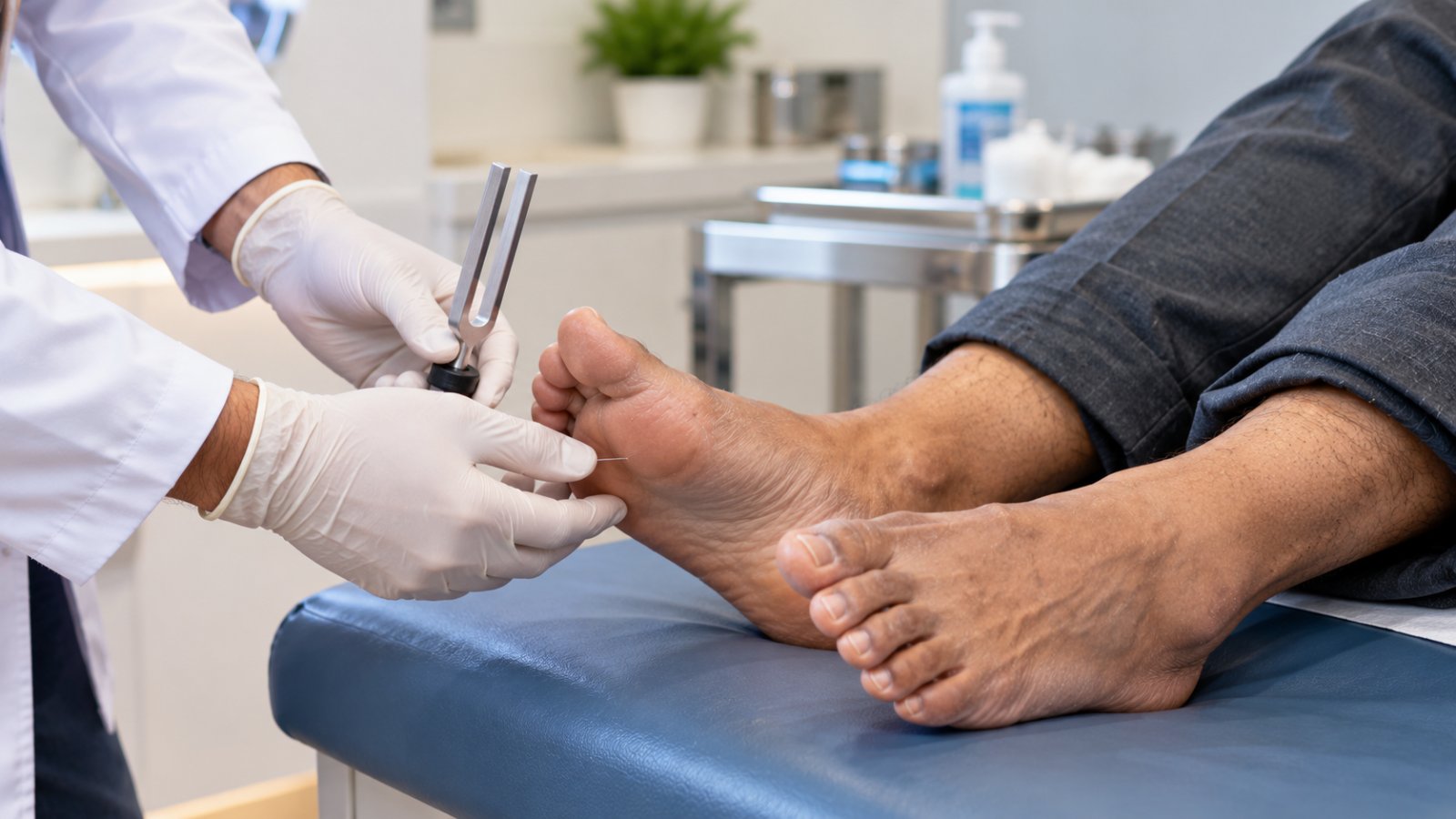
Step 3: Neuropathy Assessment
A monofilament test or another sensory examination may be used to assess protective sensation.
Step 4: Circulation Assessment
The clinician may check foot pulses and evaluate signs of reduced blood flow.
Step 5: Wound Assessment
If an ulcer is present, the doctor evaluates its size, depth, location and surrounding tissue.
Step 6: Treatment Planning
Recommendations may include wound care, investigations, pressure offloading, medication, surgical assessment or specialist referral.
The exact consultation process depends on clinical findings.
What Tests May Be Required for Diabetic Foot Problems?
Investigations help identify the causes of delayed healing and guide treatment.
Not every patient requires every test.
| Investigation | Purpose |
|---|---|
| Blood glucose and HbA1c | Assess diabetes management |
| Monofilament testing | Check protective sensation |
| Doppler assessment | Evaluate blood circulation |
| Ankle-brachial index | Screen for arterial disease |
| Toe pressure testing | Further assess circulation |
| Foot X-ray | Look for bone changes, deformity or gas |
| MRI | Evaluate suspected deep infection or osteomyelitis |
| Appropriate tissue culture | Guide treatment of selected infected wounds |
| Inflammatory markers | Support assessment of suspected infection |
In people with diabetes, arterial calcification can make ankle-brachial index results less reliable.
Additional vascular investigations may be necessary.
What Treatments Are Available for Diabetic Foot Ulcers?
Treatment depends on wound depth, infection status, blood circulation and pressure-related factors.
1. Wound Cleaning and Dressings
Appropriate wound cleaning helps remove contamination.
Dressings are selected according to wound characteristics, drainage and surrounding skin condition.
2. Pressure Offloading
Offloading reduces pressure on an ulcer.
Depending on the wound, doctors may recommend specialised footwear, removable devices or other suitable methods.
Pressure reduction is particularly important for ulcers on weight-bearing areas.
3. Infection Management
Clinically infected wounds may require antibiotics and, in some cases, drainage or surgery.
Antibiotics are not routinely recommended for uninfected ulcers.
Read more about diabetic foot infection management.
4. Debridement
Debridement removes dead or infected tissue when clinically appropriate.
The decision depends on wound condition, infection and blood supply.
5. Vascular Treatment
Patients with inadequate circulation may need further vascular evaluation.
Selected patients may benefit from revascularisation procedures.
6. Surgical Treatment
Deep infections, extensive tissue damage or selected structural problems may require surgery.
Treatment should be individualised.
Why Is Blood Circulation Important for Diabetic Foot Healing?
Adequate blood flow supplies oxygen and nutrients to living tissue.
Peripheral artery disease can reduce blood supply to the foot, increasing the risk of delayed healing and tissue loss.
Possible signs include:
-
Cold feet
-
Reduced pulses
-
Pain while walking
-
Pain at rest
-
Slow-healing wounds
-
Darkened tissue
-
Skin colour changes
Some patients with diabetes may have significant arterial disease without typical pain.
Doctors may recommend vascular assessment when circulation problems are suspected.
Restoring blood flow may improve healing potential in selected patients.
When Does a Diabetic Foot Problem Need Surgery?
Not every diabetic foot condition requires an operation.
Surgery may be necessary when there is:
-
A deep abscess
-
Extensive dead tissue
-
Severe infection
-
Certain bone infections
-
Gangrene
-
Complex tissue loss
-
Selected structural problems
Procedures may include drainage, debridement or other surgical treatment.
Patients can review diabetic foot surgery services for additional information.
Can a Diabetic Foot Be Saved From Amputation?
Many diabetic foot complications can be managed without major amputation.
However, severe infection, extensive tissue death or irreversible circulation problems may make amputation necessary.
In suitable cases, limb salvage treatment may combine infection control, vascular treatment and reconstruction.
Limb preservation cannot be guaranteed in every case.
What Is Charcot Foot and Why Does It Need Early Assessment?
Charcot neuroarthropathy affects bones and joints, usually in people with significant neuropathy.
Early signs may include:
-
One warm, swollen foot
-
Redness
-
Mild discomfort or no pain
-
Changes in foot shape
-
Difficulty walking
The condition may resemble cellulitis or another inflammatory problem.
Continuing to walk on an affected foot can worsen bone and joint damage.
A patient with diabetes, neuropathy and an unexplained warm, swollen foot should receive urgent assessment.
If Charcot foot is suspected, appropriate immobilisation and offloading are important while the diagnosis is evaluated.
How to Choose the Right Diabetic Foot Doctor
Choosing an appropriate doctor involves more than finding the nearest clinic.
Experience With Diabetic Foot Conditions
Ask whether the doctor regularly evaluates diabetic foot ulcers, infections and neuropathy.
Access to Wound Assessment
The doctor should be able to assess wounds and arrange appropriate investigations.
Vascular Evaluation
Blood circulation assessment is important when ulcers are slow to heal.
Infection Management
The doctor should recognise serious infections and arrange urgent hospital care when necessary.
Pressure Offloading Support
Appropriate offloading can be essential for healing certain diabetic foot ulcers.
Multidisciplinary Referrals
Complex cases may require vascular, surgical or diabetes specialist involvement.
Follow-Up Arrangements
Regular monitoring helps determine whether treatment is working.
Patients should confirm appointment availability, costs and referral arrangements directly.
When Should Patients Consider Travelling to Surat?
Patients with stable but complicated diabetic foot problems may consider an additional specialist opinion.
Possible reasons include:
-
A foot ulcer that is not improving
-
Recurrent diabetic foot wounds
-
Complex wound reconstruction needs
-
Questions about surgical treatment
-
Limb salvage assessment
-
Circulation problems complicating healing
-
A second opinion on a proposed treatment plan
Before travelling, patients should confirm appointment availability and whether their condition is suitable for outpatient consultation.
When Should Patients Avoid Delaying Local Care?
Patients with rapidly spreading infection, suspected wet gangrene, severe systemic illness or sudden circulation loss should seek emergency treatment locally.
Urgent care should not be postponed to arrange travel.
Once medically stable, referral or transfer may be considered when appropriate.
Diabetic Foot Care at Elegance Diabetic Foot & Ulcer Clinic
At Elegance Diabetic Foot & Ulcer Clinic in Surat, Dr. Ashutosh Shah is associated with specialist assessment and management of diabetic foot ulcers, complex wounds and limb-preservation concerns.
Patients may require evaluation of:
-
Wound depth
-
Infection
-
Nerve damage
-
Blood circulation
-
Pressure-related injuries
-
Previous treatment response
Depending on clinical findings, treatment planning may involve wound care, infection management, offloading, vascular investigations or surgical assessment.
The clinic is based in Surat and should not be confused with a branch in Bharuch.
Patients considering consultation should contact the clinic to confirm current OPD timings, appointment availability and referral requirements.
For clinic information, visit Elegance Diabetic Foot & Ulcer Clinic.
How to Prepare for Your First Diabetic Foot Appointment
Patients should bring relevant medical records when available.
Useful documents include:
-
Recent blood glucose reports
-
HbA1c results
-
Previous wound treatment records
-
Doppler or angiography reports
-
X-rays or MRI reports
-
Current medication list
-
Previous antibiotic details
-
Hospital discharge summaries
-
Recent wound photographs
Patients may also bring their regular footwear for assessment of pressure points and fit.
Do not delay emergency care while collecting documents.
How Can Diabetic Foot Complications Be Prevented?
Prevention is an important part of long-term diabetic foot care.
Inspect Both Feet Daily
Check the soles, heels, toes and spaces between the toes.
Avoid Walking Barefoot
Protect the feet from sharp objects, hot surfaces and unnoticed injuries.
Wear Properly Fitting Footwear
Shoes should not cause excessive pressure or friction.
Maintain Diabetes Management
Follow prescribed medicines and monitoring recommendations.
Keep Skin Healthy
Use appropriate moisturiser for dry skin, avoiding application between the toes unless advised.
Avoid Self-Treatment of Calluses
Patients with neuropathy or poor circulation should not cut calluses themselves.
Attend Regular Foot Examinations
The recommended frequency depends on individual risk.
Seek Early Medical Care
Do not ignore a blister, crack or open wound.
Conclusion
Finding an experienced diabetic foot doctor is important for timely assessment of foot ulcers, infections, neuropathy and circulation problems.
Effective diabetic foot care involves identifying the underlying cause, providing appropriate treatment and monitoring wound healing.
Patients with stable but complicated foot conditions may consider specialist consultation at Elegance Diabetic Foot & Ulcer Clinic for further evaluation.
quiz Frequently Asked Questions
This article is general education, not a diagnosis. If you have a diabetic foot wound, please have it assessed in person. Send a photo on WhatsApp or book a consultation.
About the Author

Dr. Ashutosh Shah, Plastic, Reconstructive & Diabetic Foot Surgeon, Elegance Diabetic Foot & Ulcer Clinic, Surat
Dr. Ashutosh Shah is a board certified plastic and reconstructive surgeon with over 22 years of experience and more than 10,000 limbs and feet saved. He founded Elegance Diabetic Foot & Ulcer Clinic, India's first chain of clinics dedicated to foot care, with centres in Surat and OPD partners across South Gujarat. He is known for a limb first approach, safe wound care and ethical, natural results.