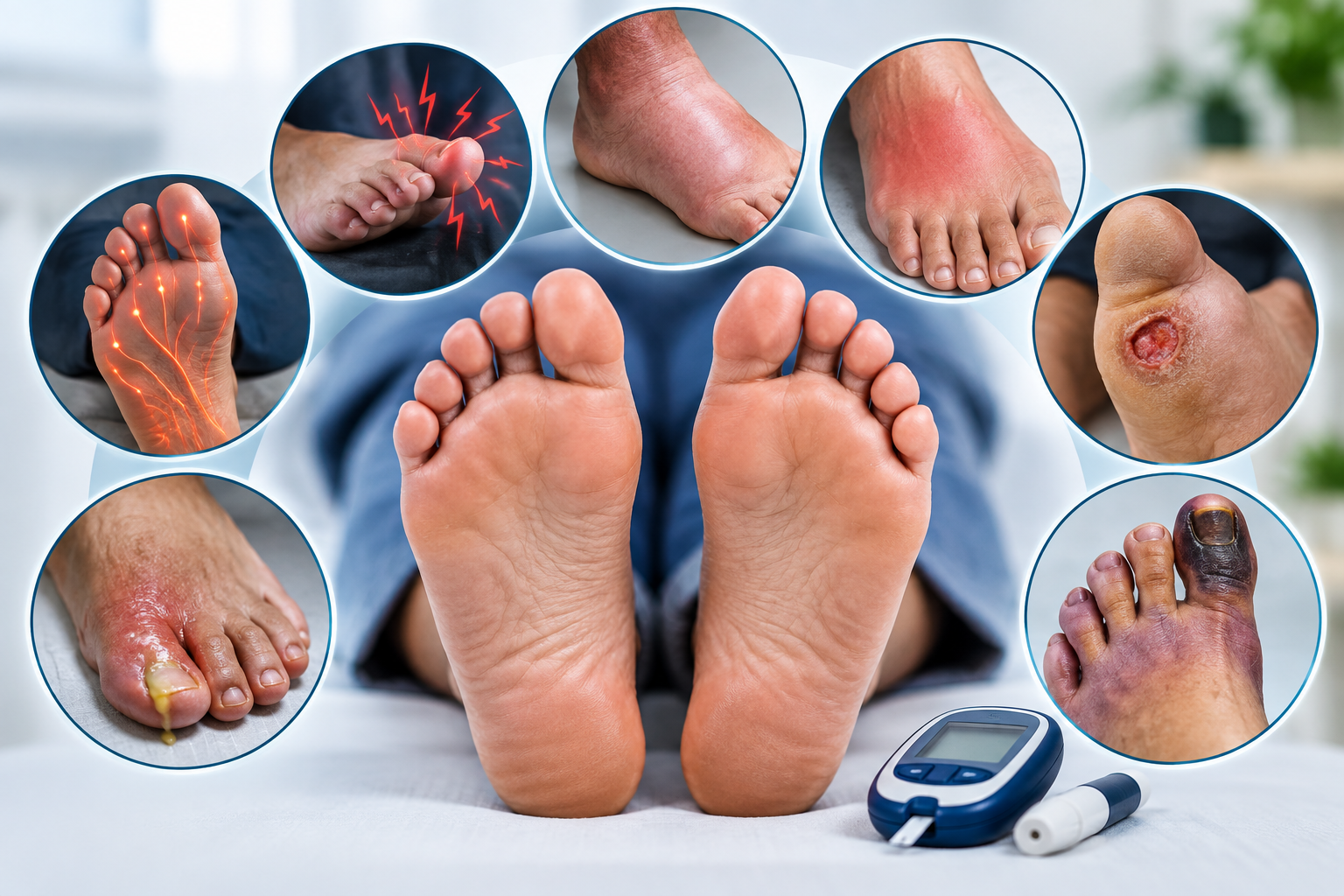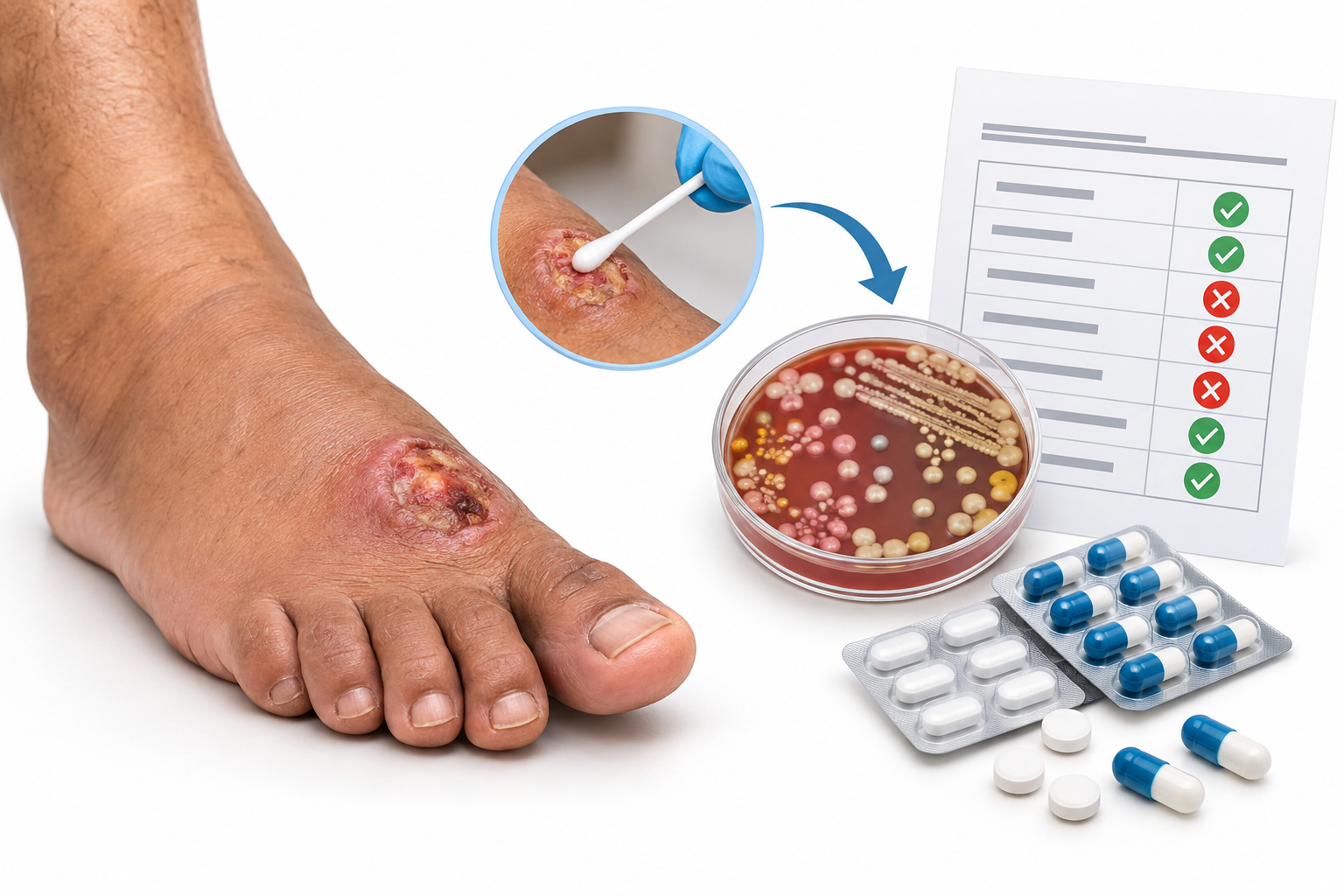
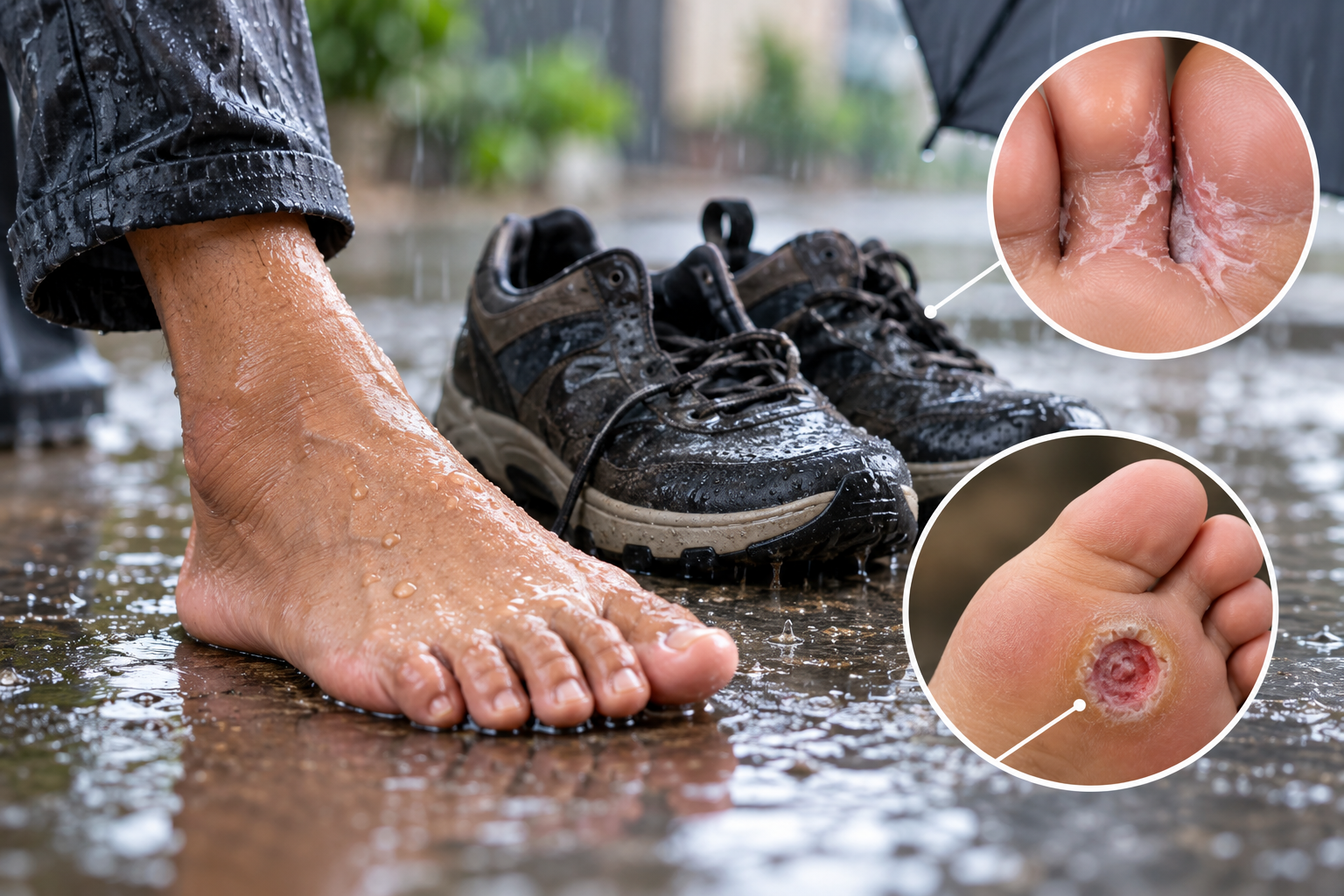
Constant dampness softens skin and opens fungal cracks between the toes, and those cracks are the entry point for the bacteria that cause cellulitis. Dry the feet and the gaps between toes fully after every soaking, and inspect them every night in the rainy season.
At Elegance Diabetic Foot & Ulcer Clinic (EDFC), Dr. Ashutosh Shah and the diabetic foot care team emphasise that monsoon foot care diabetes routines should focus on keeping feet dry, protecting the skin and detecting small breaks early. For someone with diabetes and reduced sensation, a minor fungal crack or wet-shoe injury can go unnoticed until infection has already started.
What Does Constant Dampness Do to Diabetic Skin?
Skin is an important protective barrier against bacteria and other organisms. During the monsoon, repeated exposure to rain, wet socks, damp footwear and humid conditions can keep the feet moist for long periods.
Constant moisture softens the outer layer of skin. This is known as maceration. The skin may become pale, soft, wrinkled and easier to damage from rubbing or pressure.
The spaces between the toes are particularly vulnerable because moisture can remain trapped there even after the rest of the foot appears dry.
For people with diabetes, this matters because neuropathy may reduce the ability to feel rubbing, small cuts or early skin damage. A person can therefore continue walking in wet footwear without noticing that the skin has started breaking down.
Good monsoon foot care diabetes habits should therefore include removing wet footwear promptly, drying the feet thoroughly and checking the skin after every significant soaking.
Why Do Fungal Cracks Between Toes Become Entry Points for Bacteria?
Warm, damp spaces between the toes create favourable conditions for fungal infection.
The skin may become itchy, white, peeling or cracked. A fungal infection such as Athlete's foot can damage the protective skin barrier.
Once the skin cracks, bacteria have a route into the tissue underneath.
This can lead to redness, warmth and swelling around the toes or foot. If bacterial infection spreads through the skin and soft tissue, it may develop into Cellulitis.
The risk is particularly important in a diabetic foot because neuropathy may hide pain and poor circulation may make infection and skin damage more difficult to recover from.
A fungal infection between toes diabetic patients develop should therefore not be dismissed simply as an itching or cosmetic problem. Persistent peeling, cracking, discharge or broken skin deserves attention.
Which Footwear Is Safe in Wet Conditions and Which Is Not?
The safest rainy-season footwear should protect the foot from direct injury while reducing prolonged contact with moisture.
Walking barefoot is risky because sharp objects, rough surfaces, dirty water and small stones can injure the skin without being noticed.
Very loose slippers can also create problems. They provide limited protection, can allow the foot to slide and may cause rubbing between the toes or around pressure points.
Footwear should fit properly, protect the foot and be allowed to dry completely before being worn again.
For individual advice, see Footwear guidance.
Wet-Weather Footwear: Do and Do Not
| Do | Do Not |
|---|---|
| Wear well-fitting footwear that protects the whole foot | Walk barefoot outdoors or through standing water |
| Choose footwear that does not rub or create pressure points | Continue wearing soaked shoes or socks |
| Change wet socks promptly | Wear damp socks for several hours |
| Allow wet footwear to dry fully before wearing it again | Put wet shoes back on simply because the outside looks dry |
| Inspect the inside of footwear for stones or rough areas | Wear damaged footwear with exposed rough edges |
| Keep a dry alternative pair available during the rainy season | Depend on loose slippers as the only protection for a high-risk diabetic foot |
How Should Feet Be Dried and Inspected Daily?
Drying the feet means more than wiping the top and sole.
After bathing, rain exposure or walking in wet conditions, use a clean soft towel and gently dry the entire foot. Pay particular attention to the gaps between every toe.
Do not rub damaged skin aggressively.
Once the foot is dry, inspect it carefully. If bending or vision makes this difficult, a mirror or help from another person can make daily inspection easier.
Look for:
- white or softened skin
- peeling between the toes
- fungal changes
- cracks
- blisters
- redness
- swelling
- cuts or scratches
- discharge
- new callus
- colour changes
The Daily foot care routine should continue throughout the year, but wet weather makes careful drying and inspection especially important.
Daily Monsoon Foot Routine
| Time/situation | What to do |
|---|---|
| Morning check | Inspect the sole, heel, toes and spaces between the toes for cracks, redness, blisters or fungal changes |
| Footwear choice | Wear clean, dry, properly fitting protective footwear and dry socks |
| After every soaking | Remove wet shoes and socks, wash away visible dirt if needed, and dry the entire foot and spaces between the toes thoroughly |
| Night inspection | Check again for new skin breaks, softened skin, fungal cracks, redness, swelling, discharge or colour changes |
Consistent monsoon foot care diabetes routines make it more likely that a small problem will be found before it progresses into an ulcer or infection.
What Should Be Done Immediately After Wading Through Standing Water?
Standing or flood water should be treated as contaminated.
It may contain mud, sewage, sharp objects and other material capable of damaging or contaminating the skin. The risk becomes more important when a person with diabetes already has a crack, blister, ulcer or other break in the skin.
If you have walked through standing water:
- Remove wet shoes and socks as soon as possible.
- Check the feet carefully for cuts, punctures, blisters or cracks.
- Gently clean the feet with clean water.
- Dry the skin thoroughly, especially between the toes.
- Put on clean, dry socks and protective footwear.
- Continue monitoring the feet for redness, swelling, discharge or other changes.
Do not walk barefoot simply because footwear has become wet. Bare feet may be exposed to glass, stones, metal or other sharp objects hidden beneath the water.
If there is already an open wound or you discover a new skin break after flood-water exposure, seek medical advice rather than ignoring it because it is small.
This is especially important for someone with neuropathy, because a puncture or cut may cause little or no pain.
Which Post-Monsoon Signs Need Same-Day Hospital Review?
Not every wet foot or fungal infection is an emergency. However, some changes suggest that infection may be spreading and should not wait for a routine appointment.
Seek same-day medical assessment for:
- fever with a foot wound or skin break
- spreading redness
- rapidly increasing swelling
- foul or unusual smell
- pus or increasing discharge
- rapidly worsening skin breakdown
- black, blue or significantly discoloured tissue
- a new break in the skin between the toes that is becoming red, swollen or infected
- systemic illness, chills or unusual weakness
A rainy season foot ulcer risk becomes more serious when damaged skin is combined with infection, poor circulation or loss of sensation.
In particular, fever, spreading redness, smell or a worsening new skin break between the toes should not simply be treated at home while waiting to see whether it improves.
Conclusion: Keep the Diabetic Foot Dry, Protected and Checked
Effective monsoon foot care diabetes management is based on three simple principles: keep the feet as dry as possible, protect them from injury and inspect them every day.
Wet footwear and prolonged dampness can soften the skin, while fungal infection can create small cracks between the toes. Once that protective barrier is broken, bacteria may enter and cause cellulitis or a more serious diabetic foot infection.
At Elegance Diabetic Foot & Ulcer Clinic (EDFC), Dr. Ashutosh Shah and the diabetic foot care team encourage people with diabetes to pay particular attention to footwear, toe spaces and daily inspection during the rainy season. Small cracks, blisters and colour changes should be identified early rather than waiting for pain to develop.
After rain or flood-water exposure, remove wet footwear, clean and dry the feet thoroughly and inspect every part of the foot. If fever, spreading redness, foul smell, increasing swelling or a new infected break in the skin develops, seek same-day medical assessment rather than waiting for the problem to settle on its own.
This article is general education, not a diagnosis. If you have a diabetic foot wound, please have it assessed in person. Send a photo on WhatsApp or book a consultation.
About the Author

Dr. Ashutosh Shah, Plastic, Reconstructive & Diabetic Foot Surgeon, Elegance Diabetic Foot & Ulcer Clinic, Surat
Dr. Ashutosh Shah is a board certified plastic and reconstructive surgeon with over 22 years of experience and more than 10,000 limbs and feet saved. He founded Elegance Diabetic Foot & Ulcer Clinic, India's first chain of clinics dedicated to foot care, with centres in Surat and OPD partners across South Gujarat. He is known for a limb first approach, safe wound care and ethical, natural results.