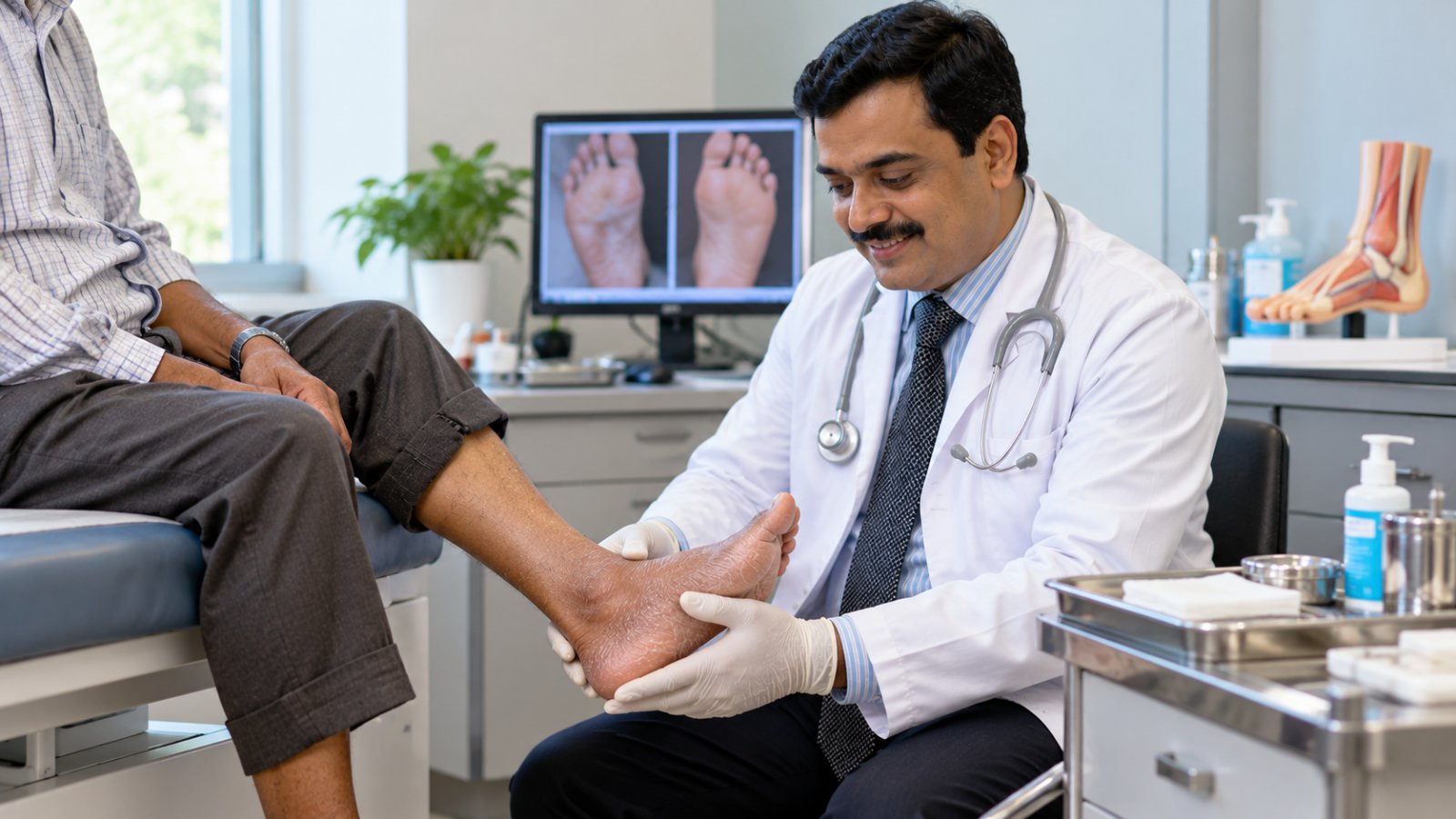

Foot ulcer treatment in Jamnagar involves identifying the cause of an open wound on the foot, checking blood circulation, assessing infection and reducing pressure on the affected area. Treatment may include wound cleaning, suitable dressings, pressure offloading, antibiotics for infected ulcers and surgery when necessary. Early medical assessment is particularly important for people with diabetes.
What Is a Foot Ulcer?
A foot ulcer is an open wound that develops when the skin and underlying tissue become damaged.
Foot ulcers commonly occur on the soles, heels, toes or areas exposed to repeated pressure.
People with diabetes are at increased risk because high blood glucose can contribute to nerve damage, circulation problems and impaired wound healing.
Unlike a minor cut, a foot ulcer may extend into deeper tissue and become difficult to heal.
Common types include:
-
Neuropathic ulcers: Develop when reduced sensation allows repeated pressure or unnoticed injuries.
-
Ischaemic ulcers: Occur when inadequate blood supply damages tissue.
-
Neuroischaemic ulcers: Involve both nerve damage and poor circulation.
-
Pressure-related ulcers: Develop from prolonged pressure or friction.
Identifying the ulcer type helps doctors select appropriate treatment.
What Causes Foot Ulcers?
Several factors can contribute to foot ulcer development.
1. Diabetic Neuropathy
Diabetic neuropathy damages nerves and reduces protective sensation.
A person may not notice:
-
Small cuts
-
Blisters
-
Shoe-related injuries
-
Excessive pressure
-
Minor burns
Repeated unnoticed injuries can eventually cause an ulcer.
2. Poor Blood Circulation
Peripheral artery disease reduces blood flow to the feet.
This limits oxygen delivery and can delay wound healing.
Severe circulation problems may cause tissue damage or gangrene.
3. Repeated Pressure
Walking places pressure on the feet.
People with altered foot shape, calluses or neuropathy may experience excessive pressure at specific points.
4. Unsuitable Footwear
Tight shoes, rough seams or poorly fitting footwear can cause friction and skin breakdown.
5. Foot Deformities
Bunions, claw toes and other deformities can change pressure distribution.
6. Previous Foot Ulcers
People who have previously developed foot ulcers face a higher risk of recurrence.
Preventive footwear and regular examinations are therefore important.
What Are the Early Signs of a Foot Ulcer?
Recognising early symptoms can help prevent complications.
Possible warning signs include:
-
A small open wound
-
Redness around the affected area
-
Thickened or cracked skin
-
Fluid or discharge
-
Swelling
-
Skin discolouration
-
Callus formation
-
Unpleasant wound odour
-
A wound that does not improve
Some ulcers cause pain, but others may be painless.
A painless foot ulcer should never be assumed to be harmless.
Patients with diabetic neuropathy may develop serious wounds without feeling significant discomfort.
When Should You Seek Foot Ulcer Treatment in Jamnagar?
Anyone with diabetes who develops a new foot wound should arrange prompt medical assessment.
Early foot ulcer treatment in Jamnagar may help identify infection, circulation problems and pressure-related damage before complications become severe.
Seek urgent medical attention when an ulcer develops:
-
Increasing redness
-
Spreading swelling
-
Pus or worsening discharge
-
Fever
-
Black or discoloured tissue
-
Rapidly increasing wound depth
-
Severe pain or sudden loss of sensation
-
A cold or pale foot
Rapidly spreading infection, suspected gangrene, fever with systemic illness or sudden loss of circulation requires immediate hospital care.
Do not delay emergency treatment while arranging travel for a specialist consultation.
How Do Doctors Diagnose a Foot Ulcer?
A complete assessment identifies the ulcer's severity and underlying causes.
Medical History
The doctor reviews diabetes history, previous ulcers, medications, footwear and other medical conditions.
Wound Examination
The clinician assesses:
-
Ulcer location
-
Wound size
-
Wound depth
-
Surrounding skin
-
Discharge
-
Dead tissue
-
Signs of infection
Nerve Testing
A monofilament examination may help identify reduced protective sensation.
Blood Circulation Assessment
Foot pulses and vascular investigations may be used to assess blood supply.
Tests can include Doppler ultrasound, ankle pressure measurements or toe pressure measurements.
In people with diabetes, ankle-brachial index results may be misleading because of arterial calcification, so additional testing may be needed.
Patients with suspected arterial disease may require vascular services and circulation assessment.
Infection Testing
When infection is suspected, the doctor may recommend blood tests, appropriate wound cultures or imaging.
X-rays or MRI may be considered when deeper infection or bone involvement is suspected.
What Are the Treatment Options for Foot Ulcers?
Treatment depends on the ulcer's location, depth, circulation and infection status.
1. Wound Cleaning
Appropriate cleaning helps remove surface contamination and prepares the wound for dressing.
Patients should avoid applying harsh antiseptics or unprescribed chemicals to open ulcers.
2. Foot Ulcer Dressings
Dressings protect the wound and help manage moisture.
Options may include:
-
Foam dressings
-
Alginate dressings
-
Hydrofibre dressings
-
Other moisture-balancing wound dressings
The best dressing depends on wound characteristics.
No single dressing is suitable for every ulcer.
For additional information, explore non-surgical diabetic foot wound management.
3. Debridement
Debridement removes non-viable tissue when clinically appropriate.
It can help prepare the wound for healing and support infection control.
However, patients with severe ischaemia need careful vascular assessment, and debridement decisions must account for circulation and infection severity.
4. Infection Management
Infected ulcers may require antibiotics, drainage or surgical treatment.
Antibiotics should not be prescribed solely to promote healing in an ulcer without clinical infection.
Read more about diabetic foot infection management.
5. Pressure Offloading
Reducing pressure on the ulcer is one of the most important treatments for many diabetic foot ulcers.
Depending on the ulcer, doctors may recommend specialised casts, walking boots or other offloading devices.
6. Blood Circulation Treatment
When poor circulation prevents healing, vascular intervention may be necessary.
7. Surgery
Some ulcers require surgery to drain infection, remove dead tissue or treat deeper complications.
Patients can review diabetic foot surgery services for related information.
Why Is Pressure Offloading Important for Foot Ulcer Healing?
Every step places pressure on the foot.
If an ulcer develops on a weight-bearing area, repeated walking can damage healing tissue.
Pressure offloading reduces mechanical stress and supports wound recovery.
Common Offloading Methods
| Offloading method | Possible use |
|---|---|
| Non-removable knee-high device | First-line option for suitable neuropathic plantar forefoot or midfoot ulcers |
| Total contact cast | Redistributes pressure in appropriately selected patients |
| Removable walking boot | Used when a non-removable device is unsuitable or contraindicated |
| Specialised footwear | Helps protect vulnerable areas and reduce recurrence |
| Other offloading devices | Selected according to ulcer location and patient needs |
Offloading decisions must consider infection, circulation, balance and individual safety.
Patients should not start using a cast or walking boot without professional assessment.
Appropriate therapeutic footwear may also help prevent future ulcers after healing.
How Are Infected Foot Ulcers Treated?
An infected foot ulcer requires careful medical evaluation.
Doctors assess infection severity based on local signs and systemic symptoms.
Mild Infection
A mild infection may involve limited redness, warmth or swelling around the ulcer.
Treatment may include appropriate antibiotics and local wound care.
Moderate Infection
A moderate infection may involve deeper tissues or more extensive inflammation.
Some patients require imaging, drainage or surgical evaluation.
Severe Infection
A severe infection may cause fever, confusion, low blood pressure or other systemic illness.
Hospital treatment is necessary.
Severe cases may require intravenous antibiotics, urgent surgery and specialist monitoring.
Can an Infected Foot Ulcer Heal Without Amputation?
Yes. Many infected ulcers can be treated without amputation.
However, extensive gangrene, uncontrolled infection or irreversible tissue damage may make amputation necessary.
Early treatment offers the best opportunity to preserve healthy tissue.
When Does a Foot Ulcer Require Surgery?
Not every foot ulcer requires an operation.
Surgery may be recommended when there is:
-
A deep abscess
-
Extensive dead tissue
-
Severe infection
-
Selected bone infections
-
Gangrene
-
Significant structural damage
-
A wound requiring reconstruction
Procedures may include drainage, debridement, vascular intervention or reconstructive surgery.
In complex cases, doctors may consider limb salvage treatment.
The goal is to control complications while preserving as much healthy, functional tissue as medically possible.
How Long Does a Foot Ulcer Take to Heal?
Foot ulcer healing time varies significantly.
A small, uncomplicated ulcer with adequate circulation and effective pressure offloading may improve over several weeks.
More complex ulcers may take months and require repeated assessment.
Healing depends on:
-
Ulcer size and depth
-
Blood circulation
-
Infection status
-
Pressure reduction
-
Diabetes management
-
Nutrition
-
Other medical conditions
-
Adherence to treatment
A wound that fails to show meaningful improvement after approximately four weeks of appropriate treatment should undergo reassessment.
Doctors may investigate circulation, infection, pressure or other causes of delayed healing.
A worsening ulcer requires earlier review.
Can Foot Ulcers Heal Without Surgery?
Yes. Many uncomplicated foot ulcers can heal with non-surgical treatment.
Care may involve:
-
Wound cleaning
-
Suitable dressings
-
Pressure offloading
-
Infection treatment when indicated
-
Blood glucose management
-
Regular clinical monitoring
However, severe infection, extensive dead tissue or significant vascular disease may require procedural or surgical treatment.
The treatment plan should be based on clinical findings rather than wound appearance alone.
Foot Ulcer Care at Elegance Diabetic Foot & Ulcer Clinic
At Elegance Diabetic Foot & Ulcer Clinic in Surat, Dr. Ashutosh Shah is associated with the assessment and management of diabetic foot ulcers, complex wounds and limb-preservation concerns.
Patients seeking specialist evaluation may require a review of wound depth, infection, blood circulation, nerve damage and pressure-related factors.
Depending on the findings, management may involve:
-
Foot ulcer assessment
-
Wound dressing
-
Infection management
-
Debridement
-
Pressure offloading
-
Vascular evaluation
-
Surgical assessment
-
Follow-up care
The aim is to identify the causes of the ulcer and develop an appropriate treatment plan.
Patients considering a consultation should contact the clinic before travelling.
For additional information, visit Elegance Diabetic Foot & Ulcer Clinic.
How Can You Prevent Foot Ulcers?
Prevention is particularly important for people with diabetes or a history of foot wounds.
Inspect Your Feet Daily
Check the soles, heels, toes and spaces between the toes.
Use a mirror or ask for assistance if necessary.
Wear Properly Fitted Footwear
Avoid tight shoes, rough seams and footwear that causes friction.
Avoid Walking Barefoot
Even small injuries can become serious when protective sensation is reduced.
Keep Feet Clean and Dry
Wash feet gently and dry carefully, especially between the toes.
Avoid Cutting Calluses at Home
Do not use blades, sharp instruments or chemical corn removers.
Maintain Diabetes Management
Take prescribed medication and attend recommended reviews.
Attend Regular Foot Examinations
People with neuropathy, circulation problems or previous ulcers may need more frequent assessment.
Seek Care for New Injuries
A new blister, cut or open wound should be evaluated promptly.
Conclusion
Early foot ulcer treatment in Jamnagar can help identify nerve damage, poor circulation, infection and repeated pressure that may interfere with healing.
Effective treatment often requires more than wound dressing. Pressure offloading, circulation assessment, infection control and regular follow-up are essential components of care.
Patients with persistent or complicated ulcers can contact Elegance Diabetic Foot & Ulcer Clinic for specialist evaluation and an individualised treatment plan.
quiz Frequently Asked Questions
This article is general education, not a diagnosis. If you have a diabetic foot wound, please have it assessed in person. Send a photo on WhatsApp or book a consultation.
About the Author

Dr. Ashutosh Shah, Plastic, Reconstructive & Diabetic Foot Surgeon, Elegance Diabetic Foot & Ulcer Clinic, Surat
Dr. Ashutosh Shah is a board certified plastic and reconstructive surgeon with over 22 years of experience and more than 10,000 limbs and feet saved. He founded Elegance Diabetic Foot & Ulcer Clinic, India's first chain of clinics dedicated to foot care, with centres in Surat and OPD partners across South Gujarat. He is known for a limb first approach, safe wound care and ethical, natural results.