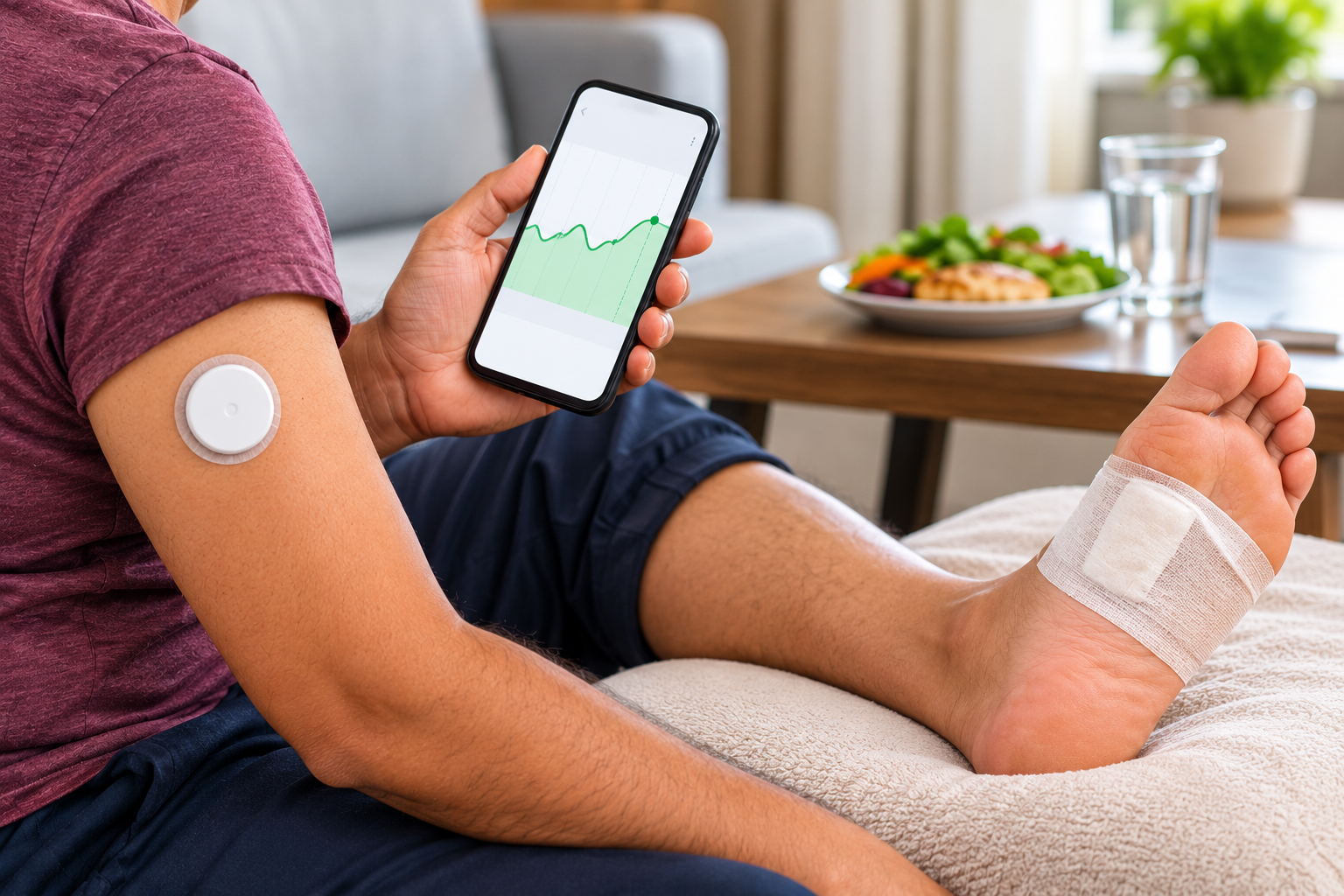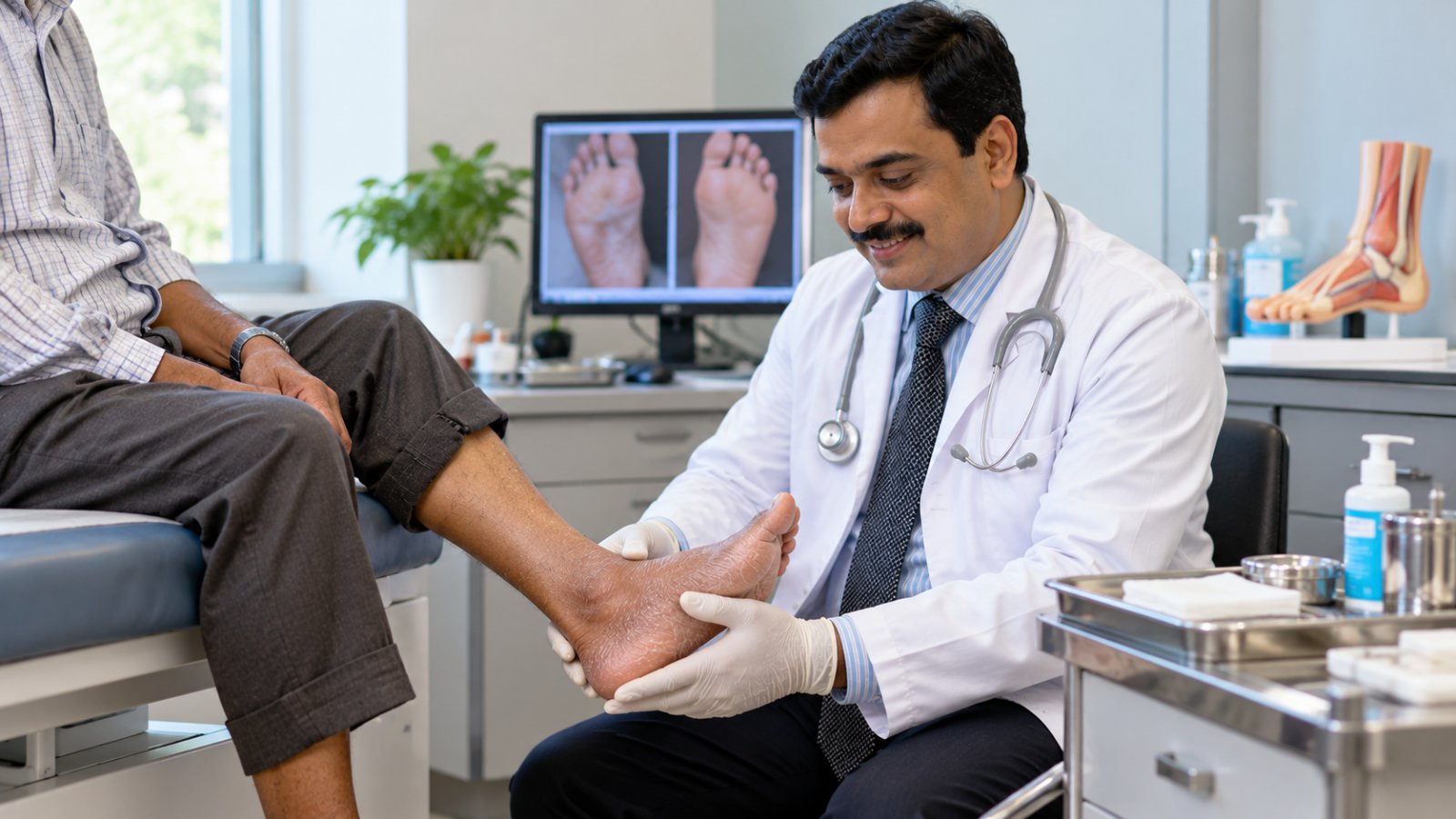

Diabetic wound treatment in Jamnagar starts with identifying why a wound is not healing. Diabetes-related nerve damage, poor blood circulation, infection and repeated pressure can delay recovery. Effective treatment may involve wound cleaning, suitable dressings, pressure relief, infection control and specialist assessment. Early care is important because even a small, painless wound can develop serious complications.
What Is a Diabetic Wound?
A diabetic wound is an injury or open area of skin that occurs in a person with diabetes and may be difficult to heal.
These wounds commonly affect the feet because diabetes can damage nerves and blood vessels.
A diabetic wound may begin as:
-
A small cut or scratch
-
A blister caused by footwear
-
Cracked skin
-
A pressure-related injury
-
A wound beneath a callus
-
An injury that goes unnoticed because of numbness
Not every wound in a person with diabetes is caused by diabetes. However, diabetes can increase the risk of infection and delayed healing.
Patients with new or persistent foot wounds should seek prompt medical assessment.
Why Do Diabetic Wounds Heal Slowly?
Diabetic wound healing is affected by several factors.
1. Poor Blood Circulation
Blood supplies oxygen and nutrients needed for tissue repair.
Peripheral artery disease can reduce circulation to the feet and make wound healing difficult.
Patients with poor circulation may experience cold feet, changes in skin colour or wounds that do not improve.
When blood supply is suspected to be inadequate, doctors may recommend vascular assessment and treatment.
2. Diabetic Neuropathy
Diabetes can damage nerves and reduce the ability to feel pain, heat and pressure.
A patient may continue walking on an injured foot without noticing further damage.
This can make a small wound progressively deeper.
3. Repeated Pressure
Pressure from walking, standing or unsuitable footwear can damage newly forming tissue.
For wounds on the sole, reducing pressure is often essential for healing.
4. Infection
Bacteria can enter through broken skin and cause infection.
An infected diabetic wound may develop redness, warmth, swelling or discharge.
Severe infections can spread into deeper tissues or bone.
5. Poor Blood Sugar Management
Persistently elevated blood glucose can impair immune function and interfere with wound recovery.
Diabetes management is therefore an important part of treatment.
Early Signs of a Non-Healing Diabetic Wound
A wound may require further assessment when it shows little improvement or begins to deteriorate.
Warning signs include:
-
A wound that remains open
-
Increasing wound depth
-
Persistent discharge
-
Redness or swelling
-
An unpleasant smell
-
Dark or discoloured tissue
-
Thickened skin around the wound
-
New areas of skin breakdown
-
Repeated reopening after apparent healing
Some diabetic wounds cause very little pain because of nerve damage.
The absence of pain does not mean the wound is safe.
When Should You Seek Diabetic Wound Treatment in Jamnagar?
Patients should arrange prompt medical assessment for any new diabetic foot wound.
The urgency depends on the symptoms.
| Wound condition | Recommended action |
|---|---|
| Small new wound | Prompt clinical assessment |
| Wound not improving | Specialist reassessment |
| Increasing redness or swelling | Same-day medical evaluation |
| Pus or spreading infection | Urgent medical evaluation |
| Fever with an infected wound | Emergency hospital care |
| Black tissue or gangrene | Immediate emergency assessment |
| Suddenly cold or pale foot | Emergency vascular assessment |
| Rapidly worsening wound | Immediate hospital assessment |
Early diabetic wound treatment in Jamnagar helps identify problems before they progress into deeper infection or extensive tissue damage.
Patients with severe symptoms should seek treatment at the nearest appropriate hospital rather than delaying care for travel.
How Do Doctors Assess a Diabetic Wound?
A proper wound assessment involves more than looking at the surface.
Step 1: Examine the Wound
The doctor evaluates:
-
Wound size
-
Depth
-
Location
-
Tissue appearance
-
Amount of drainage
-
Surrounding skin
-
Signs of infection
-
Possible involvement of deeper structures
Step 2: Check Protective Sensation
A monofilament test or other neurological examination may help identify diabetic neuropathy.
Step 3: Assess Blood Circulation
The doctor may examine foot pulses and recommend Doppler studies, toe-pressure measurements or other vascular tests.
Step 4: Evaluate Infection
When infection is suspected, blood investigations, appropriately collected tissue cultures and imaging may be required.
Step 5: Review Diabetes Management
Blood glucose readings, HbA1c results, medications and other medical conditions may influence treatment decisions.
For additional information about different wound conditions, visit the clinic's foot and wound conditions guide.
Treatment Options for Diabetic Wounds
The correct treatment depends on the wound's cause and severity.
1. Wound Cleaning
Wound cleaning removes surface contamination and prepares the wound for an appropriate dressing.
Cleaning methods should be selected by a healthcare professional.
Patients should avoid applying harsh chemicals or unprescribed products directly to an open wound.
2. Diabetic Wound Dressings
Dressings help protect the wound and maintain an appropriate healing environment.
The doctor selects the dressing according to drainage, depth, infection status and surrounding skin condition.
3. Debridement
Debridement involves removing non-viable tissue when medically appropriate.
It may help improve wound assessment and prepare the wound bed.
However, the presence of severe circulation problems can change how and when debridement should be performed.
4. Infection Management
Clinically infected wounds may require antibiotics, drainage or surgical treatment.
Antibiotics should not be used routinely for uninfected diabetic foot wounds.
The clinic's diabetic foot infection management service explains how infection assessment and treatment form part of diabetic foot care.
5. Pressure Offloading
Offloading reduces pressure on injured areas.
Depending on the wound, clinicians may prescribe a cast, walking boot or another pressure-relieving device.
6. Vascular Treatment
Some patients need treatment to improve blood circulation before their wounds can heal.
7. Surgical Management
Surgery may be required for deep infection, abscesses, extensive dead tissue or selected complex wounds.
Not every diabetic wound requires surgery.
Which Dressings Are Used for Diabetic Wound Healing?
There is no single dressing that is best for every diabetic wound.
Foam Dressings
Foam dressings can help absorb moderate to heavy drainage.
Alginate Dressings
Alginate dressings may be suitable for wounds producing significant fluid.
Hydrogel Dressings
Hydrogel dressings may help manage selected dry wounds.
Non-Adherent Dressings
These dressings can help protect fragile tissue and reduce trauma during dressing changes.
Advanced Wound Dressings
Some wounds require specialised dressings or additional wound-management techniques.
However, advanced products do not automatically produce faster healing.
Patients can explore non-surgical wound management for information about dressings, wound-bed preparation and other treatment approaches.
Why Are Regular Dressing Changes Not Always Enough?
A dressing protects the wound, but it does not necessarily correct the underlying cause.
Consider a patient with a wound beneath the forefoot.
The wound is cleaned and dressed regularly, but the patient continues walking on the same pressure point.
The cycle may continue:
Pressure → Tissue injury → Wound → Dressing → Continued pressure → Delayed healing
Similarly, a wound affected by poor circulation may remain open despite suitable dressings.
This is why successful diabetic wound treatment requires evaluation of pressure, blood supply and infection.
How Does Pressure Offloading Support Wound Healing?
Offloading reduces mechanical stress on the injured part of the foot.
It is particularly important for pressure-related wounds on the sole.
Options may include:
-
Total contact casts
-
Non-removable knee-high devices
-
Removable walking boots
-
Specialised pressure-relieving devices
-
Footwear modifications for selected patients
The appropriate device depends on wound location, circulation, infection severity and patient mobility.
For suitable neuropathic plantar forefoot or midfoot ulcers, non-removable knee-high offloading is generally preferred.
The clinic's therapeutic footwear and offloading service provides additional information about pressure management.
How Long Does a Diabetic Wound Take to Heal?
Healing time depends on several clinical factors.
Small uncomplicated wounds may improve over weeks, while deep or complicated wounds may take much longer.
Factors influencing recovery include:
-
Wound size and depth
-
Blood circulation
-
Presence of infection
-
Pressure reduction
-
Blood glucose management
-
Nutrition and general health
-
Regular wound monitoring
Doctors may measure wound size at follow-up visits to assess progress.
If a wound does not show meaningful improvement after approximately four weeks of appropriate care, the treatment plan should be reassessed.
A wound that is worsening should be evaluated sooner.
What Happens When a Diabetic Wound Does Not Heal?
A non-healing diabetic wound requires reassessment of the underlying cause.
The doctor may investigate:
Persistent Infection
An infection may remain untreated or involve deeper tissues.
Poor Blood Supply
Reduced circulation can prevent adequate tissue repair.
Continued Pressure
Repeated walking may interfere with healing.
Dead Tissue
Non-viable tissue may require appropriate removal.
Bone Infection
Deep wounds may occasionally involve underlying bone.
Other Medical Problems
Kidney disease, nutritional problems and other conditions may complicate healing.
Treatment should be adjusted according to the findings rather than simply continuing the same dressing indefinitely.
Can Advanced Machines Heal Diabetic Wounds Faster?
Certain wound-care devices, including negative pressure wound therapy, may benefit selected patients.
Negative pressure wound therapy uses controlled suction to manage wound fluid and support wound-bed management.
It may be considered for some postoperative diabetic foot wounds.
However, it is not routinely recommended solely to accelerate healing of non-surgical diabetic foot ulcers.
No wound-care machine can replace adequate circulation, infection control or pressure offloading.
When Is Surgery Needed for a Non-Healing Diabetic Wound?
Surgery may be necessary when a wound has complications that cannot be managed safely with dressings and medication alone.
Examples include:
-
Deep abscesses
-
Rapidly spreading infection
-
Extensive non-viable tissue
-
Selected bone infections
-
Gangrene
-
Complex wounds requiring reconstruction
Surgical treatment may involve drainage, debridement, vascular procedures or reconstructive techniques.
Patients requiring additional assessment can explore diabetic foot surgery services.
For severe cases where limb preservation is being considered, diabetic limb salvage surgery may be relevant.
Surgery does not guarantee healing or limb preservation, and treatment must be individualised.
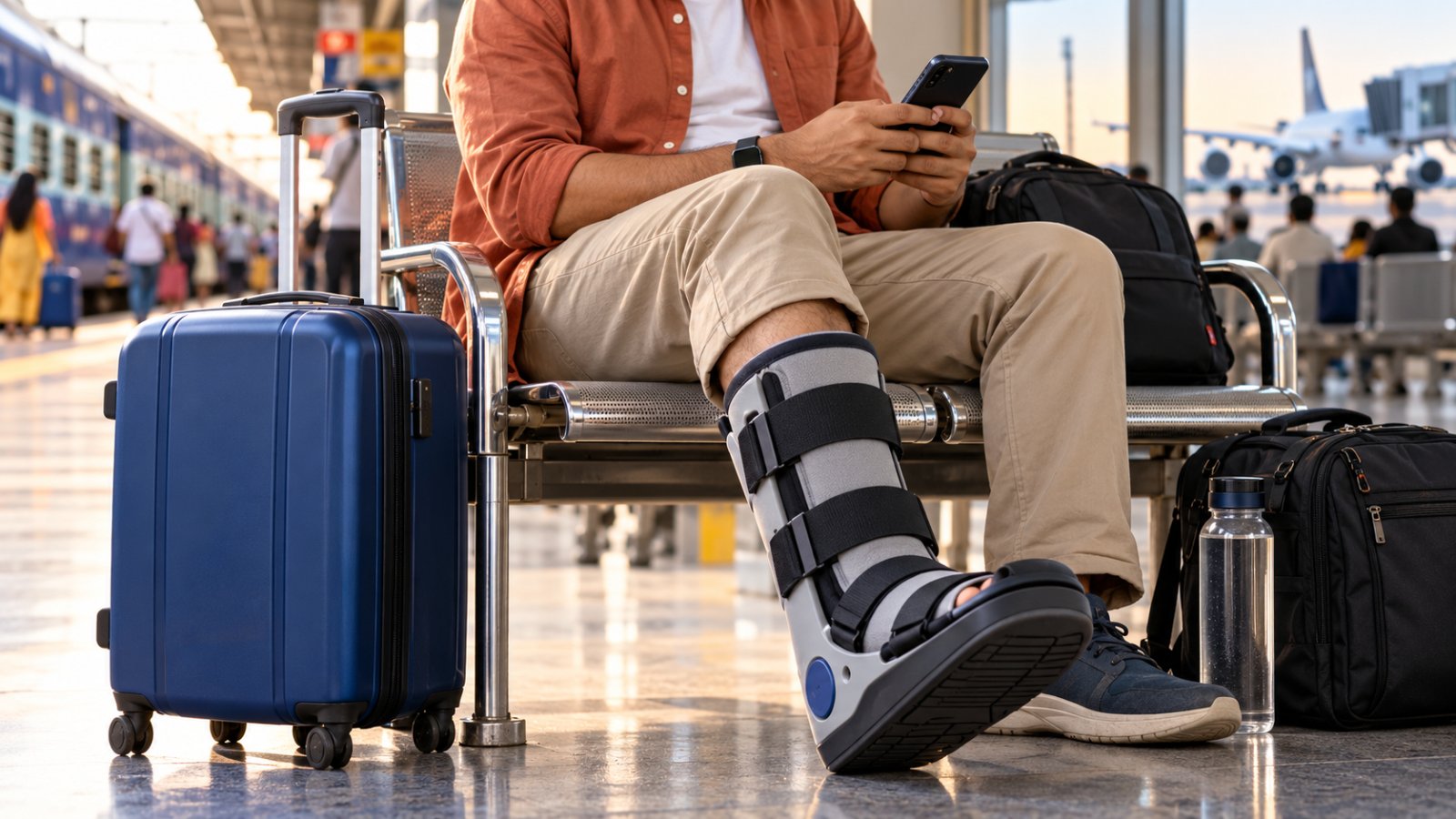
When Should Patients Travel From Jamnagar for Specialist Wound Care?
Patients may consider an additional specialist opinion when:
-
A wound remains open despite appropriate care
-
The wound repeatedly reopens
-
Infection returns after treatment
-
Blood circulation problems are suspected
-
Bone infection requires further evaluation
-
Reconstructive treatment is being considered
-
An amputation has been recommended and the patient is medically stable enough for another opinion
Patients seeking diabetic wound treatment in Jamnagar should first obtain timely local medical assessment.
Those requiring more complex care may consider referral to a specialist centre.
Emergency warning: Fever with a serious foot infection, rapidly spreading redness, gangrene or sudden loss of circulation requires immediate hospital assessment. Do not postpone emergency treatment to arrange travel.
Diabetic Wound Care at Elegance Diabetic Foot & Ulcer Clinic
At Elegance Diabetic Foot & Ulcer Clinic in Surat, Dr. Ashutosh Shah provides specialist care for diabetic foot wounds and complex wound-management problems.
The clinic's approach includes assessing wound depth, infection, blood circulation and pressure-related factors before selecting treatment.
Depending on clinical findings, treatment may involve:
-
Wound cleaning and dressings
-
Debridement when appropriate
-
Infection management
-
Pressure offloading
-
Vascular evaluation and referral
-
Surgical assessment
-
Follow-up and recurrence prevention
Patients considering a specialist opinion should contact the clinic before travelling to confirm consultation arrangements.
How Can Patients Care for a Diabetic Wound at Home?
Home care should follow the treating clinician's instructions.
Keep the Dressing Protected
Change dressings according to medical advice.
Avoid unnecessary handling of the wound.
Avoid Walking Barefoot
Use appropriate footwear and prescribed offloading devices.
Check Both Feet Daily
Inspect the toes, heels, soles and spaces between the toes.
Avoid Home Callus Removal
Do not use blades, sharp tools or chemical corn-removal products.
Follow Diabetes Treatment
Take prescribed medicines and monitor blood glucose as advised.
Avoid Unprescribed Remedies
Do not apply household substances, strong antiseptics or herbal mixtures to an open wound without medical advice.
Attend Follow-Up Visits
Regular review helps detect deterioration and determine whether treatment needs to change.
How Can Diabetic Wounds Be Prevented?
Prevention is particularly important for patients with neuropathy or previous foot ulcers.
Recommended measures include:
-
Daily foot inspection
-
Properly fitted footwear
-
Regular diabetes reviews
-
Avoiding barefoot walking
-
Professional callus management
-
Prompt treatment of blisters and cuts
-
Routine foot examinations
-
Pressure-relieving footwear when prescribed
A healed wound can reopen if the original pressure problem remains untreated.
Conclusion
Timely diabetic wound treatment in Jamnagar is important for identifying slow-healing wounds and preventing avoidable complications.
Effective wound management involves more than dressing changes. Blood circulation, infection, pressure, diabetes management and regular follow-up all influence healing.
Patients with persistent or complicated wounds can contact Elegance Diabetic Foot & Ulcer Clinic for an additional specialist evaluation.
quiz Frequently Asked Questions
This article is general education, not a diagnosis. If you have a diabetic foot wound, please have it assessed in person. Send a photo on WhatsApp or book a consultation.
About the Author

Dr. Ashutosh Shah, Plastic, Reconstructive & Diabetic Foot Surgeon, Elegance Diabetic Foot & Ulcer Clinic, Surat
Dr. Ashutosh Shah is a board certified plastic and reconstructive surgeon with over 22 years of experience and more than 10,000 limbs and feet saved. He founded Elegance Diabetic Foot & Ulcer Clinic, India's first chain of clinics dedicated to foot care, with centres in Surat and OPD partners across South Gujarat. He is known for a limb first approach, safe wound care and ethical, natural results.