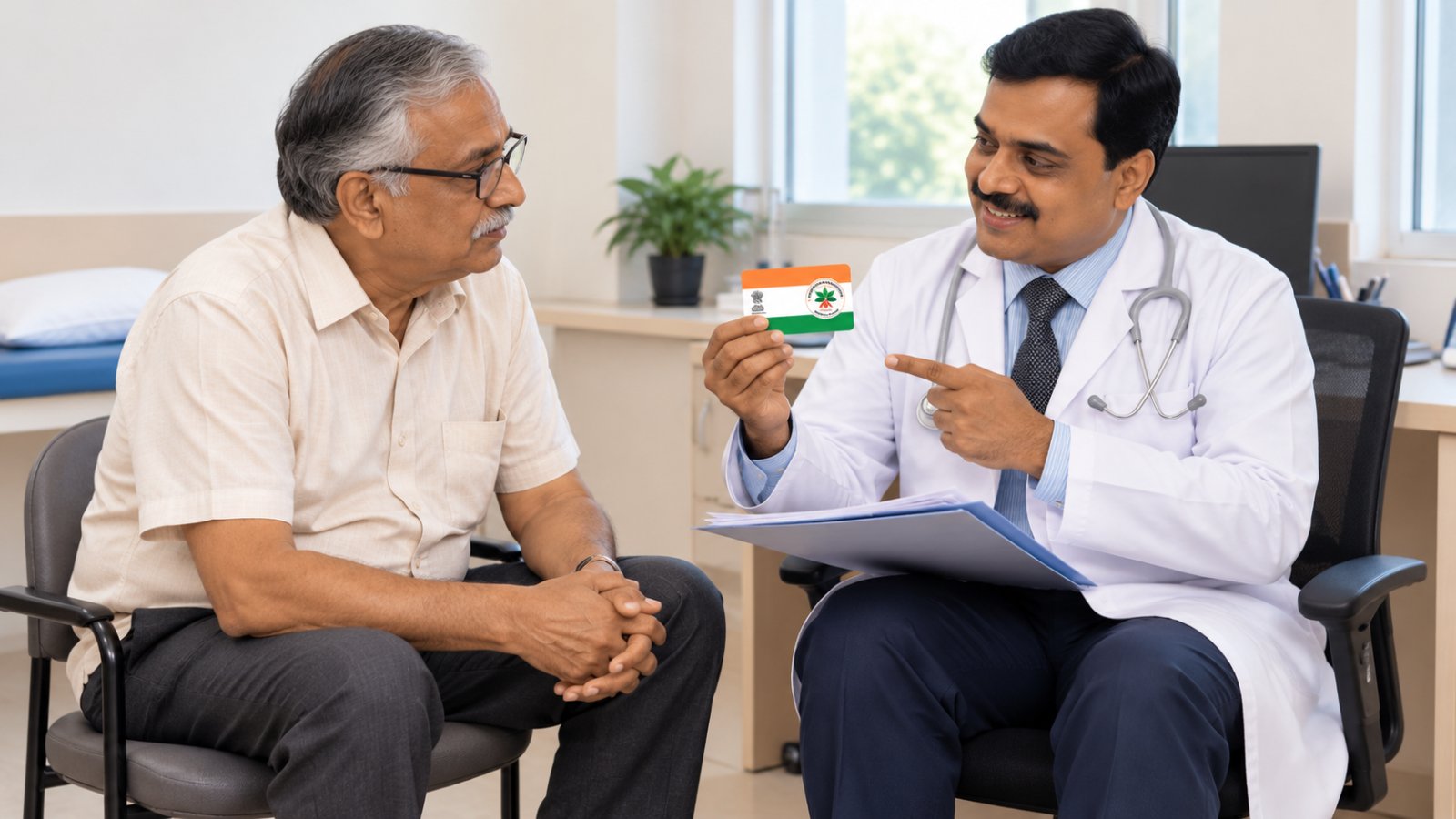
Ayushman Bharat PM-JAY covers eligible families for hospital admissions up to Rs 5 lakh a year, and its package list includes debridement, amputation and vascular procedures; Gujarat's PMJAY-MA scheme extends cover for state beneficiaries. Outpatient dressings, footwear and most OPD tests are not covered, and only empanelled hospitals can claim, so confirm before admission.
Diabetic foot treatment under ayushman bharat may be covered when an eligible patient needs hospital admission for an approved procedure. PM-JAY provides up to ₹5 lakh per eligible family per year. Debridement, amputation and certain vascular procedures may qualify under applicable packages. Coverage depends on eligibility, hospital empanelment and approval, while routine outpatient care is generally excluded.
Key Takeaways
-
Ayushman Bharat PM-JAY provides eligible beneficiaries with cashless hospitalisation benefits under approved packages.
-
The standard PM-JAY benefit is ₹5 lakh per family per year, while state-specific arrangements may provide different limits.
-
Diabetic foot surgery, including certain debridement and amputation procedures, may qualify for coverage.
-
Gujarat's PMJAY-MA scheme combines national and state-level health assurance arrangements.
-
Routine outpatient consultations, dressings and diabetic footwear are generally not covered as standalone PM-JAY services.
-
Citizens aged 70 years and above have a separate eligibility pathway under Ayushman Vay Vandana.
-
A hospital must be empanelled for the relevant scheme and procedure package.
-
Patients should confirm eligibility and approval before planned admission.
What Does PM-JAY Cover for a Diabetic Foot?
Ayushman Bharat Pradhan Mantri Jan Arogya Yojana (PM-JAY) is a government-funded health assurance scheme designed to provide hospitalisation benefits to eligible beneficiaries.
The scheme covers approved secondary and tertiary hospital care through empanelled hospitals.
For patients with diabetes, foot complications may sometimes require hospital-based treatment.
Examples include:
-
Surgical wound debridement
-
Treatment of severe diabetic foot infection
-
Drainage of a deep abscess
-
Selected minor or major amputation procedures
-
Certain vascular interventions
-
Other approved hospital procedures
However, diabetic foot treatment under ayushman bharat does not mean every treatment, test or procedure is automatically free.
Coverage depends on the current Health Benefit Package (HBP), clinical indication, beneficiary eligibility and hospital authorisation.
Is Diabetic Foot Debridement Covered?
Debridement is a procedure used to remove dead, damaged or infected tissue from a wound.
Some diabetic foot ulcers require surgical debridement to control infection or prepare the wound for further treatment.
Hospital-based debridement may qualify under an applicable approved surgical package.
However, routine wound cleaning or dressing performed during an outpatient visit should not be assumed to qualify for the same benefit.
Patients searching for debridement under ayushman card should ask the hospital to confirm the exact package before admission.
Is Diabetic Foot Amputation Covered?
Amputation may become necessary when a foot has severe infection, extensive tissue damage or irreversible loss of blood supply.
The operation may involve a toe, part of the foot or a larger portion of the limb.
Some amputation procedures may be included in approved hospitalisation packages.
Patients should ask whether the specific procedure is covered and whether the hospital has authorisation to perform it under the scheme.
Learn more about amputation surgery and the clinical situations in which it may be considered.
Important: A patient should not delay urgent medical treatment while waiting for insurance clarification if there are signs of a limb-threatening infection.
How Does Gujarat's MA or PMJAY-MA Card Add to It?
Gujarat's Mukhyamantri Amrutam (MA) programme and PMJAY-MA arrangements are designed to support eligible beneficiaries with specified healthcare expenses.
The exact benefit limit, eligibility criteria and covered procedures depend on the applicable state scheme rules.
The PMJAY-MA arrangement should not be understood as automatically providing an additional separate ₹5 lakh on top of every national PM-JAY benefit.
Patients must check which scheme applies to their card and the current coverage available.
What Is the Difference Between an Ayushman Card and an MA Card?
An Ayushman card is associated with eligibility under the national PM-JAY framework.
The MA card is associated with Gujarat's state health assurance programme.
Both may support cashless hospitalisation for approved treatments, but eligibility and administrative rules can differ.
A beneficiary should verify:
-
Whether the card is active.
-
Whether the patient is eligible.
-
Whether the hospital is empanelled.
-
Whether the required treatment package is available.
-
Whether pre-authorisation is necessary.
-
Whether the proposed treatment is included in the approved package.
The hospital's scheme help desk or Ayushman Mitra can assist with verification.
Which Diabetic Foot Treatments Are Covered and Which Are Not?
Patients often assume that possessing a government health card means all diabetes-related services are covered.
In practice, hospitalisation benefits and routine outpatient services are different.
Diabetic Foot Treatment Coverage Comparison
| Treatment or Service | PM-JAY | Gujarat PMJAY-MA | What to Verify |
|---|---|---|---|
| OPD consultation | Generally not covered separately | Depends on scheme rules | Outpatient eligibility |
| Routine blood tests | Usually not covered as standalone OPD tests | Depends on scheme rules | Whether included in admission package |
| Routine wound dressings | Generally excluded as standalone OPD care | Depends on scheme rules | Inpatient package inclusion |
| Surgical debridement | May be covered | May be covered | Current HBP package code |
| Toe or foot amputation | May be covered | May be covered | Procedure-specific approval |
| Major amputation | May be covered | May be covered | Hospital authorisation |
| Leg artery angioplasty | May be covered | May be covered | Applicable vascular package |
| Diabetic footwear | Generally not covered as routine footwear | Check separate state benefits | Specific assistance eligibility |
| Prosthetic limb | Package-dependent | Package-dependent | Prosthesis or rehabilitation benefit |
This table is a general guide, not a confirmation of payment. Hospitals must verify the current HBP list, applicable state rules and patient-specific approval.
Are Routine Dressing Changes Covered?
Routine diabetic foot dressing performed during an outpatient visit is generally not a standalone PM-JAY hospitalisation benefit.
However, wound dressings and consumables may be included within an approved inpatient treatment package.
The patient should ask whether the required care is part of the authorised admission.
Are Blood Tests and Scans Covered?
Blood tests, imaging and other investigations may be included when they form part of an approved hospitalisation package.
Standalone outpatient investigations are generally not covered under standard PM-JAY hospitalisation benefits.
The hospital should explain which investigations are included and whether any additional expense may apply.
Is Diabetic Footwear Covered?
Special diabetic footwear helps reduce repeated pressure and protect vulnerable areas of the foot.
However, routine footwear is generally not included as a standalone PM-JAY benefit.
Patients should check whether any separate government assistance, rehabilitation or disability-related programme applies.
Are All Seniors Above 70 Now Eligible?
The government introduced an expanded PM-JAY eligibility pathway for senior citizens aged 70 years and above in 2024.
Under this arrangement, eligible senior citizens can access Ayushman Vay Vandana benefits regardless of income.
The programme provides health coverage of up to ₹5 lakh, subject to the applicable household and beneficiary rules.
What Is the Ayushman Vay Vandana Card?
The ayushman vay vandana card is associated with PM-JAY coverage for citizens aged 70 years and above.
Senior citizens must complete the required enrolment and verification process.
Age eligibility does not mean that every hospital or every procedure is automatically covered.
The hospital must still be empanelled, and the treatment must qualify under the applicable scheme rules.
Can a Senior Citizen Receive Diabetic Foot Surgery?
A person aged 70 years or above may qualify for approved hospital treatment under the senior citizen scheme.
If surgery is medically necessary, the hospital can check whether the proposed procedure has an eligible package.
The patient should confirm enrolment, hospital participation and pre-authorisation before planned treatment.
How Do You Check Hospital Empanelment and Package Approval?
Before planning diabetic foot treatment under ayushman bharat, patients should verify both beneficiary eligibility and hospital participation.
An active Ayushman or MA card does not guarantee that every hospital accepts the scheme.
Step 1: Check Card Eligibility
Use the official PM-JAY beneficiary system or contact an authorised scheme help desk.
Keep the required identity and eligibility documents available.
Step 2: Check Hospital Empanelment
Search for the hospital through the official empanelled hospital directory.
Confirm the exact hospital name and location.
A hospital may be empanelled for some specialties but not necessarily authorised for every procedure.
Step 3: Ask for the Procedure Package
Request the applicable HBP package name or code.
For example, a patient requiring surgical debridement should ask whether that particular operation is available under an approved package.
Do not rely only on a general statement that the hospital accepts an Ayushman card.
Step 4: Confirm Pre-Authorisation
Some procedures require approval before treatment.
The hospital's scheme team should explain whether pre-authorisation is required and what clinical documents must be submitted.
Step 5: Ask About Included Expenses
Before admission, clarify whether the approved package includes:
-
Hospital bed charges
-
Surgeon and procedure charges
-
Anaesthesia
-
Medicines and consumables
-
Relevant investigations
-
Postoperative inpatient care
-
Applicable follow-up benefits
The exact inclusions depend on the authorised package.
For patients who need information about visiting a diabetic foot specialist, the consultation process page explains the general care pathway.
MA Card Diabetic Foot Treatment in Jamnagar: What Should Patients Check?
Patients looking for government-funded diabetic foot surgery should first identify an empanelled hospital that offers the required procedure.
A diabetic foot ulcer may need treatment ranging from wound care to vascular intervention or surgery.
The most appropriate treatment depends on the severity of infection, circulation, tissue damage and the patient's overall health.
For planned ma card diabetic foot treatment in jamnagar, patients should confirm:
-
Active beneficiary eligibility
-
Hospital empanelment
-
Availability of the required specialist
-
Relevant surgical package
-
Pre-authorisation requirements
-
Whether transfer or referral is necessary
At Elegance Diabetic Foot & Ulcer Clinic (EDFC), Dr. Ashutosh Shah is associated with diabetic foot assessment and surgical wound management. Patients can seek clinical guidance about ulcer severity and possible treatment options, but they should independently confirm scheme empanelment and coverage before assuming that treatment at the clinic will be cashless.
What If the Hospital Does Not Accept the Card?
If a hospital is not empanelled for the required treatment, patients may need to choose another authorised hospital.
They can ask the scheme help desk for guidance about eligible facilities.
If private payment is being considered, patients can also review EMI and payment options, subject to availability and applicable terms.
Does PM-JAY Cover Angioplasty for Leg Arteries?
Some diabetic foot ulcers fail to heal because blood supply to the foot is inadequate.
Peripheral artery disease can reduce the oxygen and nutrients reaching the wound.
Patients with severe arterial disease may need vascular assessment.
In selected cases, treatment may include angioplasty or another revascularisation procedure.
Certain vascular interventions may qualify under approved PM-JAY packages.
However, coverage depends on the specific procedure, clinical indication and hospital authorisation.
Learn more about endovascular procedures used to treat selected blood-flow problems.
Why Is Blood Supply Important Before Surgery?
Poor circulation can delay wound healing and increase the risk of tissue loss.
Before major treatment decisions, clinicians may evaluate:
-
Foot pulses
-
Doppler findings
-
Ankle or toe pressure measurements
-
Other vascular investigations
-
Infection severity
-
Tissue viability
A suitable vascular assessment can help determine whether improving blood flow is possible.
Insurance eligibility should not replace proper clinical decision-making.
What Documents Should Patients Keep Ready?
Patients seeking hospital treatment under PM-JAY or PMJAY-MA should prepare their documents before admission whenever possible.
Commonly requested documents include:
-
Ayushman or MA card details
-
Aadhaar or another accepted identity document
-
Beneficiary verification details
-
Relevant medical reports
-
Doctor's admission recommendation
-
Previous treatment records
-
Contact information
The hospital may request additional documentation depending on the scheme and procedure.
For emergency admissions, the hospital should explain the applicable verification process.
When Should Diabetic Foot Treatment Not Be Delayed?
Government health coverage can help reduce treatment costs, but urgent diabetic foot complications require timely medical attention.
Seek immediate assessment if you notice:
-
Rapidly spreading redness or swelling
-
Fever with a foot wound
-
Black or discoloured toes
-
Pus or deep infection
-
Sudden severe foot pain
-
A cold, pale foot with reduced circulation
-
Rapidly worsening tissue damage
Some patients with diabetic neuropathy may have serious infection without much pain.
Therefore, the absence of pain does not guarantee that the wound is safe.
Conclusion
Diabetic foot treatment under ayushman bharat may provide financial support for eligible patients who require approved hospital-based procedures.
Surgical debridement, amputation and selected vascular interventions may qualify, but coverage is not automatic.
Routine outpatient dressings, footwear and standalone investigations are generally outside standard hospitalisation benefits.
Patients should verify their eligibility, the hospital's empanelment and the relevant treatment package before planned admission.
At Elegance Diabetic Foot & Ulcer Clinic, Dr. Ashutosh Shah is associated with diabetic foot evaluation and treatment planning. Patients should confirm scheme participation separately from medical consultation.
Early assessment remains important because untreated diabetic foot infection or poor circulation can lead to serious complications.
quiz Frequently Asked Questions
This article is general education, not a diagnosis. If you have a diabetic foot wound, please have it assessed in person. Send a photo on WhatsApp or book a consultation.
About the Author

Dr. Ashutosh Shah, Plastic, Reconstructive & Diabetic Foot Surgeon, Elegance Diabetic Foot & Ulcer Clinic, Surat
Dr. Ashutosh Shah is a board certified plastic and reconstructive surgeon with over 22 years of experience and more than 10,000 limbs and feet saved. He founded Elegance Diabetic Foot & Ulcer Clinic, India's first chain of clinics dedicated to foot care, with centres in Surat and OPD partners across South Gujarat. He is known for a limb first approach, safe wound care and ethical, natural results.