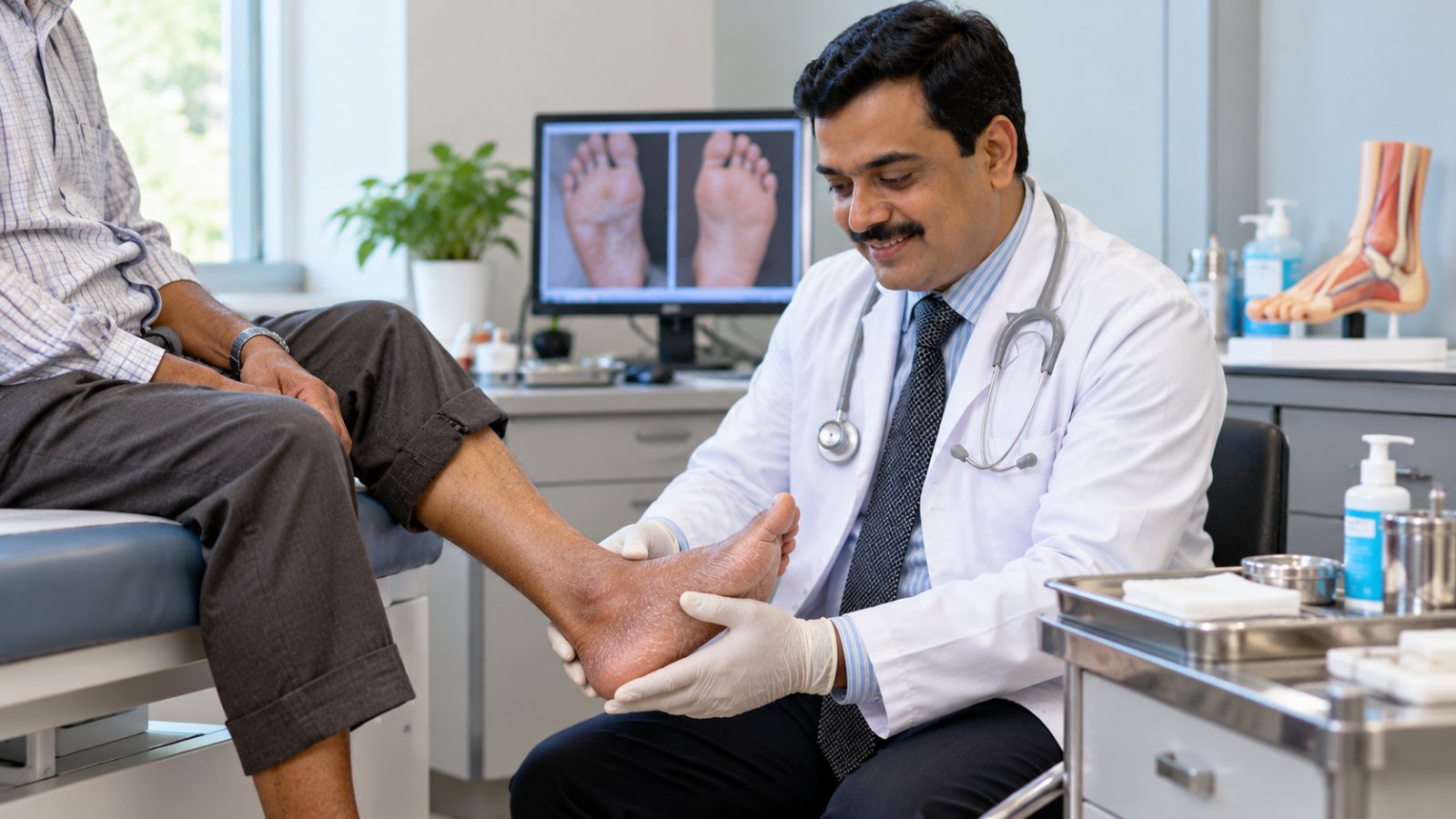

Diabetic foot surgery in Vesu covers procedures that heal wounds and save the limb: cleaning out infection (debridement), correcting the pressure or deformity causing an ulcer, and rebuilding tissue with grafts or flaps. Done early by an expert doctor, most diabetic foot surgery aims to save the foot, with amputation only a last resort.
The word "surgery" frightens many people with a diabetic foot, because they fear amputation. But most diabetic foot surgery is the opposite: it is done to save the foot, by fixing what stops an ulcer healing. This guide explains diabetic foot surgery in Vesu, Surat, and how it protects the limb.
What Is Diabetic Foot Surgery in Vesu?
Diabetic foot surgery in Vesu is a group of operations that treat the causes of a non-healing diabetic foot wound, so the foot can heal and stay whole. Rather than a single procedure, it ranges from cleaning out dead or infected tissue, to releasing a tight tendon or reshaping a bone that is creating harmful pressure, to rebuilding lost tissue with grafts or flaps. The goal throughout is healing and limb salvage.
This is limb-saving surgery. Even where a small area cannot be saved, the aim is to remove only what is necessary and preserve as much functional foot as possible.
What Types of Diabetic Foot Surgery Are There?
The right operation depends on why the wound will not heal. The table below outlines the main types.
| Surgery | What it does |
|---|---|
| Debridement | Removes dead and infected tissue so the wound can heal. |
| Surgical offloading (tendon / bone) | Releases a tight tendon or reshapes bone to relieve pressure. |
| Reconstruction (grafts / flaps) | Rebuilds and covers deep or large tissue loss. |
| Charcot foot correction | Stabilises and reshapes a collapsed, deformed foot. |
At EDFC these fall under diabetic foot surgery and reconstructive surgery, with Charcot foot correction where the foot has deformed.
Does Diabetic Foot Surgery Actually Heal Ulcers?
Yes, especially when an ulcer keeps returning because of pressure or deformity. Correcting the mechanical cause is often what finally heals a stubborn wound. The evidence supports this: a systematic review of minimally invasive foot surgery for plantar diabetic ulcers found that surgically relieving pressure under bony prominences enabled prompt ulcer healing with good short and long-term results. Simple procedures like a flexor tenotomy can heal toe ulcers that dressings alone could not.
The honest point is that surgery works best alongside infection control and good blood flow. When those are in place, correcting the cause surgically is often the missing piece that closes the wound for good.
When Is Diabetic Foot Surgery Needed?
Surgery is considered when a wound will not heal by simpler means, or when infection or deformity threatens the foot. These situations often call for it.
- Deep or spreading infection: needing surgical drainage and debridement.
- Ulcers over a bony prominence: where pressure must be corrected surgically.
- Recurrent ulcers at the same spot: driven by tendon tightness or deformity.
- Exposed tendon or bone: needing reconstruction to cover.
- Charcot deformity: a collapsed foot needing stabilisation.
An expert doctor decides if and when surgery is needed, after a full assessment and, importantly, checking and restoring blood flow through vascular services first.
Is Diabetic Foot Surgery Safe, and What About Recovery?
In experienced hands, diabetic foot surgery is safe and highly worthwhile, though it does need careful planning because diabetes affects healing. Blood sugar, circulation, and infection are optimised before and after surgery, and offloading protects the operated foot while it heals. Many procedures are minor and minimally invasive, with quicker recovery, while complex reconstruction is staged over time. Recovery varies with the operation, and your team guides each step with dressings, monitoring, and follow-up until healing is complete. The key reassurance is that this surgery exists to save the foot, and an expert, limb-first doctor treats amputation only as a last resort after every option has been explored.
Why Choose Elegance Diabetic Foot & Ulcer Clinic in Surat?
Diabetic foot surgery needs a surgeon skilled in both wound and reconstructive work, with a limb-first mindset. Elegance Diabetic Foot & Ulcer Clinic (EDFC) is led by Dr. Ashutosh Shah, a plastic and microvascular surgeon and expert doctor practising since 2004, with centres in Surat including Adajan and Vesu, and across South Gujarat. Debridement, surgical offloading, reconstruction, and vascular care are coordinated under one team, through dedicated limb-salvage programs. You can learn more about the clinic, or book a consultation.
Medical disclaimer: This article is for general information and education only and is not a substitute for personalised medical advice. Diabetic foot surgery is individualised, and the procedure, safety, and recovery depend on your infection, circulation, deformity, and overall health. Always consult a qualified surgeon. To be assessed, book a consultation at Elegance Diabetic Foot & Ulcer Clinic, Surat.
quiz Frequently Asked Questions
This article is general education, not a diagnosis. If you have a diabetic foot wound, please have it assessed in person. Send a photo on WhatsApp or book a consultation.
About the Author

Dr. Ashutosh Shah, Plastic, Reconstructive & Diabetic Foot Surgeon, Elegance Diabetic Foot & Ulcer Clinic, Surat
Dr. Ashutosh Shah is a board certified plastic and reconstructive surgeon with over 22 years of experience and more than 10,000 limbs and feet saved. He founded Elegance Diabetic Foot & Ulcer Clinic, India's first chain of clinics dedicated to foot care, with centres in Surat and OPD partners across South Gujarat. He is known for a limb first approach, safe wound care and ethical, natural results.