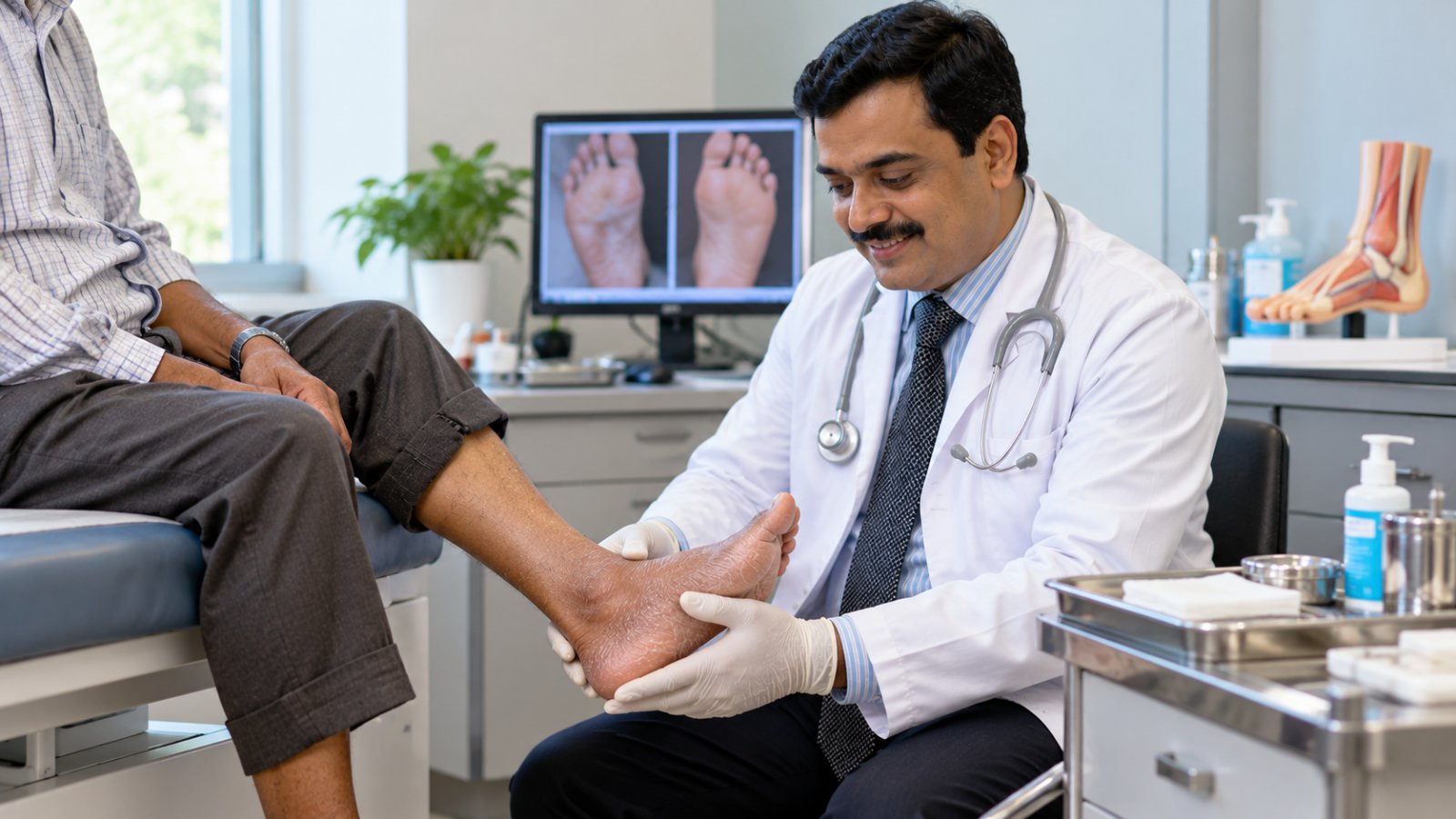

If you are searching for a diabetic foot specialist in Jamnagar, you may be concerned about a foot wound, swelling, infection, numbness, or an ulcer that is not healing. Early medical assessment can help identify infection, poor blood circulation, and pressure-related damage before complications become more serious.
People with diabetes should not ignore even a small foot injury. A wound that appears minor can become difficult to heal when nerve damage, reduced blood supply, or infection is present.
At Elegance Diabetic Foot & Ulcer Clinic, patients can seek specialist assessment for diabetic foot wounds and complications. Patients travelling from Jamnagar to Surat should confirm consultation availability before making the journey.
Who Should Consult a Diabetic Foot Specialist in Jamnagar?
A diabetic foot specialist assesses foot problems associated with diabetes, including ulcers, infections, nerve damage, and poor circulation.
Depending on the condition, diabetic foot care may involve an endocrinologist, wound-care specialist, vascular surgeon, podiatrist, or surgeon experienced in diabetic foot management.
You should arrange a medical assessment if you notice:
-
A foot wound that is not healing.
-
Redness, warmth, or swelling around a wound.
-
Discharge or an unpleasant smell.
-
Black or dark skin around the toes or foot.
-
Numbness, tingling, or loss of sensation.
-
Repeated wounds on the sole.
-
Foot pain while walking or at rest.
-
Changes in foot shape or unexplained swelling.
A diabetic foot specialist in Jamnagar or another qualified local clinician can perform the initial examination and determine whether advanced treatment or referral is necessary.
Why Is Early Diabetic Foot Treatment Important?
Diabetes can damage the nerves and blood vessels in the feet. Reduced sensation may prevent patients from noticing injuries, while poor circulation can delay healing.
Early assessment and proper diabetic foot infection treatment can help control infection and reduce the risk of serious complications.
When nerves are damaged, a person may not feel a cut, blister, or pressure injury. Reduced blood circulation can slow healing, while infection can spread into deeper tissues.
Without appropriate care, a diabetic foot problem may progress from a small wound to a serious infection.
Early treatment helps clinicians:
-
Identify the cause of the wound.
-
Check for signs of infection.
-
Assess blood circulation.
-
Reduce pressure on the affected area.
-
Select appropriate wound care.
-
Identify when advanced treatment is necessary.
Early evaluation can reduce the risk of complications, although outcomes depend on the severity of the condition and the patient's overall health.
What Happens During a Diabetic Foot Examination?
A specialist assessment generally includes several important checks.
1. Wound Examination
The clinician examines the wound's size, depth, location, surrounding skin, and signs of infection.
2. Nerve Sensation Testing
A monofilament or other examination may help identify reduced protective sensation in the feet.
3. Blood Circulation Assessment
Foot pulses and circulation are checked. Depending on the findings, Doppler ultrasound, toe-pressure measurements, or other vascular tests may be recommended.
4. Infection Assessment
The clinician looks for redness, warmth, swelling, discharge, and deeper infection. Blood tests, imaging, or an appropriate tissue sample may be required in selected cases.
5. Pressure and Footwear Assessment
Repeated pressure from walking or unsuitable footwear can prevent wounds from healing. The specialist may recommend offloading footwear, a cast, or another pressure-reducing method.
Diabetic Foot Ulcer Treatment Options
Treatment depends on wound severity, circulation, infection, and other medical conditions.
|
Treatment |
Purpose |
|---|---|
|
Wound cleaning and dressing |
Protect the wound and support healing |
|
Debridement |
Remove dead or unhealthy tissue when appropriate |
|
Offloading |
Reduce pressure on the ulcer |
|
Infection treatment |
Manage clinically diagnosed infection |
|
Vascular assessment |
Identify reduced blood supply |
|
Blood glucose management |
Support overall diabetes care and healing |
|
Surgical treatment |
Manage selected deep infections or complex wounds |
Not every patient requires surgery. Many diabetic foot wounds can be managed with appropriate wound care, pressure relief, and regular follow-up.
Treatment depends on the wound's depth, blood circulation, infection severity, and the patient's overall health.
At Elegance Diabetic Foot & Ulcer Clinic, non-surgical wound management may include wound cleaning, advanced dressings, pressure relief, and infection control.
For severe wounds that threaten the foot, the specialist may assess whether diabetic limb salvage surgery is appropriate.
Antibiotics are generally used when there is clinical evidence of infection, not simply because an ulcer is present.
When Should Patients Travel From Jamnagar to Surat?
Patients with wounds that repeatedly break down, show signs of infection, or fail to improve may need advanced evaluation.
Those experiencing redness, swelling, pus, or worsening wounds should understand the warning signs of diabetic foot infection and seek prompt medical attention.
For blackened toes or suspected gangrene, patients can also read about dry gangrene treatment in Jamnagar.
Specialist referral may be helpful for:
-
Recurrent diabetic foot ulcers.
-
Wounds that remain unhealed after several weeks.
-
Suspected reduced blood circulation.
-
Complex wounds requiring advanced offloading.
-
Suspected bone infection.
-
Wounds requiring multidisciplinary treatment planning.
However, do not delay emergency treatment to travel to another city.
If you have rapidly spreading redness, fever with a foot infection, blackening of the foot, severe pain, or sudden changes in foot colour or temperature, seek urgent medical care at the nearest appropriate emergency facility.
Diabetic Foot Care at Elegance Diabetic Foot & Ulcer Clinic
Elegance Diabetic Foot & Ulcer Clinic in Surat provides a point of contact for patients seeking evaluation of diabetic foot wounds and ulcer-related problems.
Patients from Jamnagar can contact the clinic to discuss their symptoms, available consultation arrangements, and whether an in-person visit is appropriate.
Before travelling, patients should confirm:
-
Consultation date and timing.
-
Whether an appointment is required.
-
Relevant medical reports to bring.
-
Whether the clinic can assess their specific condition.
-
Expected follow-up requirements.
Any Jamnagar OPD or visiting consultation schedule should be confirmed directly with the clinic rather than assumed.
Website: Elegance Diabetic Foot & Ulcer Clinic
How to Prepare for Your First Diabetic Foot Consultation
If you plan to consult a diabetic foot specialist in Jamnagar or visit a specialist clinic in Surat, bring the relevant medical information.
Useful records include previous prescriptions, wound photographs, blood glucose or HbA1c reports, vascular test reports, imaging results, and details of previous wound treatment.
Patients should keep their wounds protected with an appropriate dressing and avoid walking barefoot.
Do not cut dead skin, apply harsh antiseptics, or attempt to remove tissue at home.
How Can You Prevent Diabetic Foot Problems?
Daily foot care can help identify problems before they become severe.
-
Inspect both feet every day, including the soles and between the toes.
-
Wear properly fitting footwear.
-
Avoid walking barefoot.
-
Keep feet clean and dry.
-
Check inside shoes before wearing them.
-
Do not cut corns or calluses yourself.
-
Follow your diabetes treatment plan.
-
Arrange regular foot examinations based on your risk level.
People with previous ulcers, neuropathy, or poor circulation may require more frequent specialist follow-up.
Conclusion
Finding a diabetic foot specialist in Jamnagar is an important step when a person with diabetes develops a foot wound, ulcer, infection, or circulation problem.
Early examination and suitable treatment can help prevent further complications. Patients who need more advanced assessment may consider a specialist consultation in Surat, depending on their condition and local medical advice.
quiz Frequently Asked Questions
This article is general education, not a diagnosis. If you have a diabetic foot wound, please have it assessed in person. Send a photo on WhatsApp or book a consultation.
About the Author

Dr. Ashutosh Shah, Plastic, Reconstructive & Diabetic Foot Surgeon, Elegance Diabetic Foot & Ulcer Clinic, Surat
Dr. Ashutosh Shah is a board certified plastic and reconstructive surgeon with over 22 years of experience and more than 10,000 limbs and feet saved. He founded Elegance Diabetic Foot & Ulcer Clinic, India's first chain of clinics dedicated to foot care, with centres in Surat and OPD partners across South Gujarat. He is known for a limb first approach, safe wound care and ethical, natural results.