
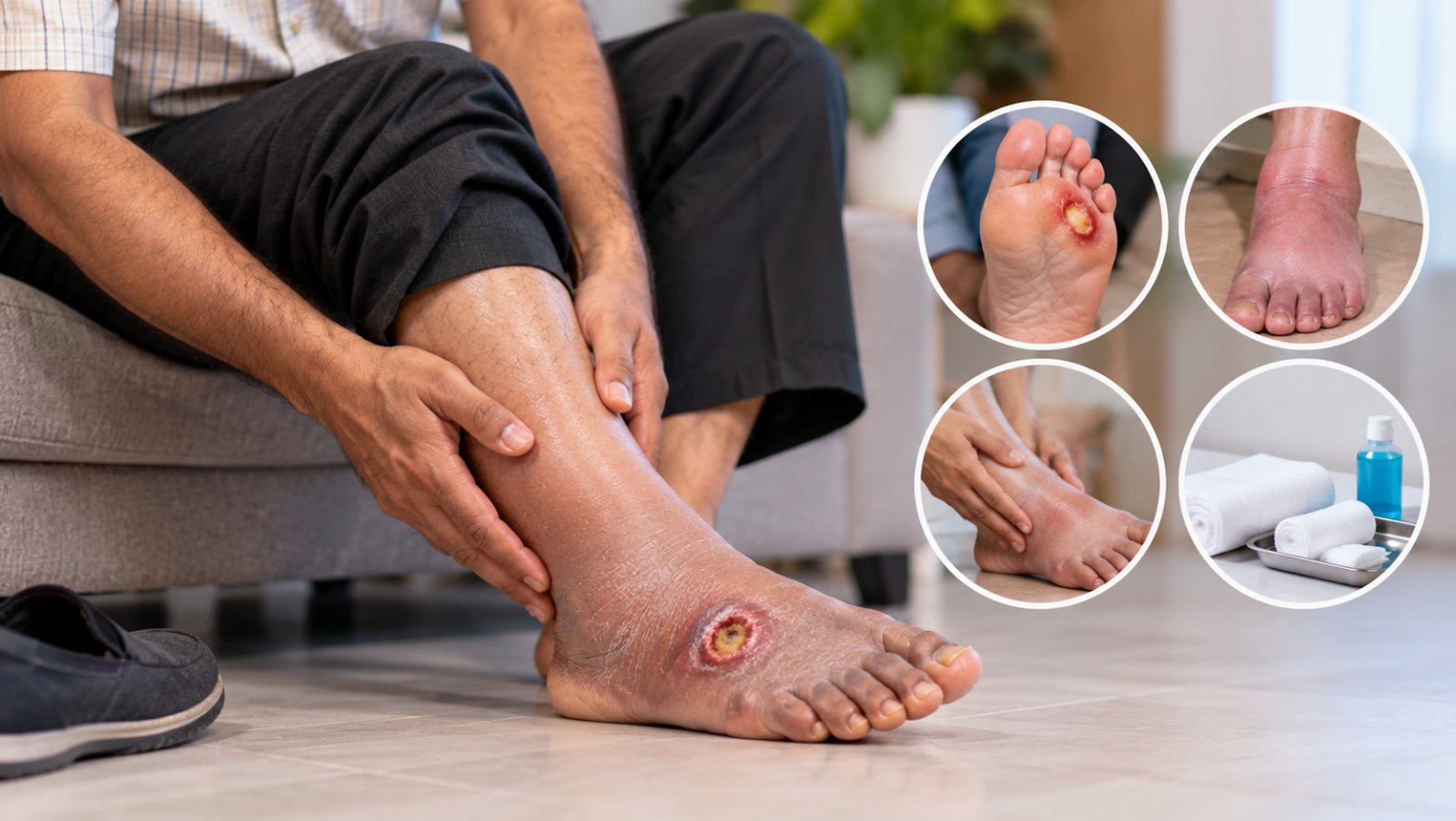
Diabetic foot infection treatment in Jamnagar depends on the severity of the infection, wound depth and blood circulation. Treatment may involve antibiotics, wound cleaning, pressure offloading, drainage or surgery. People with diabetes should seek prompt medical assessment for new redness, swelling, discharge or a foot wound because serious infections can develop even without significant pain.
A diabetic foot infection may begin with a small blister, skin crack or ulcer. Without appropriate treatment, infection can spread into deeper tissues and sometimes reach the bones.
Early diagnosis and a suitable treatment plan can reduce the risk of complications, prolonged hospitalisation and tissue loss.
What Is a Diabetic Foot Infection?
A diabetic foot infection occurs when microorganisms invade the skin or deeper tissues of the foot and produce an inflammatory response.
People with diabetes are more vulnerable to certain foot complications because of:
-
Peripheral neuropathy
-
Reduced protective sensation
-
Poor blood circulation
-
Repeated pressure or injury
-
Foot deformities
-
Impaired wound healing
-
Coexisting medical conditions
Infections commonly develop around an existing diabetic foot ulcer, but they may also begin through cuts, blisters or other skin injuries.
Not every diabetic foot ulcer is infected.
An ulcer should be considered infected when clinical signs of infection are present, rather than simply because bacteria are detected on its surface.
What Are the Early Symptoms of an Infected Diabetic Foot?
Recognising infection early is important.
1. Redness Around a Wound
Redness extending beyond the wound edge may indicate inflammation or infection.
2. Foot Swelling
New or increasing swelling may occur around an infected area.
3. Warmth
The affected skin may feel warmer than surrounding tissue.
4. Pain or Tenderness
Infection can cause discomfort, although patients with neuropathy may experience little pain.
5. Pus or Discharge
Thick discharge or pus can indicate infection.
6. Unpleasant Odour
A persistent unpleasant smell may occur with infected or dead tissue, although odour alone does not confirm infection.
7. Wound Deterioration
A wound that becomes deeper, larger or develops new tissue damage requires reassessment.
8. Fever or General Illness
Fever, chills, weakness or confusion may indicate a more serious infection.
Important: A person with diabetic neuropathy may have a severe infection without marked pain or fever.
When to Seek Diabetic Foot Infection Treatment in Jamnagar
Patients seeking diabetic foot infection treatment in Jamnagar should arrange urgent medical evaluation when a foot ulcer develops redness, warmth, swelling, tenderness or discharge.
Prompt assessment is especially important when the patient has neuropathy, peripheral artery disease, kidney disease or a history of previous foot infections.
Seek Same-Day Medical Assessment For
-
A new infected-looking wound
-
Increasing redness
-
Swelling around an ulcer
-
Pus or new discharge
-
Increasing wound depth
-
New skin breakdown
-
A warm, swollen foot
-
Recurrent infection symptoms
Seek Emergency Hospital Care Immediately For
-
Rapidly spreading redness or swelling
-
Fever with severe illness
-
Confusion or faintness
-
Blackened tissue or suspected wet gangrene
-
Severe pain or rapidly worsening tissue damage
-
A suddenly cold or pale foot
-
Suspected deep abscess
-
Signs of sepsis
Patients with emergency symptoms should go to the nearest appropriate hospital rather than delaying treatment to arrange a distant consultation.
Why Are Foot Infections More Dangerous in Diabetes?
Several diabetes-related factors can complicate foot infections.
Peripheral Neuropathy
Nerve damage reduces the ability to feel injuries.
A patient may continue walking on an infected ulcer without noticing worsening tissue damage.
Peripheral Artery Disease
Reduced blood circulation limits the delivery of oxygen and nutrients to affected tissues.
Poor blood supply can delay healing and make infection management more difficult.
Repeated Pressure
Walking on an ulcer can cause ongoing tissue injury.
Without appropriate offloading, the wound may struggle to heal.
Foot Deformities
Changes in foot structure can create areas of excessive pressure and increase ulcer risk.
Other Medical Conditions
Kidney disease, immune suppression and poor overall health may complicate treatment.
These factors make early assessment and coordinated care particularly important.
How Do Doctors Diagnose Diabetic Foot Infections?
Diagnosis is primarily based on clinical examination.
The doctor evaluates the wound and looks for signs of inflammation, tissue damage and infection.
Medical History
The clinician may ask about:
-
Duration of diabetes
-
Previous foot ulcers
-
Current medications
-
Previous antibiotic use
-
Recent injuries
-
Fever or other symptoms
-
Previous surgery
-
Blood glucose management
-
Kidney disease
-
Circulation problems
Foot Examination
The doctor may assess:
-
Wound size and depth
-
Redness
-
Swelling
-
Warmth
-
Tenderness
-
Discharge
-
Dead tissue
-
Foot pulses
-
Protective sensation
Investigations
Depending on severity, investigations may include:
| Investigation | Purpose |
|---|---|
| Blood glucose and HbA1c | Assess diabetes management |
| Complete blood count | Support assessment of systemic infection |
| CRP or ESR | Evaluate inflammation |
| Foot X-ray | Look for bone changes, foreign bodies or gas |
| MRI | Assess suspected deep infection or osteomyelitis |
| Appropriate tissue culture | Help identify organisms and guide antibiotics |
| Doppler or other vascular testing | Assess suspected poor circulation |
For an infected ulcer, a properly collected tissue specimen is generally more useful than a superficial wound swab.
Not every patient needs every investigation.
Mild vs Moderate vs Severe Diabetic Foot Infection
Doctors classify infection severity to guide treatment.
| Severity | Typical findings | General treatment approach |
|---|---|---|
| Mild | Limited superficial infection without systemic illness | Often outpatient antibiotics and wound care |
| Moderate | More extensive infection or involvement of deeper tissues without systemic illness | Prompt specialist assessment; possible surgery or hospital treatment |
| Severe | Infection with systemic signs of illness | Emergency hospital care and urgent treatment |
The classification depends on clinical findings, not simply on wound size.
A small opening may conceal a deep infection.
Patients with poor circulation or significant medical conditions may require a higher level of care even when symptoms initially appear limited.
Which Antibiotics Are Used for Diabetic Foot Infection?
Antibiotics are an important part of treating clinically infected diabetic foot wounds.
However, the appropriate antibiotic depends on several factors:
-
Infection severity
-
Likely bacteria
-
Previous antibiotic exposure
-
Culture results when available
-
Kidney function
-
Medication allergies
-
Local resistance patterns
-
Whether bone infection is suspected
Oral Antibiotics
Selected mild infections can often be managed with oral antibiotics.
Patients need follow-up to confirm that the infection is improving.
Intravenous Antibiotics
Severe infections generally require hospital assessment and may need intravenous antibiotics.
Some moderate infections also require intravenous treatment, depending on clinical circumstances.
How Long Are Antibiotics Needed?
Many soft-tissue diabetic foot infections are treated for approximately one to two weeks, although the duration may differ based on infection severity, response and circulation.
Bone infections may require a longer and more individualised treatment course.
Patients should not start leftover antibiotics or change prescribed treatment without medical advice.
Antibiotics are not recommended for an uninfected diabetic foot ulcer simply to promote healing.
Why Are Wound Cleaning and Debridement Important?
Antibiotics alone may not be sufficient when a wound contains dead tissue, an abscess or extensive infection.
Wound Cleaning
Appropriate cleaning helps remove surface contamination and supports wound assessment.
Debridement
Debridement removes dead or infected tissue when clinically appropriate.
The procedure may help expose the true wound depth and reduce the burden of non-viable tissue.
Abscess Drainage
An abscess is a collection of pus.
Deep abscesses may require urgent surgical drainage.
Dressing Selection
Dressings are selected according to wound depth, drainage, tissue condition and surrounding skin.
Patients should avoid applying harsh chemicals or unprescribed products to open wounds.
For information about managing the underlying wound, see diabetic foot ulcer treatment.
What Is Pressure Offloading and Why Does It Matter?
Pressure offloading reduces mechanical stress on a diabetic foot ulcer.
Continued pressure can damage tissue and delay healing even when infection is being treated.
Depending on the ulcer, clinicians may recommend:
-
Specialised offloading devices
-
Removable walking boots
-
Therapeutic footwear
-
Insoles
-
Activity modification
-
Other wound-specific pressure reduction methods
The correct device depends on wound location, infection severity, circulation and the patient's mobility.
Some commonly used offloading devices are unsuitable for patients with significant infection or ischaemia.
Patients should follow the treating clinician's instructions rather than choosing a device independently.
When Does Diabetic Foot Infection Require Surgery?
Surgery may be necessary when infection cannot be controlled with medication and wound care alone.
Possible indications include:
-
Deep abscess
-
Extensive dead tissue
-
Necrotising infection
-
Severe infection
-
Certain bone infections
-
Gangrene
-
Complex tissue damage
Procedures may include drainage, debridement, removal of infected tissue or other operations.
Patients can review diabetic foot surgery for more information.
Does Surgery Always Mean Amputation?
No.
Many procedures aim to remove infected tissue while preserving as much healthy tissue as possible.
However, extensive infection or irreversible tissue damage may sometimes make amputation necessary.
Treatment decisions should consider infection severity, blood supply, functional outcomes and the patient's overall health.
Can Diabetic Foot Infection Spread to the Bone?
Yes. Infection can spread from a diabetic foot ulcer into nearby bone, causing osteomyelitis.
This is more likely with some deep or longstanding ulcers.
Warning Signs of Possible Bone Infection
-
A deep ulcer
-
Visible or exposed bone
-
Recurrent infection
-
Persistent wound discharge
-
An ulcer over a bony prominence
-
Failure to improve with appropriate treatment
Bone infection cannot be diagnosed from these symptoms alone.
How Is Osteomyelitis Diagnosed?
Assessment may involve:
-
Clinical examination
-
Probe-to-bone testing
-
Inflammatory markers
-
Plain X-rays
-
MRI when needed
-
Bone sampling in selected cases
How Is Bone Infection Treated?
Treatment may involve prolonged, appropriately selected antibiotics, surgery or a combination of approaches.
The plan depends on the location of infection, blood circulation and whether infected bone can be safely retained or removed.
Why Is Blood Circulation Assessment Important?
Adequate blood supply is essential for tissue repair.
Peripheral artery disease can make diabetic foot infections more difficult to treat.
Possible signs include:
-
Reduced foot pulses
-
Cold skin
-
Non-healing wounds
-
Pain during walking
-
Pain at rest
-
Darkened toes or tissue
Some people with neuropathy may have significant arterial disease without typical pain.
Doctors may recommend vascular assessment when reduced circulation is suspected.
Selected patients may require revascularisation to improve blood flow.
In complex cases, infection management and vascular treatment need to be coordinated.
How Long Does a Diabetic Foot Infection Take to Heal?
The time required for recovery varies.
It depends on:
-
Infection severity
-
Wound depth
-
Presence of bone infection
-
Blood circulation
-
Pressure offloading
-
Diabetes management
-
Other medical conditions
-
Response to treatment
Mild Infection
Signs of infection may begin improving within the first few days of appropriate treatment.
Moderate Infection
More extensive infections may need additional procedures and longer follow-up.
Severe Infection
Severe infections can require hospitalisation, surgery and prolonged recovery.
Infection Recovery vs Wound Healing
These are not the same.
The infection may resolve before the ulcer has fully healed.
Wound closure can take weeks or months, especially when circulation problems or deep tissue damage are present.
A wound that is not progressing as expected should be reassessed rather than repeatedly treated with the same approach.
Can Diabetic Foot Infection Lead to Amputation?
Severe diabetic foot infection can contribute to tissue loss and increase amputation risk.
However, amputation is not inevitable.
Appropriate treatment may include:
-
Early infection control
-
Surgical drainage when needed
-
Removal of non-viable tissue
-
Pressure offloading
-
Vascular assessment
-
Revascularisation in suitable patients
-
Wound reconstruction
-
Coordinated follow-up
In selected cases, limb salvage treatment may help preserve viable tissue and function.
No treatment can guarantee limb preservation in every situation.
How Can Recurrent Diabetic Foot Infections Be Prevented?
Prevention requires addressing the factors that caused the original wound.
Inspect Both Feet Daily
Check the soles, heels, toes and spaces between the toes.
Look for redness, blisters, cracks and new wounds.
Avoid Walking Barefoot
Protect the feet from sharp objects, hot surfaces and unnoticed injuries.
Wear Suitable Footwear
Shoes should fit properly and minimise friction or pressure.
Manage Calluses Safely
Patients with neuropathy should not cut calluses themselves.
Maintain Diabetes Management
Follow prescribed medications and monitoring recommendations.
Attend Regular Foot Examinations
Patients with previous ulcers or neuropathy may need more frequent assessments.
Treat New Wounds Promptly
Do not wait for pain to develop.
Follow Offloading Instructions
Reducing repeated pressure can help prevent ulcer recurrence.
When Should Patients Consider Specialist Care in Surat?
Patients with stable but complicated diabetic foot infections may consider an additional specialist opinion when:
-
An ulcer repeatedly becomes infected
-
The wound is not healing despite appropriate treatment
-
Deep infection has been suspected
-
Circulation problems complicate recovery
-
Surgical treatment is being considered
-
Limb preservation options need assessment
-
A second opinion is required
Patients should confirm that their condition is stable enough for travel and arrange consultation details beforehand.
Severe infection, suspected sepsis, wet gangrene or sudden circulation loss requires immediate local emergency hospital care.
Urgent treatment should not be delayed to arrange travel.
Diabetic Foot Infection Care at Elegance Diabetic Foot & Ulcer Clinic
At Elegance Diabetic Foot & Ulcer Clinic in Surat, Dr. Ashutosh Shah is associated with specialist assessment and management of diabetic foot ulcers, complex wounds, infections and limb-preservation concerns.
Patients may require assessment of:
-
Wound depth and tissue damage
-
Infection severity
-
Blood circulation
-
Peripheral neuropathy
-
Pressure-related injury
-
Previous antibiotic treatment
-
Need for surgical intervention
Depending on clinical findings, treatment planning may involve wound care, infection management, offloading, vascular investigations and surgical assessment.
The clinic is located in Surat and should not be confused with a branch in Jamnagar.
Patients considering consultation should contact the clinic directly to confirm current OPD timings, appointment availability and referral requirements.
For clinic information, visit Elegance Diabetic Foot & Ulcer Clinic.
Conclusion
Early diabetic foot infection treatment in Jamnagar is important for reducing the risk of deeper infection, tissue damage and serious complications.
Effective care involves identifying infection severity, selecting appropriate antibiotics, managing the wound, reducing pressure and assessing blood circulation when necessary.
Patients with severe symptoms should seek emergency hospital care immediately.
For stable but complex diabetic foot problems, an additional specialist consultation may help clarify treatment options.
For consultation enquiries: Visit Elegance Diabetic Foot & Ulcer Clinic
quiz Frequently Asked Questions
This article is general education, not a diagnosis. If you have a diabetic foot wound, please have it assessed in person. Send a photo on WhatsApp or book a consultation.
About the Author

Dr. Ashutosh Shah, Plastic, Reconstructive & Diabetic Foot Surgeon, Elegance Diabetic Foot & Ulcer Clinic, Surat
Dr. Ashutosh Shah is a board certified plastic and reconstructive surgeon with over 22 years of experience and more than 10,000 limbs and feet saved. He founded Elegance Diabetic Foot & Ulcer Clinic, India's first chain of clinics dedicated to foot care, with centres in Surat and OPD partners across South Gujarat. He is known for a limb first approach, safe wound care and ethical, natural results.